Warning: The 3 to 4 km after the Visoka Peak were partly overgrown and sometimes hard to get through.
This hike of 19 km with 925 m ascent starts right at the turn-off for the village Bonche (Bonce), 20 km from Prilep and 50 km from Bitola.
The main reason to do this hike is to visit the archeological site Staro Bonche and the Royal Tomb of Pavla Chuka in particular. In addition, the Visoka Peak is also an archeological site as it is an ancient acropolis or fortification. The Royal Tomb of Pavla Chuca, also referred to as the Bonche Tomb, is believed to be the burial site of a Macedonian ruler dating from the 4th century BC. More information about these sites can be found below the description of the hike itself.

Most of this hike was kind of freestyle without a very clear trail. If there was a clearly visible trail, we tried to follow it but this was difficult because of the tall grass in August 2023. There were sparse markings and sometimes a piece of plastic tied to a tree to show the right direction. With the use of the GPS it was always easy to determine the right direction.
There are some interesting balancing rock formations along the route, which are kind of the signature of the Prilep region.

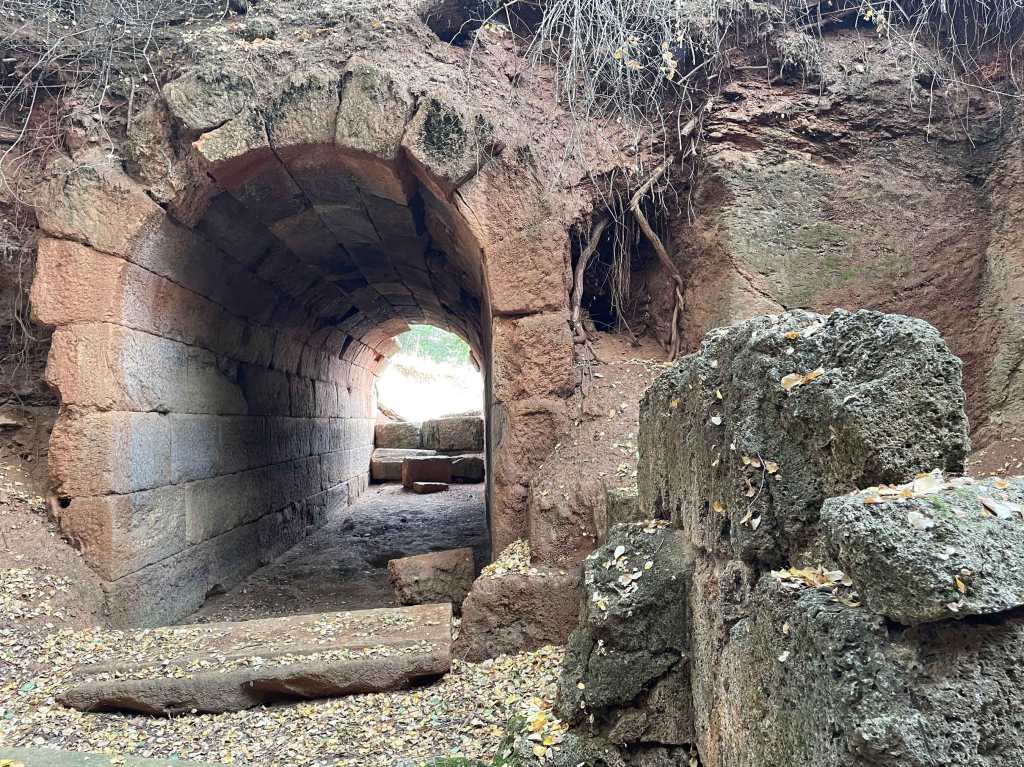
Up to the Viskola Peak the route was easy to follow. I took my time to roam around the archeological site of Visoka. The site is a bit overgrown and there is not really an awful lot to see. The main thing not to miss is the impressive “entrance” and the remains of a wall consisting of large precisely cut stones. On top of the rock formation on the peak itself, there seem to be stairs cut into the rocks.


Like mentioned before, the next kilometers were quite overgrown at some points.
I was following two tracks, one from Sibel (https://www.wikiloc.com/hiking-trails/visoka-24-03-2018-59854753# ) and one from Hristijan (https://www.wikiloc.com/hiking-trails/visoka-kralska-grobnica-bonche-88461266#) so we could see where to go approximately. At about 7.5 km Sibels GPS track got stuck in very dense vegetation and after struggling for too long we went back and followed Hristijans trail a bit higher uphill.
After that things got easier, but the stress of the overgrown trail had made us pretty tired.

Just before we reached the Royal Tomb, I noticed that we were walking on another circular shape in the field. I thought I had discovered another tomb! But back at home I found out that this was the already known archeological site “Kolpot” which is also described in the paper mentioned below. This site indeed is built in a circle that is nearly identical in size to the circle around the Royal Tomb of Pavla Chuka.

The Royal Tomb itself really is the highlight of this hike.
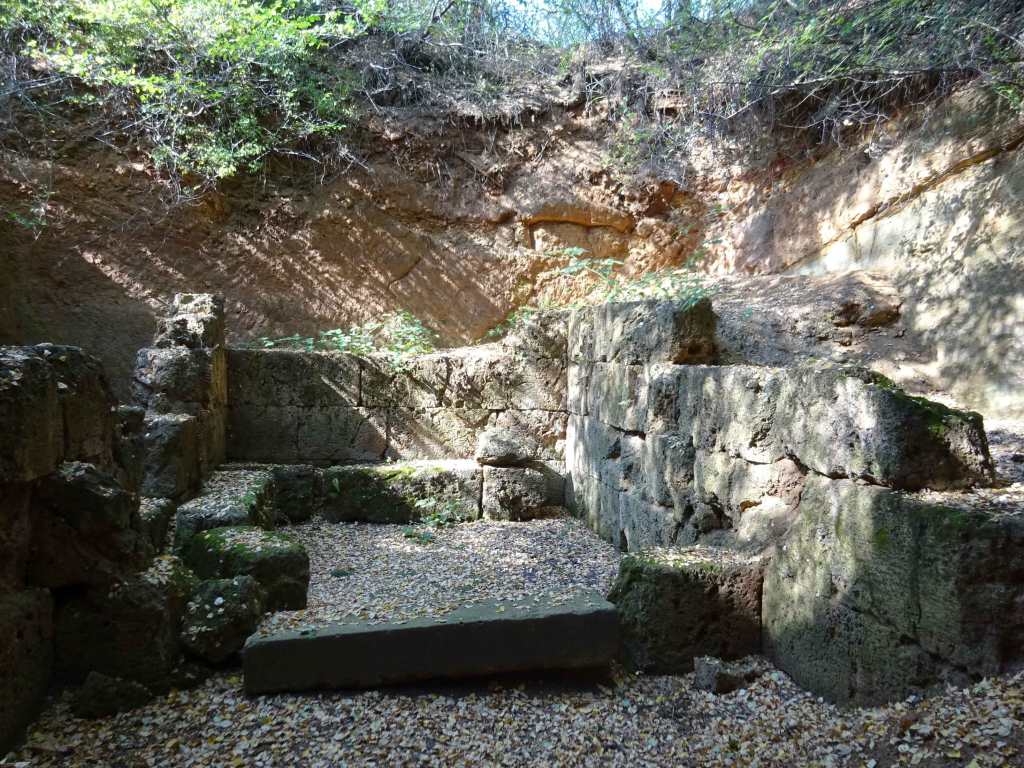
How cool to be standing in this structure that was built somewhere in the 4th century BC!
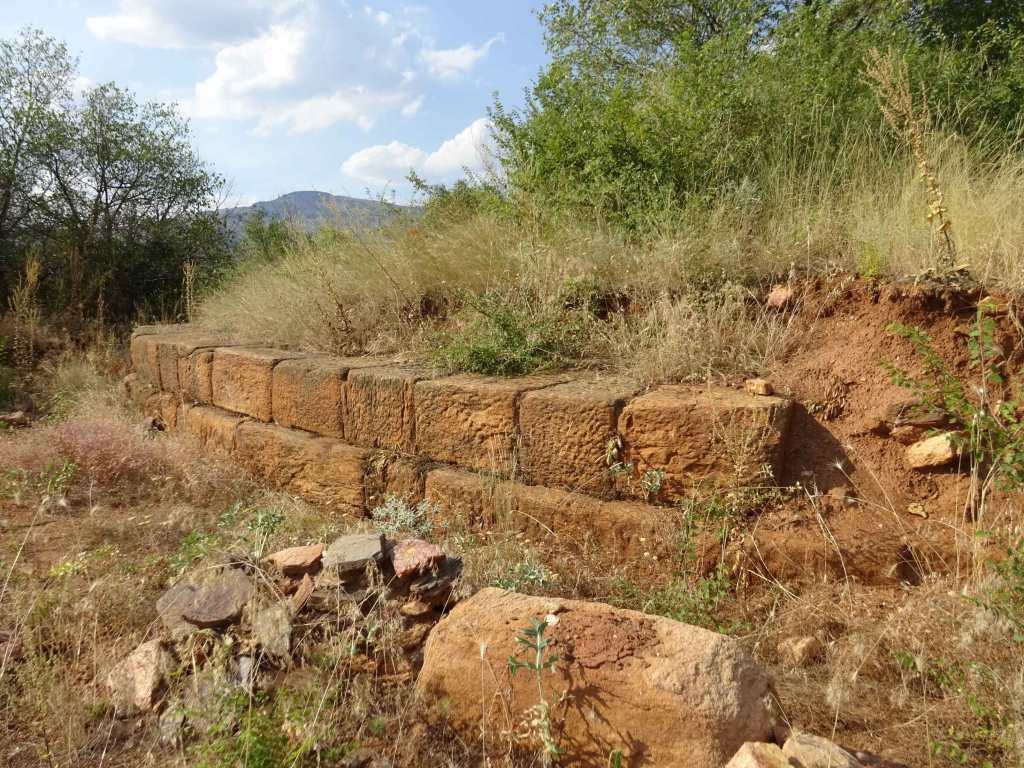
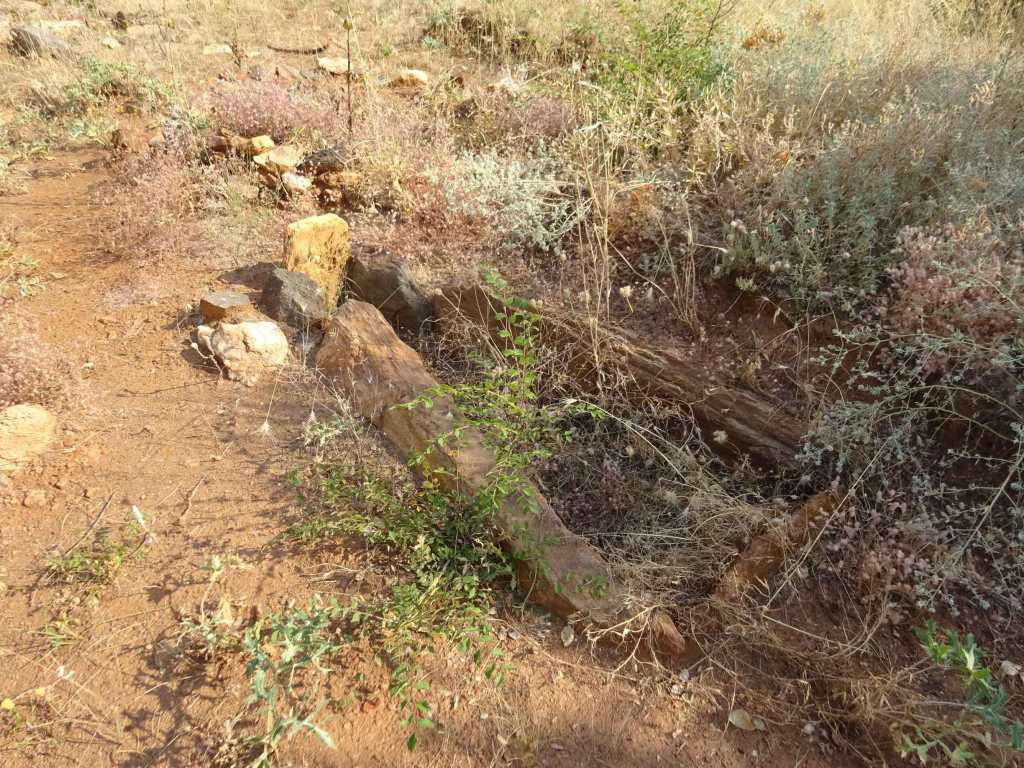
No tickets required, not fenced off, just ours to explore.

After the Royal Tomb we decided to try to avoid as much additional climbing as possible because we were tired, so we abandoned the original GPS tracks and headed for the 4×4 dirt road between the villages Bonche and Podmol.
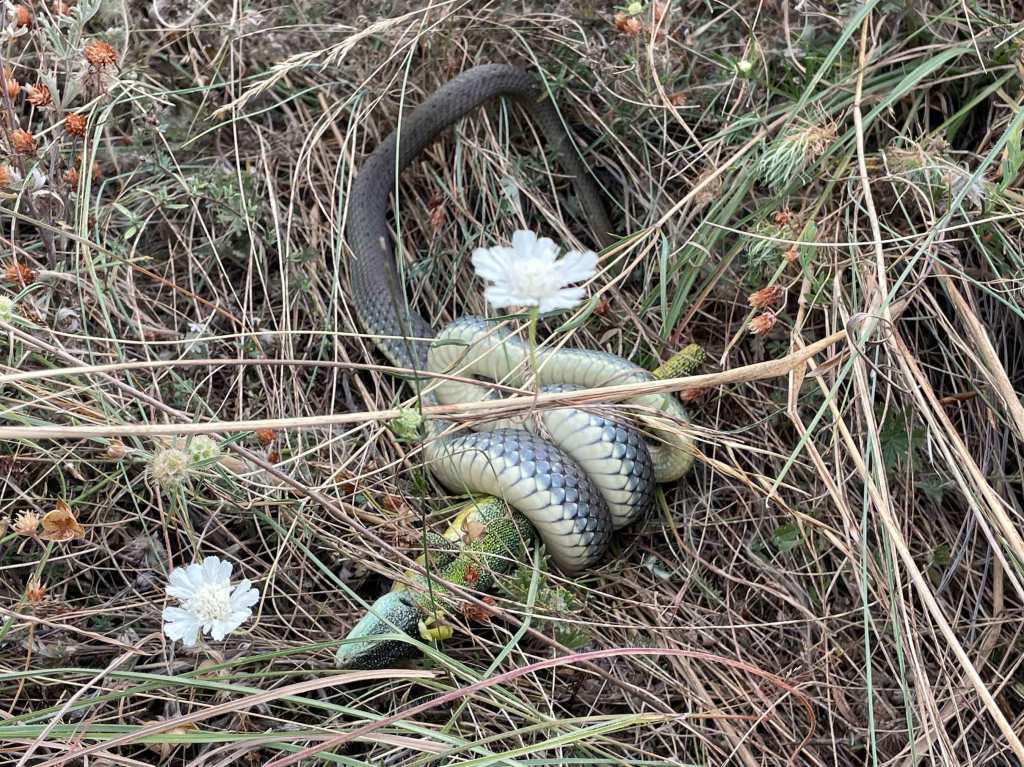
This turned out a good choice because we spotted an epic fight between a snake and a lizard. While trying to make pictures of this spectacle, I probably scared the snake who quickly crawled away, leaving the lizard barely alive behind.

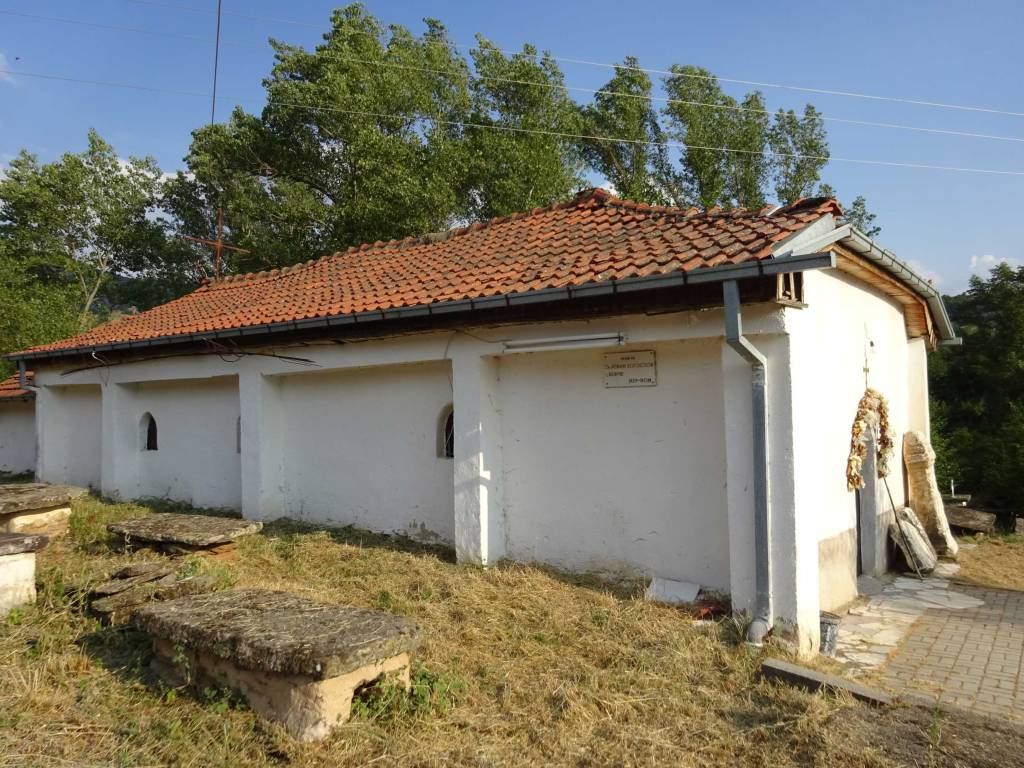
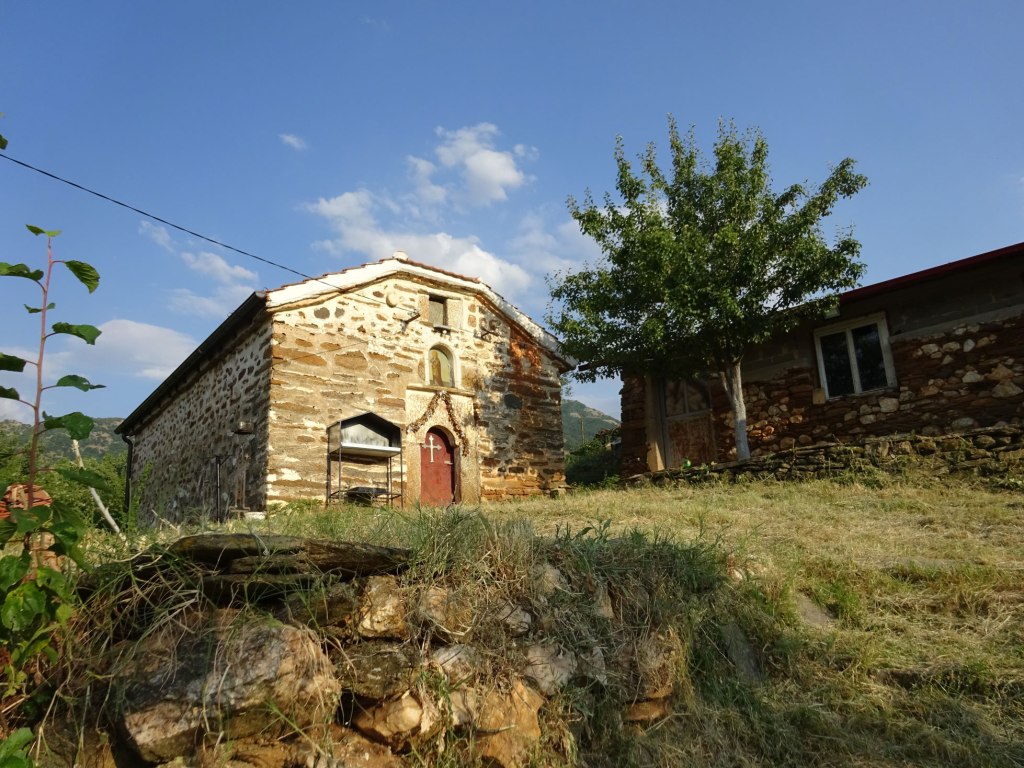
In addition, we visited the Church of St Marija, The Monastery of St Jovan Bogoslov and the Church of St Jovan (St John) in the village Bonche. They were all closed.
The last 2.5 km are slightly uphill along the boring asphalt road that connects Bonche to the outside world. The asphalt starts just outside the village. Unfortunately not the best end of this hike.
The hike itself gets 3 stars, the overgrown parts were sometimes annoying and the asphalt road at the end was quite boring, but visiting the Royal Tomb of Pavla Chuka I was an amazing experience!

Village Stavica
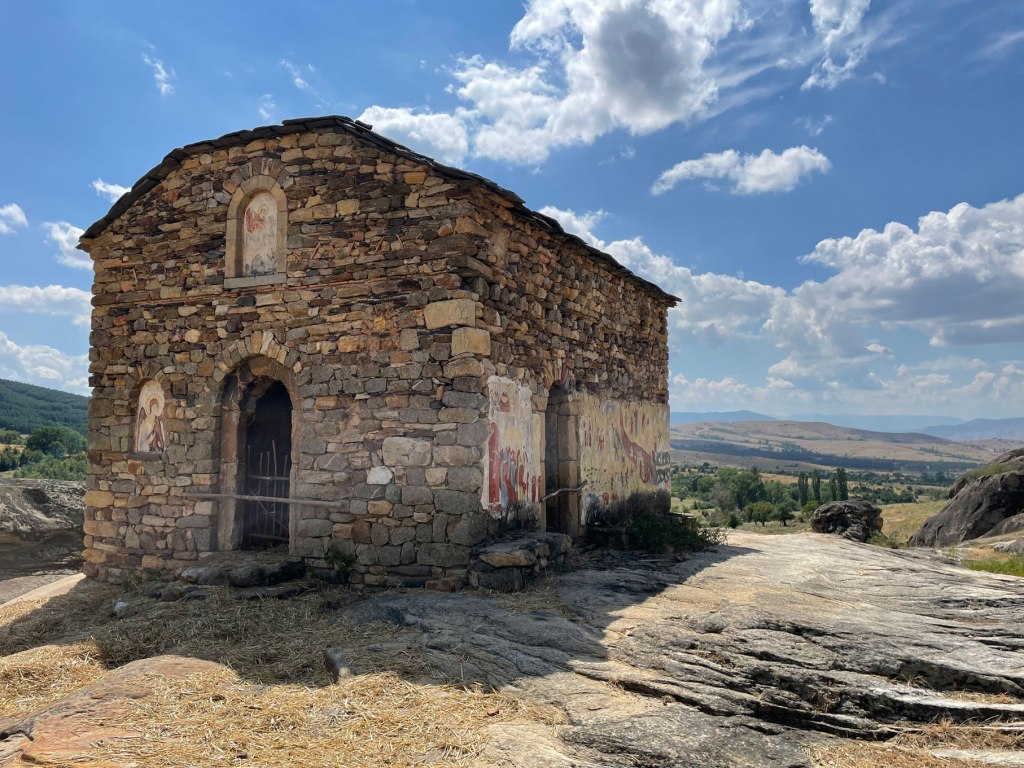
Since you are in the neighborhood, you may as well pay a visit to the village Stavica (Shtavica), where some of the most famous Macedonian movies directed by Milcho Manchevski were filmed. Both “Before the Rain” (1994) and “Dust” (2001) were recorded here.
The “Movie Church” in Stavica was allegedly built especially for the movie “Dust”. If you would not know any better, it looks like a very old church with some very strange frescoes on the outside. Nowadays it is in use as a stable for cattle and storage for hay. Location: N41° 15′ 35.3″ E21° 34′ 00.0″

The other church in the village Stavica is St Bogorodica (St Nativity of the Holy Mother of God) was built in 1881. It was closed when we visited.
You can view and download the GPS track of the hike here: https://www.wikiloc.com/hiking-trails/bonche-visoka-peak-royal-tomb-of-pavla-chuka-145399796

Information about the sites
The following is a freely taken summary from the scientific paper “Complex of the archaeological sites of Staro Bonche” by Antonio Jakimovski and Dushko Temelkoski (2018), Folia Archaeologica Balkanica IV, p205-255. I would highly recommend to read this paper before you go, it gives you detailed background on the Staro Bonche site and has many photographs.
The archaeological site of Pavla Čhuka is located at the very border of the areas of the two villages Podmol and Bonče, about 1.8 km northeast of Podmol. From there, the continuation of this direction, the area called Staro Bonče begins. The site was a huge tumulus, under which a monumental tomb was built in the early antiquity.
During the time, the tumulus stretched and lost its original form. Its maximum area size is about 100 meters in diameter. First excavations took place in 1936, although unwritten sources indicate that the site was likely already excavated during the First World war.
During the research, 10 graves were discovered among the dismembered remains of the building that likely was a Heroon (a shrine dedicated to an ancient Greek or Roman hero and used for the commemoration or cult worship of the hero). Six burials are of the type of cysts of roughly made stone slabs, and four are free diggings in the rock terrain. The tombs are without exception of small dimension, which points to the fact that burials of children are concerned. It is assumed that these burials were ritual, as part of some superstition.
On the territory of nowadays Macedonia, only two tombs of the Macedonian type have been discovered. One of them is in the antique town of Lihnid (Ohrid), and the other is the tomb of the site Pavla Čuka.
Reading this sparked my interest in finding the other tomb in Ohrid, which turns out to be located right behind the Antique Theater in Ohrid. It is called “Karagjulevsi Tomb”. Location: N41° 06′ 53.4″ E20° 47′ 36.7. Nowadays it is completely closed off with bricks.

Already from the second half of the 4th century BC they begin to build the so called “Macedonian type” of tombs, which as the eternal home of the aristocracy were especially decorated.
Just before we reached the Royal Tomb, there is the other archeological site “Kolpot” which is also described in above mentioned paper:
On the naturally dominant elevation in the immediate vicinity of about 350 meters south-east of the Pavla Čuka tomb, the archaeological site Kolkot is located. Archaeological researches were carried out at this site only in 1985, when a circular wall was discovered, built of fine crushed rock with mud as a connecting agent. At the center of the circle in the natural rock, four right-angled chambers were found, for which the researcher assumed that they were graves, and other interventions in the natural rock were disclosed, for which no explanation was given. there is almost an identical diameter of the circular walls of the tomb and Kolkot, as well as the dromos that is perceived on the surface, connecting the two building. According to the proximity of Pavla Čuka and the surroundings with a large number of early antiquity necropolises, as well as the elements that the building of the archaeological site Kolkot possesses, and in the absence of excavation, material and technical documentation, we can only assume that it is a cult building connected with the procession of burials or maybe a local variant of the cult to agriculture, or something similar to Tesmophorion (Tesmophoria) – a circular shrine – temple, in the honour of Demetra and Persephone, especially respected in the early antiquity.
Another good source of information is the booklet “Visoka and Staro Bonche: Center of the Kingdom of Pelagonia and the Royal Tomb of Pavla Chuka” by Viktor Lilchikj Adams and Antonio Jakimovski
 My Macedonia Blog