
Below are some general tips and answers to frequently asked questions about Macedonia. This definitely does not cover everything, but it is information that I would find helpful myself. Also see the sections for sightseeing and hiking in Macedonia.
Renting a car at Skopje airport

Over the years I have used several companies to rent a car at Skopje Airport, and had good and smooth experiences with the following car rentals:
- Sharr Express, https://www.sharrexpress.com/
- Interways, https://www.macedoniarentacar.com.mk/
- Hertz, https://hertz.mk/
I have also used Relax Rent A Car, but they do not have an office at the airport. My experience with Relax was mixed: At the time they were the cheapest option. When I arrived at the airport at midnight, it turned out I could not pay onsite with my credit card and had to go to their office in Skopje to pay by card. Also, they charged my credit card more than the agreed 1,000 euro (1,030 euro instead of 1,000 euro for a month rental, basically an extra day of renting); according to Relax this was due to the conversion rate from denar to euro and they refused to pay this back. In addition, none of the employees spoke English. Last, they tried to charge a cleaning fee upon return of the car, which was not mentioned in the contract and which I refused to pay. Summarized, a cheap but not so “relaxed” experience.
Like with every car rental, make pictures of the car when you get it, especially of any damage that is already present when you receive the car.
Do you want to cross the border with the car? In that case, let the rental company know because you will need a “green card” for insurance.
It usually pays off to compare prices between the companies, since one may be cheaper than the other for a given period. Here is a list of all the car rental companies at Skopje Airport: https://skp.airports.com.mk/en-EN/passenger-guide/to-from-the-airport/page/rent-a-car-from-the-airport and a similar overview for Ohrid Airport: https://ohd.airports.com.mk/en-EN/passenger-guide/to-from-the-airport/page/rent-a-car
Registration with the police


You need to be registered within 48 hours after entering Macedonia, or when changing accommodation.
Usually your paid host takes care of the registration online, for instance when you are staying in an hotel or other paid accommodation such as Airbnb. It is their obligation to do so and you can ask your host about it. Especially when you are staying at “less official” accommodation such as Airbnb it may be good to ask your host if they do the registration for you. Sometimes they are not willing to do this, likely because of tax reasons. You will not receive a receipt when the registration is done online. Here is a link to the online registration form: https://mvr.gov.mk/prijavistrintro. Note that this form can only be used by hosts that offer accommodation services for a fee. If you are staying with family or friends, you still have to report within 48 hours at the nearest police station.
When you are staying with family or friends, you or your host have to take care of the registration at the police station. At the local police station, the form in the pictures above needs to be filled out. Make sure you have your passport with you. The police will keep the upper part, the lower part called “potvrda” is for you. When leaving Macedonia or when stopped by the police, you theoretically can be asked for this form. You may have to pay a large fine when they find out at the border that you were not registered. Personally I have never been asked for the “potvrda” at the airport, but I have heard of people who were asked for it and who had to pay the fine.
Official info about the registration process can be found here.
Hiking ban Macedonia 2026
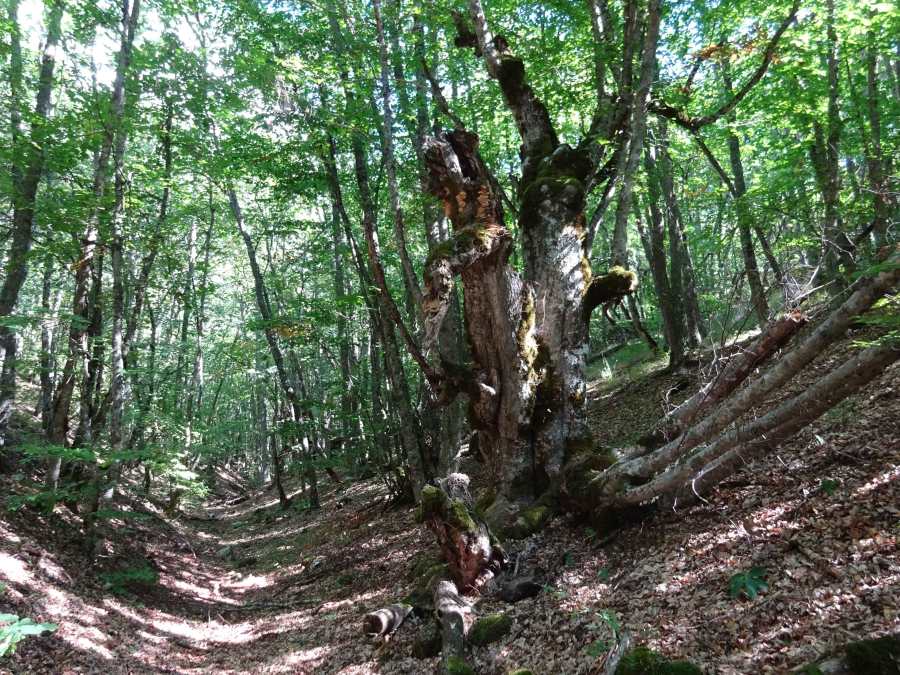
The last years Macedonia has suffered from forest fires during the summer. In an attempt to prevent these fires the authorities often proclaim a (partial) ban to enter the forests and National Parks during periods of forest fires, usually from 01 July – 31 August. In 2025 and 2026 this was even prolonged until the end of September. Fines can go up to 2,000 euro!
UPDATE AUGUST 2026: The ban has been extended until 30 September 2026. Source.
This can have consequences for your hiking holiday! The “partial” ban means that you usually are still allowed to go hiking after registering yourself with the authorities and/or having obtained a permit. For the registration you have to give the following information: Names of all the people in your group, passport/ID numbers, contact information, vehicle license plate number and when and were you want to hike. The permits are for a specific day so this requires some planning ahead.
The ban does not apply to Mount Vodno near Skopje, according to this article, and this was confirmed by somebody on Reddit who had contacted the responsible authorities (Parkovi i Zelenilo).
For the National Parks the permits can easily be obtained by email or the website of the National Park, for some National Parks only registration is sufficient and no permits are issued. The exact requirements seem to change every year so inform yourself well.
Below you can find the contact details of the National Parks in Macedonia (their Facebook sites are often more up-to-date than the official websites):
Galicica National Park:
Contact: http://galicica.org.mk/; https://www.facebook.com/galicicanp; galicica@galicica.org.mk.
See here for information about the ban: https://galicica.org.mk/vazhno-izvestuvanje-za-posetitelite-na-nacionalen-park-galichica/ and the electronic registration form.
Note that you have to buy tickets for almost any activity in Galicica NP, such as hiking (100 den/1.65 euro), entry by car (150 den/2.5 euro) or climbing the Magaro Peak (300 den/5 euro). See here for the complete list and to order your tickets online: https://galicica.org.mk/e-prodavnica/. There are also booths at the main entrances of the park on the road from Trpejca to Stenje.
Mavrovo National Park:
Contact: https://npmavrovo.mk; https://www.facebook.com/npmavrovo, mavrovonationalpark@gmail.com and/or infopoint@npmavrovo.org.mk.
According to the website, registration takes place by sending an email to mavrovonationalpark@gmail.com with the date of the visit, number of people, names, duration of the planned activity and movement area (https://npmavrovo.mk/blog/information).
For hiking in Mavrovo NP you always need to register and buy a ticket (100 Dears or 1.65 euro), regardless if there is a ban or not. Tickets can be obtained via the website (https://npmavrovo.mk/tickets) or at the information center which is just outside of Mavrovi Anovi.
Pelister National Park
Contact: http://park-pelister.com/; https://www.facebook.com/nppmk; https://nppelister.mk/kontakt/, and maybe these also still work: np.pelister@yahoo.com and/or visitpelister@gmail.com.
Registration can be done here: https://nppelister.mk/evidencija-na-posetiteli/
There is no fee for visiting Pelister National Park.
Shar Mountain National Park:
Contact: https://www.sarmountain.org.mk/; https://www.facebook.com/IPSharPlanina; park@sarmountain.org.mk.
See here for registration: https://www.sarmountain.org.mk/en/evidenten-list-posetiteli.
Besides the registration there is a fee for entry by motor vehicles (150 de/2.50 euro for a normal car) and camping that can be paid here. Hiking is free: https://services.sarmountain.org.mk/en/front-en/.
Outside the National Parks you have to deal with the Macedonian National Forest Authorities (Makedonski Sumi). This means that you have to go in person with your passport to the local Forest Authority office, the one closest to where you plan to hike and get the permit there.
Here is a list with their offices: http://www.mkdsumi.com.mk/kontakt.php
This is quite time-consuming and difficult, also because the local employees often have no idea how to issue the permit nor speak English. It therefore would be best to ask for the help of a local when calling Makedonski Sumi or when going in person to their office. You will have to plan ahead as well, since they do not work in the weekends. Good luck tourist!
In 2025, we managed to contact some local offices by phone and obtain the mobile number of the employee. Then we could send our information and passport copies via the Viber app. The permit was then also digitally sent to us with the Viber app. That was already a big improvement of the permit process. However, the willingness to do this seemed to be completely dependent on the employee we spoke to.
There is an online form to request a permit from the National Forest authorities. In 2026 I have filled out this form and sent it together with a copy of my ID to several email addresses that I found on the contact page of the MKD Shumi website. The main email address (komunikacii@mkdsumi.com.mk) gave an error. Eventually they emailed me the permit! This was through the branch office “Skopje-Karadzica” for a hike on Skopska Crna Gora Mountain. I don’t know if I was just lucky or this is an official process now. Please let me know your experience of getting a permit by email!
Macedonian Forest Authorities: http://www.mkdsumi.com.mk/, info@mkdsumi.com.mk, komunikacii@mkdsumi.com.mk (the email addresses may not work).
Monastery accommodation
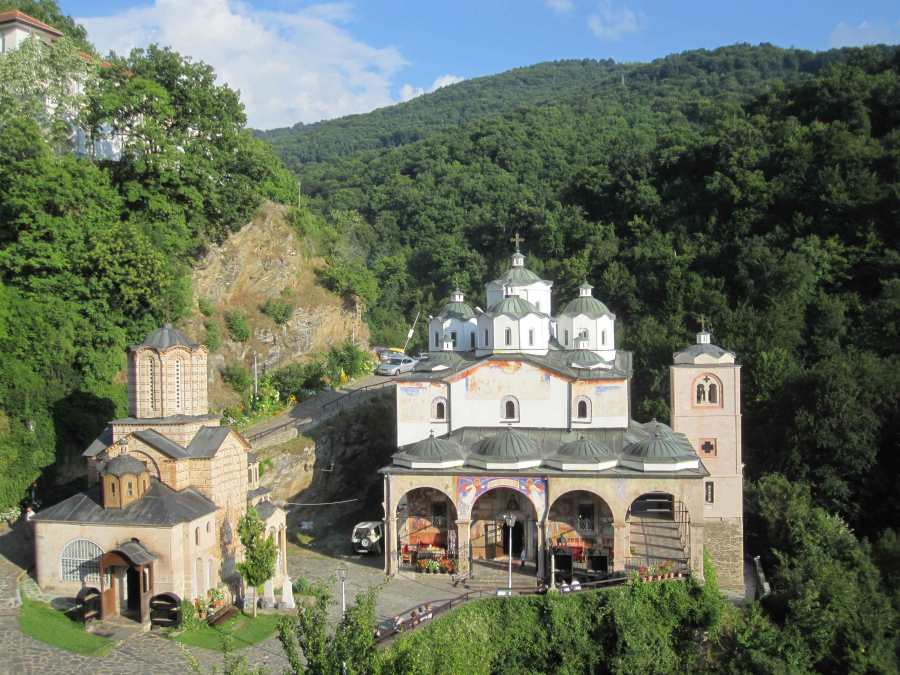
Many monasteries in Macedonia offer accommodation for guests. Some of these monasteries, such as the St Joakim Osogovski Monastery in Kriva Palanka, are even comparable to a simple hotel. Staying in a monastery is not only cheaper than staying in a hotel, but it also gives you the unique opportunity to enjoy these old sacred places from a local point of view.
It is probably difficult for a foreigner to book most of these monasteries in advance since you’ll have to call them, and in most cases it will be unlikely that you’ll get somebody on the phone who speaks English. It may also be uncomfortable to stay there when you cannot communicate with the hosts, when they do not speak English. For us, it’s not a problem since my girlfriend is Macedonian. We have stayed in several monasteries in Macedonia. You can follow the links for more info about these monasteries.
- Monastery of St Joakim Osogovski near Kriva Palanka,
- Monastery of the 15 Martyrs of Tiberiopolis in Strumica
- Monastery of St Spas in Trstenik near Prilep
- Monastery of St George near Negotino
- Monastery of Lesnovo accommodation in a former school building in Lesnovo
- Monastery of St Jovan Bigorski in Mavrovo National Park. This is a male monastery and men and women have to sleep separately. I heard that the (very early) morning mess is obligatory. A better option for tourists probably is to stay in the new Guest Mansion right next to the monastery. Below the monastery there is one of the best restaurants I’ve been to in Macedonia, named House of the Miyaks.
- Monastery of Smilevo dedicated to St Peter and Paul, near Smilevo
In the following monasteries you can stay as well, we have been to most of them but never actually stayed there overnight:
- Monastery of St Stefan near Ohrid
- Monastery of St Petka in Velgosti near Ohrid
- Monastery of St Petka in Orovnik near Ohrid
- Monastery of St Spas in Gorno Lakocherej near Ohrid
- Monastery of Treskavec near Prilep
- Monastery of St Ana in Pelister National Park
- Slivnica Monastery near Slivnika at Lake Prepa
- Monastery of St Petka outside of Stip
- Monastery of St Petka near Brajcino. When we were in Brajcino it was not possible to stay in the monastery.
- Monastery of St Pantelejmon near Skopje with an official hotel.
- Monastery of St Naum at Lake Ohrid, with an official hotel.
- Monastery of St Jovan Veterski along the highway between Skopje and Veles
More info about Macedonian monasteries (click on the picture of the guide): https://www.macedonia-timeless.com/eng/things_to_do/publications/guidetothemonasteriesinmacedonia/ or see here for a PDF version: https://tourismmacedonia.gov.mk/wp-content/uploads/2018/09/A-gudie-to-the-monasteries-in-the-RM-1.pdf
Hiking in Macedonia with GPS
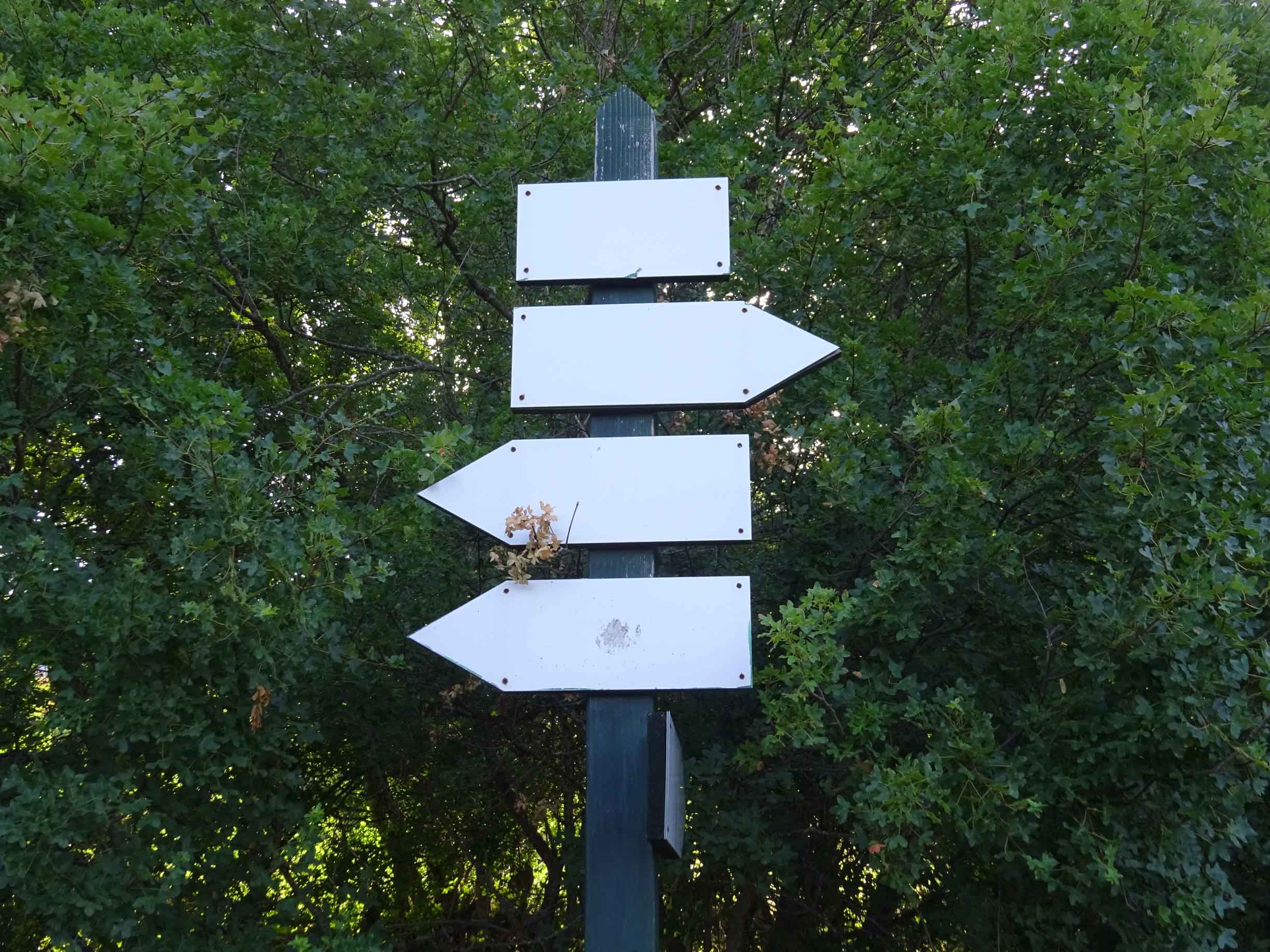
As you may have understood from the hiking section of this website, Macedonia has nice nature and great mountains to climb. However, it is difficult to find information about the hiking trails in Macedonia and the trails are often very badly marked. The signpost on the picture is a relatively new signpost, but the text was already completely bleached after a year in the burning Macedonian sun. Signposts often are broken and just lying on the ground, the international red/white marking may suddenly disappear halfway a trail, etc etc.
There are paper maps of all the National Parks from Trimaks, but they lack detail and are not very useful. In my opinion the best way not to get lost in Macedonia is to use an outdoor GPS device in combination with a free digital map based on OpenStreetMap. Simply find GPS tracks from others on websites such as Wikiloc, Outdooractive or AllTrails and follow the track on an outdoor GPS device or phone. Wikiloc by far has the most GPS trails in Macedonia and is my preferred website. I do not recommend using a mobile phone for hiking, but if you do make sure you have downloaded the maps for off-line use in case you lose signal in the mountains, and take a powerbank with you.
Over time I have collected a lot of GPS tracks in gpx format and I am happy to share them with you. You can ask for the gpx files via the contact form.
I currently use a Garmin Oregon 700 outdoor GPS in combination with a free map from OpenFietsMap. In addition to the Orgon 700 which I use for navigation, I have a Garmin InReach Mini with satellite communication and position tracking for emergencies. The Garmin InReach adds some extra safety in mountainous regions without a mobile phone signal. Especially if you hike alone the people at home can track your position almost step by step. The required satellite subscription is rather pricy though.
The free digital maps based on OpenStreetMap are the most detailed maps available, showing even small mountain trails and the maps are continuously updated by volunteers. The free program Basecamp by Garmin can be used check and organize your downloaded GPS tracks, or design your own tracks.

The shepherd dogs are the nightmare of every hiker in Macedonia. The dogs of the Sarplaninac brand can be as big as a small horse. The shepherd dogs aggressively protect their flock of sheep, and will see you as an intruder. Therefore you should be very, very careful when you see or hear sheep in the mountains! If you notice a flock of sheep, keep your distance and try walk around them even if this means a detour. There will be dogs as well! If you have to approach the sheep, try to get the attention of the shepherd by waving or yelling. He usually will make sure that the dogs do not attack you. Unfortunately, if you yelled and there is no shepherd around this means you will have the full attention of the dogs. Good luck in that case. I have been followed, chased and surrounded by shepherd dogs but have never been bitten. Keep in mind they have been trained to scare off intruders. When confronted with the dogs, my tactics are to say a little prayer while walking away from the flock of sheep. It always worked up to now, and over the years I became more relaxed about the shepherd dogs. If you are hiking together with your own dog (or a dog that just tags along, it happened regularly to us), be extra careful because the shepherd dogs may attack your four-legged hiking buddy.
Some people advise to carry bear spray, pepper spray or firecrackers to deter the sheep dogs or stray dogs in general. People also mentioned that an emergency whistle may have a calming effect on the dogs.
Driving in Macedonia
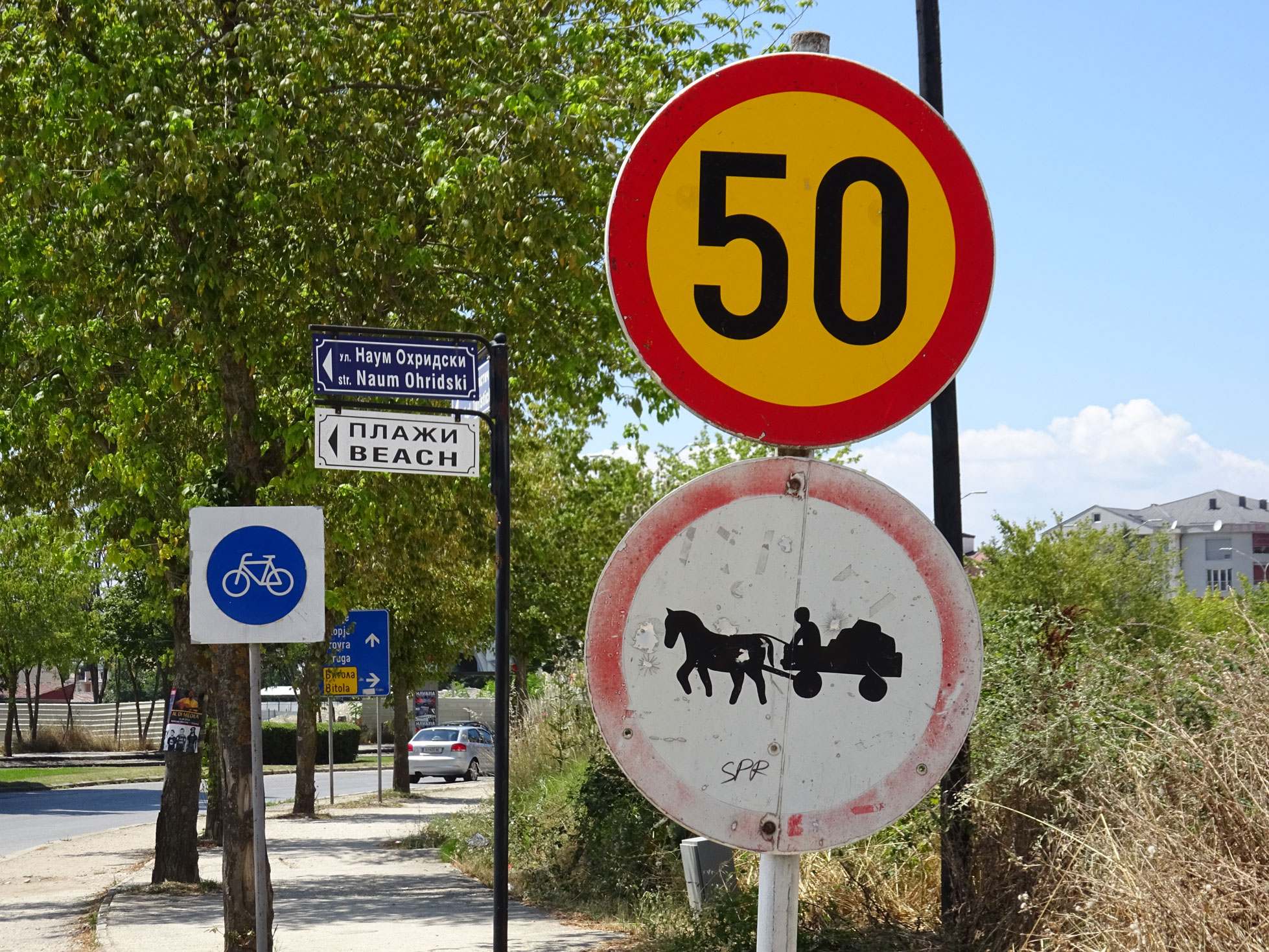
The main roads in Macedonia are generally in relatively good condition. The smaller and more rural the roads become, the higher the chance that they are in bad conditions and you will have to be aware of holes. Driving skills or adherence to traffic rules (or both) are generally worse than I am used to in Western European countries. Be extra careful at all times! Expect cattle, horse and carriage on the roads, also at night without lights. Be careful at roundabouts, no rules seem to apply there! Some extra points of attention:
- You need to have the headlights (low beam) of your car turned on also during the day.
- The right lane is often used as extra parking space in urban areas, so expect double-parked cars on the right lane!
- Street-name signs may be sparse or absent.
- I use Google Maps with an off-line downloaded map in the car for navigation. It usually gets you where you have to be. If you have to drive to the starting point of a hike somewhere in the mountains, it helps to enter the GPS coordinates of the starting point in Google Maps.
- You have to pay toll for some of the highways
- In several cities such as Skopje and Strumica, you need to pay for parking by SMS using a (Macedonian) mobile phone. You may also be able to buy a ticket at a kiosk.
- There are quite a lot of mobile speed traps, i.e. cops with radar or laser guns next to the road. Either keep the speed limit or look well ahead 🙂 One part of the toll road between Skopje and Gostivar has an 80 km/h limit, in contrast to the other parts were 100 or 120 km/h is allowed. It seems to be a lucrative strip of asphalt for the police!
Macedonia & The Dutch

You’re lucky if you’re Dutch and are visiting Macedonia, and Ohrid in particular. The Dutch writer A. den Doolaard (1901-1994) wrote two novels which take place in Macedonia. His book “De Bruiloft der Zeven Zigeuners” (The Wedding of the Seven Gypsies, 1939) is a love story situated in Ohrid. It’s great to read this book while you are in Ohrid so you actually can visit the same sites as the main characters in the book. The other novel is called “Orient-Express” (1934) which describes the resistance of the Macedonians against the Turkish occupiers. Part of the book takes places at Marko’s Towers in Prilep, one of my favorite historical sites in Macedonia. These books by Den Doolaard generated a lot of interest of the Dutch in Macedonia and were responsible for a lot of Dutch tourists. In Ohrid a monument was raised for the writer, and there is a memorial room in the cultural center Cultura 365.
Another advantage if you read Dutch is that you can use the Dutch hiking guide “Wandelen in Macedonie: Mavrovo Nationaal Park“, by Niek and Tymen van der Maas. The guide describes 13 hikes in Mavrovo National Park. The authors can send you the GPS tracks of these hikes upon request. Although the hikes are described and the guide includes small maps of the hikes, I would recommend to use the book in combination with an outdoor GPS device and these GPS tracks.
Macedonia & Money

The Macedonian denar is a so-called closed currency, meaning that it is only available in the country that uses it. So you cannot get your denars in advance outside of Macedonia if you plan to visit. Usually, just withdrawing denars from an ATM in Macedonia gives me a good exchange rate. Make sure that you exchange your left-over denars back to euros before you leave Macedonia, because exchanging them outside Macedonia is virtually impossible.
Guides for Macedonia
In my opinion the most useful guide for Macedonia is the Bradt guide “North Macedonia” by Thammy Evans currently 6th edition (2019). There are also some hikes described in this guide with very rudimentary maps. My advice would be not to try to do these hikes using these descriptions and maps, get better maps at least and use a GPS. We got lost or had to abandon the hikes described in the Bradt guide more than once.
I have really enjoyed the self-guided city walks in Ohrid and Skopje from WalkingMacedonia. You can now download the Ohrid City Walk and Skopje Walk for free!
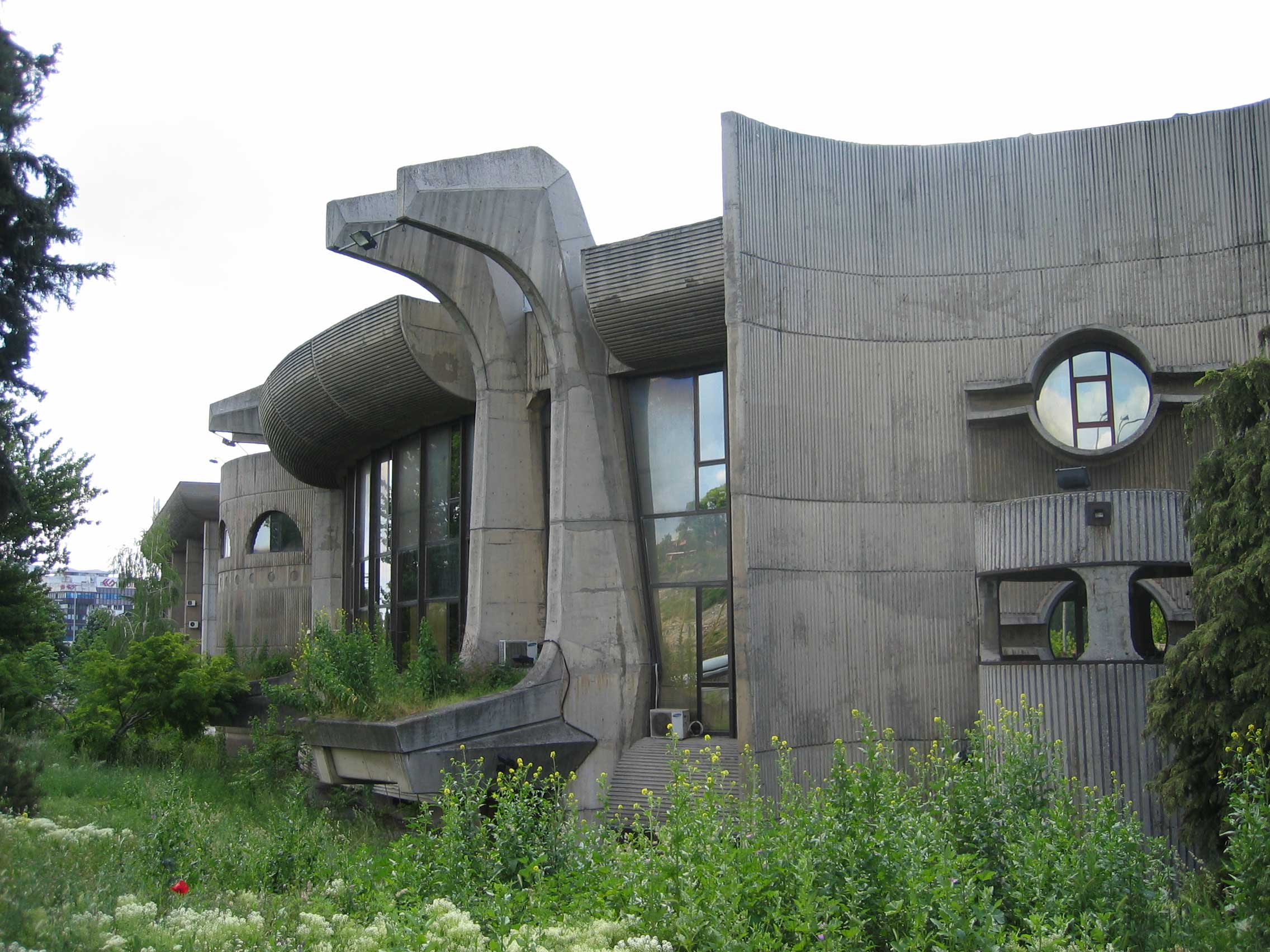
Interested in Brutalist architecture? Skopje is the place to be! And the Modernist Skopje Map will help you locate all these beautifully horrific buildings. Also check my free Brutalist and Modernist Architecture walking tour in Skopje.
Food and drinks


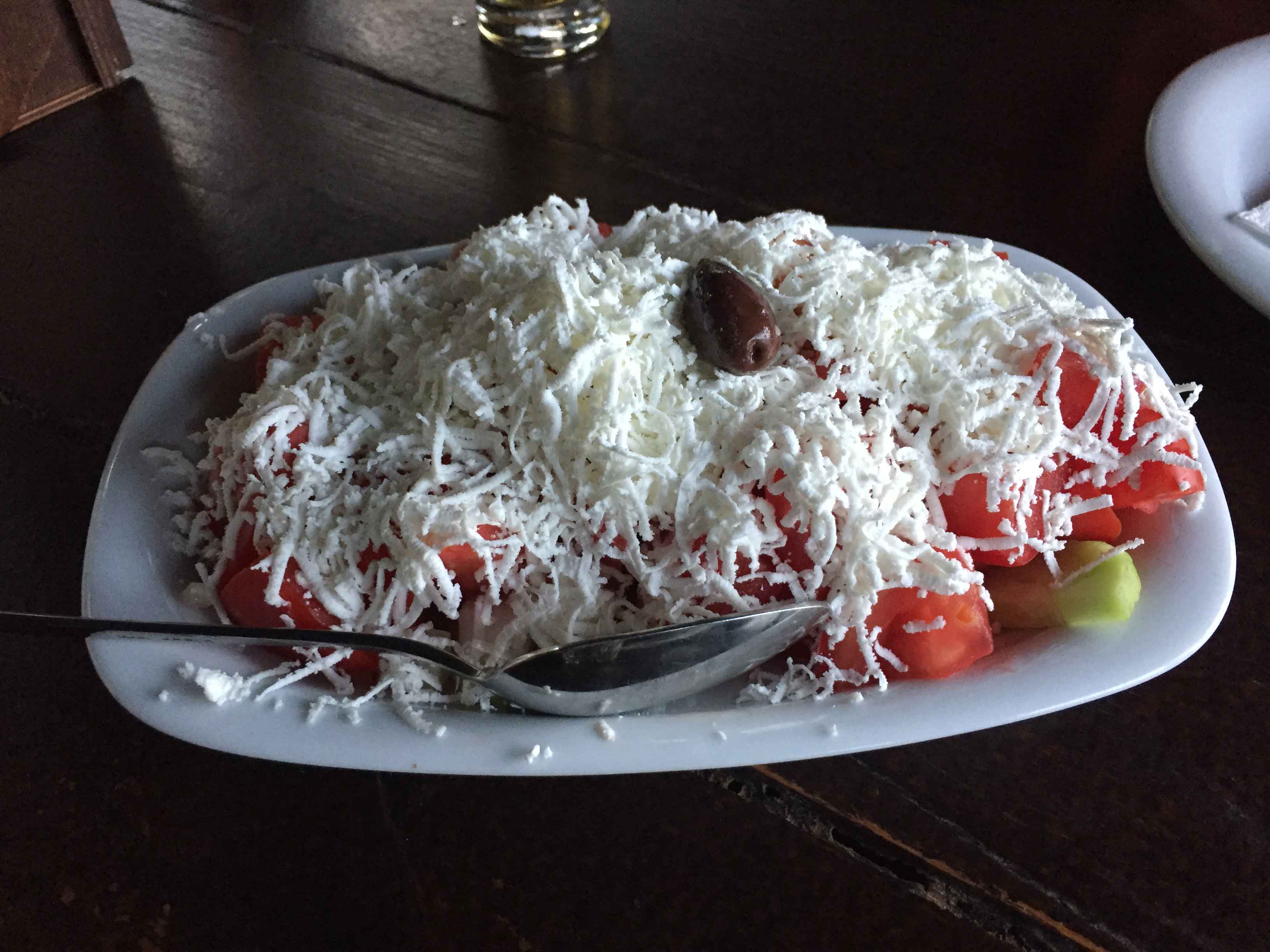
Warning: Do not eat vegetables in Macedonia, because it will make you realize how vegetables should taste and you’ll start to dislike the vegetables anywhere else! A famous salad in Macedonia is the Shopska salad, made of tomatoes, cucumbers, onions, peppers and white cheese. The Shopska is often enjoyed before the dinner, together with a glass of (preferably home-made) rakija. Rakija basically is fruit brandy, in Macedonia usually made of grapes. While writing this, I am enjoying a glass of our home-made rakija made of kiwis, quite a rare spirit even in Macedonia!

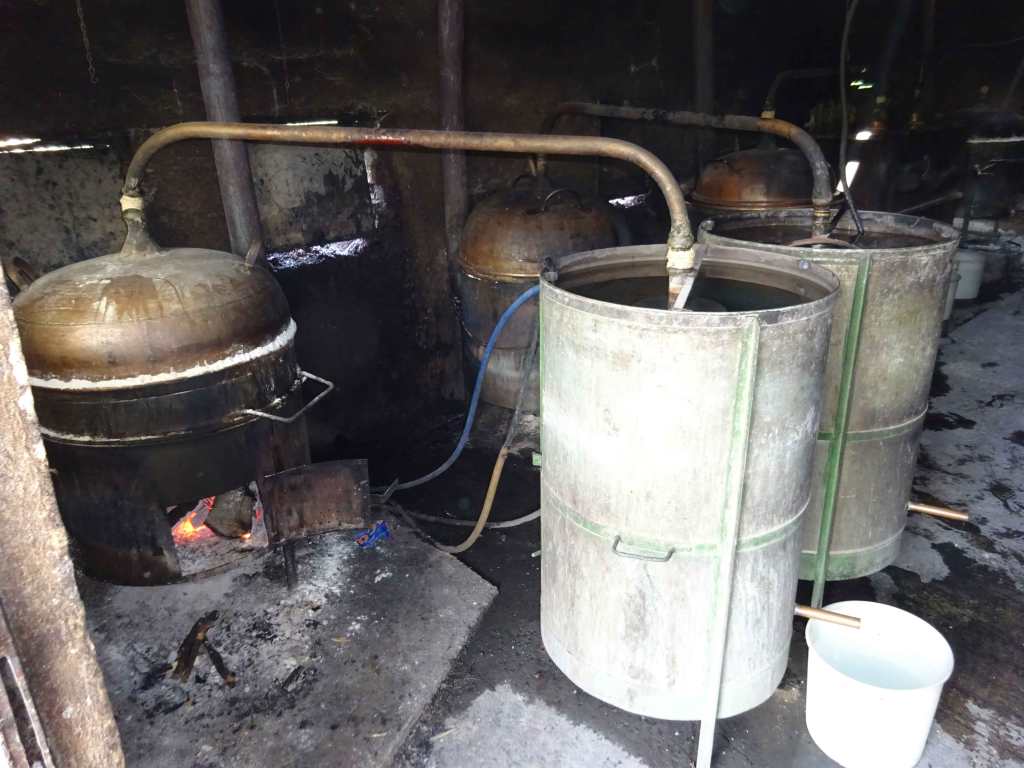
Home-made rakija is a drink that should never be turned down when it is offered to you! Another drink that is hard to turn down is coffee. Especially in the more rural towns you may get invited into people’s house quite often, to have a cup of coffee with them. Sometimes it is difficult to say no to this friendliness, especially when it conflicts with our busy schedules as a tourist! The best coffee is the one prepared Macedonian-style, i.e. boiling the coffee directly in the water. Be vary careful with your last sip or you end up with a mouthful of coffee grounds! Besides rakija, another Macedonian hard liquor is mastika, which tastes like anise. The mastika from the Strumica region is the most famous one. My favorite beer brand in Macedonia is Skopsko. Macedonia also has quite some wines, a famous one is T’ga za Jug which translates as “Longing for the South”, after a famous Macedonian poem by Konstantin Miladinov. If you are a wine-lover, check out the wineries in the Tikves region.
A very tasty specialty is Ajvar, a spread made of roasted or cooked peppers, sweet or spicy. Of course the home-made versions prepared with love and hard work are the best, but also a jar of ajvar from the supermarket can be a good souvenir to remember Macedonia when you’re back home. In most restaurants the food is simple but tasty, and grilled meat (skara) can be found on basically every menu. A good dinner does not have to cost more than 10 euros and often is less.
Useful links
- Skopje bus station: http://www.sas.com.mk/en/
- Macedonia tourism: https://www.macedonia-timeless.com/eng
- Good information about Skopje: https://www.skopje.in/
- Guide to Macedonian monasteries (click on the picture of the guide): https://www.macedonia-timeless.com/eng/things_to_do/publications/guidetothemonasteriesinmacedonia/
- Nice blog about Macedonia: https://macedonia.for91days.com/
- High Scardus long distance trail through Macedonia, Albania and Kosovo: https://www.high-scardus-trail.com/en/
- A new long distance hiking trail initiative in Macedonia, 2070 km through the wilderness: https://sammiana.com/
- TripAdvisor forum for all your questions: https://www.tripadvisor.com/ShowForum-g295109-i8578-Republic_of_North_Macedonia.html
- Balkan Hiking Adventure; never used them: http://www.balkanhikingadventure.com/
- Mountain huts in Macedonia: https://travelmacedonia.info/discover-macedonia/mountain-huts-in-macedonia
- Places we visited in Macedonia
- Hiking trails in Macedonia that we walked
- Free self-guided City Walk for Skopje and Ohrid


