
This short hike takes you to the archeological site “Kale-Strezov Grad” near Demir Kapija.
Strezov Grad is part of a larger archeological complex called Prosek. Other parts of this complex are Markova Kula on the hill opposite to Kale-Strezov Grad, Chrkvishte (Church) and Manastir (Monastery) at the other site of the river Vardar and the Ramnishte Fortress, which I tried to visit but failed due to dense vegetation (and bad navigation skills, probably).

At Kale-Strezov Grad the remains of a church from the 6th century can be found, with reconstructions in the middle ages, 12th-13th century and the end of the 14th century.
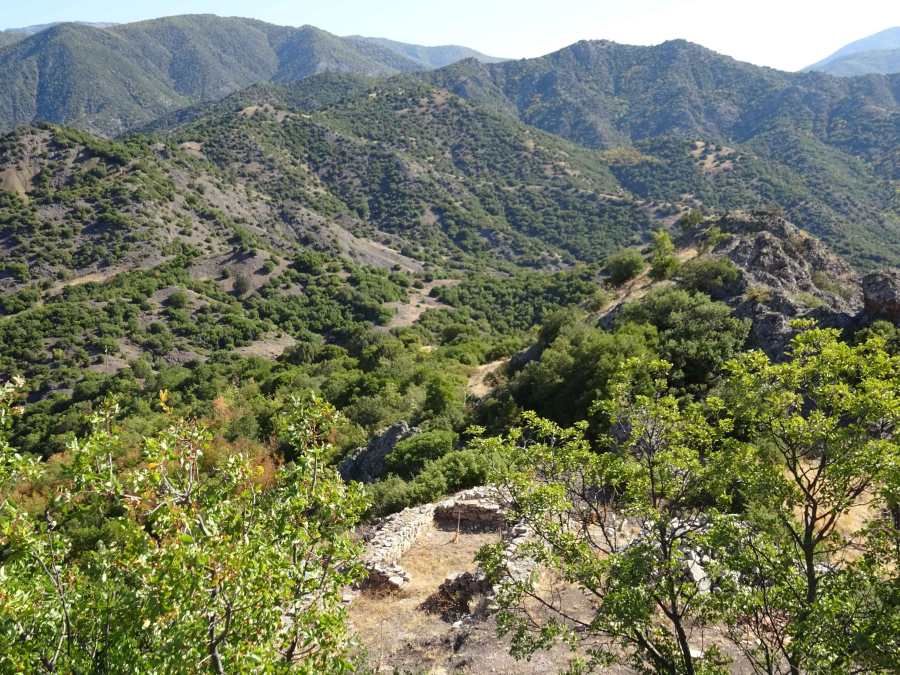
The absolute highlight of this site for me was a very well preserved and almost intact tomb. Inside the tomb you can even still see a painted red cross and plant motifs on the wall. This is thought to be from the 6th century and re-used during the 13th-14th centuries.


Next to the church graves have been found and you can still clearly see where they have been. The links to the publications below also contain pictures from when the graves were discovered.
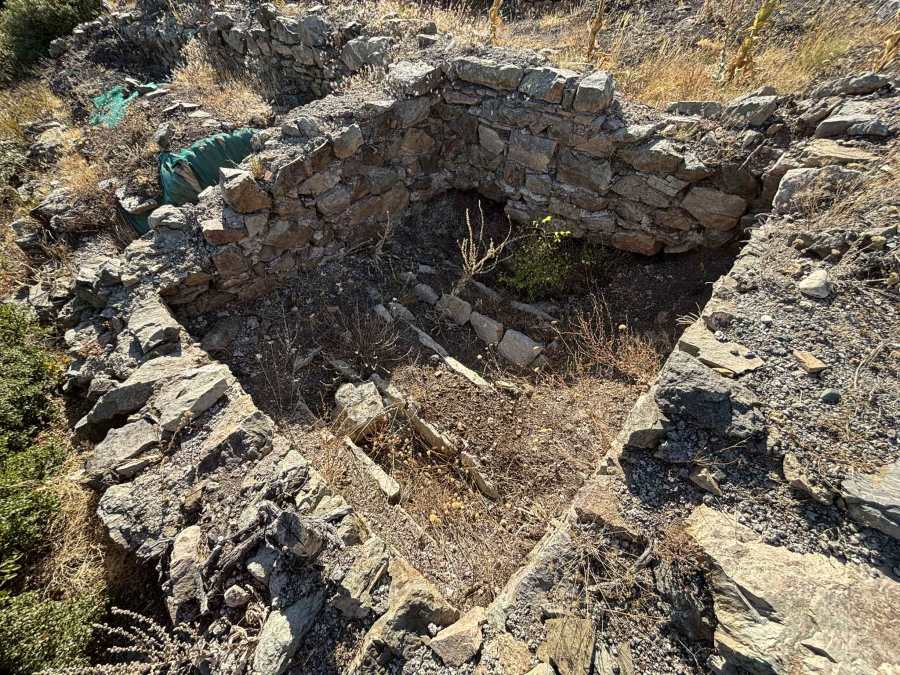
A bit above the church the renovated ruins of a tower can be found.
The fortress is referred to as Цвингер (предтврдината), translated as Zwinger (the outer fortification). Zwinger is a term of German origin used in medieval architecture. It refers to the outer defensive area between two walls — the space between the main wall of a fortress and an outer wall.

The following is taken from the publication “MEDIEVAL NECROPOLIS AT THE SITE KALE STREZOV GRAD NEAR THE VILLAGE OF ČELEVEC – DEMIR KAPIJA by Ordanče Petrov:
Between 2015 and 2018, at the site Kale-Strezov Grad in the village of Chelovec, near Demir Kapija, there were archaeological excavations carried out at the northern plateau, outside of the fortified perimeter of the fortress. A church with at least four construction phases was discovered in this area, the earliest dating to mid-6th century, while the last one to the end of the 14th and the beginning of the 15th century. Among and around the architectural remains of the church from the first phase, a necropolis with inhumation developed in the Middle Ages. 32 burials have been investigated. The small area of the plateau caused the repeated use of the same graves, and part of the skeletal material was dislocated and reburied in the free spaces between the graves, or in the eastern part of the already existing burials. The deceased were placed in an extended position with a west-east direction within the allowed deviations conditioned by the terrain and the architectural remains. The arms of the deceased are laid in many variations: on the pelvis, abdomen or chest without any obvious patterns. A special feature is the placement of headrests under the skulls, as well as stones placed to the left and right, probably with the function of keeping the head set straight towards the east. The grave finds represent part of the deceased’s personal belongings, jewelry and pieces of clothing. Among the jewelry there is head jewelry and hand jewelry, while on the pieces of clothing there are buttons and buckles. The movable archeological material, as well as the absolute dating of the skeletal material from two burials (graves 5 and 26) indicates the active use of the necropolis in the 14th century.
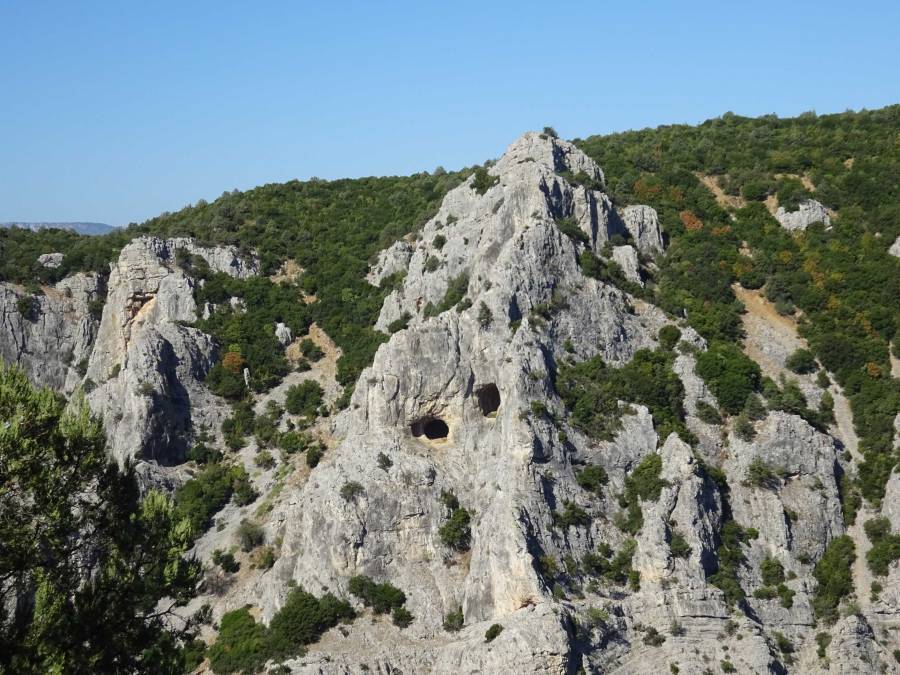
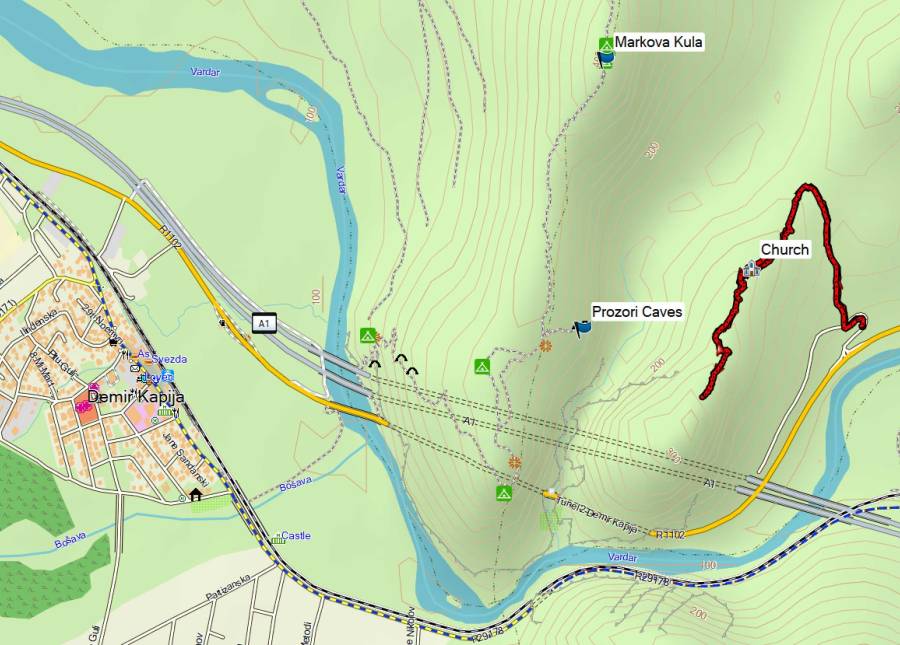
We visited the site of Markova Kula on the opposite hill a few days earlier, and that hike also included the Prozori (Windows) Caves. You can clearly see the large entrances of these caves, that look like windows, from the Kale-Strezov Grad site.
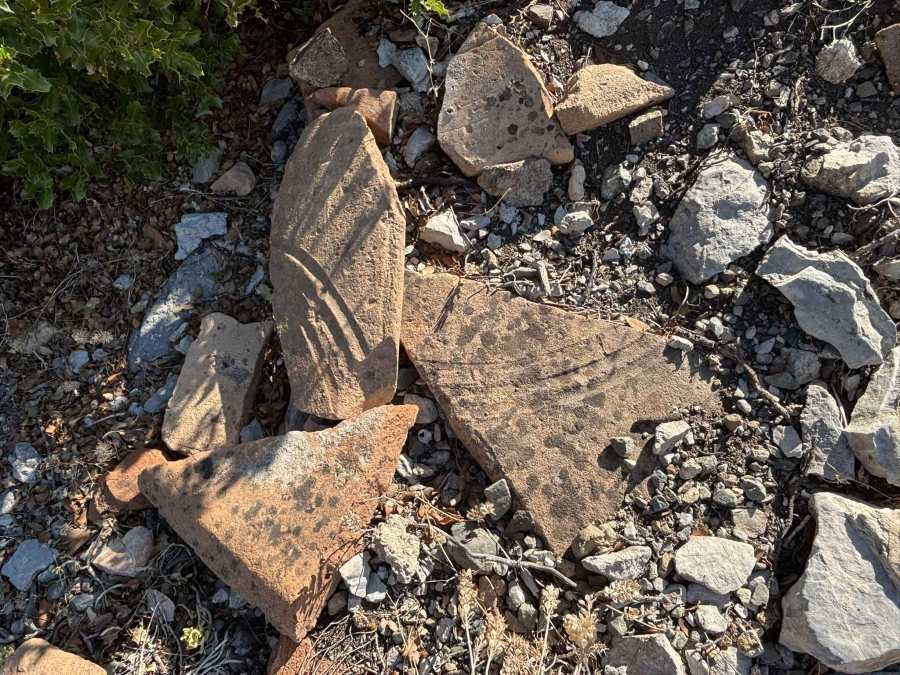
The last part of the GPS track, after the last waypoints for “pottery”, involves some climbing were you have to use hands and feet. I was exploring if there would be more ruins to be found. But I did not find anything else except for nice views.

We combined our visit to Kale-Strezov Grad with a visit to the archeological sites Crkvishte and Manastir and the Zmjejovec cave on the other side of the river Vardar.
Further reading:
- A NEWLY DISCOVERED EARLY CHRISTIAN BARREL-VAULTED TOMB IN DEMIR KAPIJA by Ordanče Petrov, Folia Archaeologica Balkanica IV, 2018: 405-425.
- PREVIOUS REPORT ON ARCHAEOLOGICAL RESEARCH OF THE SITE KALE – STREZOV GRAD VILLAGE OF ČELEVEC – DEMIR KAPIJA 2015-2016 by Ordanche Petrov, Arheološki Informator 2, 2018: 135-141.
- MEDIEVAL NECROPOLIS AT THE SITE KALE STREZOV GRAD NEAR THE VILLAGE OF ČELEVEC – DEMIR KAPIJA by Ordanče Petrov, Macedoniae acta archaeologica No. 24 (2021), pp. 275-297.
- This page has interesting information about Prosek: http://www.promacedonia.org/im3/im_negotino.htm
You can view and download the GPS track for this hike here: https://www.wikiloc.com/hiking-trails/demir-kapija-kale-strezov-grad-archeological-site-238951258
 My Macedonia Blog