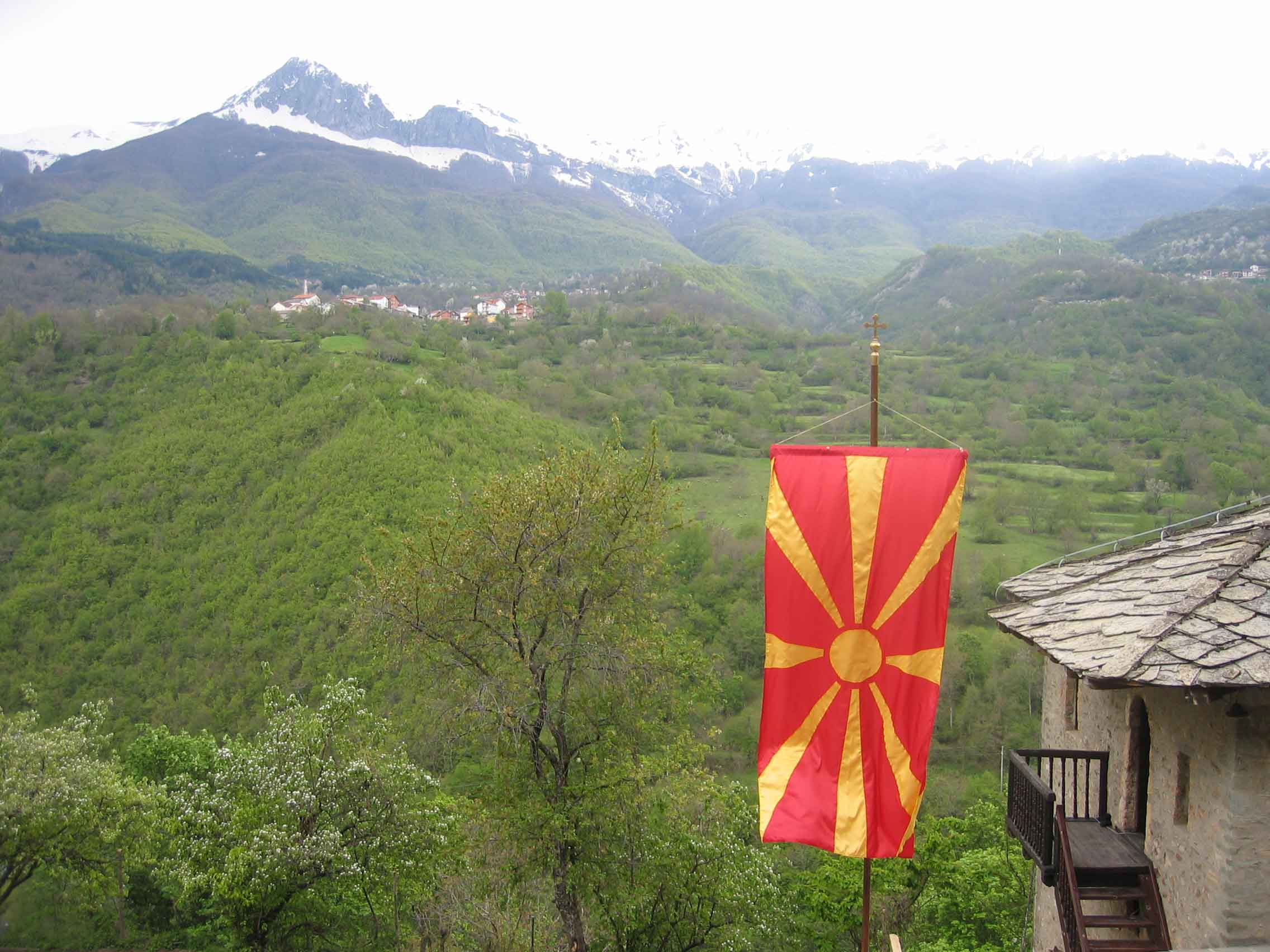
Mavrovo was proclaimed National Park in 1949 and is the biggest National Park of Macedonia, located in the north-west and bordering Albania. It covers an area of more than 73,000 square hectares. The Mavrovo National Park is a popular resort for the Macedonians, with many weekend houses. Shepherds walk with their sheep on the slopes of the mountains in the park.
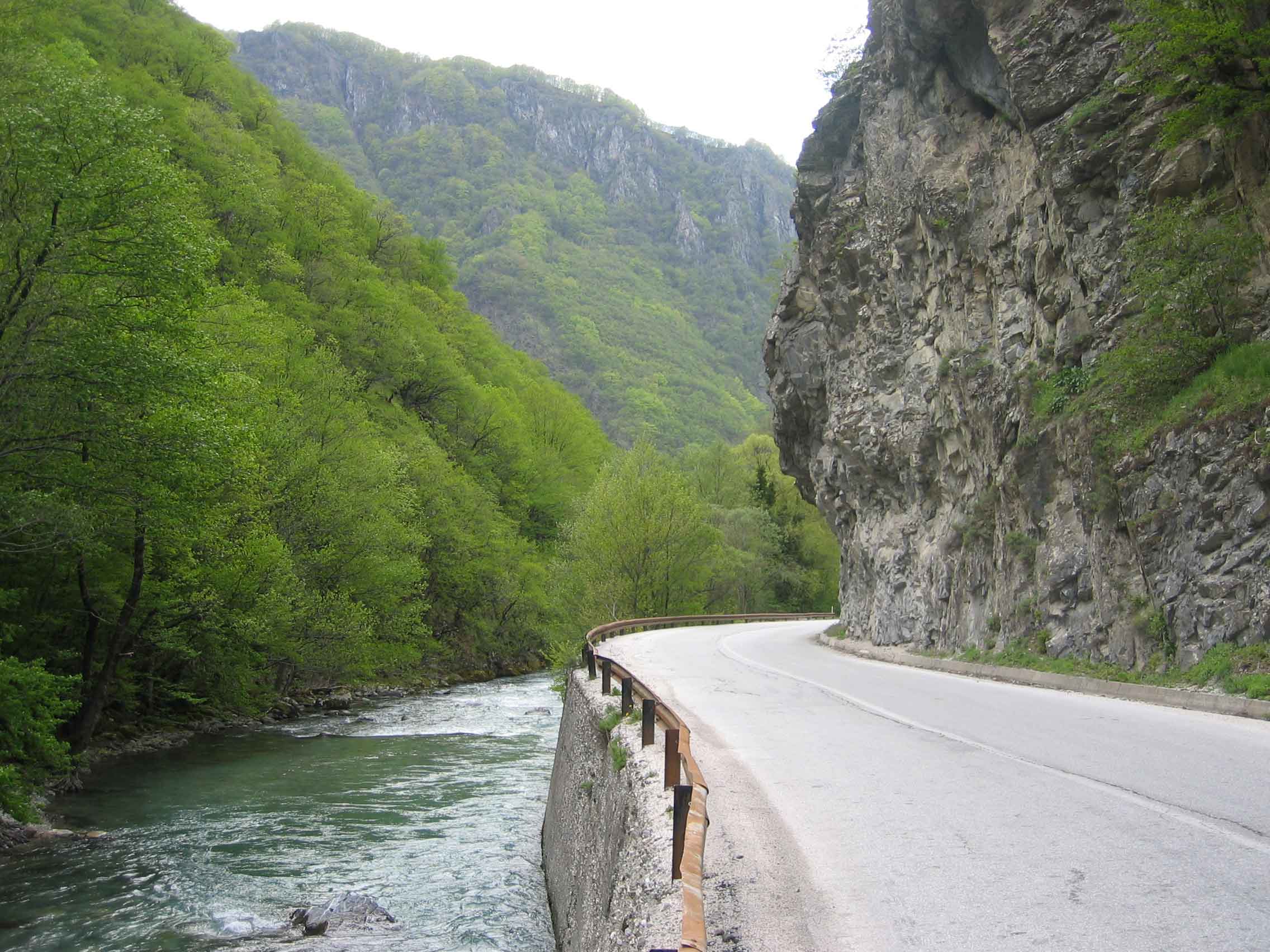
The main road through the park follows the river Radika and is a very scenic ride. If you are traveling between Skopje and Ohrid by car, you can take this road via Gostivar-Debar instead of the more direct and faster route between Gostivar-Kicevo.
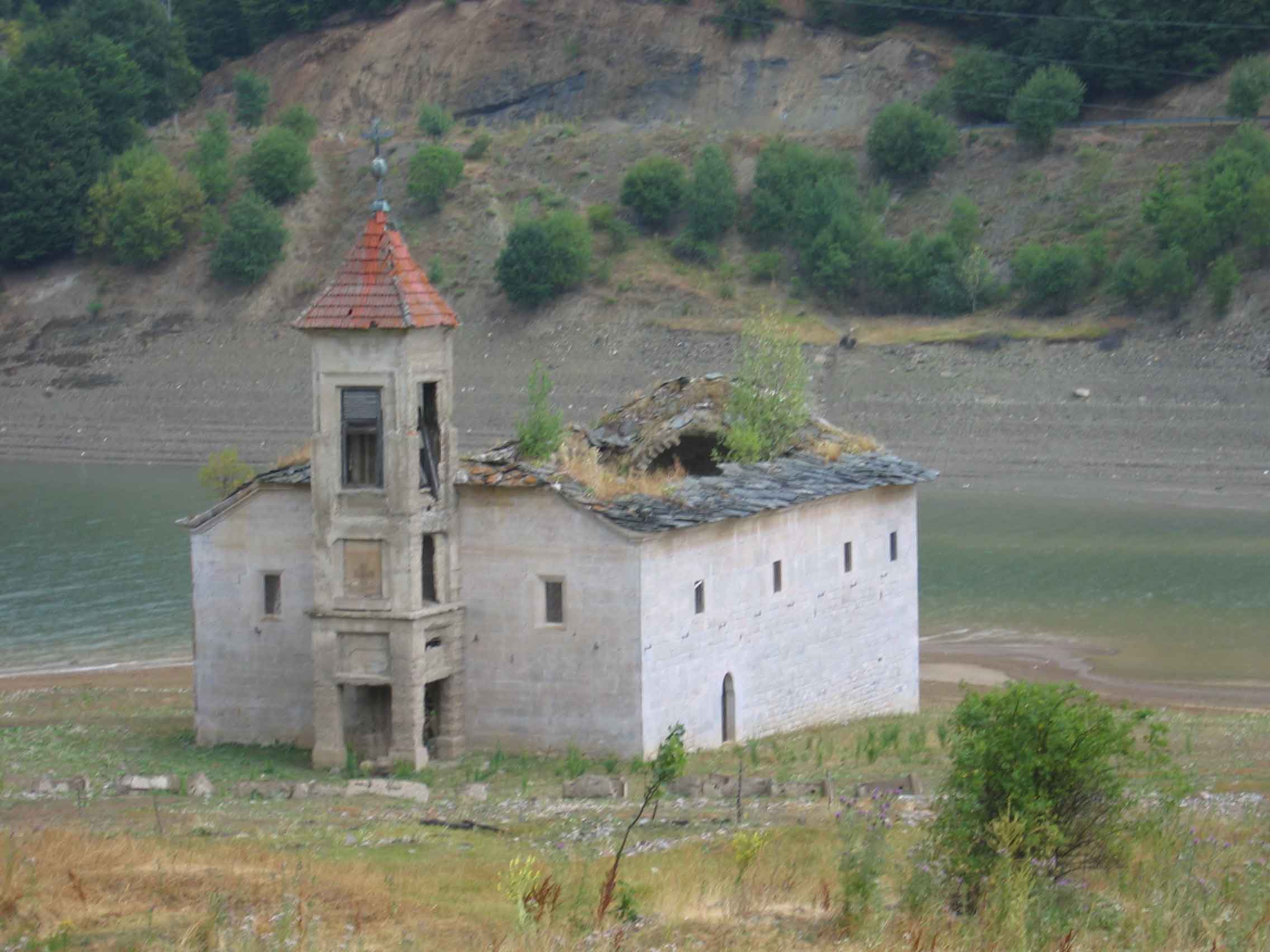
Lake Mavrovo is an artificial lake in Mavrovo National Park, accumulated in 1953 after a dam was build. This caused the Church of St Nikola to be flooded, parts of which still can be seen in the lake. The picture was taken after a dry period in 2007, when the church fully emerged from the lake.
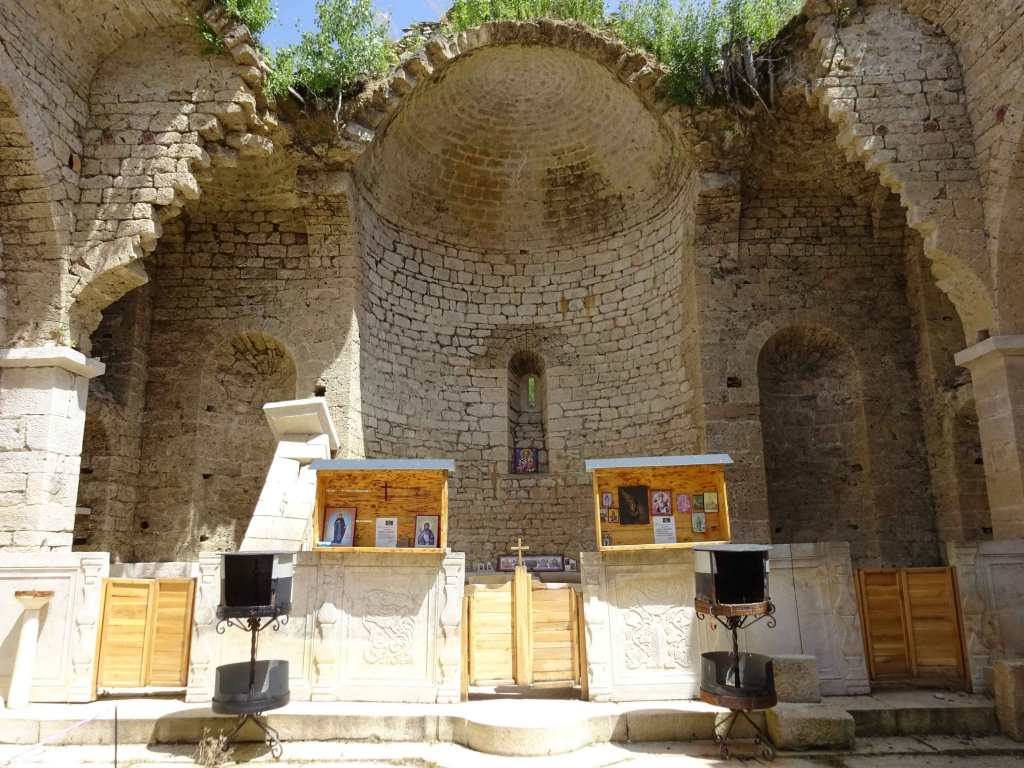
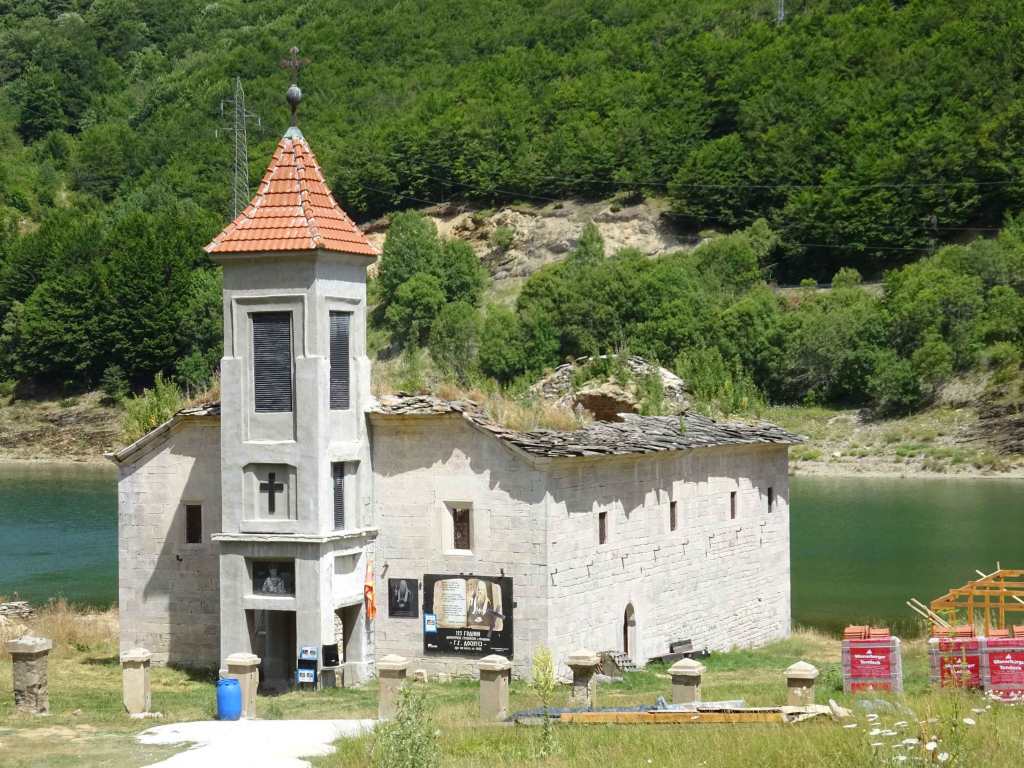
In 2023 we visited again and now also inside the church, which was still without a roof. Inside the Church of St Nikola there is the possibility to burn a candle. There were some building activities around the church.

A new church dedicated to St Nikola was built on the shores of the lake, not far from the flooded church.
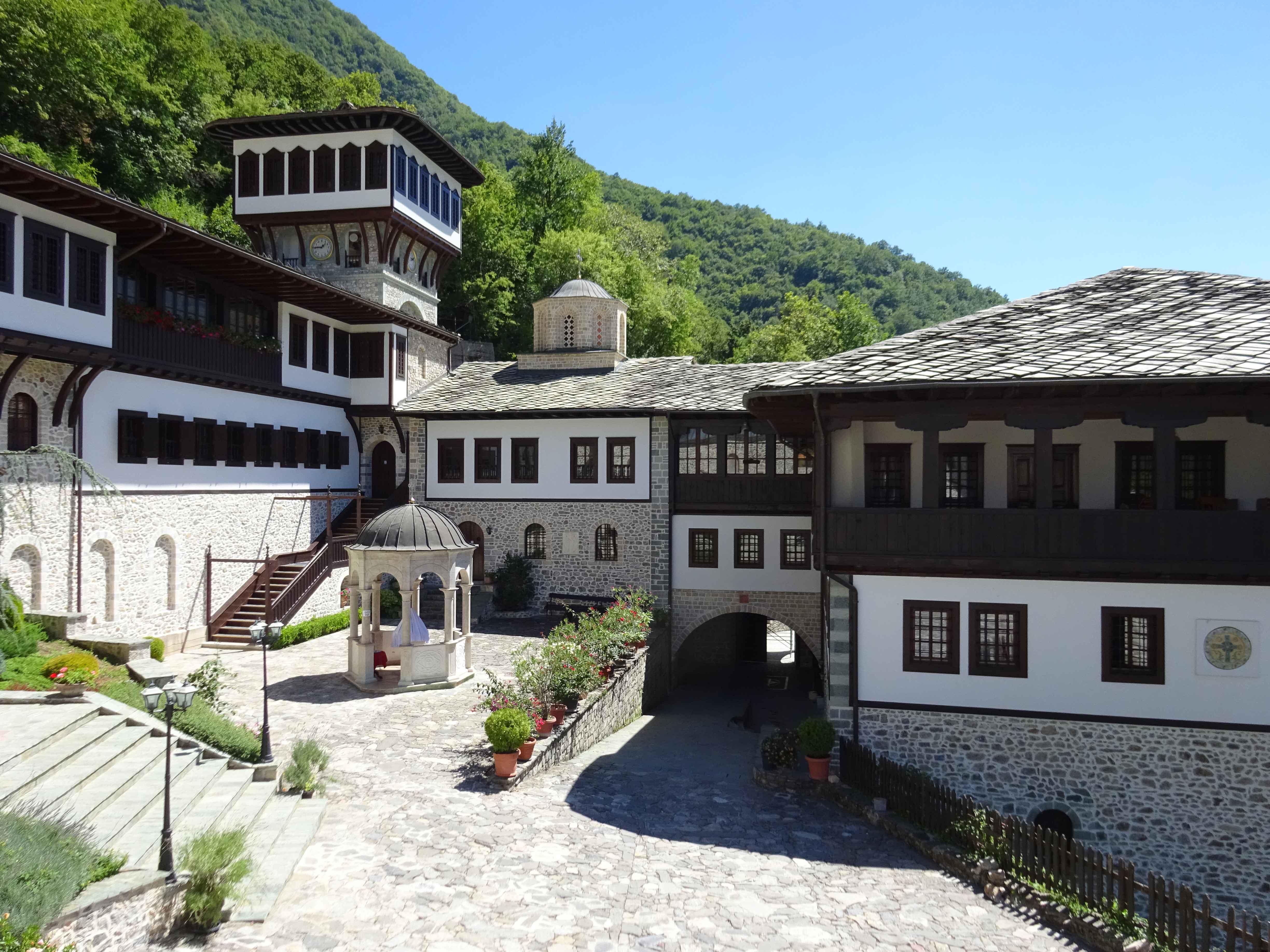
The most famous monastery of Macedonia, the Monastery of St Jovan Bigorski (St John the Baptist) is located in Mavrovo National Park. The monastery was first build in 1020, when an icon of St John the Baptist was found at the spot. Remarkable are the frescoes on the outside of the church. There is a small shop that sells religious items as well as CDs with church music such as Orthodox singing. You cannot enter the monastery in shorts , but at the entrance you can get trousers and skirts to put over your own clothes in case you are dressed inappropriately. Parts of the Monastery burned down September 2009. The church was spared.

The church is renowned because it has one of only three iconostases that were wood-carved by the famous brothers Petre and Marko Filipovski from Gari and Makarije Frckovski from Galicnik. The iconastasis has over 500 humans and 200 animals, depicting scenes from the Old and New Testaments. Remarkably, many of the depicted people wear the traditional 19th century Macedonian costumes, despite the fact that the scenes are from the bible. Besides the many religious scenes, the woodcarving team itself can be found at the left side of the iconostasis as a funny signature. See if you can find this antique easter egg! The other two iconostases can be found in the Church of St Spas in Skopje and in the Monastery of St Gavril Lesnovski (St Gabriel) in Lesnovo.

It is a working monastery, were you theoretically can stay the night. If you do so, you’re supposed to participated in the (early) mass with the monks.
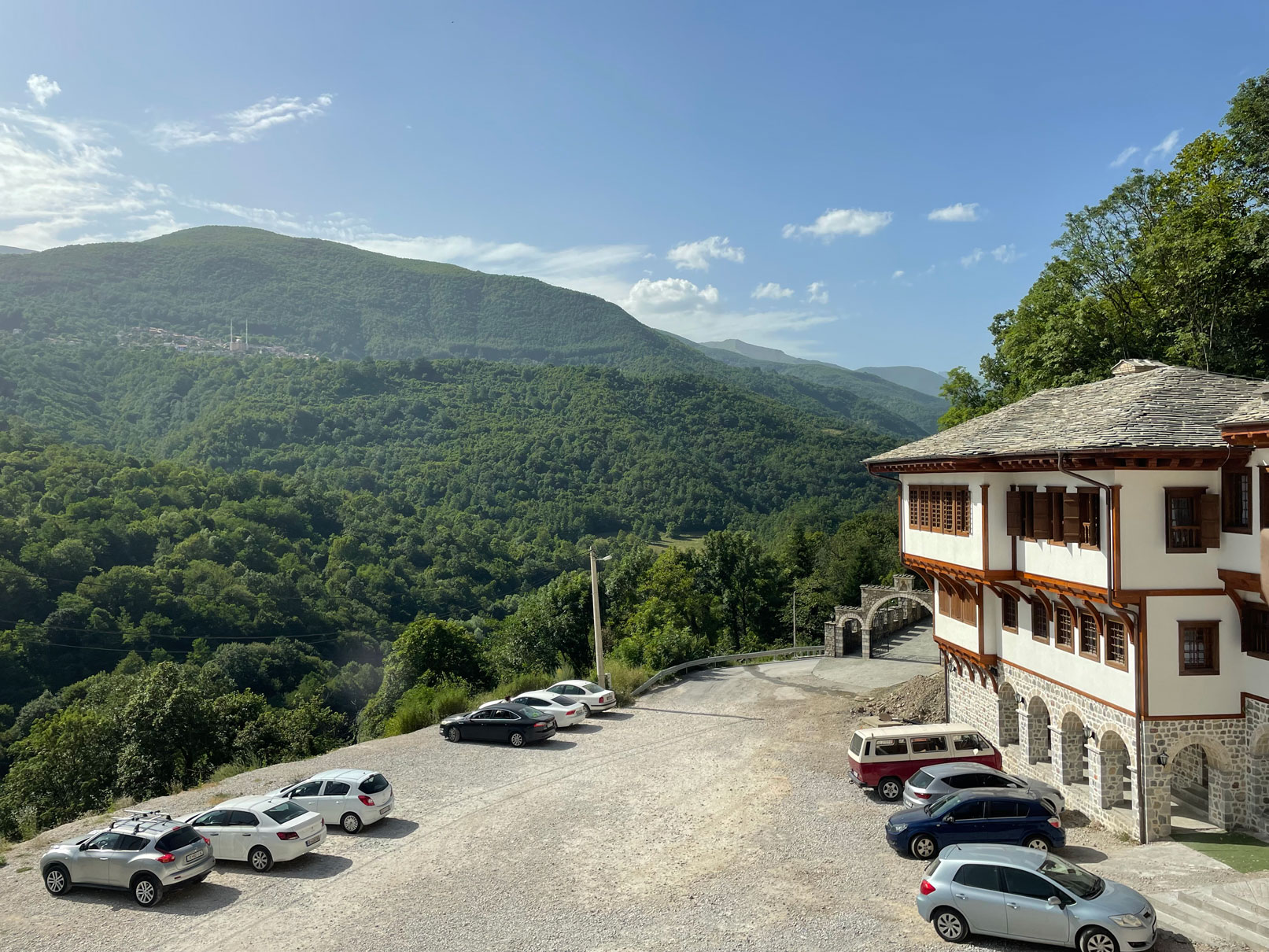
Probably an easier solution to stay near the Monastery is to get a room in the Bigorski Guest Mansion, which is located right at the entrance of the Bigorski Monastery. We stayed here for a week in 2023 as a base for our hikes in Mavrovo National Park. The Guest Mansion offers simple accommodation, and on our request they placed a small fridge in the room. You can book a room here or through booking.com. In case no rooms are available on the website, contact them directly.
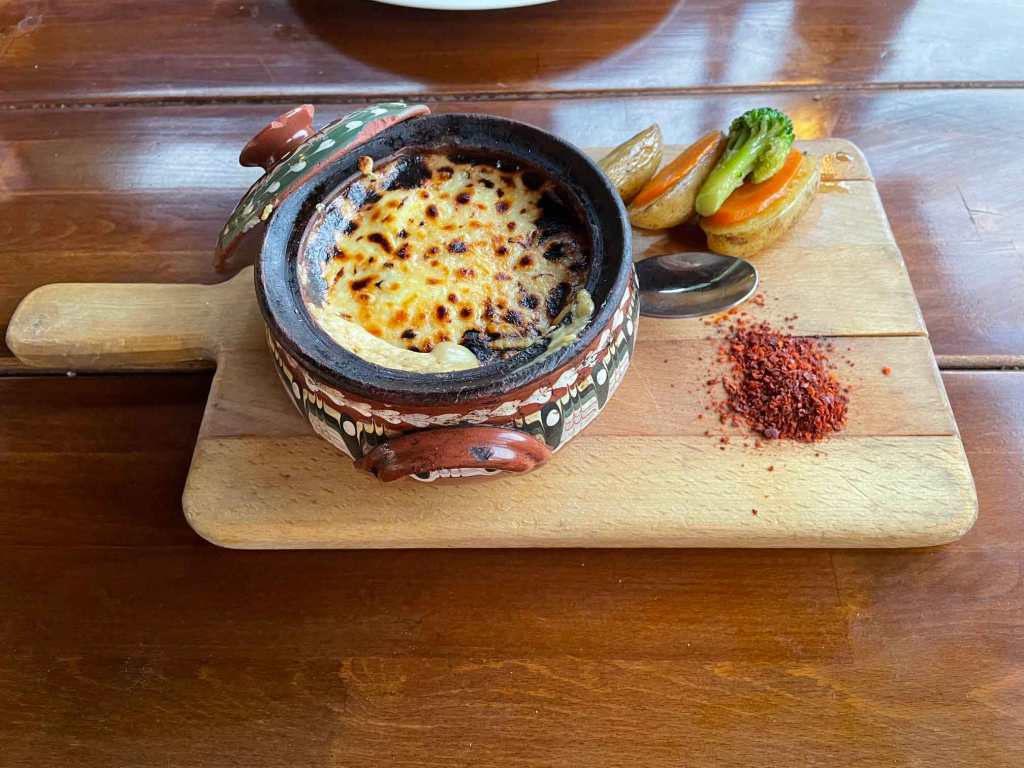


The restaurant “House of the Miyaks” is about 800 m from the Guest Mansion along the main road through the park. It’s a bit more expensive than a regular restaurant but the food is among the best I have had in Macedonia. We ate here daily for a week and sampled the whole menu. My favorites were the Lazaropole Beef, the Miyak’s Secret and the Baked Beans. Yummie!
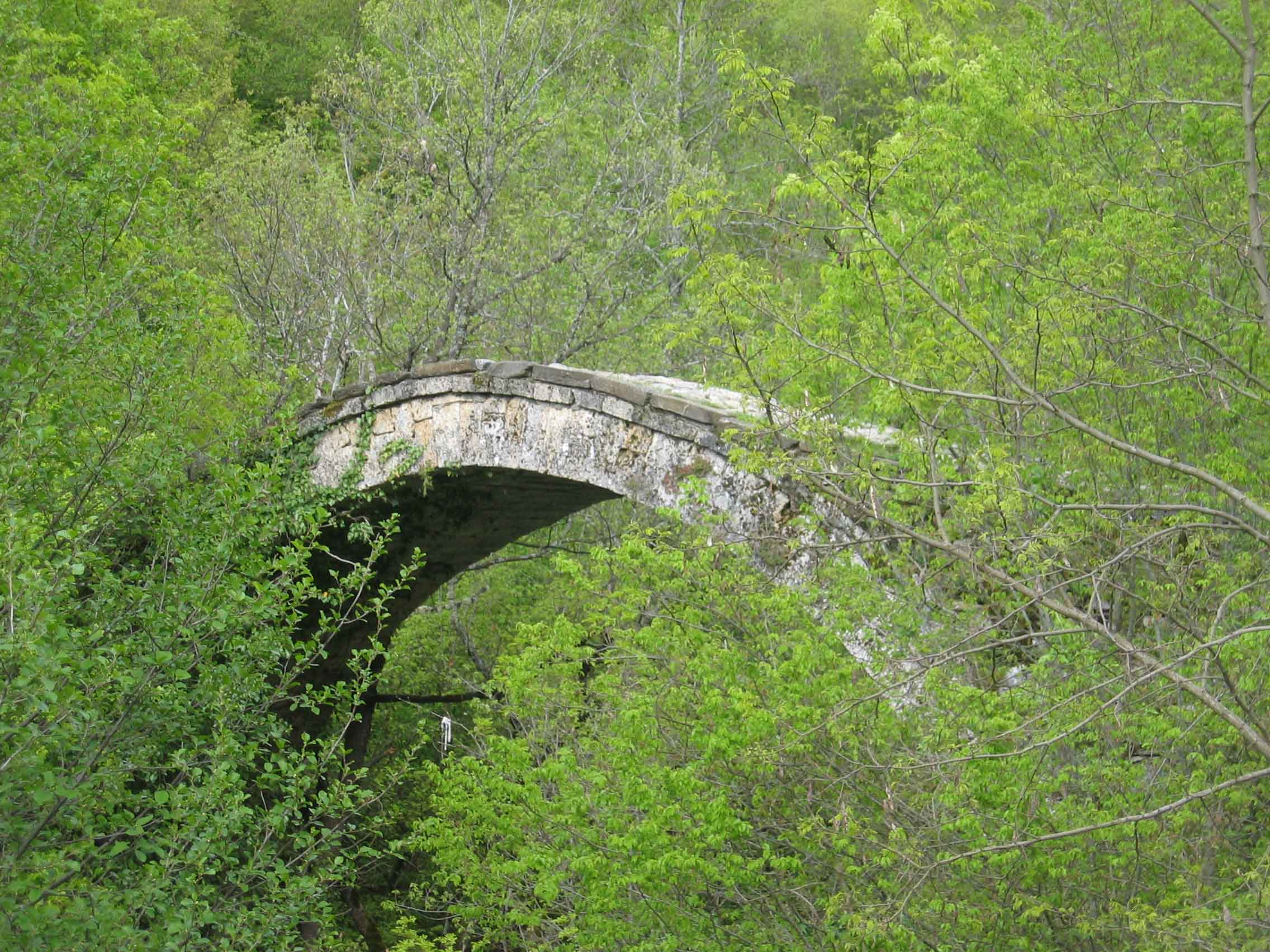
They say that the Deer Leap Bridge is build by an Ottoman lord (also called a “Bey”) during the 14th century. The Bey and his army were hunting a deer, which was wounded but kept escaping. Despite its wounds, the deer was not caught. When it reached the river, it jumped over the river but died on the other side. The Bey build the bridge to commemorate the deer’s bravery. The graceful shape of the bridge reminds of the leap the deer made. When you are driving southwards from Mavrovo Lake to Debar, turn left to the villages Gari, Lazaropole and Tresonce, before you reach Lake Debar. The 600-year-old bridge is less than 2km on this road, at an open space on your left. It is easy to miss if you drive too fast!

Mavrovo Park also has the the highest peak of Macedonia, Mount Korab with 2764 m. More information about the hikes that we did in Mavrovo National Park.

When you enter or exit Mavrovo National Park in the south via Debar, make sure you visit the Nunnery of St George the Victorious (St Gjorgi Pobedonoset). The nunnery, which was completed in 2001, can be found just before you exit Debar on the road to Skopje. If the main gate is closed, enter through the door a little further down the nunnery outer wall. St George the Victorious is the same patron saint of England who slayed the dragon from his white horse in order to save the princess.

The church itself is one of the best preserved in Macedonia, with many intact 19th-century frescoes. The church dates back to 1835, but is built on the foundations of a 16th-century church that in turn was built on the grounds of the 11th-century castle of St George.
The church contains the only replica of St George’s original icon that stands in the Zograf Monastery at Mount Athos in Greece, where it miraculously appeared after the Zograf Monastery was built. The story goes that local bishop did not believe this spontaneous appearance and wanted to check the icon for fresh paint. When he touched the icon, his finger got stuck to the painting and eventually had to be chopped off. The finger remained stuck to the original icon and a bloody digit represents this on the replica icon at St George’s church in Debar.

This statue commemorates 17 people from the village Belicica and 21 soldiers that were brutally murdered on September 19th 1944.
Other sights in Mavrovo National Park

Visit the Duf waterfall in Rostusa.

The Sharkova Dupka Cave is located in the village Mavrovo, on a hill close to the two large parking lots. The cave is closed off with a door and can only be visited when it is opened for you. The picture is from our visit in 2007; when we wanted to re-visit in 2023, the cave was closed. A friendly local called the person who has the key and it turns out that the cave probably only opens during weekends. The cave was discovered more than three decades ago and the local population was afraid to go inside. According to one of the stories related to the cave discovery, the villager whose nickname was Sharko was the first person to be brave enough to go inside. He had cut several trees, put them down the hole, and with ropes and his neighbors’ help, he managed to go inside the cave. Therefore, this cave got the name “Sharkova Dupka” (“Sharko’s Hole”).
 My Macedonia Blog