
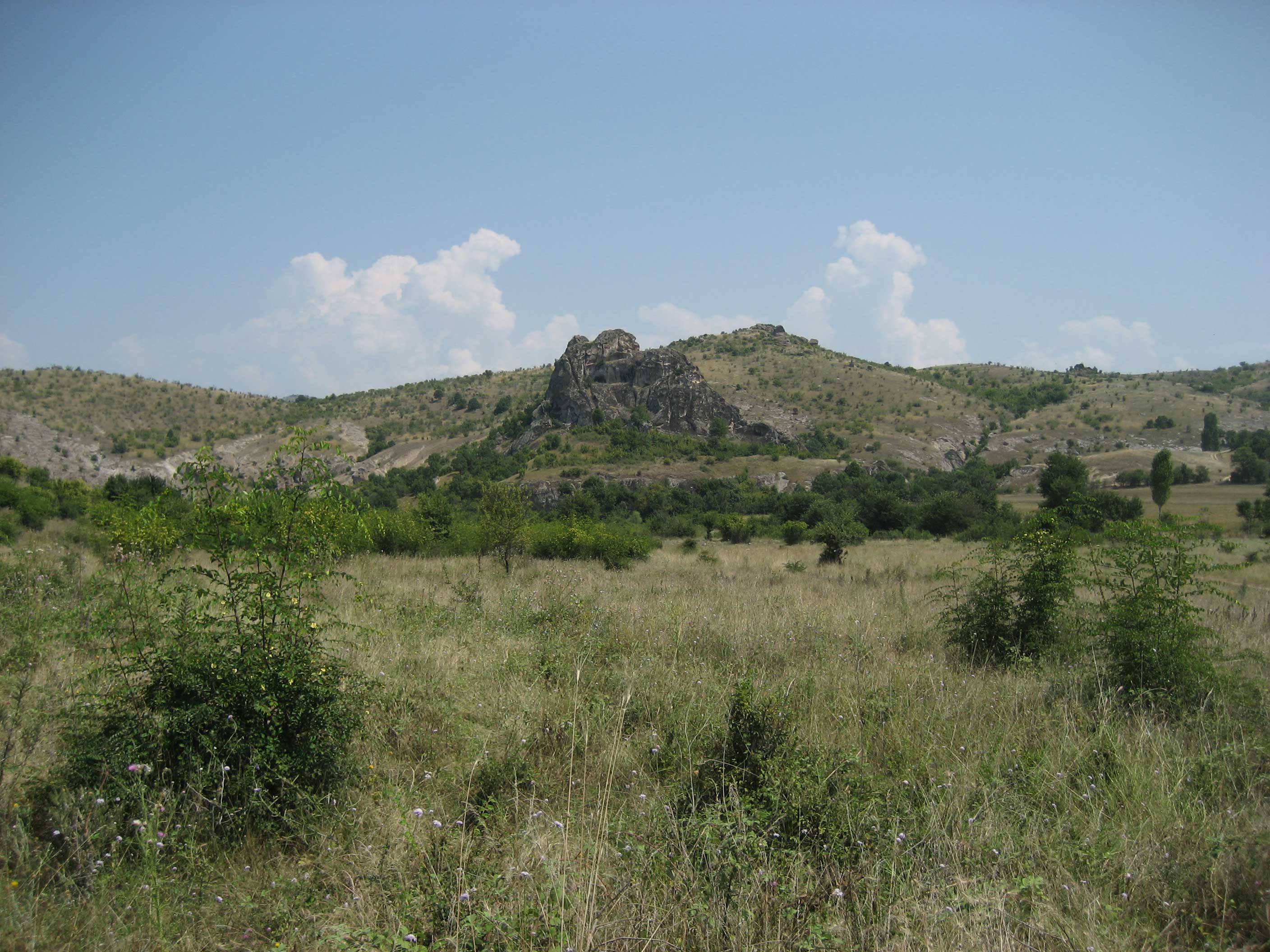
The archeological site Cocev Kamen (or Tsotse’s Stone) is thought to be a prehistoric observatory similar to Kokino near Kumanovo and Stonehenge in the UK. Besides, it was used for sacrificial rituals and as a temple. Rocks art (paintings on the rocks) is found here as well. Cocev Kamen is a spectacular rock formation, about 45 minutes by car from Kratovo. There are some natural shallow caves in this rock, and many man-made structures in the rock, such as stairs and holes for e.g. wooden piles used to built walls. In early times, the entrance to the rock was closed-off by massive wooden gates, you can still see the holes that were cut in the rocks to support gates and piles. In my opinion, it is best to go there with a guide. You probably will miss a lot when there’s no expert to tell you what you see. Our guide was Stevce Donevski from the Municipal Center of Rock Art in Kratovo. Stevce also took us to the nearby archeological site Golemo Gradiste and the natural rarity the Stone Dolls.
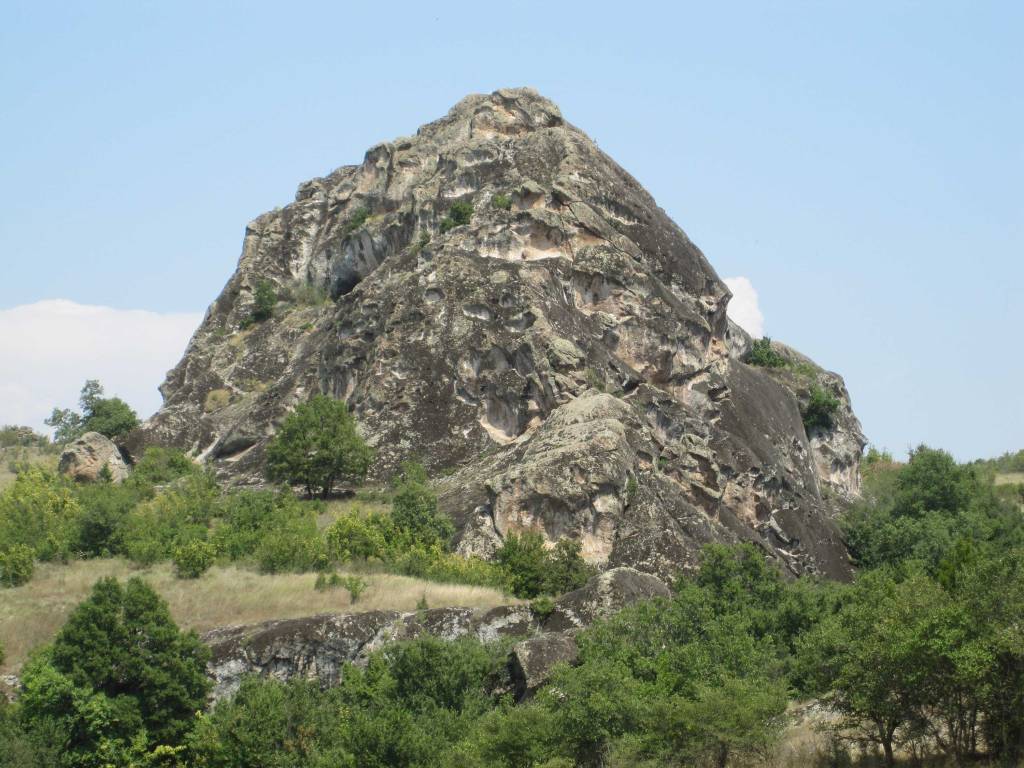
Although there is an asphalt road that takes you close to Cocev Kamen, drive carefully because there were many holes in the road in 2010. We parked our car at the crossing of the asphalt road with the dirt track that leads to Cocev Kamen, and walked the last 30 minutes to the rock formation. The information on this page is from a booklet about Cocev Kamen, financed by the European Agency for Reconstruction by Dr Dusko Aleksavski (2008), ISBN 978-9989-611-05-4, and from what our guide
Stevce told us.
Caves and man-made structures

These are two natural caves. The Lower Cave was used in in the Paleolithic (Stone Age). In Neolithic time (New Stone Age) it was rearranged for the spiritual needs of the population who inhabited the surroundings of Cocev Kamen. There are two rows of rock seats cut under the cave, which appear to have formed a theatrical complex,
together with a wooden platform that may have been constructed there. In the immediate vicinity of the cave a bone worked over object in the form of a woman was found, called Gea Mater, along with other artefacts. The Upper Cave has been adjusted during the Early Copper time, when it was hollowed out for ritual and ceremonial activities.
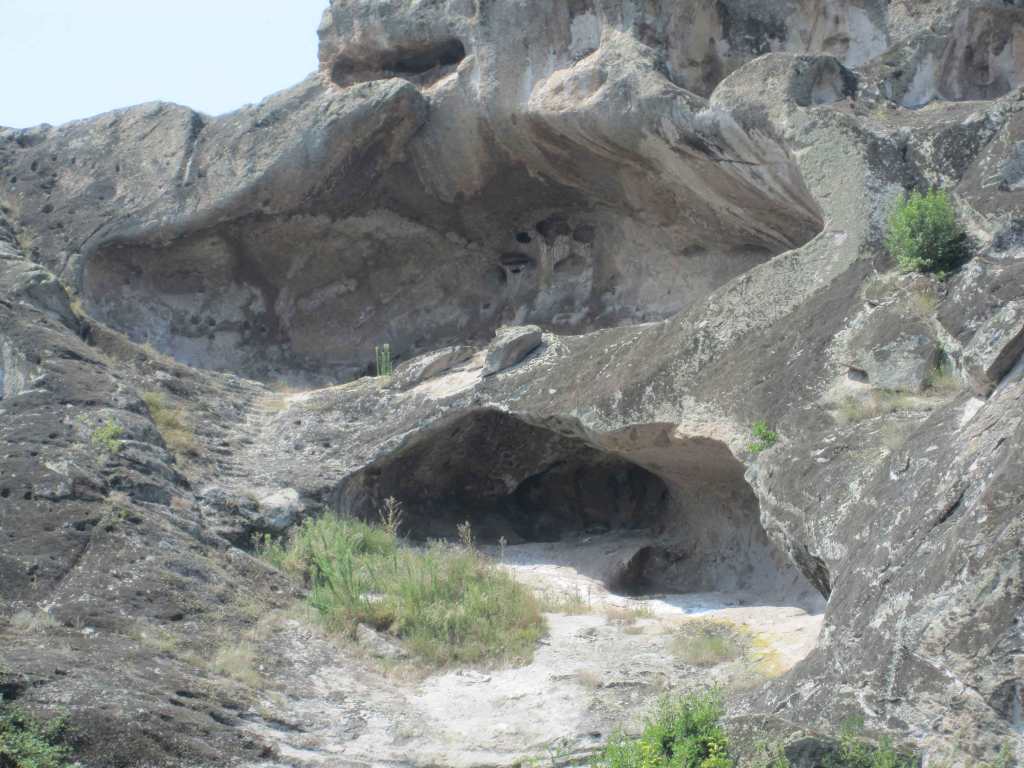
The Upper Cave has been adjusted during the Early Copper time, when it was hollowed out for ritual and ceremonial activities.
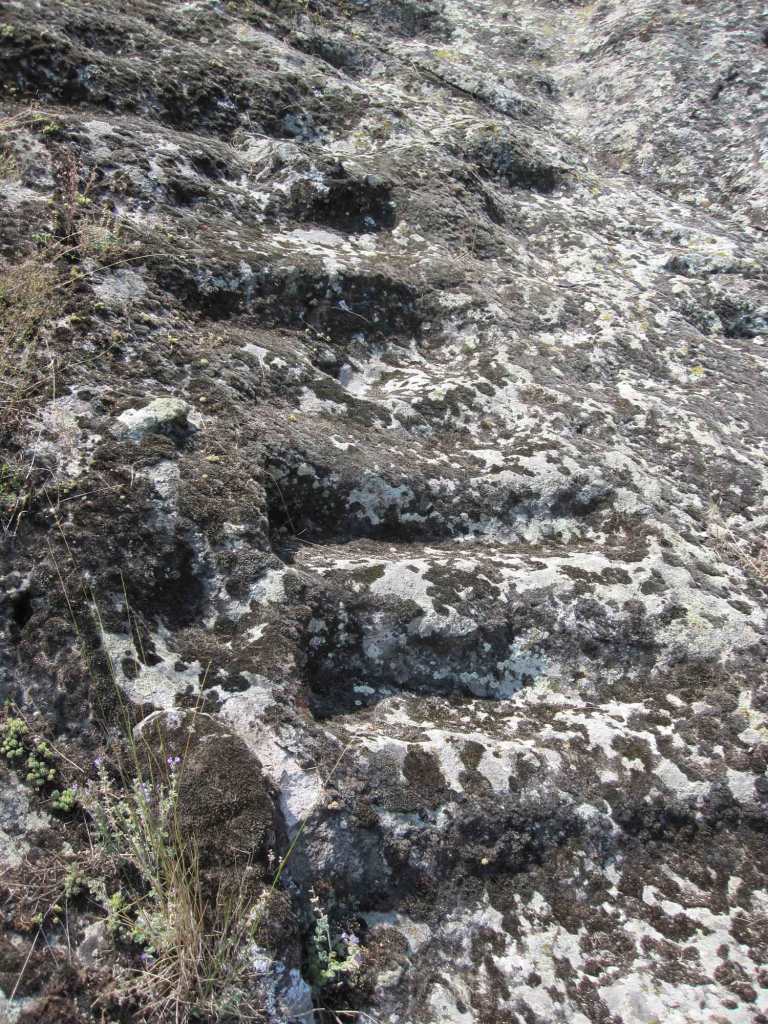

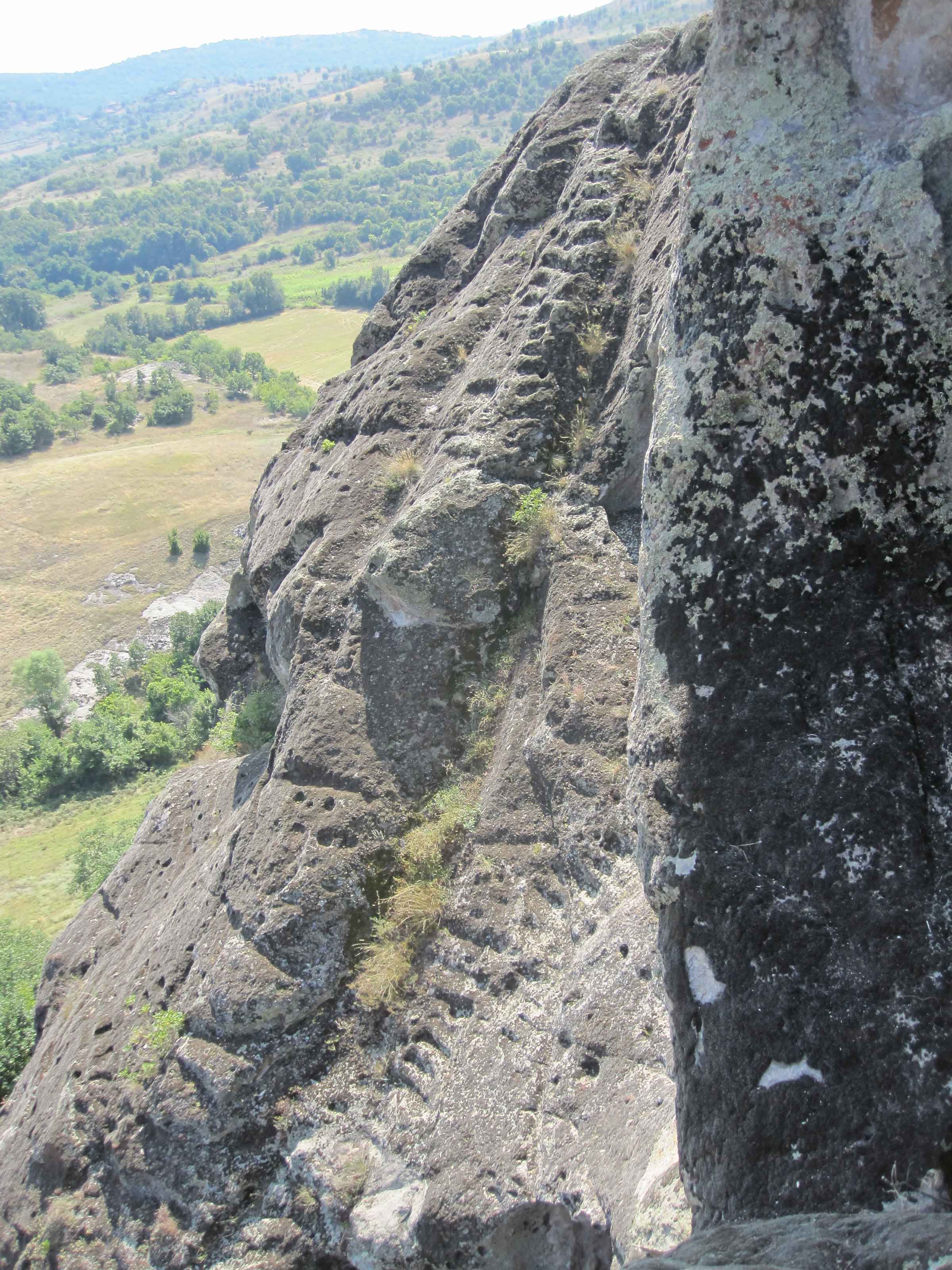
You can see man-made stairs leading to the upper cave, this is the first entrance to Cocev Kamen, that brings you to the caves and to the plateau with the frames and the cross in the rocks. There are other man-made adjustments as well, which probably served as holes for piles in order to make walls.

These three objects in the Upper Cave were man-made as well, and they are similar to objects found in Pelagonia and may have served as an altar. According to the booklet about Cocev Kamen, these “tubs” did not have any practical use, but where used for rituals and ceremonies, for honoring the God of Wine and the God of Fertility. The ancient users of the cave may have brought objects to the cave, such as ceramic, bone or stone objects. These sacrifices were broken, and one part was left in the cave, and the other part was taken home. That way, a connection with the Gods from whom they expected protection was established.

Above the Upper Cave is a big reservoir for water, probably used for ritual bathing.
This reservoir can only be reached by some risky climbing. You have to approach it from the second entrance to Cocev Kamen. You can clearly see the man-made cuts around the reservoir, probably used to close it off with a wall. Next to the big pool, there is a smaller reservoir and just below the two reservoirs is another small cave with a bench-like seat.

The stairs leaving from the Upper Cave lead to a plateau. Carved in the rocks you can see some kind of frame. According to Stefan Simic, who researched Cocev Kamen in 1911, there was a portrait-sculpture of an unknown God in the frame. It is gone now.

This cross was carved in a big boulder on the plateau
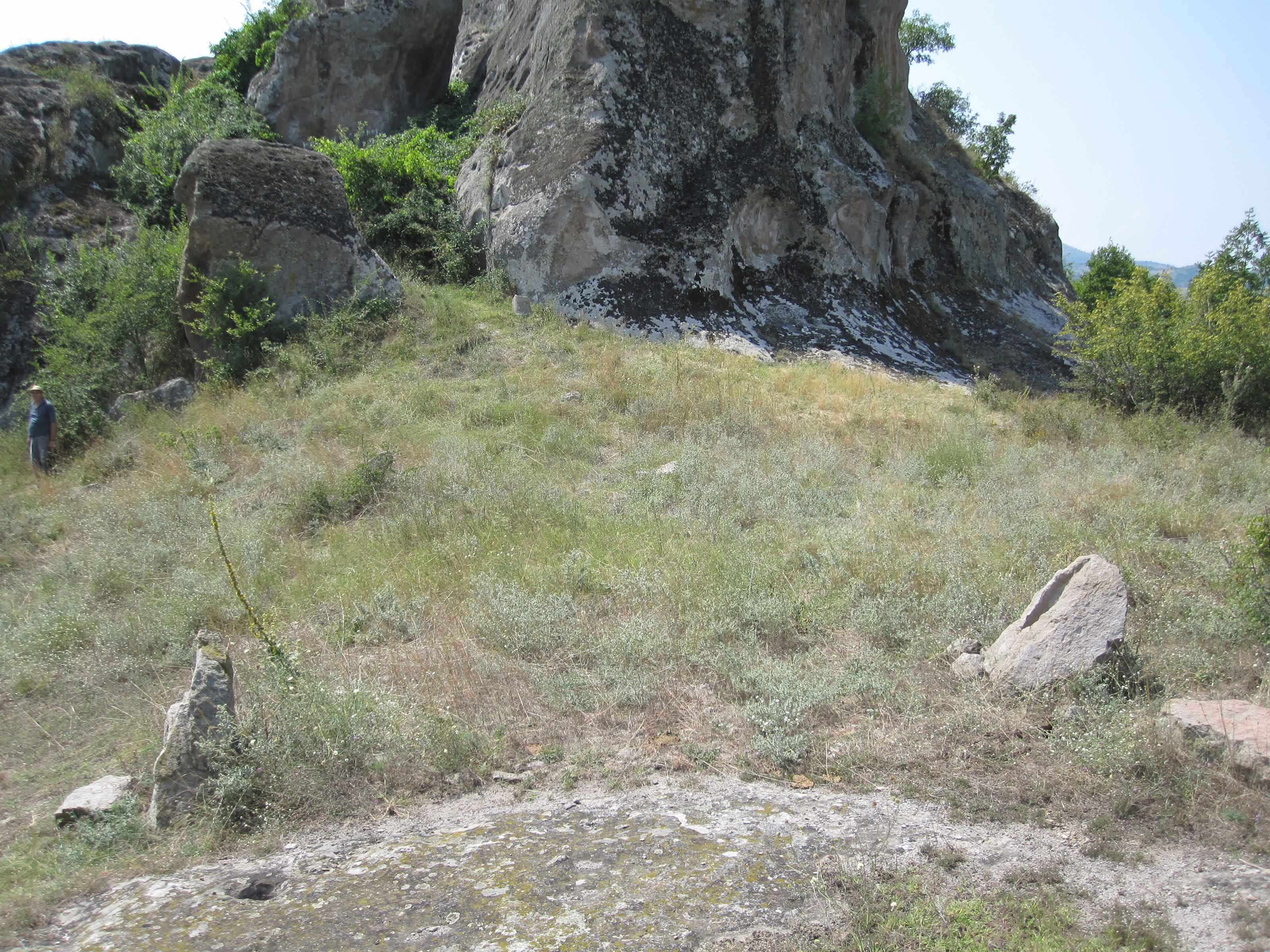

The first entrance to Cocev Kamen are the stairs going up to the caves. The second entrance is marked by these two rocks, which have been hollowed out so wooden pillars could be placed in them. This way an entrance gate was constructed. This probably was the main entrance to Cocev Kamen.

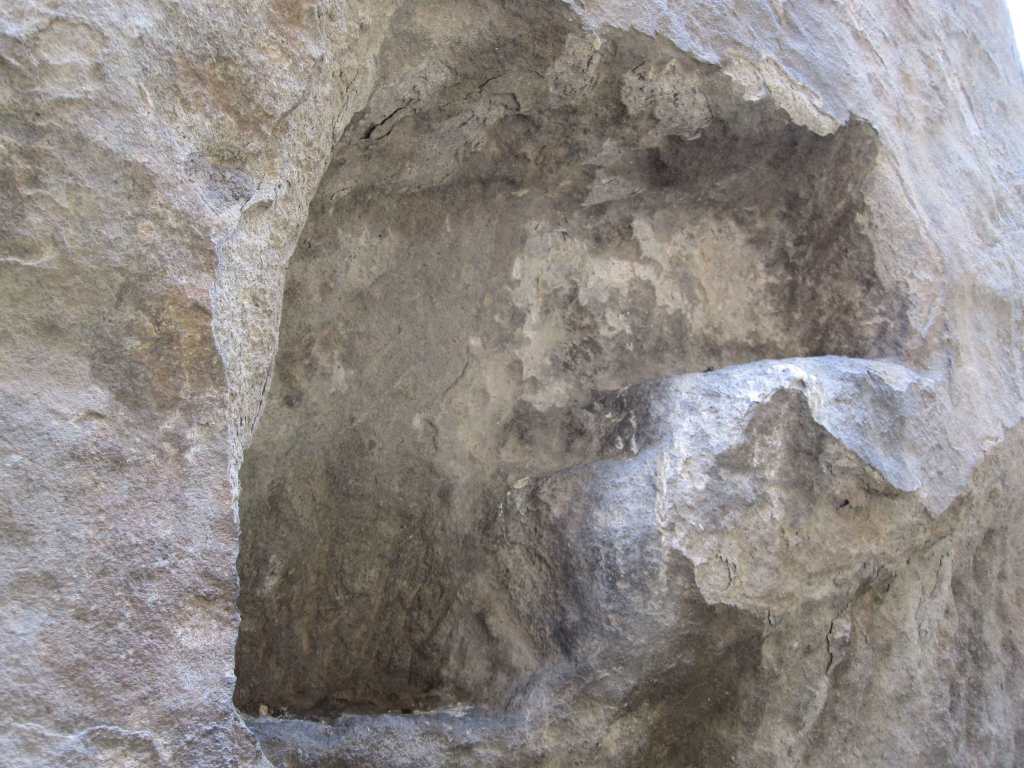
If you enter the mass of rocks via this main entrance , you will notice these L-shaped
cuts in the rocks. These L-shape cuts were probably used to support a defense wall with a gate.


The path from the second entrance leads to a plateau, with a seat in the rocks that was used as a throne. To me, it looks more like a primitive toilet with a nice view. In front of the throne there probably was a man-made wooden platform. From here you can see the Megaliths (big stones) on top of another hill, which were possibly used to study the movements of the sun and the moon. From this plateau there are also small stairs leading to the water reservoirs. It is a steep and a bit risky climb to the water reservoir!
Rock Art

In one of the caves on the west side of Cocev Kamen painted rock art was discovered. This is probably a painting of an orant. An orant is a type of gesture during prayer in which the hands are raised, set apart, and the palms face outward. It was once common in early Christianity, and can frequently be seen in early Christian art.
The red paint has been analyzed in a lab in France and it allegedly was found that the paint cannot be younger than the copper age. This is due to the usage of hematite (Fe2O3), a pigment used in the prehistory and later.
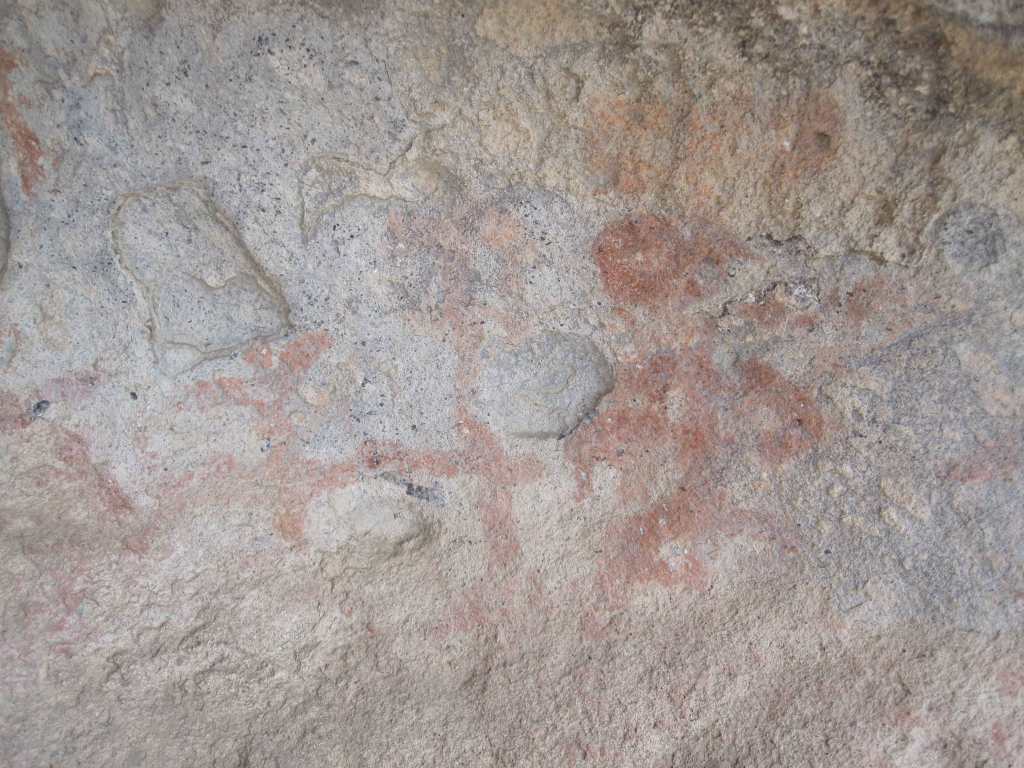
There is a scene with a farmer at the end of the cave, which is moving towards the orant and other painted elements, which should have greeted the beginning of the daily agricultural work.
Beehives
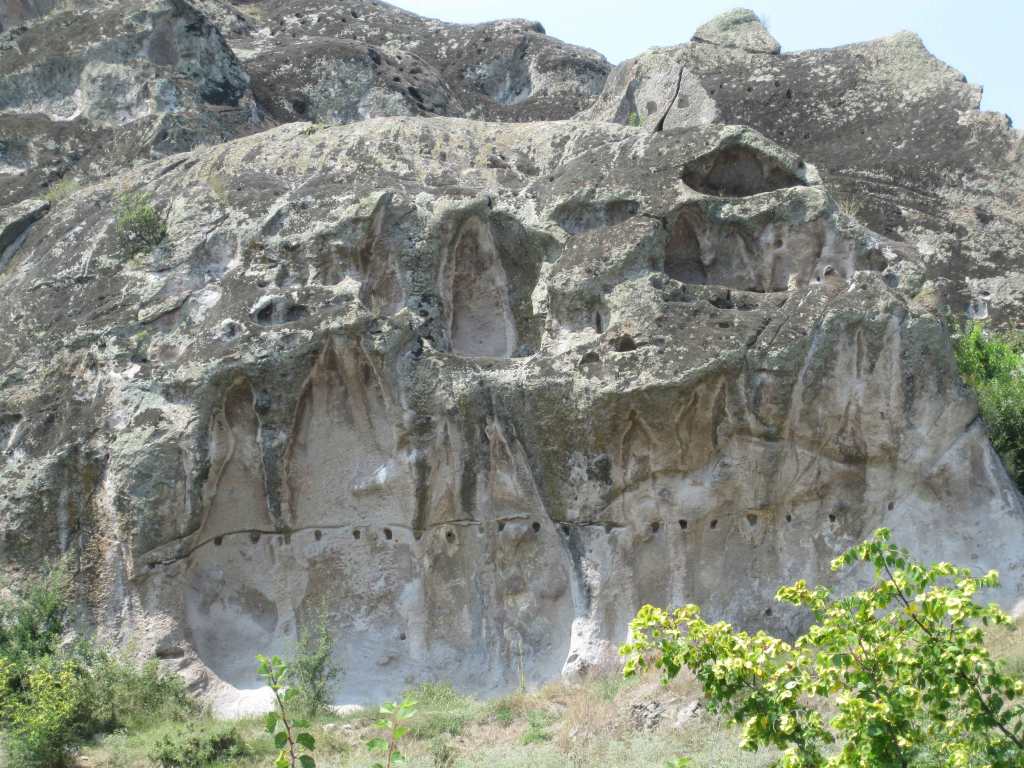
There are several man-made cuts in the rocks here. Notice all the skull-like cuts!


The skull-like cuts are now sometimes closed off with mud by the locals and used as beehives.
Megaliths

There are several Megaliths a few hundred meters east from Cocev Kamen. A megalith is a large stone that has been used to construct a structure or monument, either alone or together with other stones. Some of the Megaliths have been manually relocated and worked over. Several of them may have served to follow the oscillation of the sun.

 My Macedonia Blog