
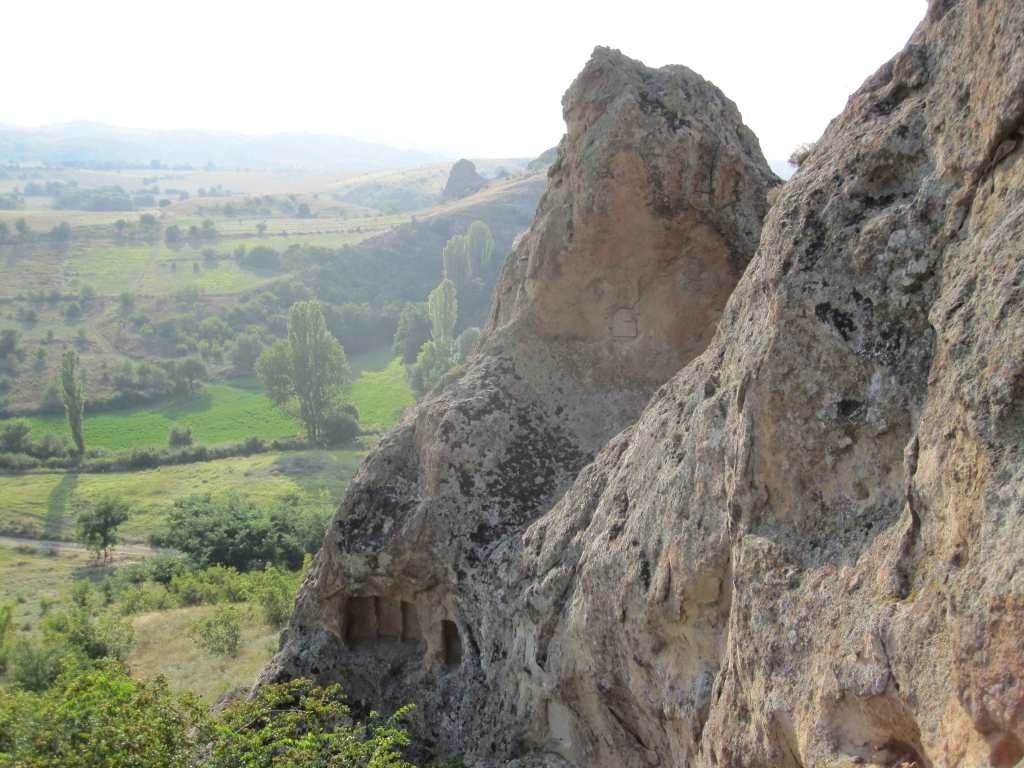
Golemo Gradiste (Big Building Site) is a hill that rises about 100 meters above the Kriva river. It served as the acropolis of a fortified ancient city.
There are many man-made adjustments to be seen in the rocks of the hill, such as rooms cut into the rock, stairs, niches etc. Pottery of the 4th-6th centuries has been found here, and evidence suggests that people were living at Golema Gradiste in the prehistoric, Hellenistic, late Roman/late antique and medieval periods.
For more information about Golemo Gradiste, you can e.g. read the papers “Archaeological Investigation at Konjuh, Republic of Macedonia, in 2000” or “The new basilica at Golemo Gradiste, Konjuh: A sixt century church in the province of Dardania” by Carolyn S. Snively. If you google these papers or the author, you will find a lot of info that makes your visit to this site a lot more interesting.

This map of Golemo Gradiste was taken from the first paper mentioned above by Carolyn S. Snively.
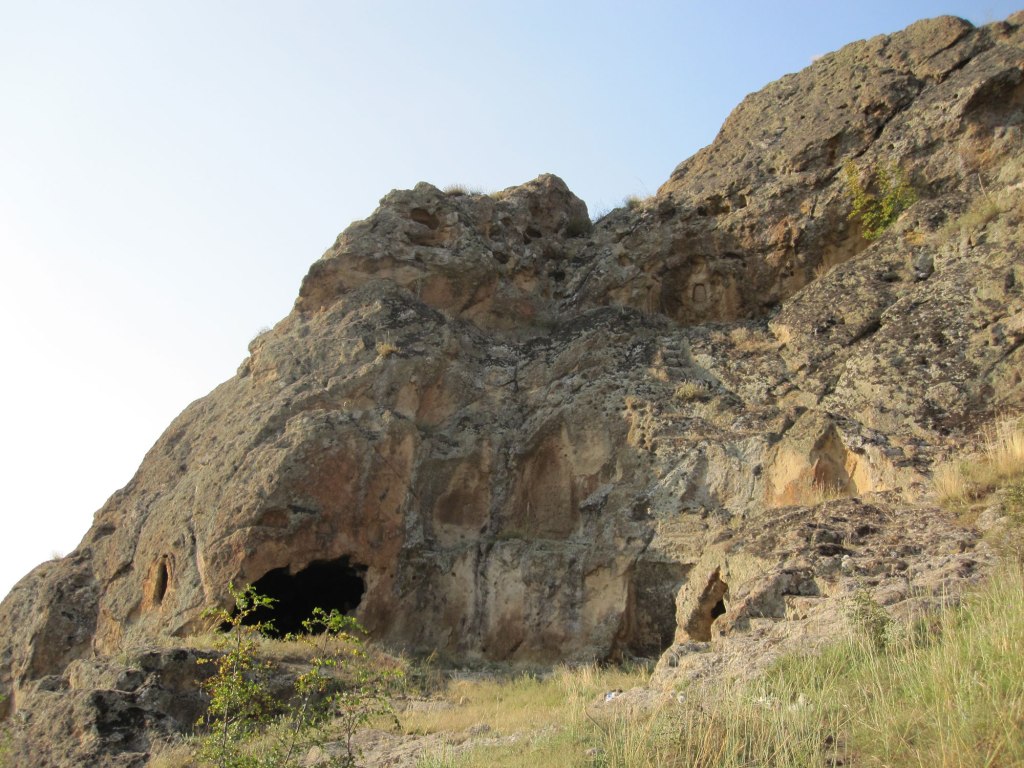
The most recognizable feature on the western part of the acropolis on the hill of Golemo Gradiste is a room that was created by digging horizontally into the cliff face.
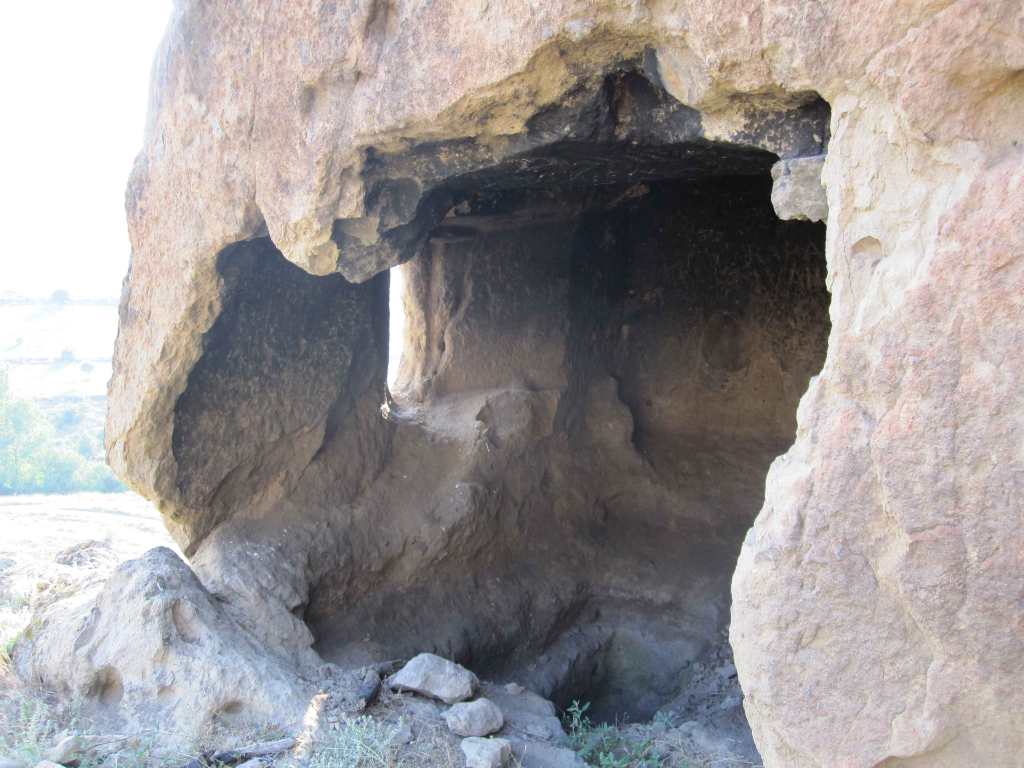
This room included a rock-cut bed under a window, benches and a tomb in the middle of the floor.

Tomb 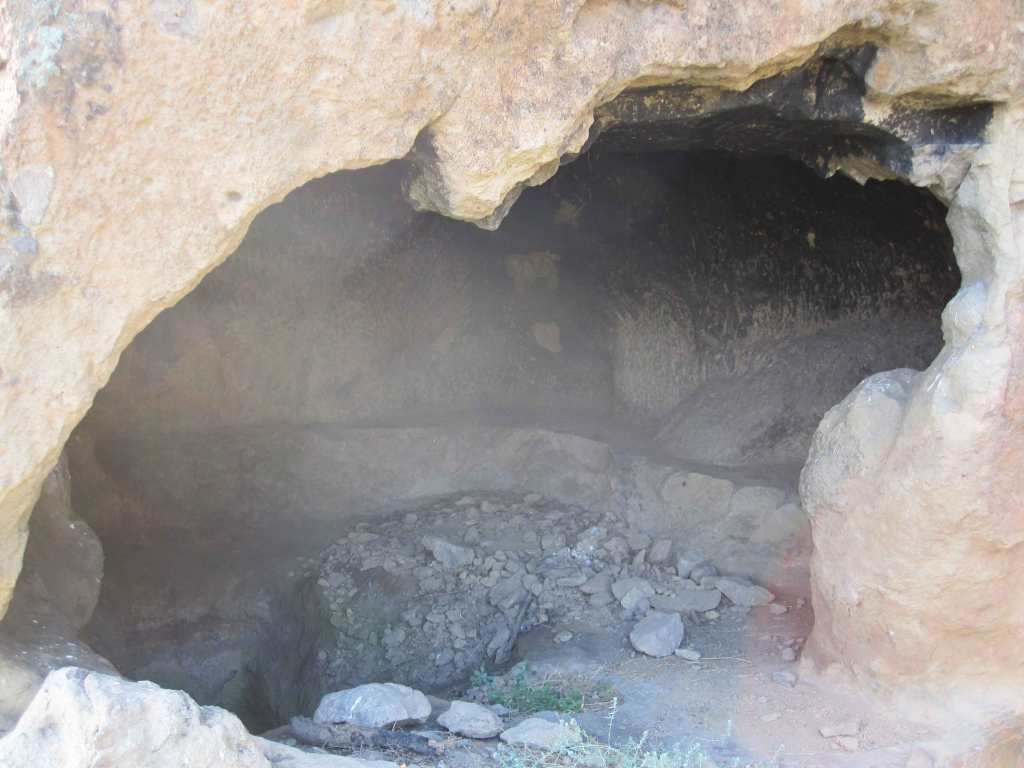
Benches
The doorway opens onto a terrace, and cuttings in the rock above the entrance suggest that a porch or a second room was built in front of the room in the rocks.
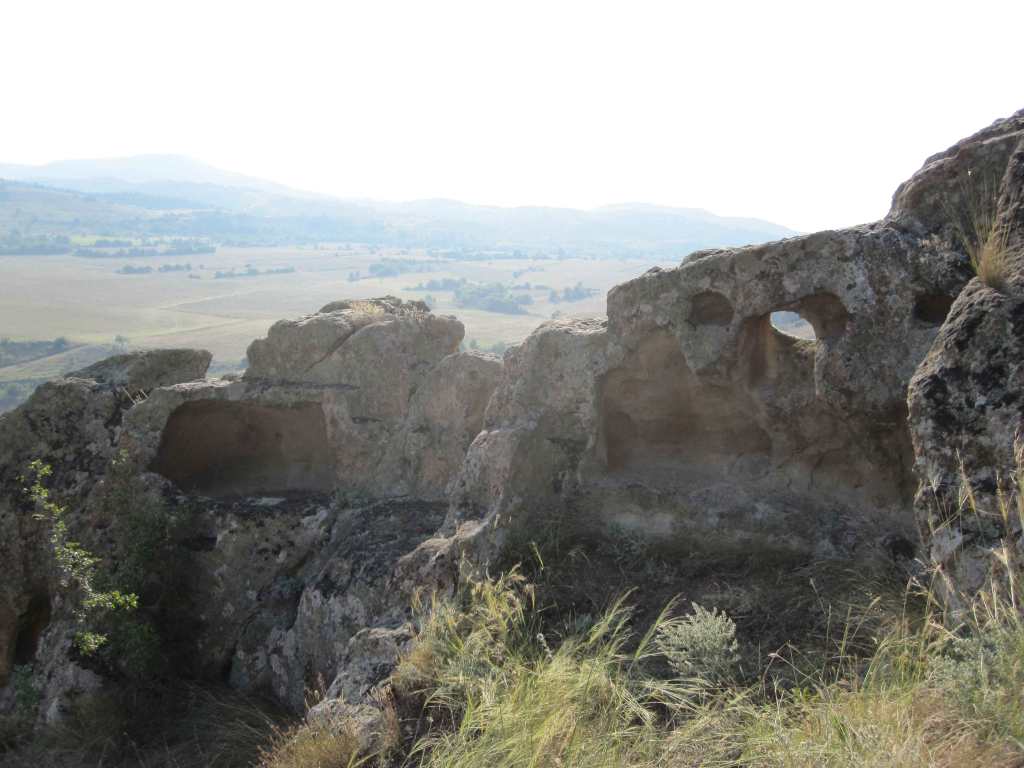
Above and around this terrace are niches, stairs, footholds and handholds carved into the rock.


Some more pictures of the acropolis…
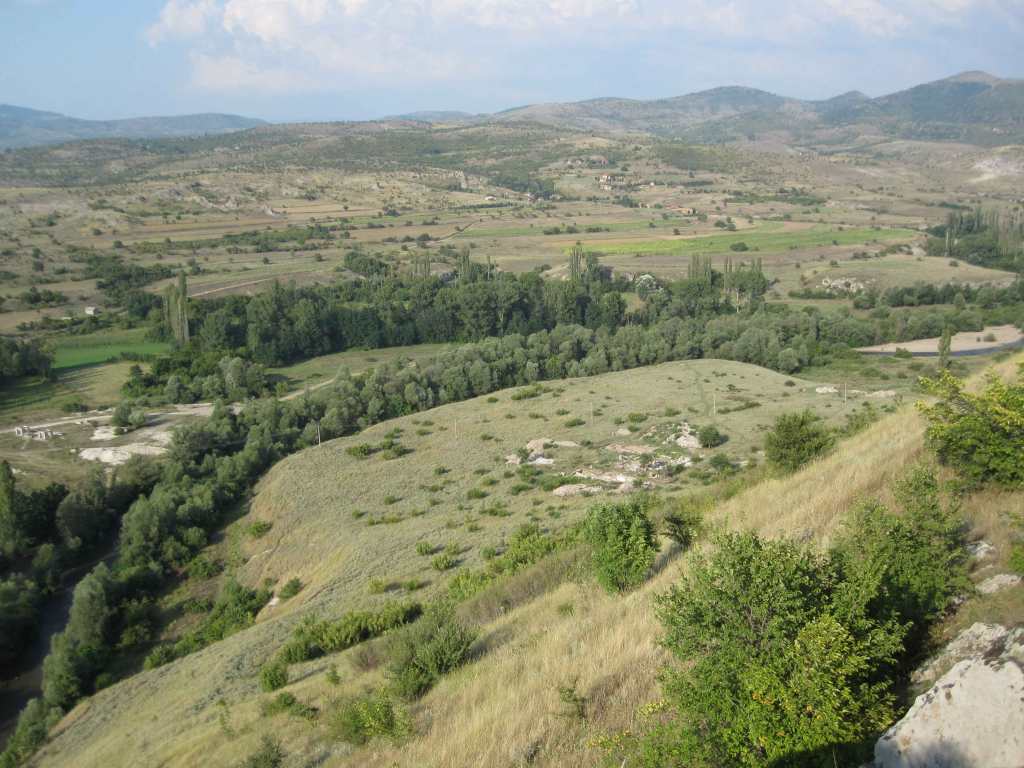
North of the acropolis, below the hill of Golemo Gradiste, is an excavation site where a basilica was found.

We did not descend to the basilica, but the pictures show the site seen from the acropolis on the hill.

About 160 meter south of the hill Golemo Gradiste, there are the ruins of an unusual early Byzantine church in the form of a Rotunda (a building with a circular ground plan).
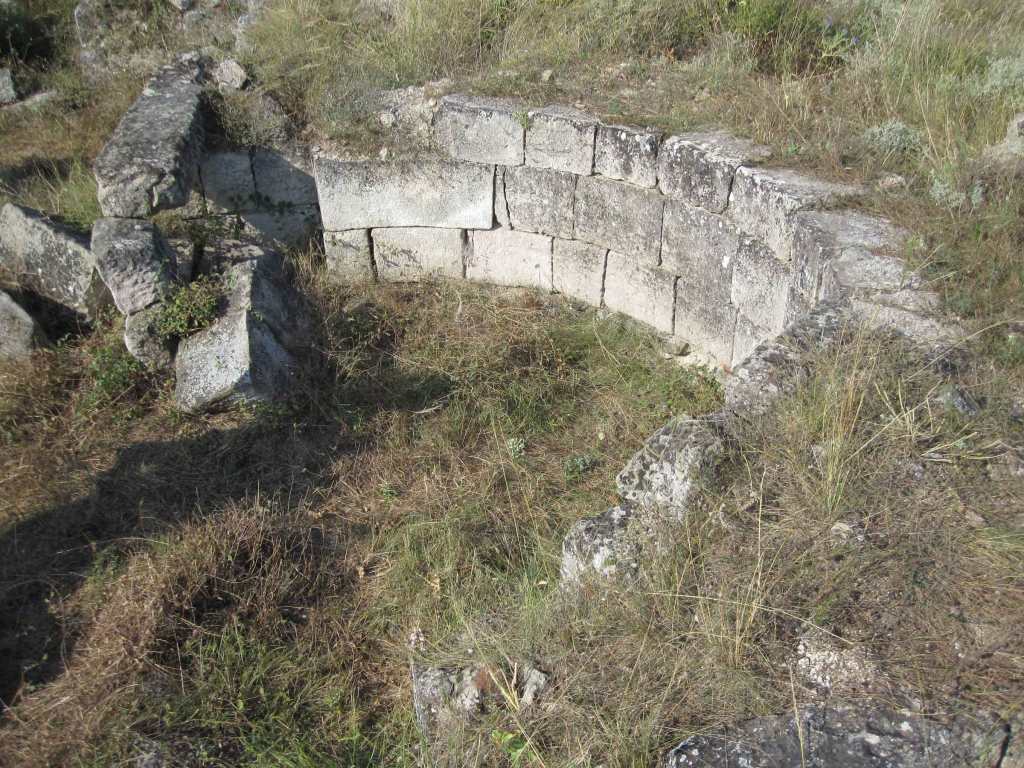
The Rotunda Church probably dates back to the 6th century.

Local villagers excavated the building of the Rotunda Church in 1919.
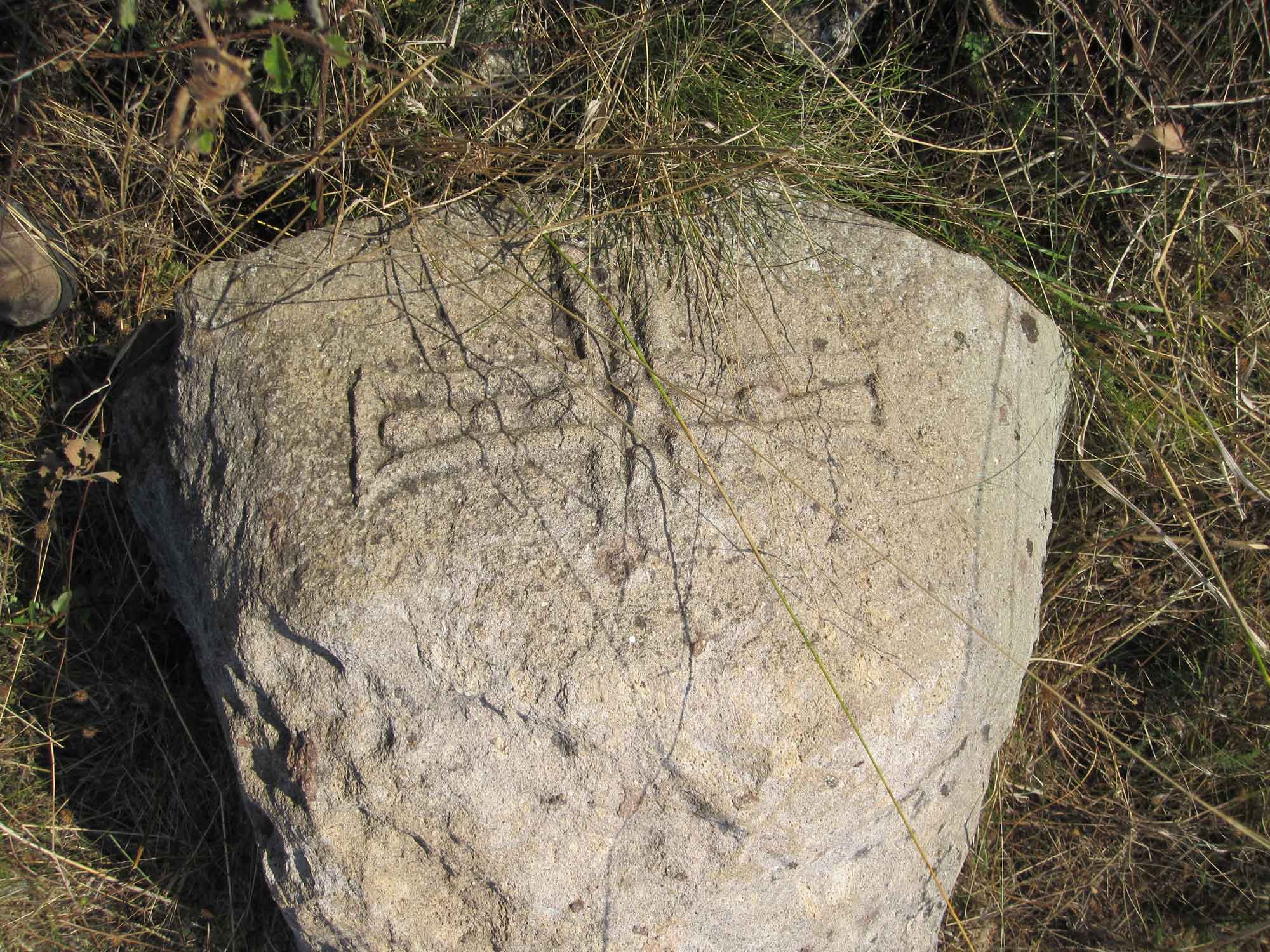
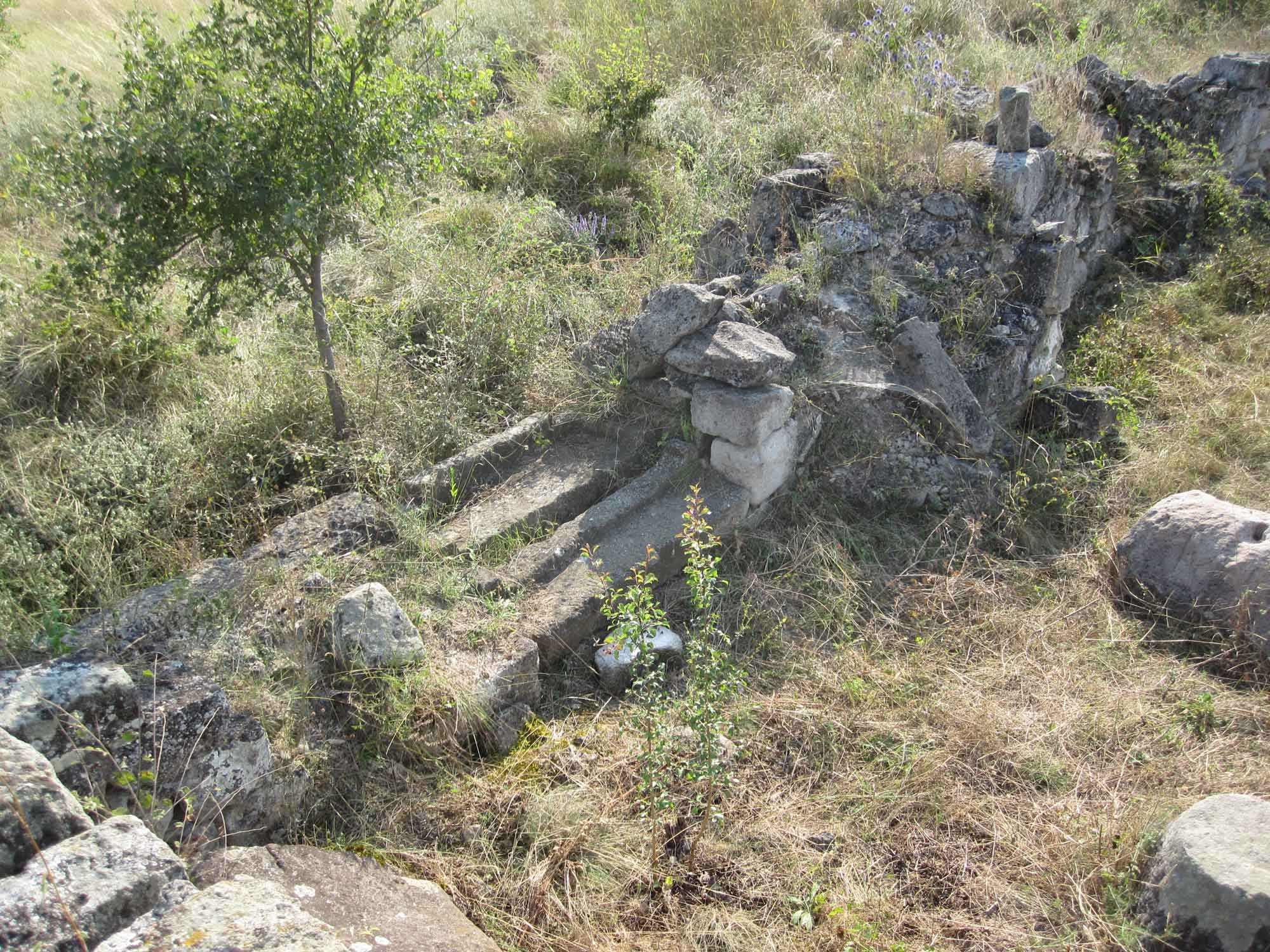

The inscription DOMATRIRS has been found at the Rotunda Church, which is interpreted as “domus martyris”, suggesting that the Rotunda had served as a martyrium. A martyrium is a building used by the early Christians as a burial place or a place where the relics of martyrs are preserved. More about this you can read in the book “Loca Sanctorum Macedoniae” by Blaga Aleksova.
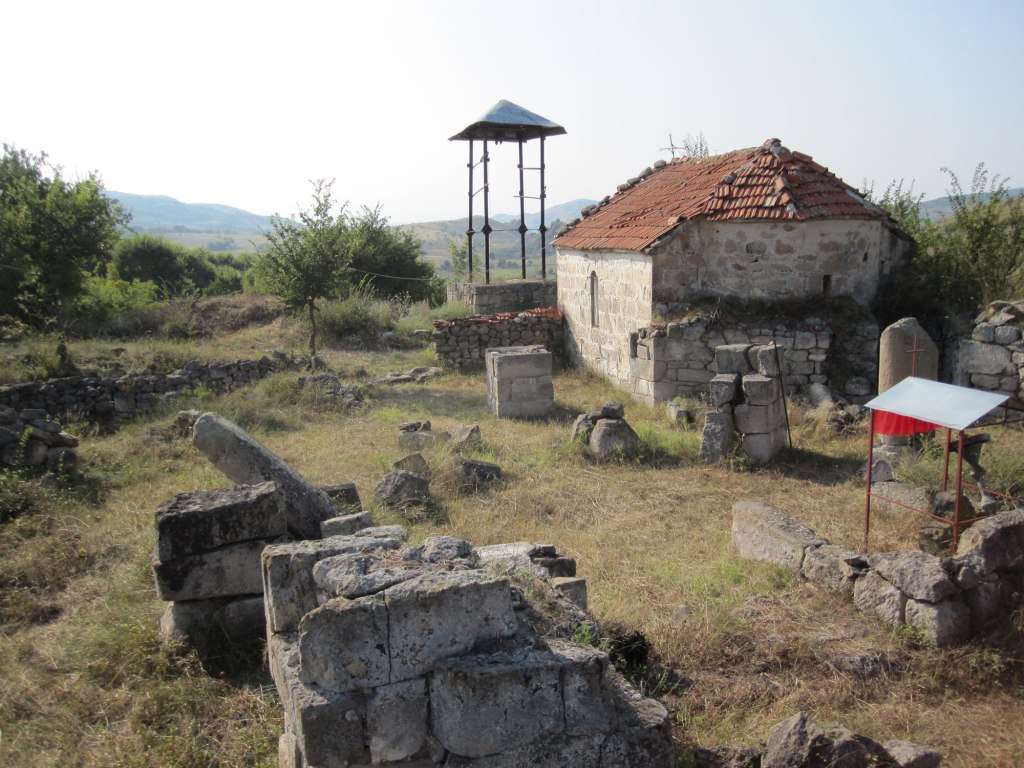
Next to the Rotunda a new small church was built.

An inscription next to the door of the new church says it was built in 1955. This modern chapel was built over the northwest apsidal (semicircular) room of the Rotunda Church.

The roofless Church of St George is about 300 meter southwest of Golemo Gradiste and 400 meter west of the Rotunda.
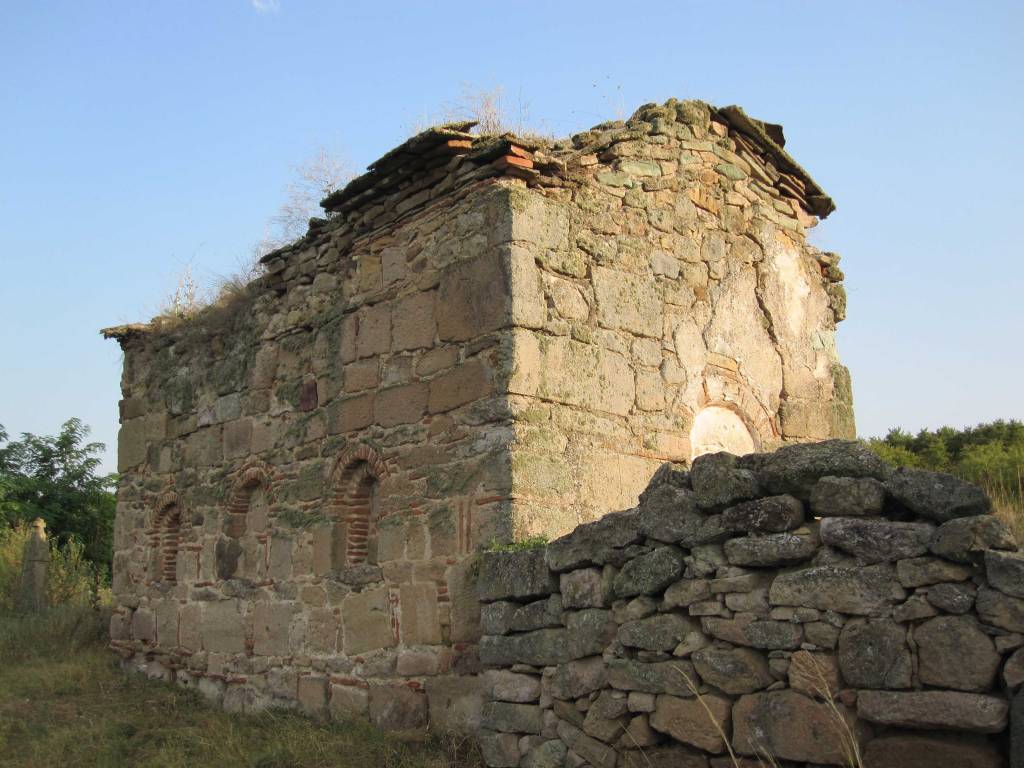
The proposed dates of the construction of St George run from the 14th to the 16th century.
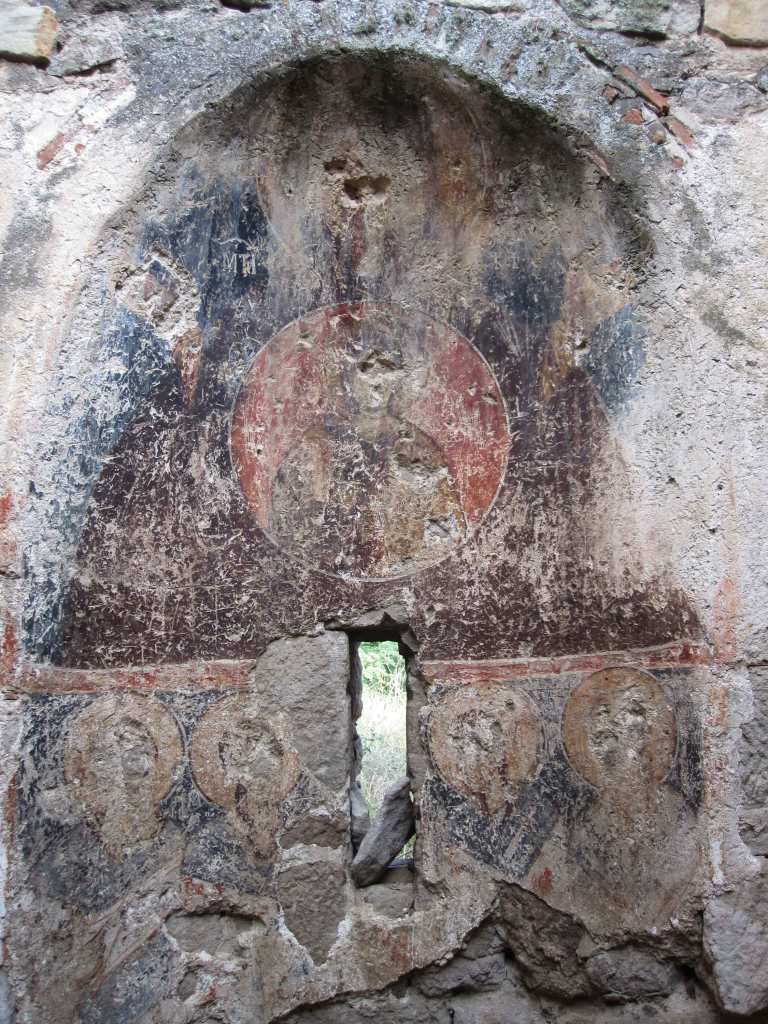
St George 
St George
Remains of frescoes can still be seen on the walls of St George.

It is not known when the roof collapsed, but it happened before 1938 when the Church of St George was already reported to be roofless.

In my opinion, it is best to visit Golemo Gradiste and Cocev Kamen with a guide. You probably will miss a lot when there’s nobody to tell you what to look at. Our guide was Stevce from the Municipal Center of Rock Art in Kratovo. He came with us in our car, and we visited Golema Gradiste, Cocev Kamen and the Stone Dolls with him. Golemo Gradiste is located 41 km east of Skopje near the village Konjuh, south of the Kumanovo–Kriva Palanka highway, not far from Kratovo. It is about 2 km away from the locality Cocev Kamen, on the other site of the asphalt road leading to Cocev Kamen. You have to walk from the asphalt road to both localities, unless you have a 4×4. Note that this asphalt road was more holes than road in 2010, so drive carefully..
 My Macedonia Blog