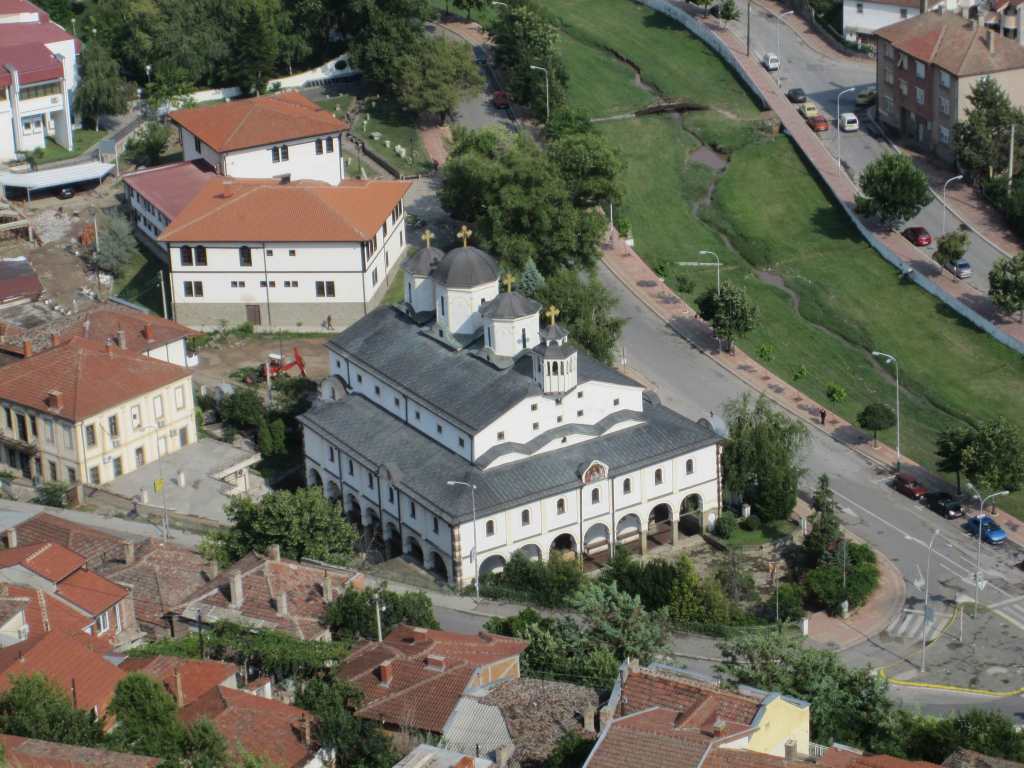
Stip may not be the first town you think of when visiting Macedonia. But besides being an interesting city with many churches, it is a good base for visits to for instance the archeological site Bargala. Or hikes around the mountain hut Vrteska, 40 km from Stip. One characteristic feature of Stip is the river Otinja which runs through the center of Stip. It is just a small stream in the summer, but filled with melting water from the mountains in the spring.
Isar Fortress

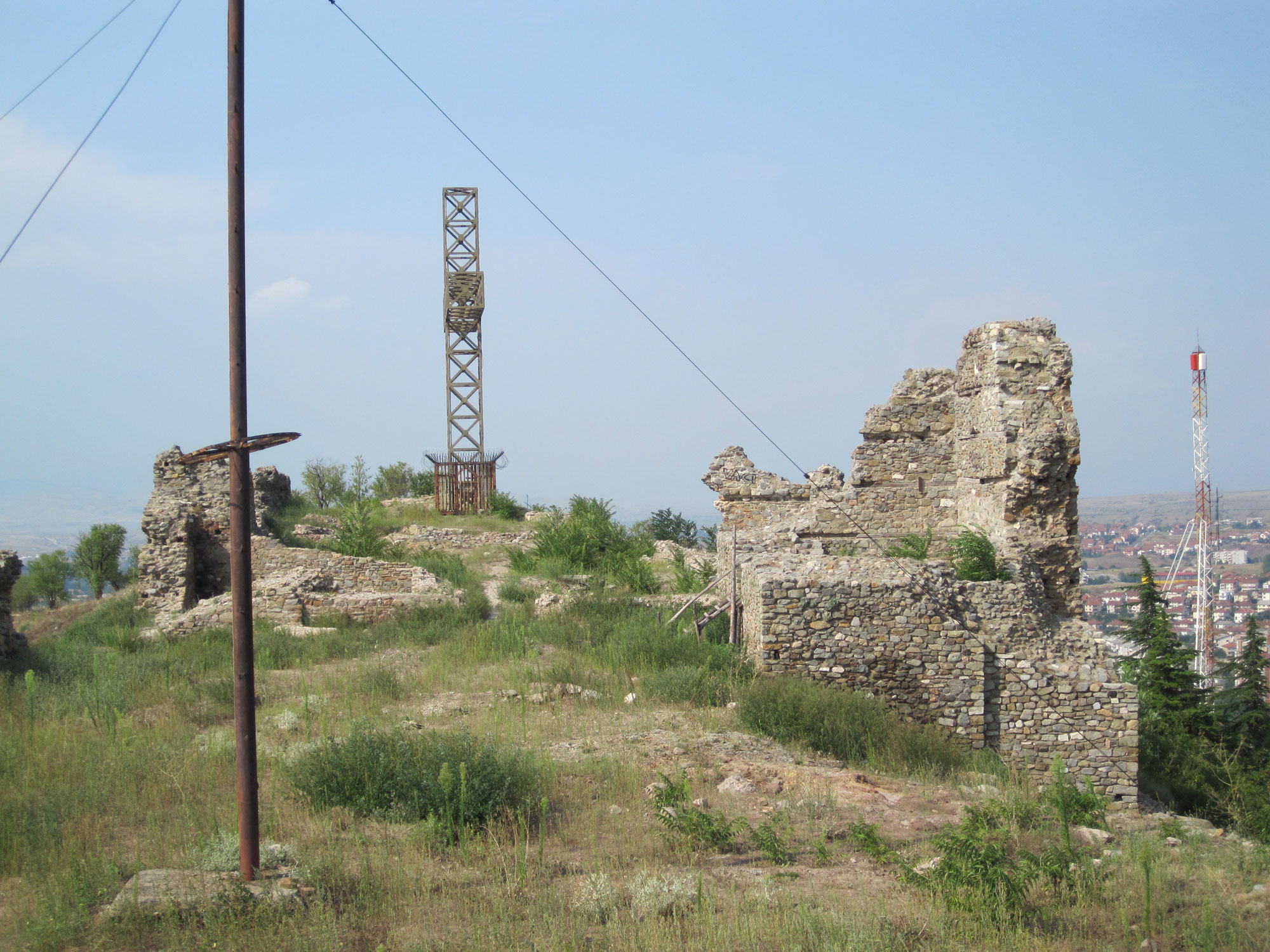
Another landmark of Stip is the Isar Fortress, located high on a hill west of the city. It is not exactly known when the fortress was built. The site may have been used from as early as the 2nd-6th century, but it is likely that the present structures date back to the 14th century.
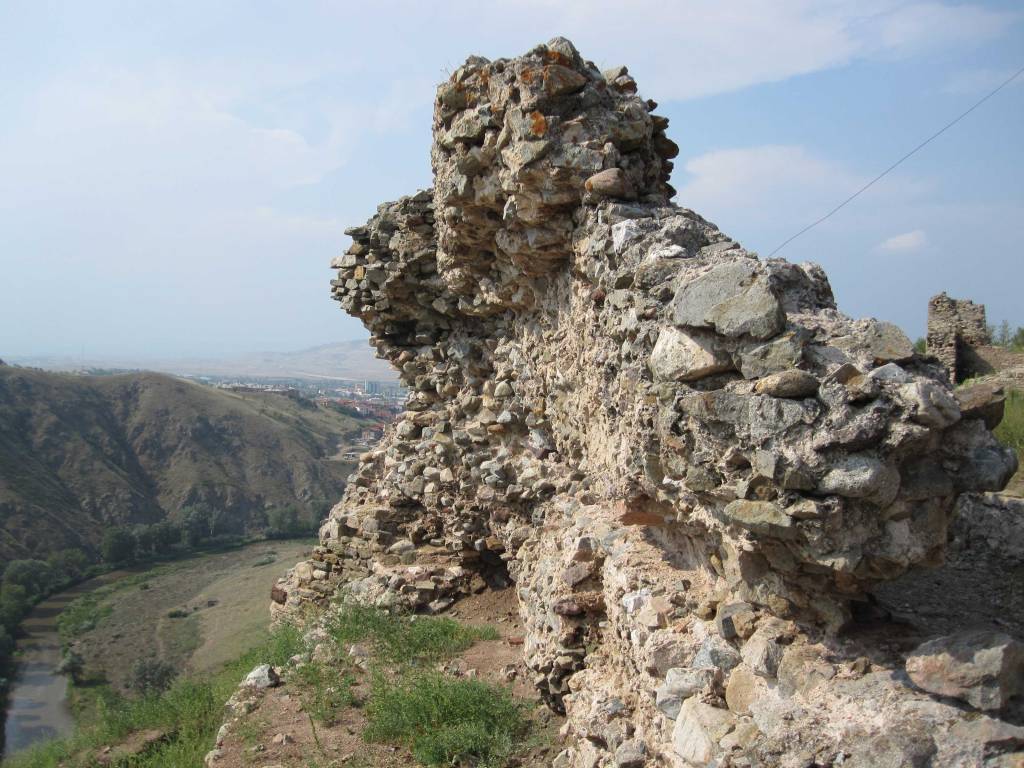
Only the ruins of the fortress remain today. In 2009 parts of a secret tunnel were discovered leading from the river Bregalnica at the foot of the hill to the Isar Fortress. This tunnel allegedly was used by the Ottomans to conquer the fortress in the 14th century.
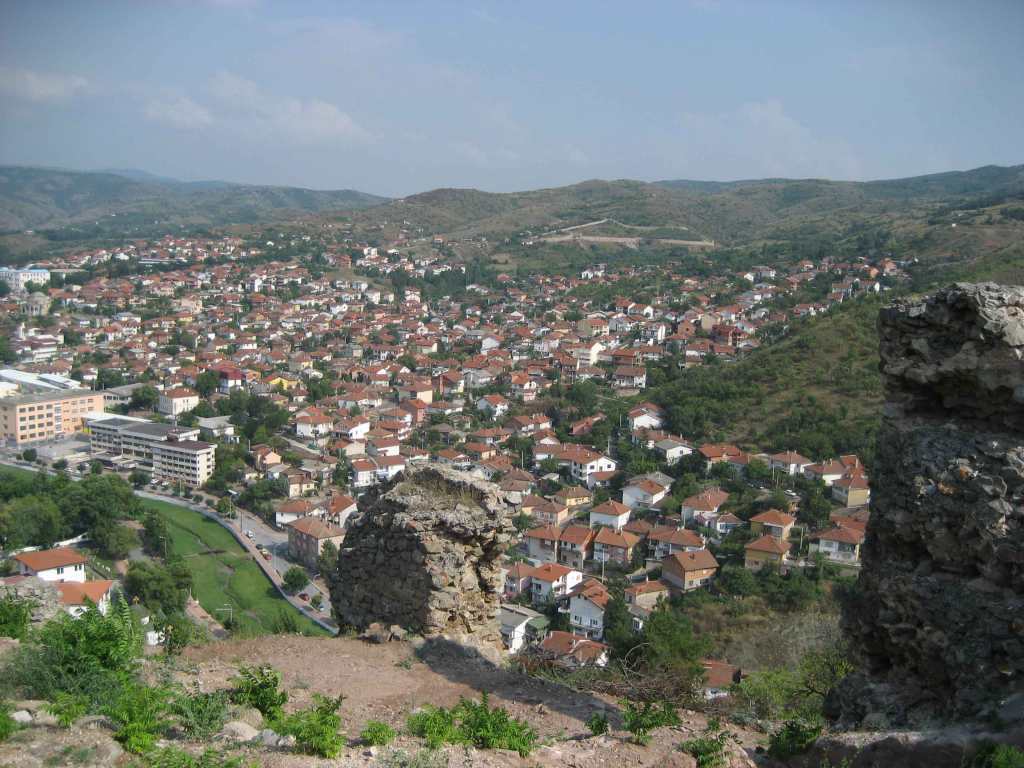
Some ugly telecom antennas deface the site of the Isar Fortress. There is also a huge steel cross on the hill. However, it is an interesting place and the location gives you excellent views of Stip itself. Five churches where built around it: St Archangel Michael (1332), St Nikola (1341), St Jovan (1350) ,St Basilius (1337) and St Spas (1369).
National Liberation Monument

National Liberation Monument 
National Liberation Monument
To get to the Isar Fortress, follow the road uphill to the National Liberation Monument, dedicated to the 814 people of Stip who died during WWII. The monument was built in 1974. Before you reach the monument, you will pass the Church of St Archangel Michael.
St Archangel Michael

This church of St Archangel Michael was the first one of the four churches built on the hill around the Isar Fortress. It was built before 1332, east from Isar fortress. There is also a bell tower next to the church. It was closed when we visited it. A man living nearby is supposed to have the key, but he was not there.
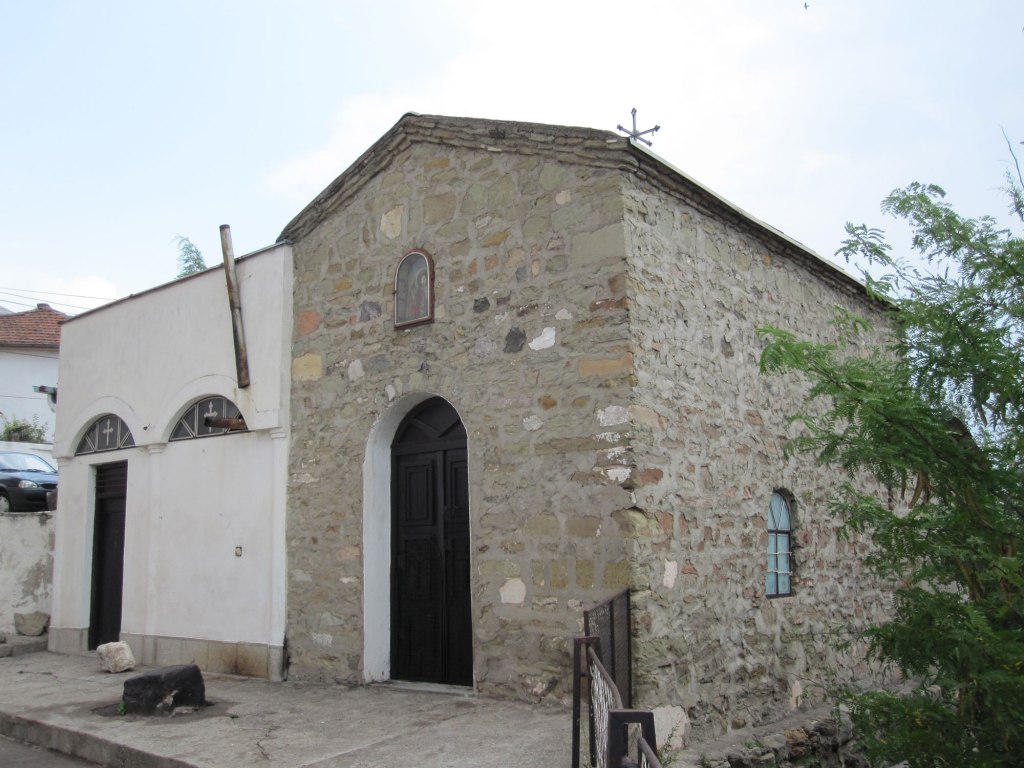
St Archangel Michael 
St Archangel Michael
Another church named St Archangel Michael can be found close to the Museum of Stip. It was opened for us by a woman living nearby. She told us that one of the icons contains a part of the cross of Christ’s crucifixion.
St Nikola
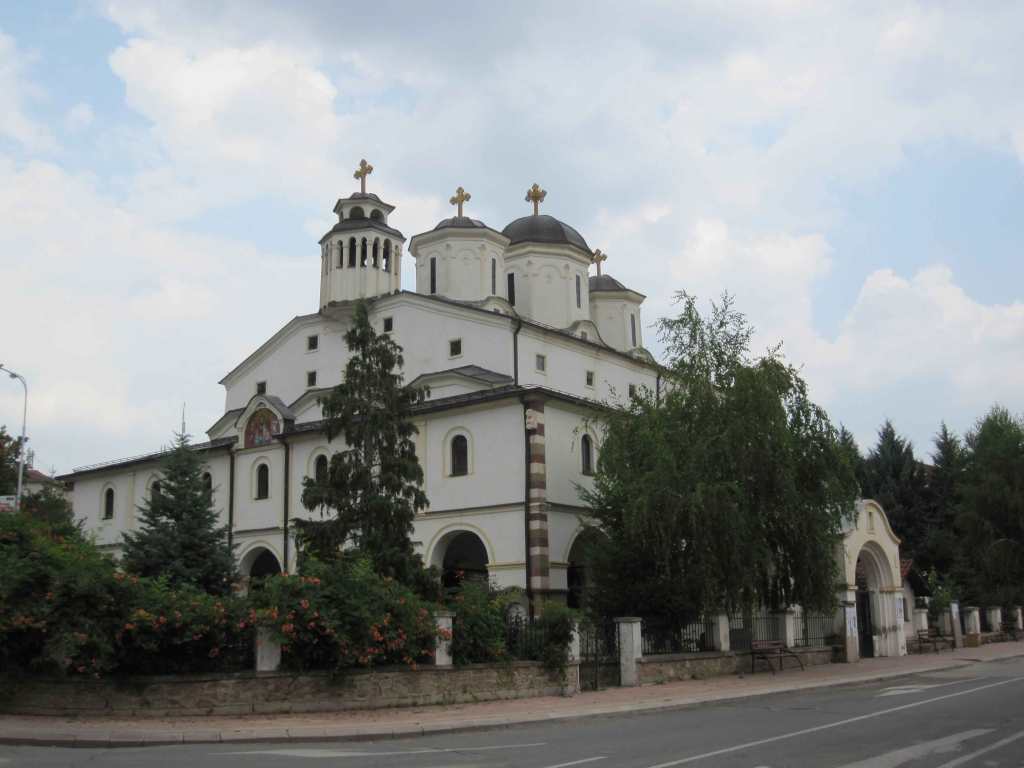
This Church of St Nikola was built in 1876 on the site of the older church dating back to 1341. The construction was headed by the master-builder Gjorgji Novakov Dzongar.
The upper floor of the church was transformed into a permanent gallery of icons in 1990. A rich and rare collection of artistic and sacred objects (such as church books, priest robes, etc.) are on display there. However, the priest didn’t allow us to see these icons because I am a foreigner (…), but you may be able to get access through the Museum of Stip if you insist. We did not.
St Jovan Krstitel

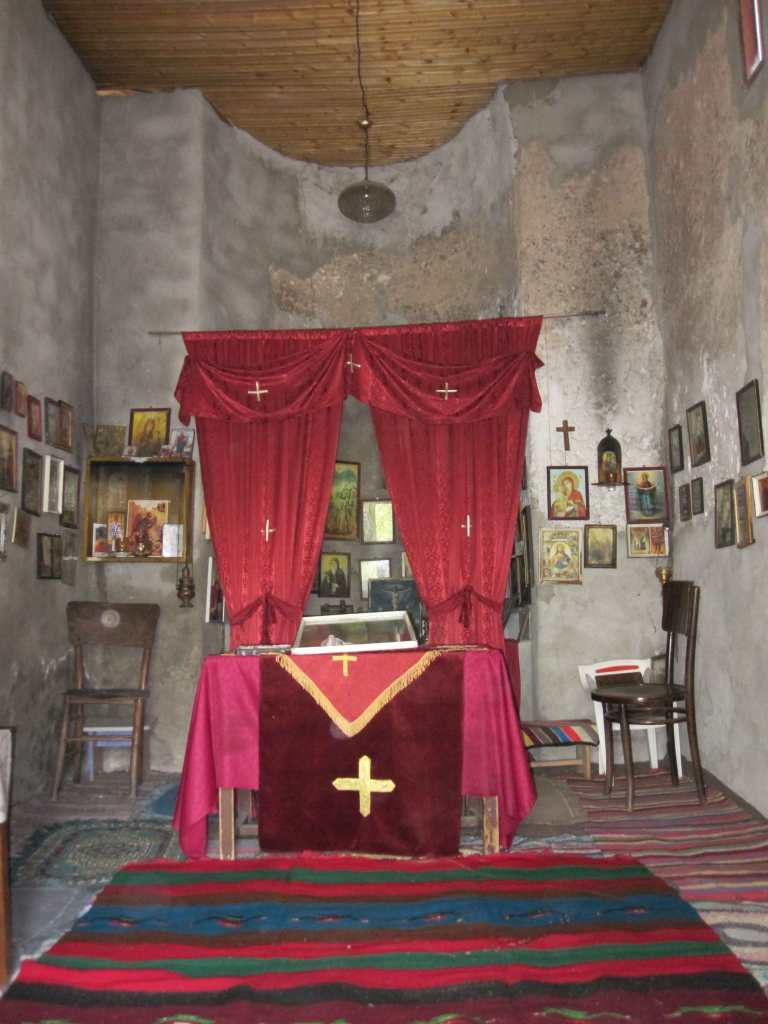
This church is dedicated to St Jovan Krstitel (St John the Baptist). It was built in 1350 and is located on the foot of the hill, south of the Isar Fortress.
St Jovan Krstitel 
St Jovan Krstitel
We got the key from the priests of the Church of St Bogorodica in the part of Stip called Novo Selo.
St Spas
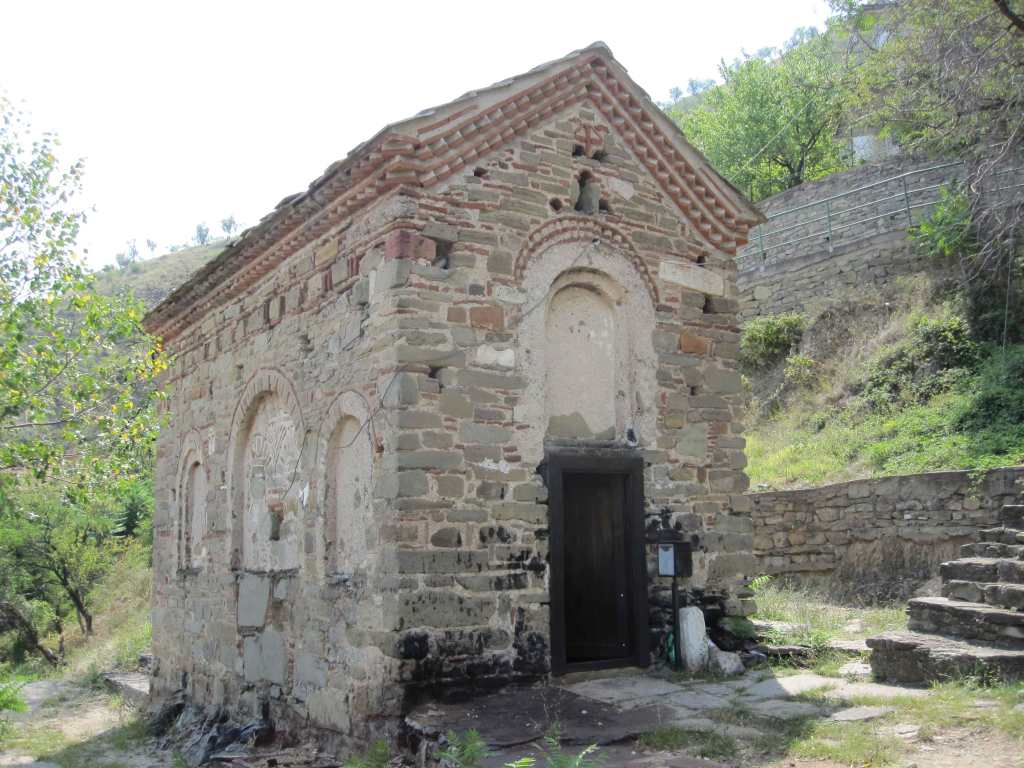
This Church of St Spas (Holy Savior) was built in 1369. It is located south of hill with the Isar Fortress, on the other side of the Otinja river.


You can get the key of the church in one of the houses on the right of the church. It is worth trying to get the key because there are some nice old frescoes inside. Next to the church of St Spas is the grave of Mise Razvigorov (1873-1907), a Vojvoda (military commander) .
Pastrmajlija and Restaurants

People come from all over the country to Stip because of the local specialty called Pastrmajlija, a sort of oval shaped pizza with meat on top. If there’s a willing cook they will make a vegetarian version. See here for the best pastrmajlija we had in Stip and other restaurants.
Museum of Stip

We got a private tour of the museum of Stip, because we were the only visitors (in fact, the staff seemed surprised that we came there to see the museum)! The guide spoke some English, but it was a lot easier for him to speak Macedonian while my Macedonian girlfriend was translating for me. The museum contains a chronological collection of artefacts found in the surrounding areas such as Bargala. The remains (or a replica?) of the oldest Neolithic man in the Balkans and the oldest inhabitant of Macedonia (7000 BC) found at the site Grncharica are here on display. It is worth a visit in my opinion. Open Monday-Friday from 07.00-15.00. Directions: Key Marshal Tito 2, next to the Church of St Nikola.
Monument Jewish war victims
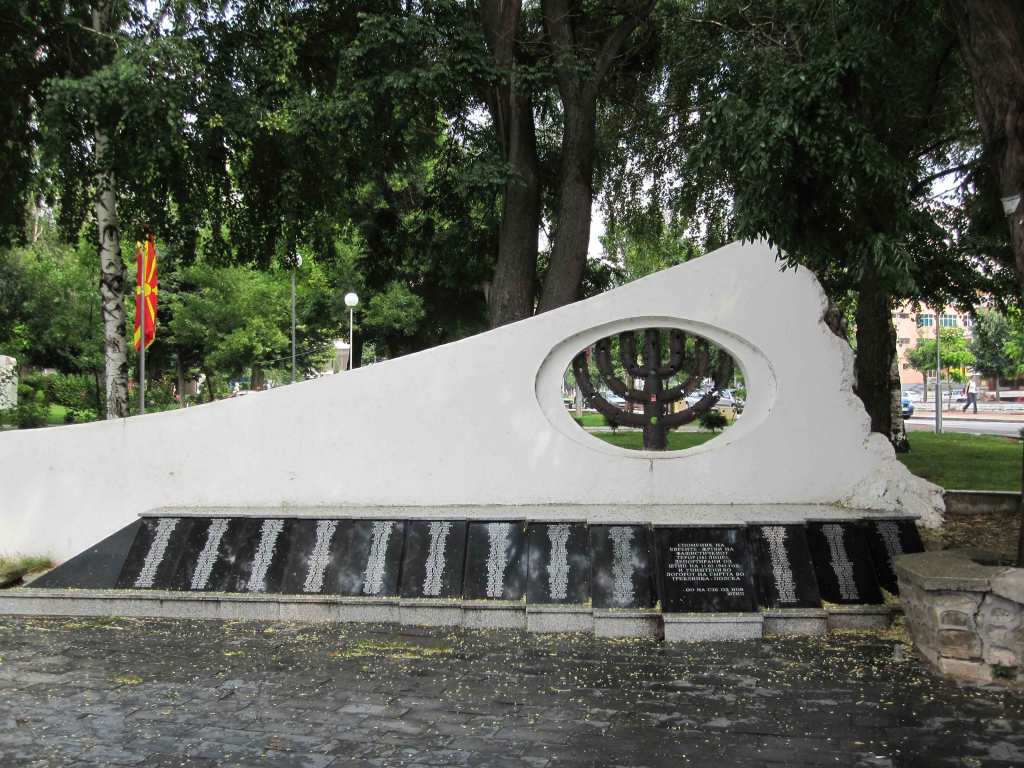
The Monument for the Jewish war victims was put up in 1985 by the artist Metodi Andonov from Stip. It symbolizes the life of the Jewish people of Stip with a parabolic rising line, that was suddenly cut off on March 11th 1943, when the fascists brought 551 people to a concentration camp to die . Directions: Key Marshal Tito, next to the Museum of Stip.
Bezisten Art Gallery
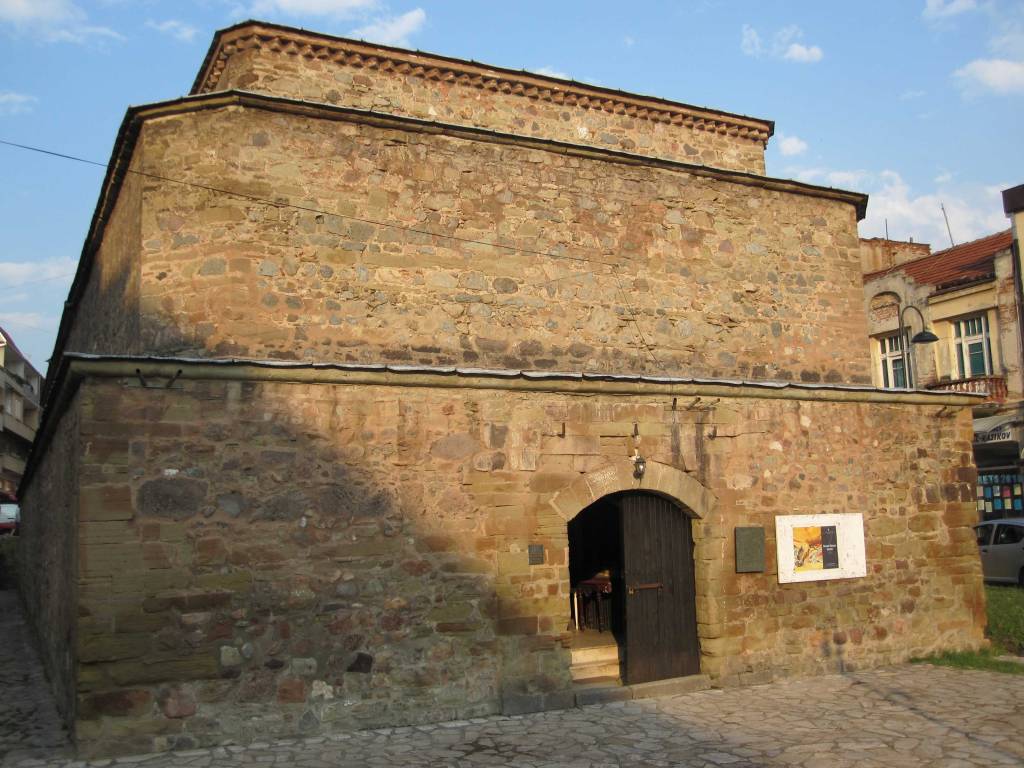
The Bezisten (or covered market, bazaar) was erected in the middle of the 17th century. Valuable goods were sold in this typical building from the Ottoman times. It now is in use as an art gallery. Address: Kuzman Josifovski, close to the museum of Stip.
Clock Tower

The Clock Tower was built in the second half of the 17th century. An inscription in the tower states: The tower dates back to the year 1650. A Turkish Bey fell in love with a beautiful girl from Stip named Anka. He wanted her to become Turkish, and he was very persistent in that. In order to reject him, she once said that she would become Turkish, but he should leave something in return, as a beautiful memory to the town, for instance, one tower that would also be a town clock. Anka thought that the bey would give up on her love. However, the Turk who was infatuated with the beautiful Anka, built the tower in a short time period and took the girl with him. Directions: Kiril i Metodi street, a bit north of the Bezisten
Husa-Medin Pasha Mosque / Church of St Ilija
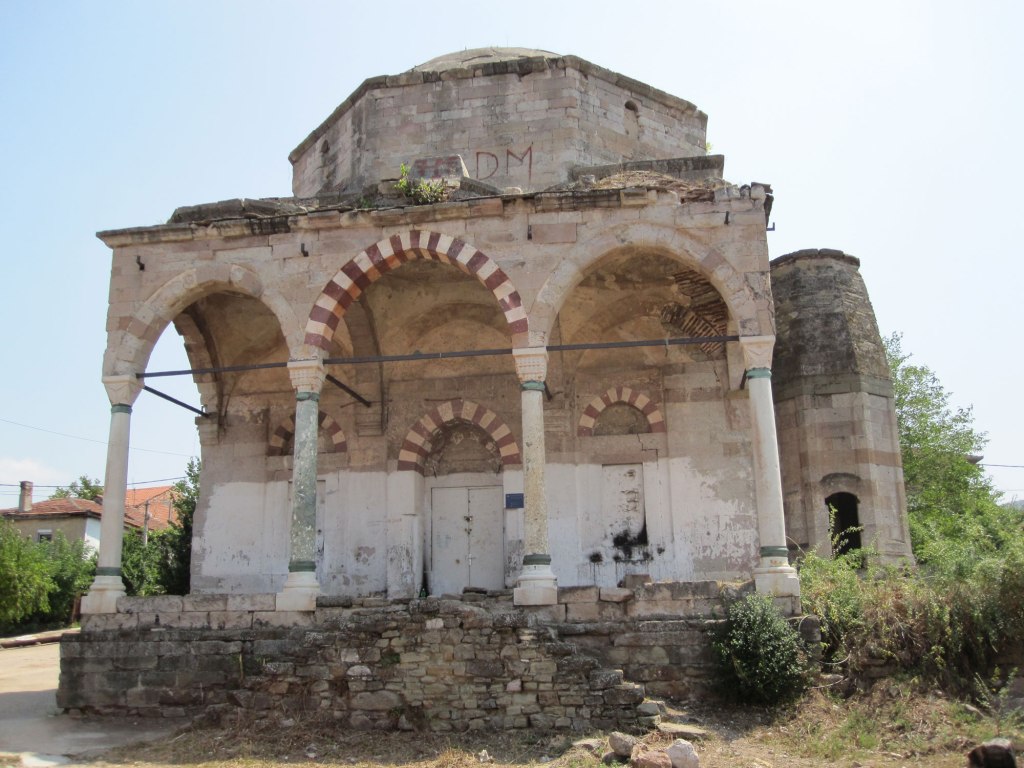
The Husa-Medin Pasha Mosque was built on the foundations of the 13th or 14th century Church of St Ilija, hence it is most often referred to as St Ilija. The mosque probably was built in the 16th or 17th century.
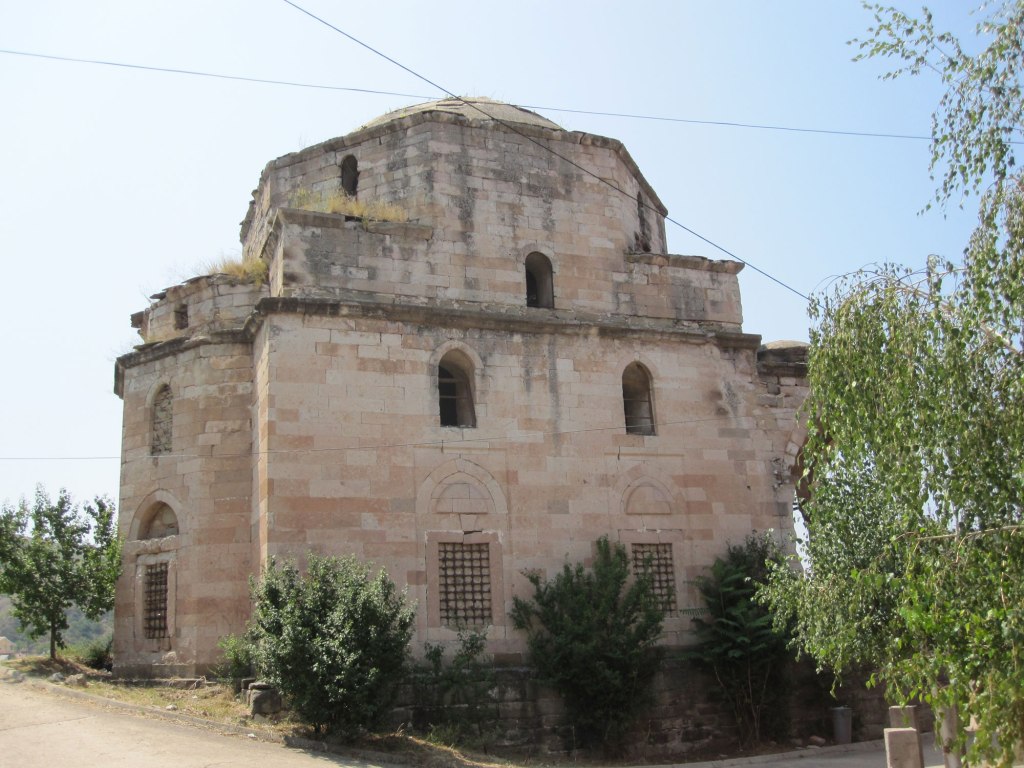
Husa-Medin Pasha Mosque / Church of St Ilija 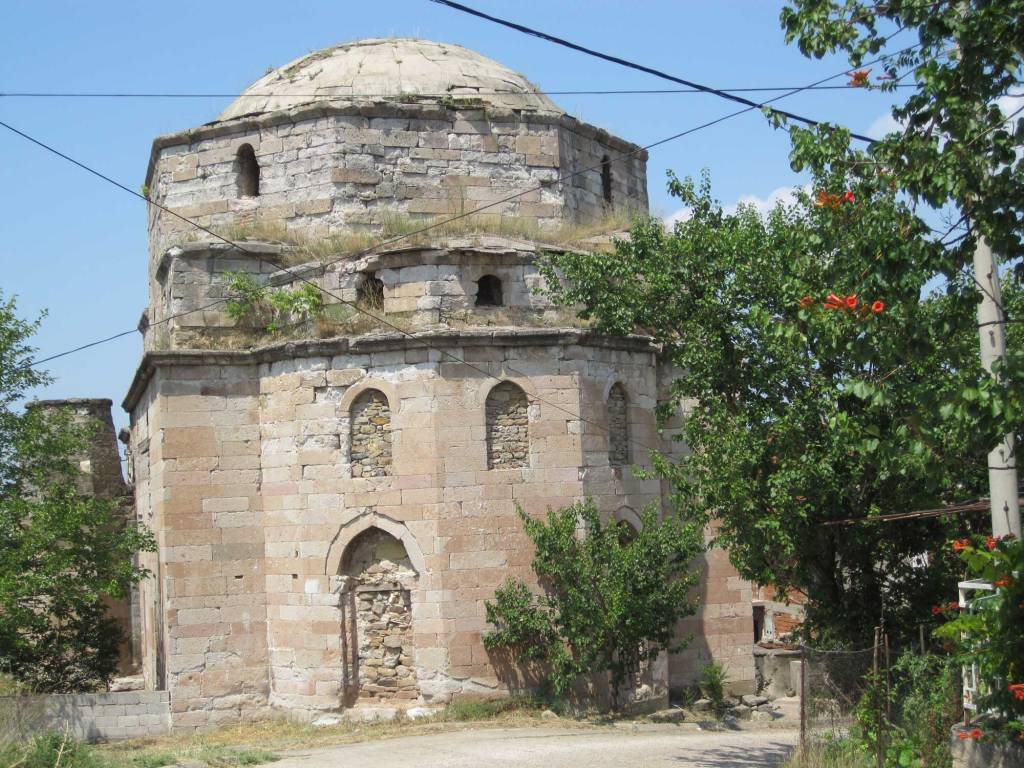
Husa-Medin Pasha Mosque / Church of St Ilija
We heard that the building never was used as a mosque though. The entrances to the mosque are closed, and it is certainly not in use anymore.Directions: On the left (south) bank of Otinja river, on a hill near Vita Pop Jordanova Street.
School of Goce Delcev
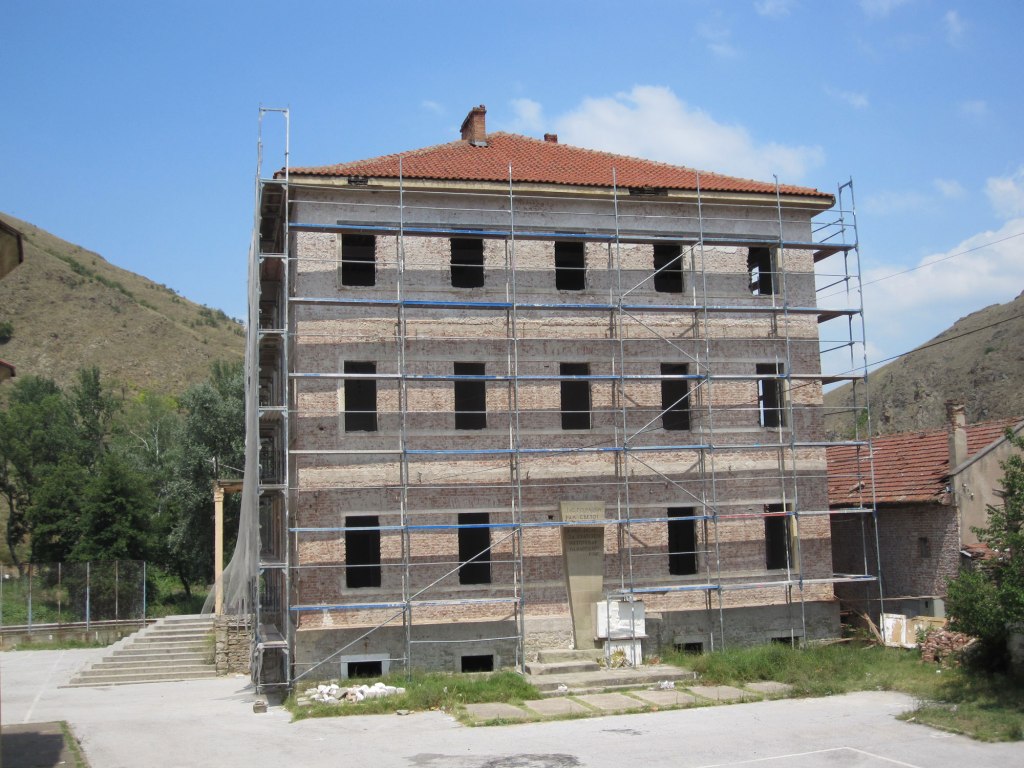
Goce Delcev (1872-1903) was a Macedonian revolutionary who fought against the Ottoman occupiers of Macedonia. Goce Delcev was a teacher at this school in the part of Stip called Novo Selo. Here he met another revolutionary hero, Dame Gruev. When we visited the school in 2010, it was in scaffolding. In the Church of St Bogorodica, next to the school, there were several hiding places for the revolutionaries and their archives. There is also a monument for Goce Delcev on one of the sides of the school. Goce’s remains are at the Church of St Spas in Skopje.
St Bogorodica
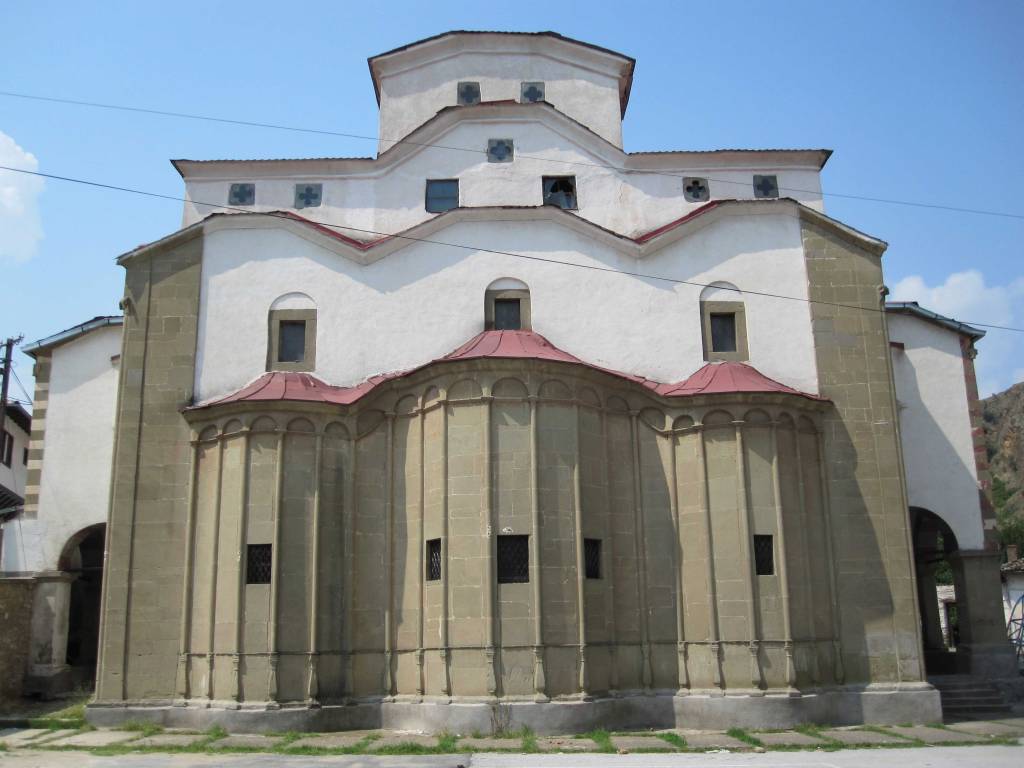
The Church of St Bogorodica (Holy Mother of God) in the settlement Novo Selo was probably erected in 1809, and renovated in 1850 by the master-builder Andreja Damjanov (1800-1878) and his brothers. He also built the Church of St Pantelejmon in Veles. Both are remarkably big basilica-like churches, which are rare in Macedonia. The church has three floors, on the second floor there is supposed to be an icon gallery. For some strange reason, the priests do not let you see the icons unless you have permission from the Museum of Stip. The priests in this church were not very helpful or friendly…

Secret chamber 
Secret room
Several hiding places were built in the church, were archives and people such as the famous revolutionary leader Goce Delcev were hiding from the Ottoman occupiers. Goce Delchev was a teacher in the school that is located next to the Church of St Bogorodica. Apparently, the surrounding wooden chairs have been removed or are being renovated, because at the time of visiting (2010) this hiding place was not hidden but very obvious!
Hot Spring
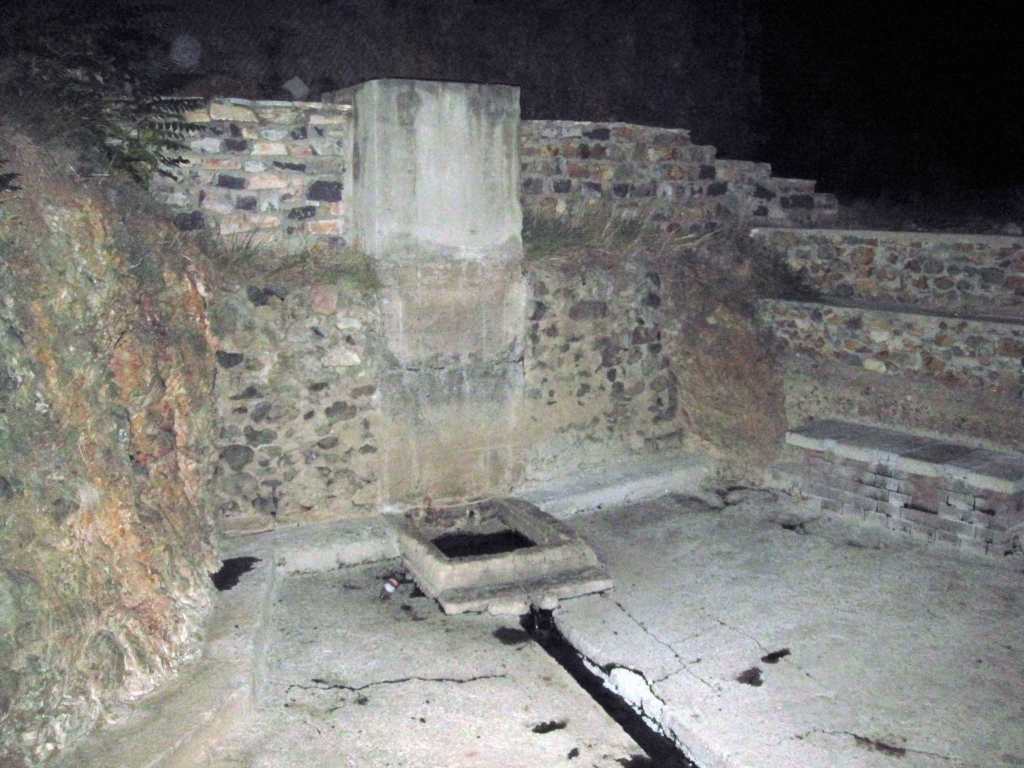
Close to the settlement Novo Selo, at the bridge crossing the river Bregalnica, there is the hot mineral water spring Ldzi (also referred to as L’dzhite and L’gji). The spring is used by the locals, they come with buckets to collect the water. I read that this water has the highest level of radioactivity in Macedonia, because it contains radioactive Radon. The water is used by patients with a variety of problems. This spring is part of the Kezovica Spring system, from which the Kezovica Spa uses water. In the Kezovica Spa it is written not to drink the water, which seems a good idea 🙂
Kezovica Spa: Accommodation
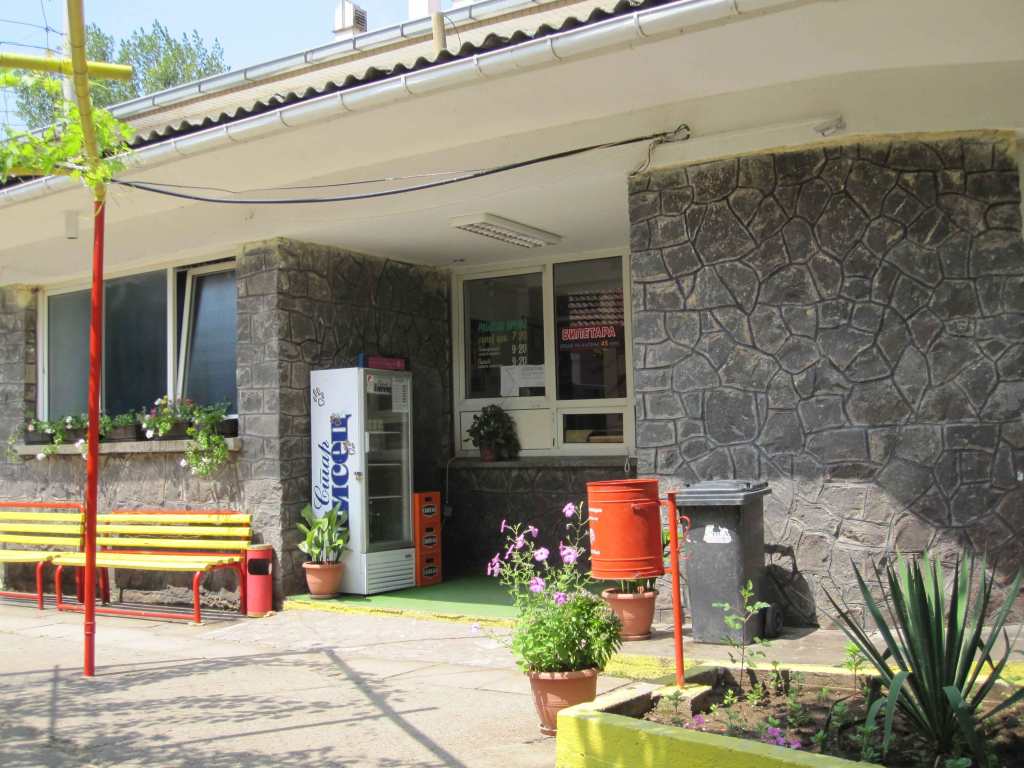
Close to the settlement Novo Selo, there is the Kezovica Spa. Now, don’t get excited when you hear “Spa”, because this is not your standard luxurious beauty and relaxation center. The Spa gets its hot water from a hot water spring. The baths are separated for men and women, and you’re supposed to go in there naked. They appear to be recently renovated. The showers, which also use the hot water from the spring, are mixed, but you have your own spacious shower cabin. At a first glance, the showers look pretty shabby. At a second glance, they still look shabby 😉 The water is supposed to cure disorders ranging from infertility to rheumatism, it has a temperature of about 60 degrees and smells like sulfur. There is a whole medical facility at the complex, and many people come here to be cured. The accommodation for the people that come here for medical reasons is separated from the guest houses.
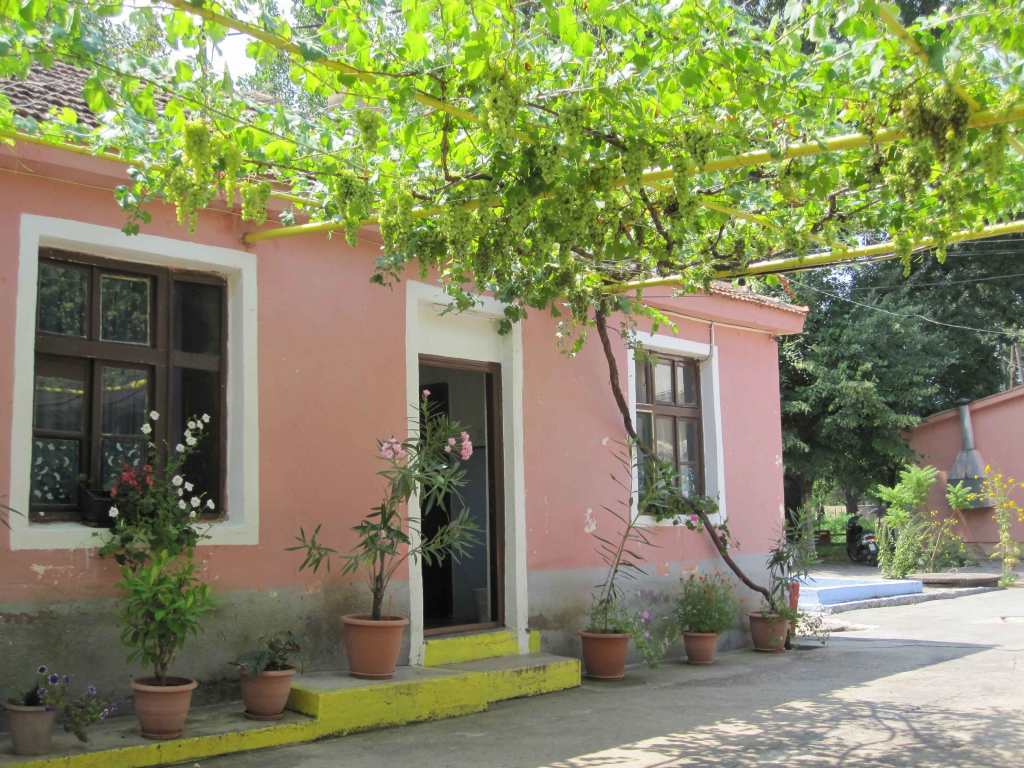
We didn’t come to Kezovica Spa for the healing water, but because they also offer rather cheap accommodation: 360 MKD (about 6 euros) per person per night in 2010. For that money you get e.g. a room with two beds and a table, a toilet shared with three other rooms, and unlimited access to the baths and showers of the Spa. Access to the baths or showers is about 60 MKD (1 euro) if you are not staying there. In the evening, many people are sitting outside watching TV or having a drink. You can buy drinks at the reception, and there is a little shop at the premises that sells some snacks and coffee. Don’t expect to sleep late in the morning, because life starts here around 06.00. We really enjoyed the place and the interaction with the locals at the spa. We stayed here for four nights and explored Stip and the surrounding area.
St Petka Monastery outside Stip
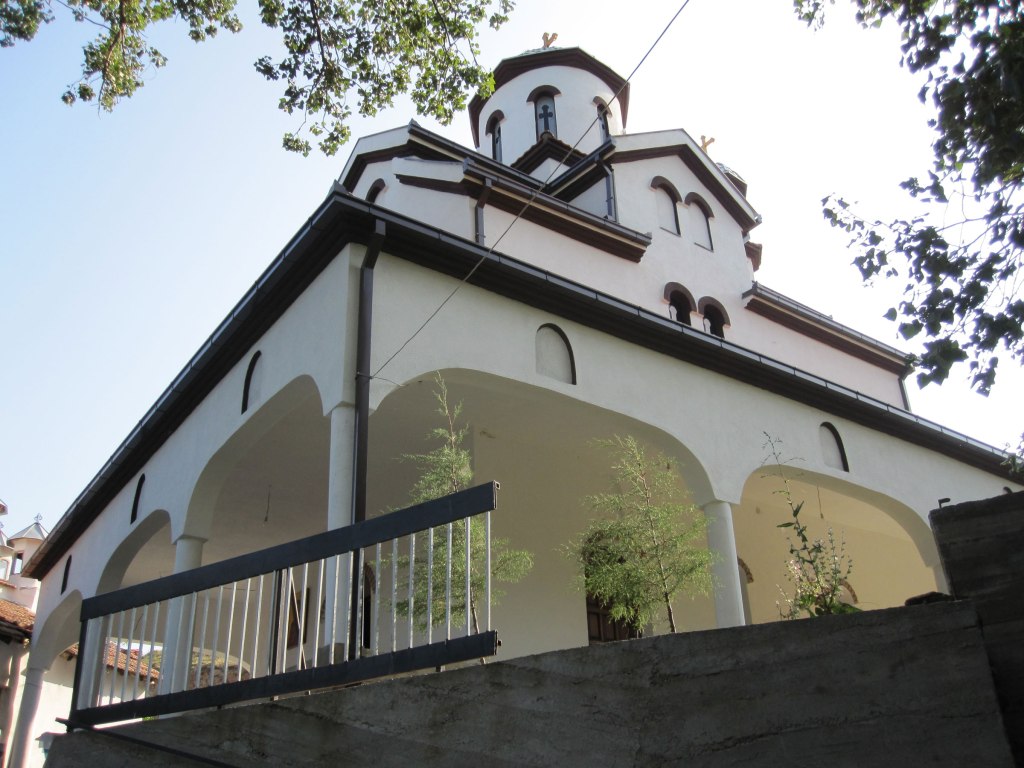
If you are looking for a more spiritual kind of accommodation, you may want to check out the Monastery of St Petka near Stip. This is a working monastery, where you can spend the night here. There are several sources with holy water in the monastery. We just passed the Monastery of St Petka on our way top the Mountain Hut Vrteska, so I cannot comment on the quality of the accommodation. Directions: located outside of Stip, along the same road to the archeological site Bargala and Vrteska. It is located between Bargala and Vrteska.Phone: +389 (0)32 800 233
St Petka MonaStery in Stip
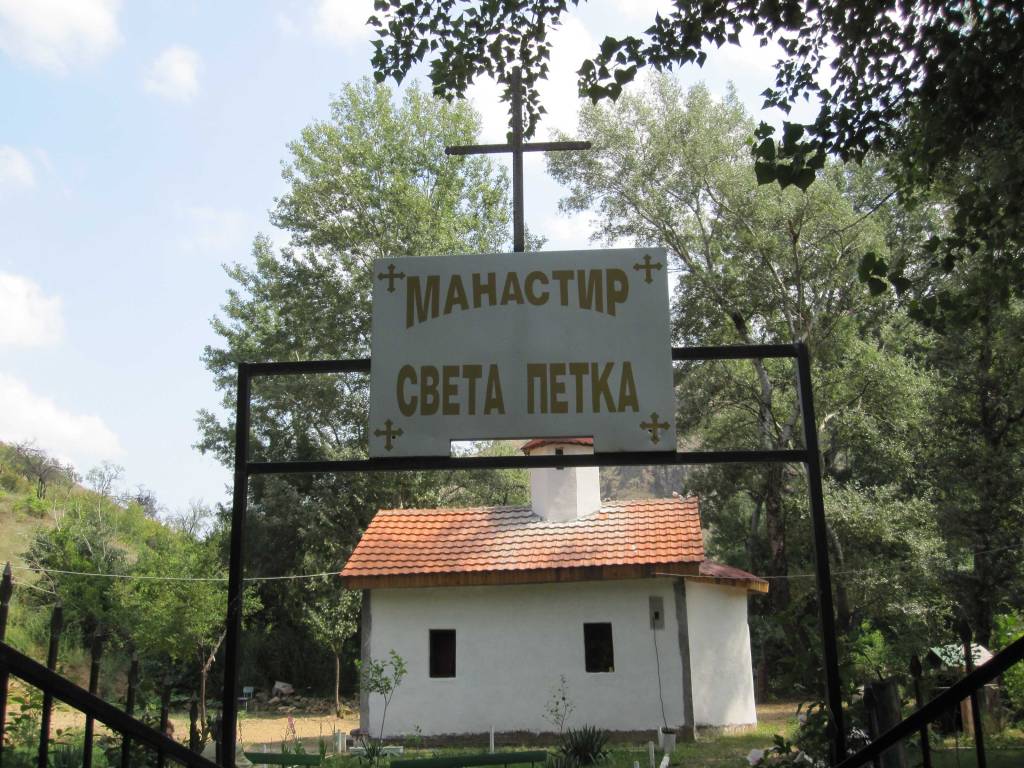
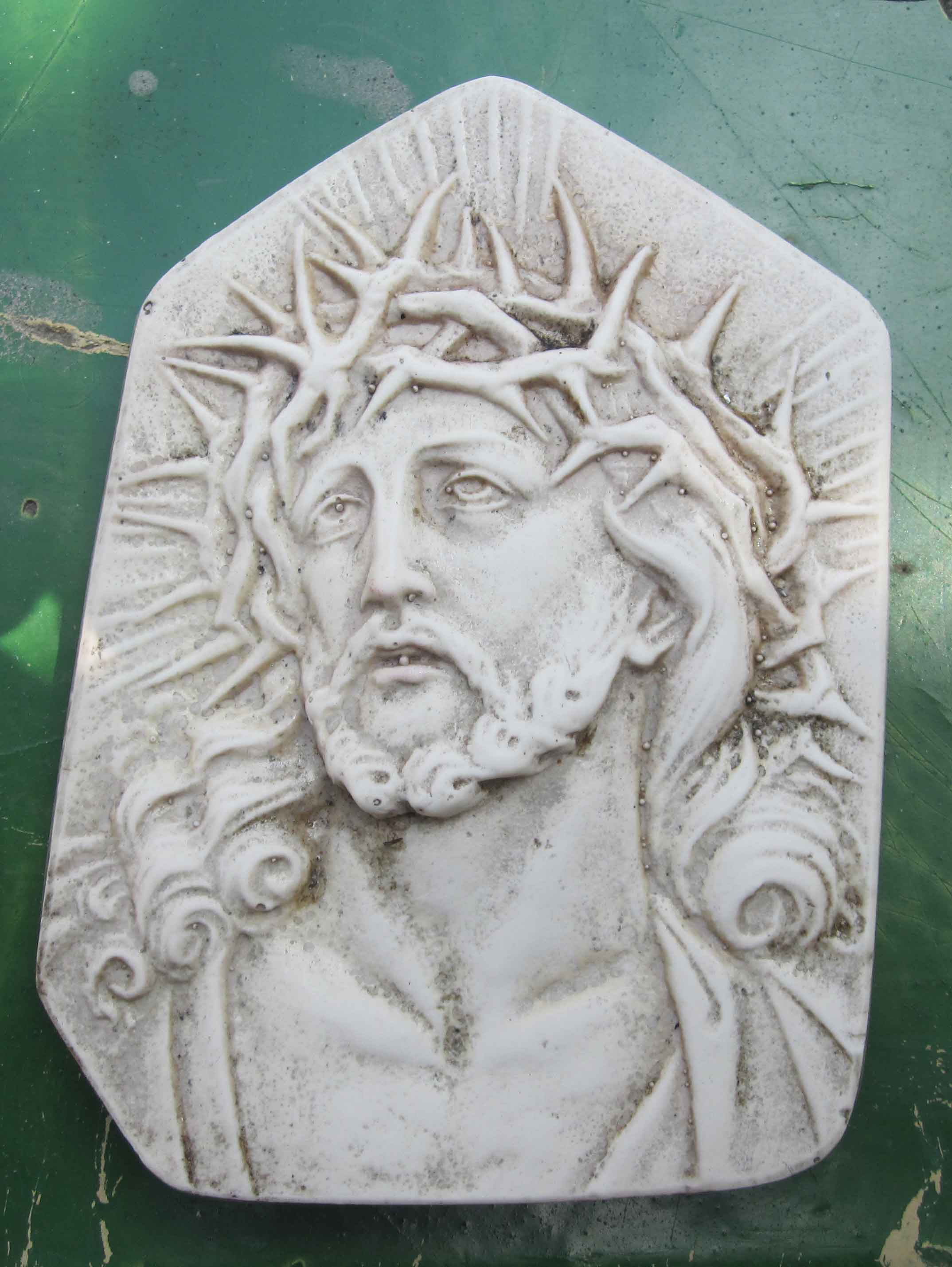
The Monastery of St Petka is located on the west side of the river Bregalnica. When we visited in 2010, it was not really a monastery yet. We spoke to the man who had build the church. He had a dream to built a church on this location. The man told us that he had never built anything in his live before, yet he built the church. During the construction he found an icon of Christ (see picture below), and parts of pillars that are on display on the monastery grounds, indicating that the place may have been used before as a church. The church is not officially recognized by the Macedonian Orthodox Church because the man refuses to donate the money that people leave in the church to the official church. Instead, he wants to use the money to built a real monastery at this place.

When we were there on August 8th, it happened to be St Petka’s day and many people came to this church to light candles and celebrate. We were invited to take place at the tables outside and got a nice breakfast! Directions: Coming from the direction of Kezovika Spa in the settlement Novo Selo, cross the bridge over the river. The hot water spring Ldzi (see above) is on your right after you pass the bridge. Just follow the path along the river Bregalnica that passes the hot water spring until you reach the Monastery of St Petka (see the picture).
Mountain Hut Vrteska
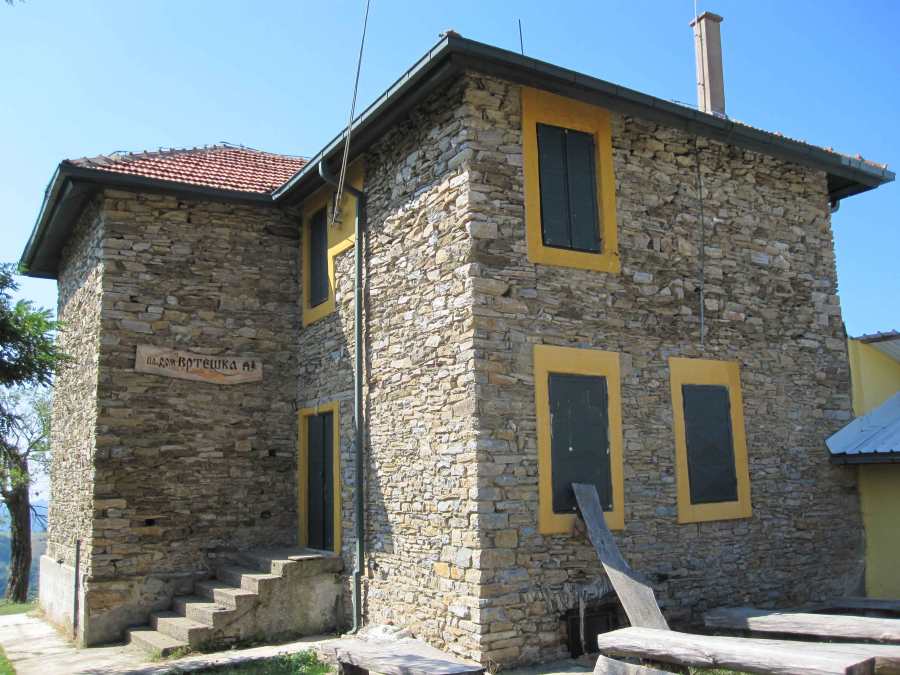
Mountain hut Vrteska is about 40 km from Stip, near the village Vrteska on the Plackovica mountain and along the same road to the archeological site Bargala. See here for a map. About 50 people can stay here, it has 6 rooms with 2, 4, 6 or 14 beds. There is a kitchen, where you can prepare your own food. We stayed in this hut after a hike to the Kup Cave and Ajducka Cave. It was the best hut we’ve been to until now in Macedonia! The stars were wonderful at night, and we could clearly see the Milky Way. We paid 250 MKD per person, just over 4 euros. .

The Church of St George was built next to the mountain hut. People from Stip come here to celebrate St George’s day and on many other occasions.
Kup Cave and Ajducka Cave

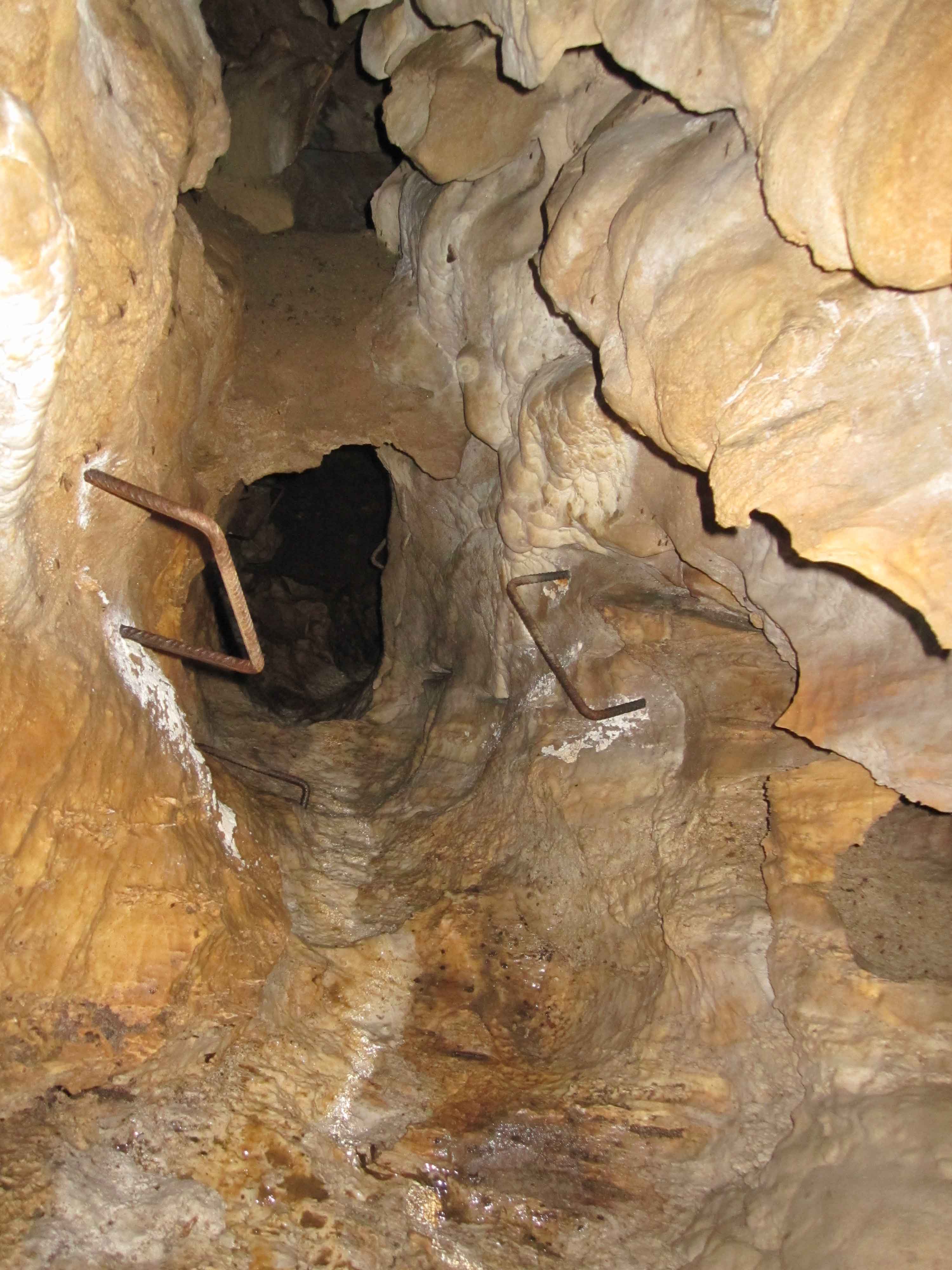
You can visit the Kup Cave and Ajducka Cave from the mountain hut Vrteska, but only with a guide from the Mountain Club Lisec. Our guides were Lazar and his friend Marija. The caves are closed with an iron gate, so without a guide you will not be able to enter.

Ajducka Cave 
Kup Cave
The Kup Cave, which we visited first, was about 90-120 minutes walking from the mountain hut Vrteska. The Ajducka Cave (Freedom Fighter Cave) is about 60 minutes further walking from the Kup cave. See here for more information.
Ezimit Winery

Ezimit Winery 
Ezimit Winery
We met Dusica who lives in Stip. I got to know Dusica through the (now closed) VirtualTourist website, and she showed us around at the winery where she worked. It was a very interesting tour! Most of the Ezimit wine is for export. We bought a bottle at the winery, and it was pretty good! http://ezimitvino.com.mk/
Archeological site Bargala
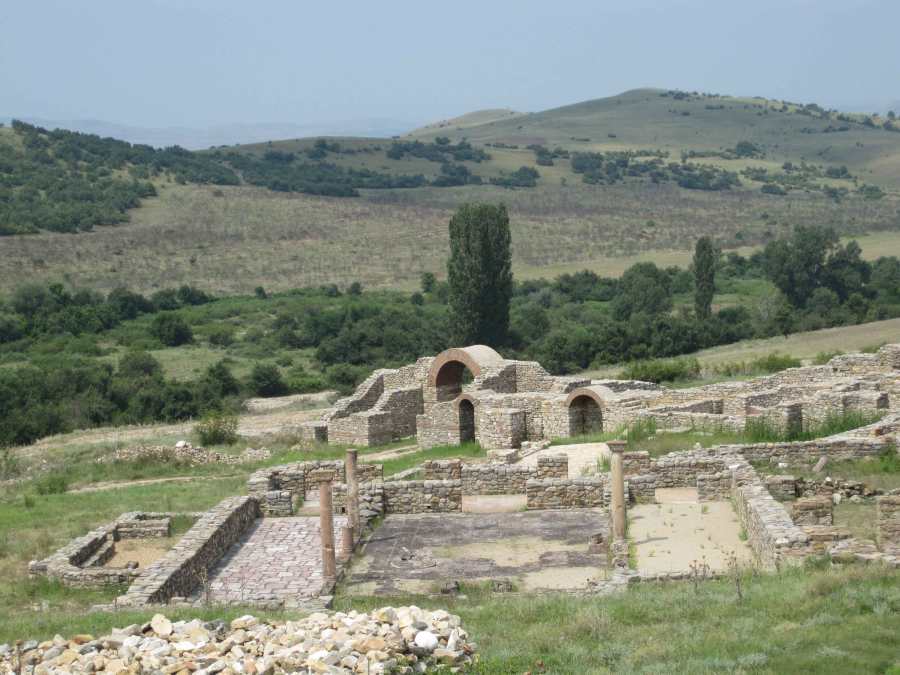
Bargala was one of the more important fortified towns in Macedonia in the Late Antiquity and early Byzantium. It was constructed between the 4th and 6th century AD. Its name is related to the river Bregalnica.

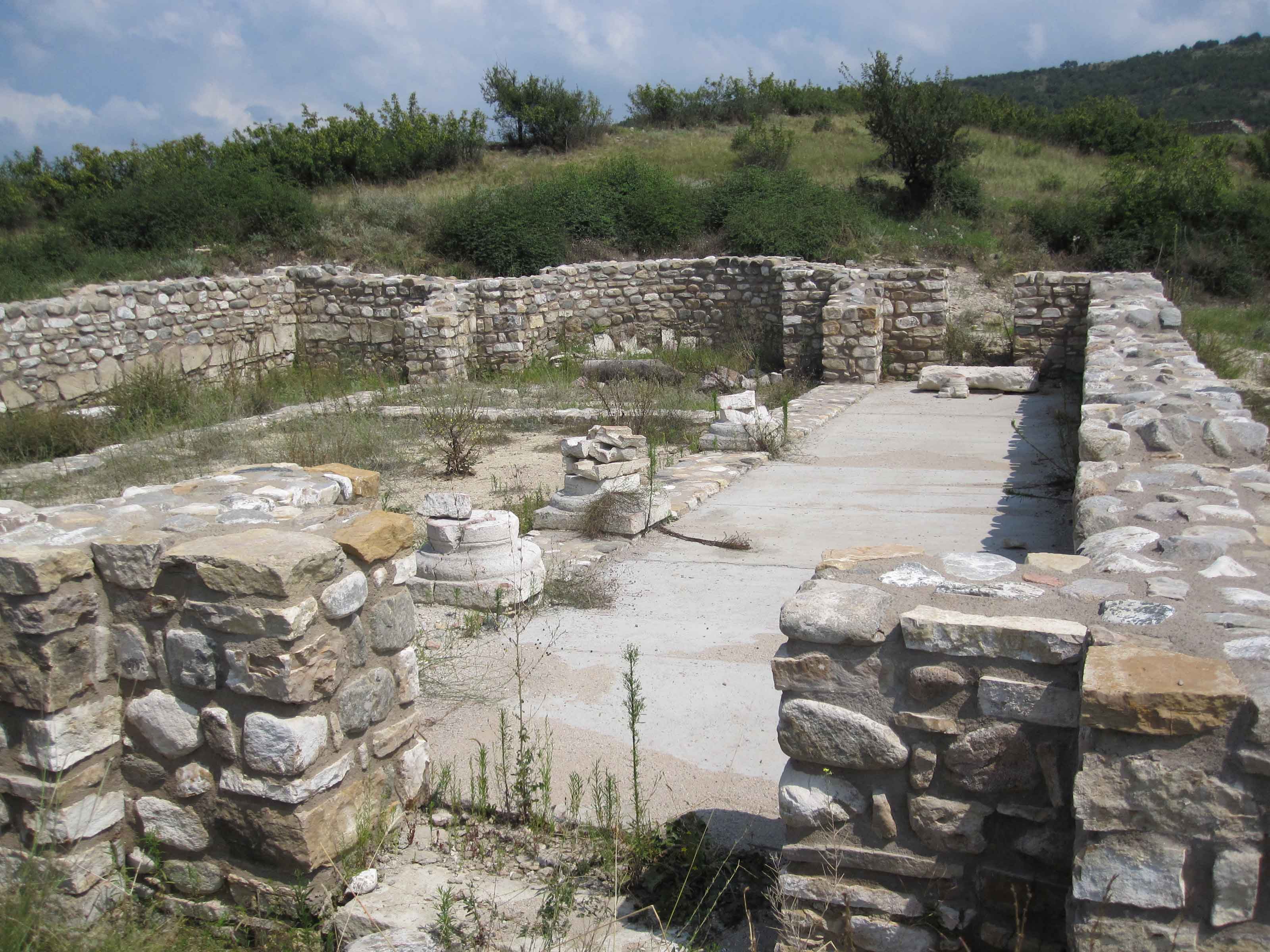


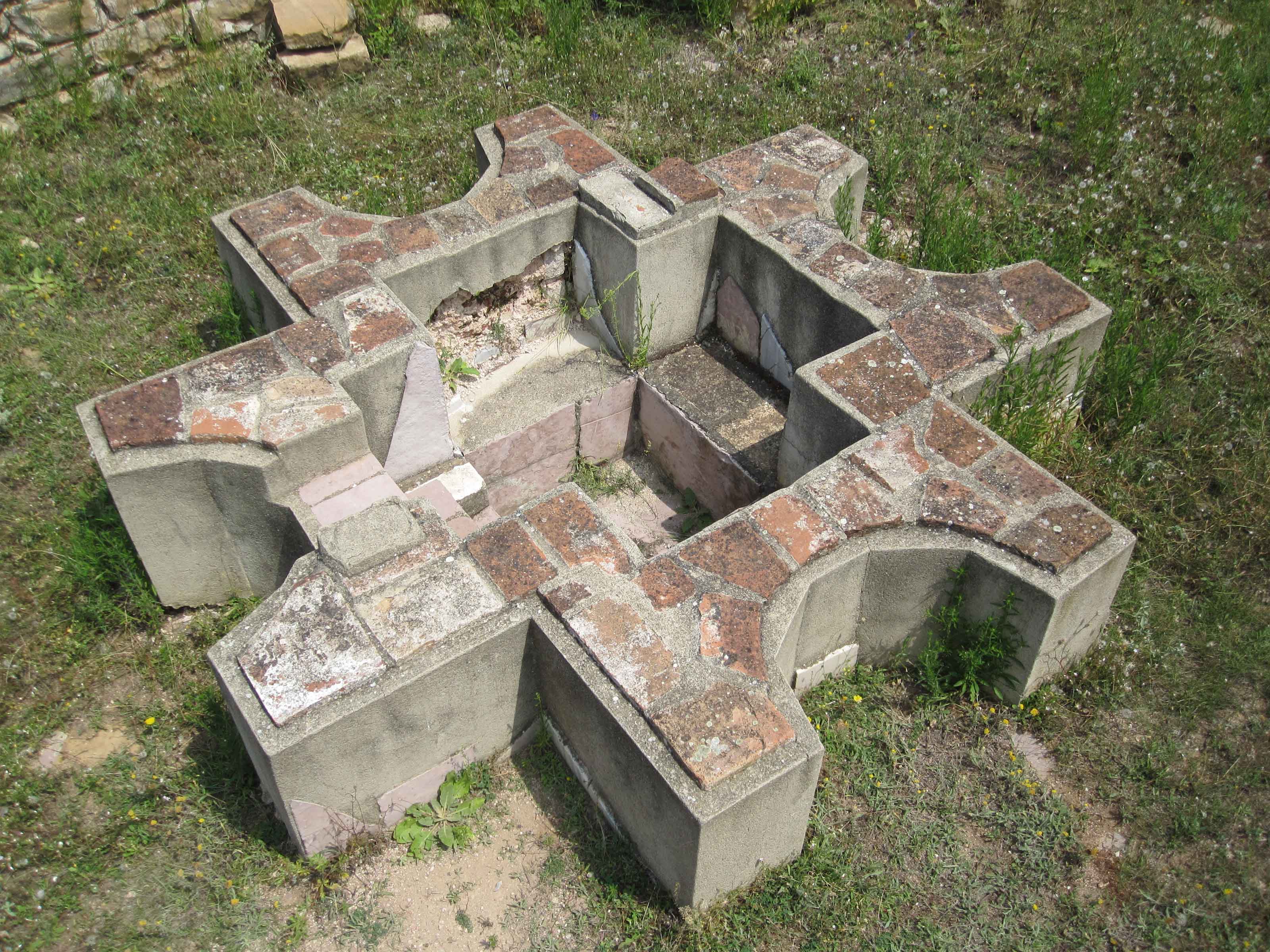


Also the 11th century Church of St George can be found at Bargala. To me, Bargala is one of the highlights of Macedonia. See here for more info about Bargala.
Stip Impressions


 My Macedonia Blog