
Kosel is a village about 7 km from Ohrid, along the road from Ohrid to Resen. The only active “volcano” on the Balkans can be found near the village. There is a sign along the road that points to the volcano.
Duvalo volcano
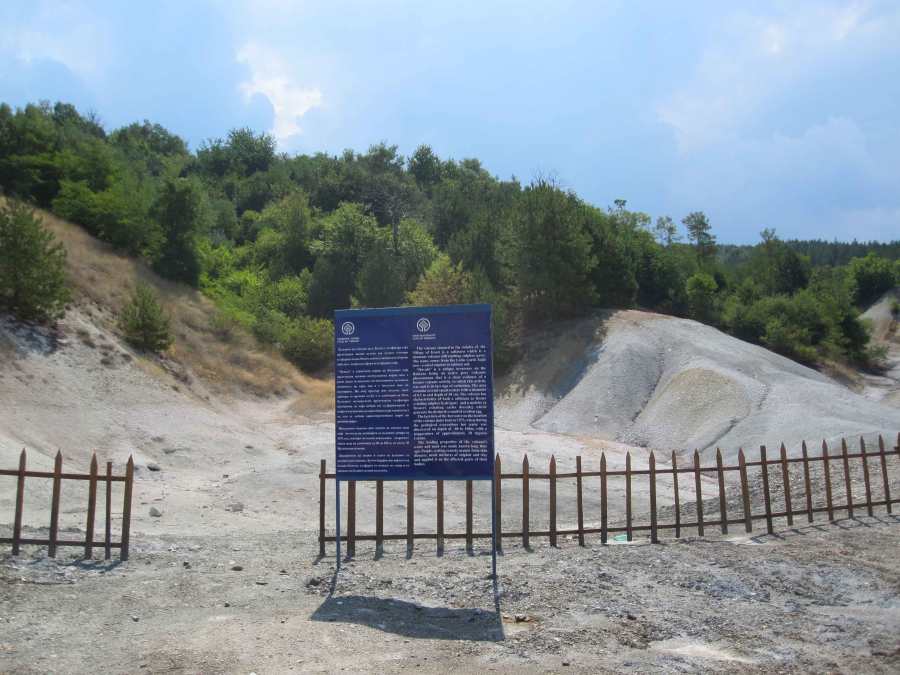
Volcano probably isn’t the right word, because it never erupted. Geothermal surface feature would be a more correct, but less interesting, description. Sulfur gasses (hydrogen sulfide, H2S) and carbon dioxide (CO2) are emitted from holes in the ground, from a crack in the deeper layers of the earth. You already can smell the volcano when you’re driving through Kosel. At first you may wonder if one of your fellow travelers cut the cheese 🙂
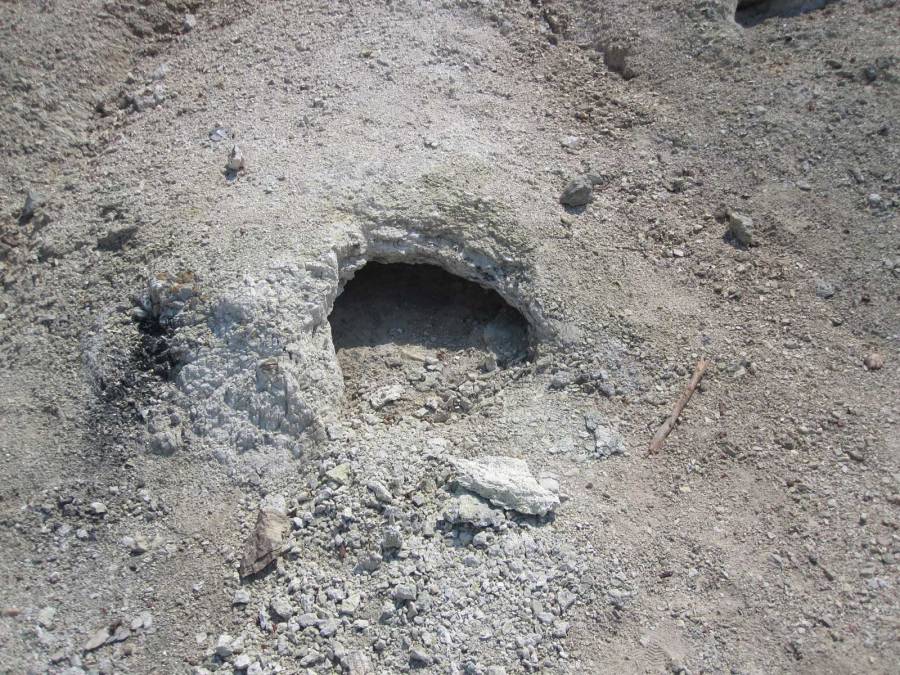
Duvalo Volcano 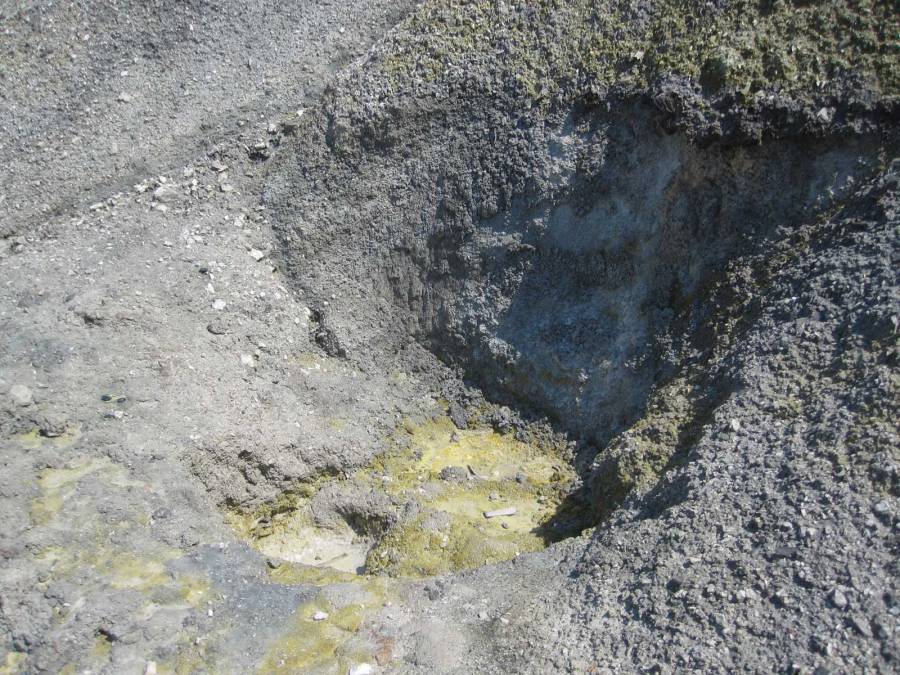
Duvalo Volcano
While the smell of rotten eggs is still bearable when you are on the road, as soon as you get closer to the volcano, the stench becomes very bad. They say that if you keep a dog near the holes, it will die in an hour. Also, there was the story of a man who as a kid witnessed somebody going into the hole, and who was found dead later. I found these stories a bit exaggerated, until I noticed several dead animals near the holes.

Duvalo Volcano 
Duvalo Volcano
There also used to come hot water from the holes, this was last witnessed in 1973 when water of about 30 degrees Celsius was discovered at a depth of 80-100 m. The sulfuric soil of the volcano is said to have curing qualities, e.g. for hemorrhoids and skin diseases. A mixture of clay and sulfur is applied to the affected parts of the body. Allegedly, the volcano also tells the locals when the weather is changing: the smell of rotten eggs becomes worse in that case. A visit is not recommended if you suffer from COPD! Location: N41° 10′ 10.5″ E20° 50′ 13.2″.
Church of St Nikola
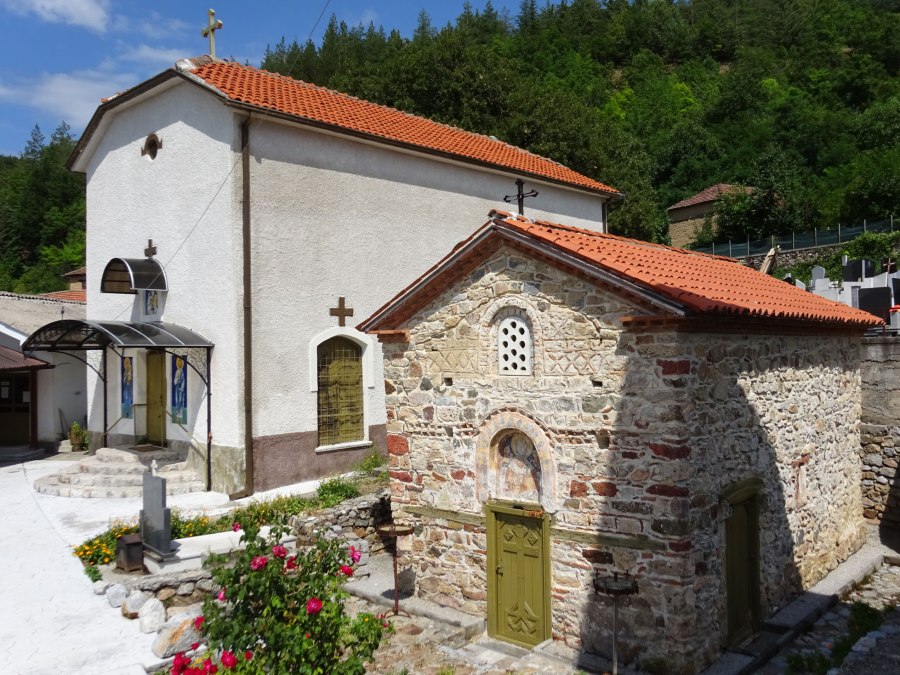
On the cemetery of Kosel you will find two churches, both dedicated to St Nikola. The small church is from the end of the 14th and beginning of the 15th century, while the larger church is from more recent times. Several spolia (re-purposed building stones from much earlier periods) can be found at the older church.1
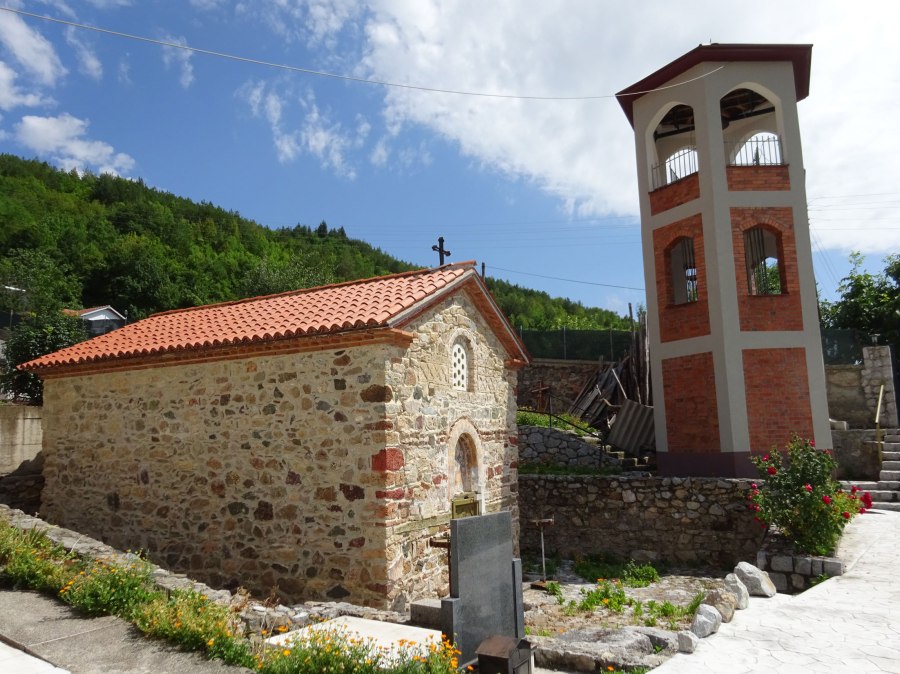
The most spectacular one is a piece of a “double half column” incorporated into a window of the church. It maintains its original function as it supports the frame of the window. These columns are representative for Late Antique and Early Medieval churches (6th-10th century), originally used as parts of balustrades or window supports.

Three more spolia can be found at the entrance of the church. These spolia are big marble slabs which were found during building activities connected with the reconstruction of the old church.

The first is a rectangular grayish stone or marble with working traces on its surface, especially noticeable on its upper side. Another block is a rectangular and strongly weathered grey stone.

The last one is also rectangular, although broken on one side. On the upper surface, it has a casting hole terminated by a circular hole. A quadrangular dowel hole 4×4 cm is located on the bottom of the circular hole. The rounded recessed part features reddish traces, most probably pointing to a former metal‑filling. All the stones were most likely an inherent part of some architecture, perhaps of an older church (destroyed before the turn of the 14th/15th century) standing on the place of the current one. Location: N41° 10′ 25.9″ E20° 50′ 14.5″. If you are interested in seeing more of these spolia, there are some interesting repurposed building blocks at the nearby Church of St Nedela in Dolno Lakocherej as well.
Other churches in Kosel
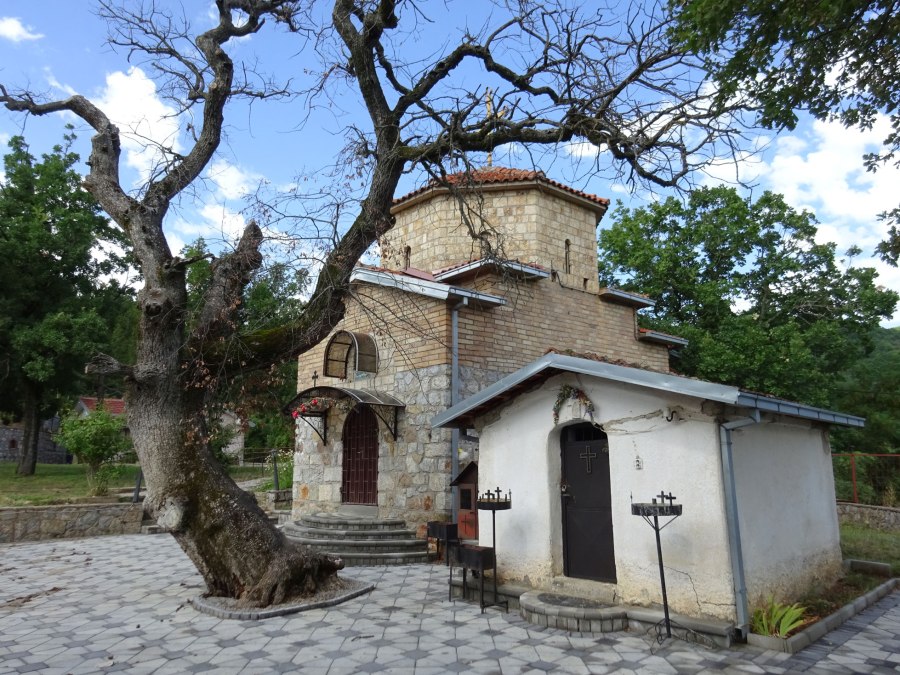
These churches or monastery dedicated to St Ilija is located on a hill above Kosel. It was a bit difficult to find them, but there are stairs leading all the way up to the churches. Location: N41° 10′ 30.4″ E20° 50′ 07.2″.
Two smaller churches / chapels can be found alongside the road from Ohrid to Resen, dedicated to St Nedela and St George (N41° 10′ 31.9″ E20° 50′ 17.0″).
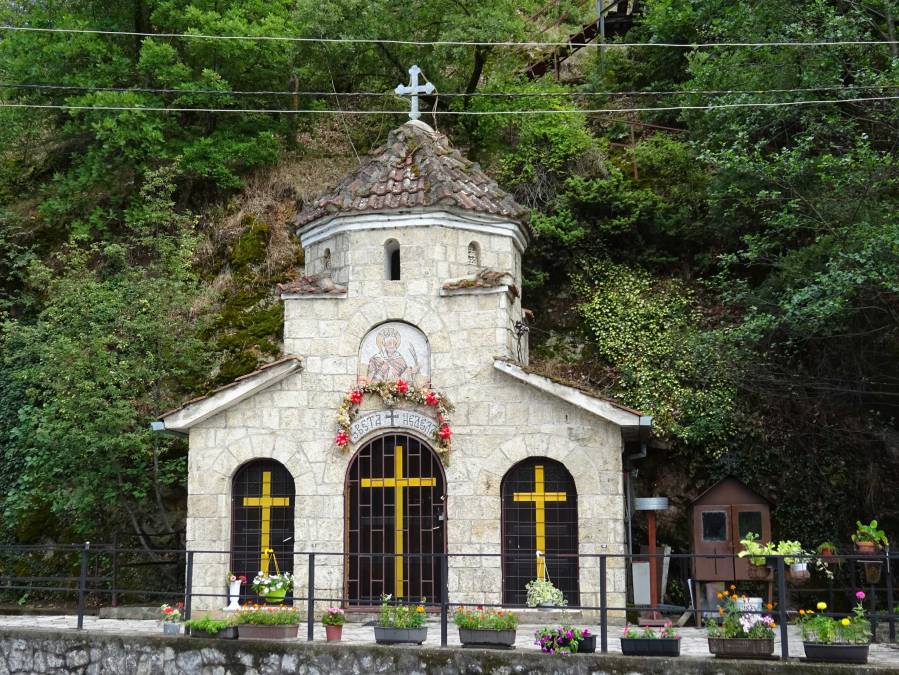
St Nedela 
St George
Besides the churches, a neglected concrete monument for those fallen in World War II is hidden along the road.

Since you are in the neighborhood, you could think about a visit to the natural washing machines in the village Rechica, about 12 km in the direction of Resen (20 min by car).
 My Macedonia Blog