Antique theater
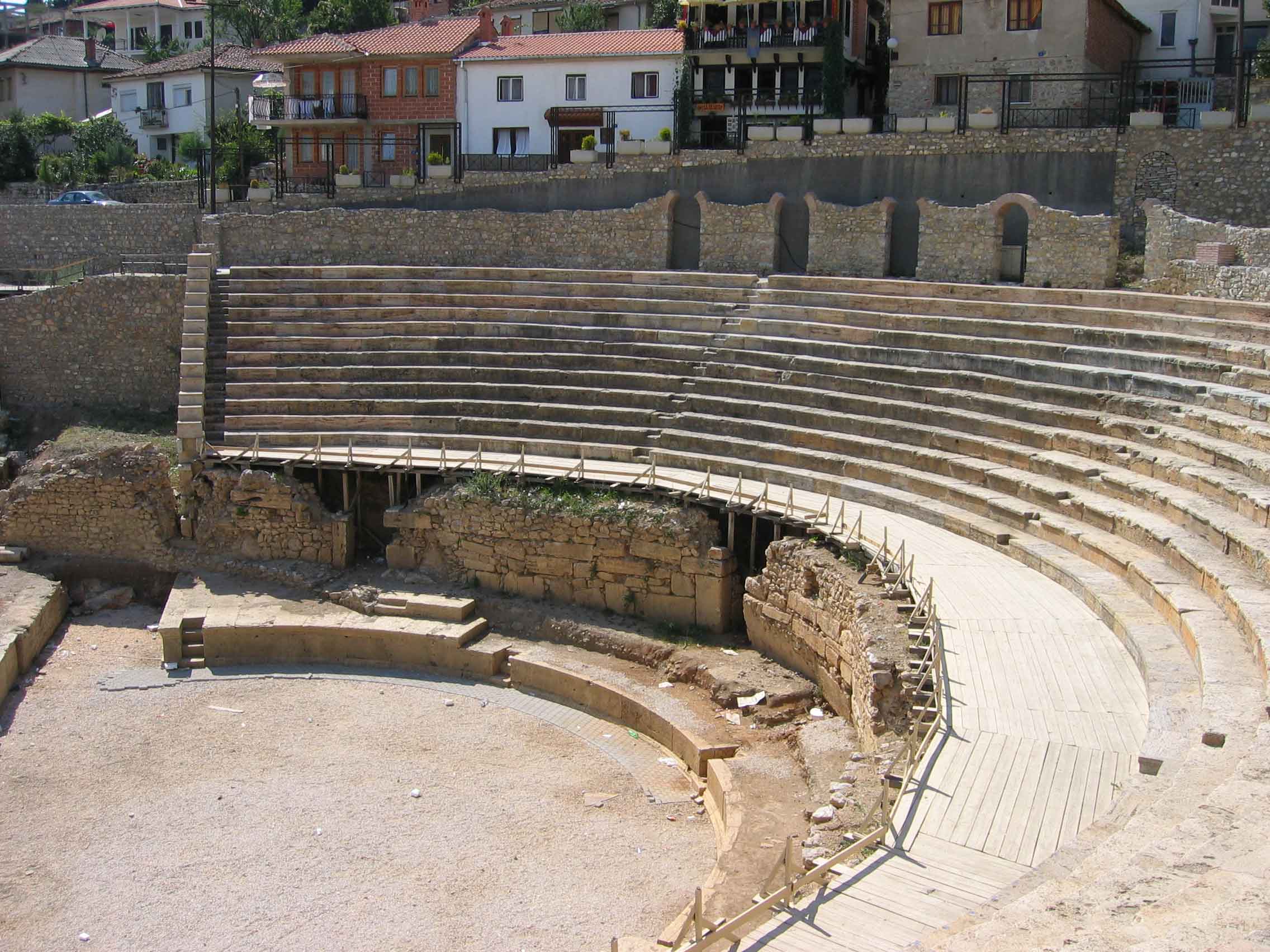
The theater was build around 200 BC, so is just over 2000 years old. The theater is in use again during the Ohrid Summer Festival for outdoor concerts and performances. Take a close look at the seats to see if you can read who owned the seat 2000 years ago! The antique theater first was in use as a theater in which tragedies, comedies and other plays were performed. During Roman times, the theater was reconstructed in order to serve as an arena for gladiator fights. Many Christians must have died here as martyrs! Address: Ilindenska. Directions: N41.11458 E20.79368
Old Gates of the Town Wall
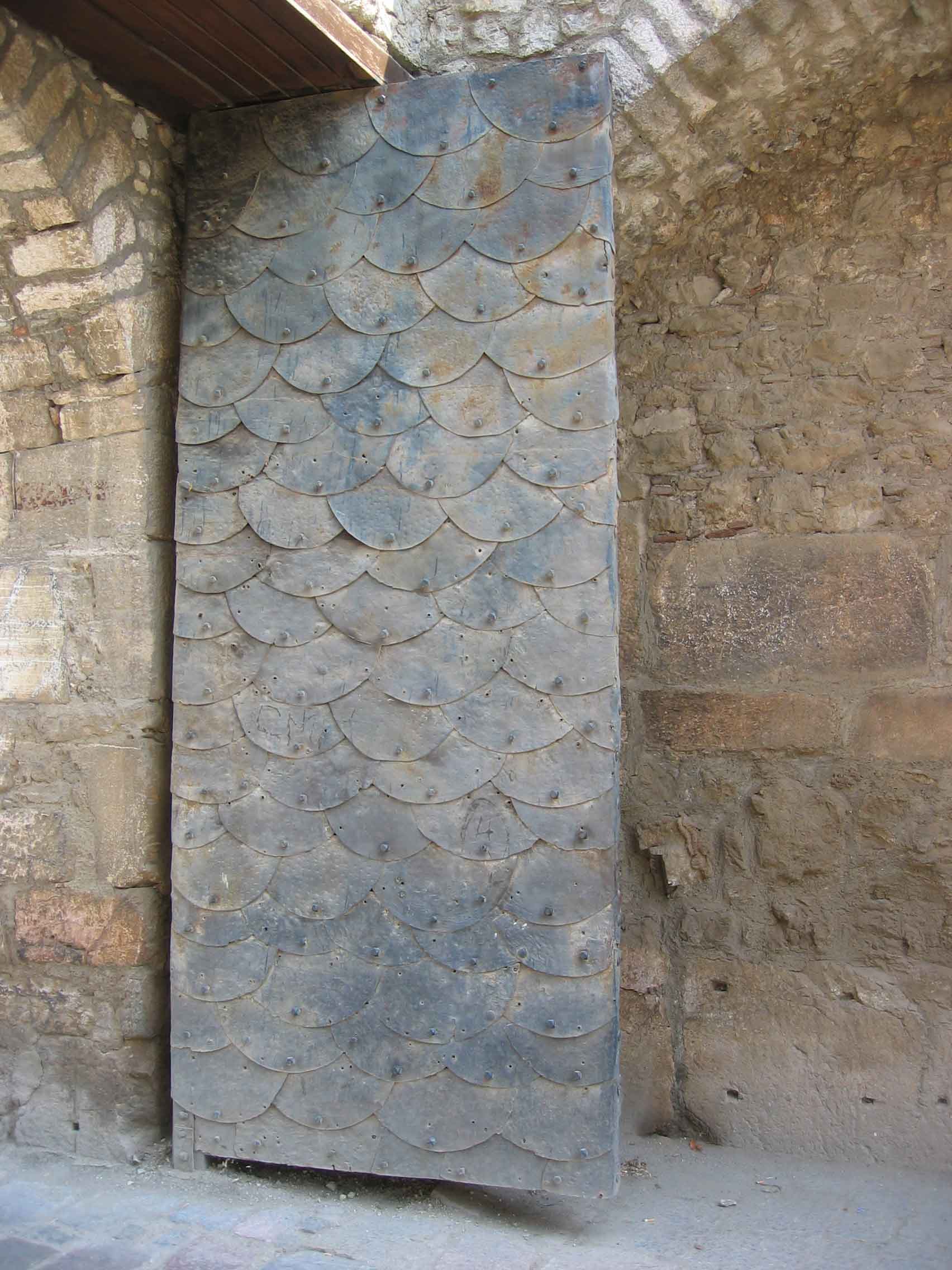
Ohrid used to be completely surrounded by city walls, up until the Ottomans arrived in 1395. One could probably only enter Ohrid through two gates, the Upper Gate and the Lower Gate. There is also a third gate, the Front Gate near the Church of St Bogodorica Celnicka, as well as the Water Gate on the waterfront. Once taken by the Ottomans, the town expanded beyond the walls as the Turks and Ottomans moved into the Ohrid area. As in other towns like Skopje, the Ottomans kept the Christian population within the town walls. As the name implies, the Upper Gate can be found on the higher part of Ohrid. It has big, heavy doors and still serves as an entrance to the town. There is a parking outside the gate. You can do a walk of 4 km around the Old City Wall of Ohrid.

As obvious as the Upper Gate on top of the hill of Ohrid is, so obscure is the Lower Gate closer to the lake. I did not actively notice it for 4 years! In contrast to the Upper Gate, the Lower gate is not a gate anymore, just one of the towers of the gate remains. The Lower Gate is from the 4th century. The gate is located at Tsar Samoil Street.
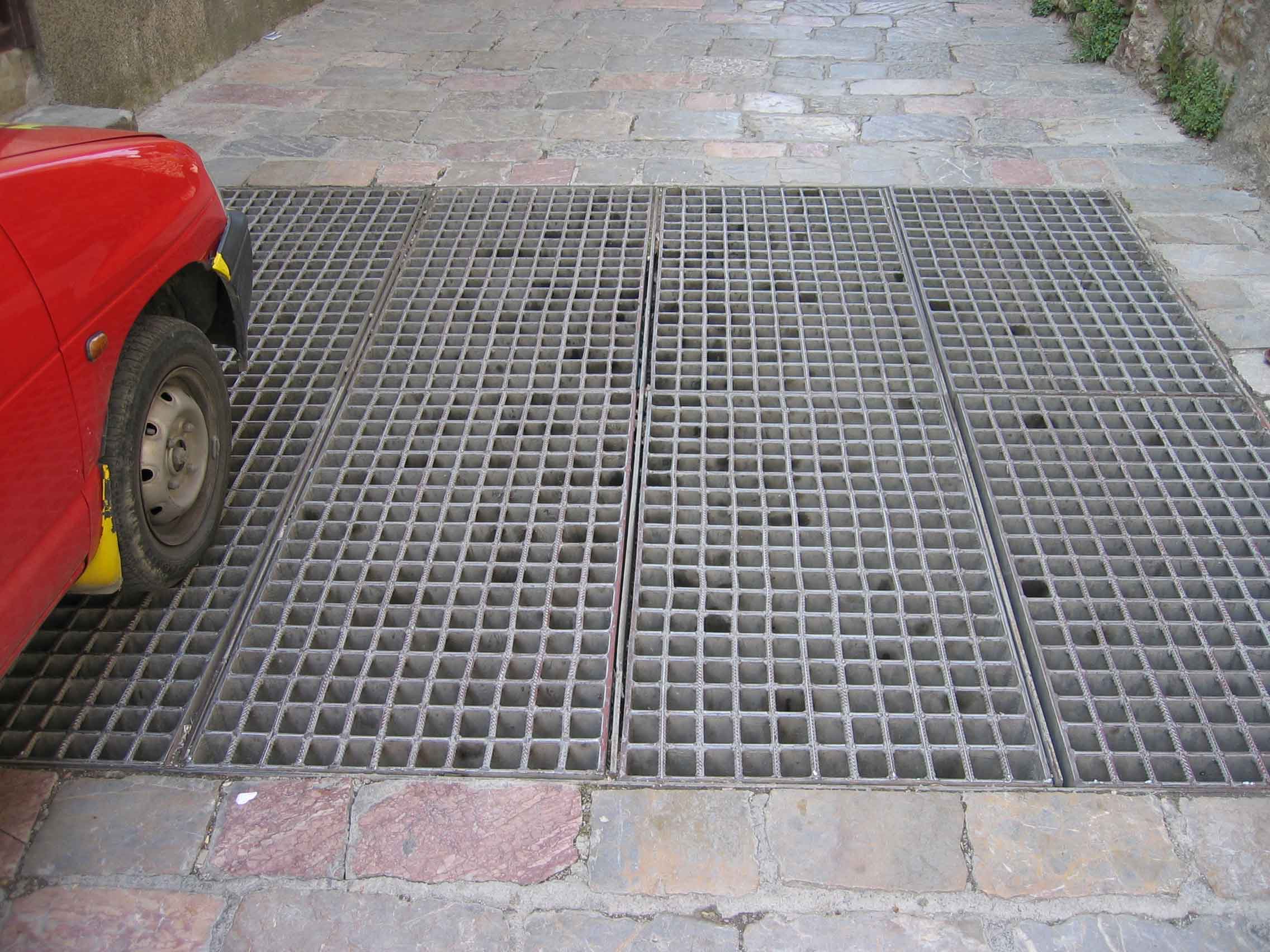
This grate at the foot of the Lower Gate is not for the sewer system, but to display the original pavement: big stones that once formed the entrance into Ohrid. I’ve walked over this grate many times (it’s slippery after rain) without noticing the original pavement, until somebody brought it to my attention! Some of the original pavement without a grate can more easily be seen at the Upper Gate.
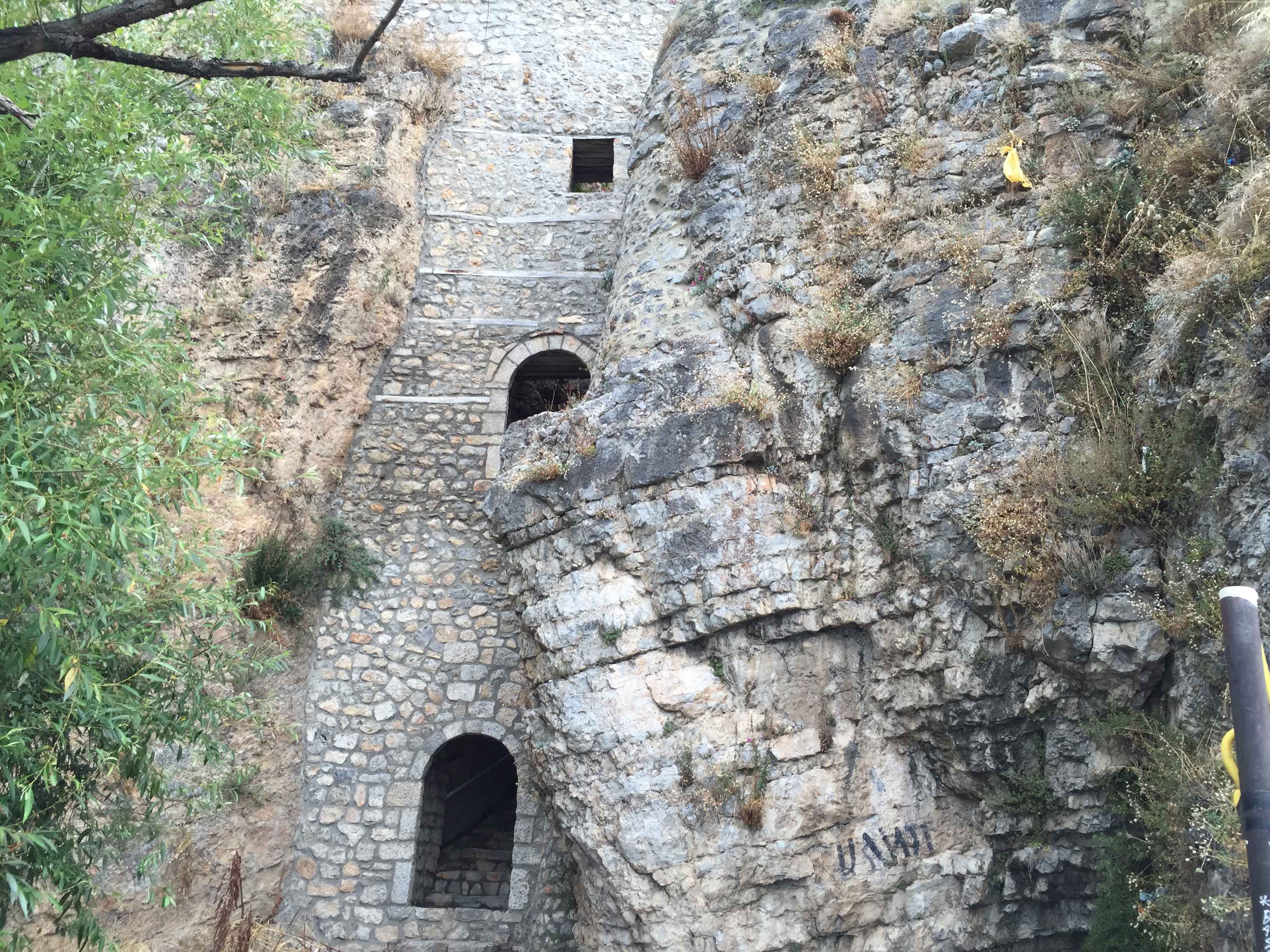
You can find the Water Gate if you take the wooden walkway over the water between Kaneo and St Sofia. Entering the Water Gate used to be possible from the wooden walkway, but it is not anymore and the entrance is closed with a gate, also see here.
Tsar Samoil Fortress
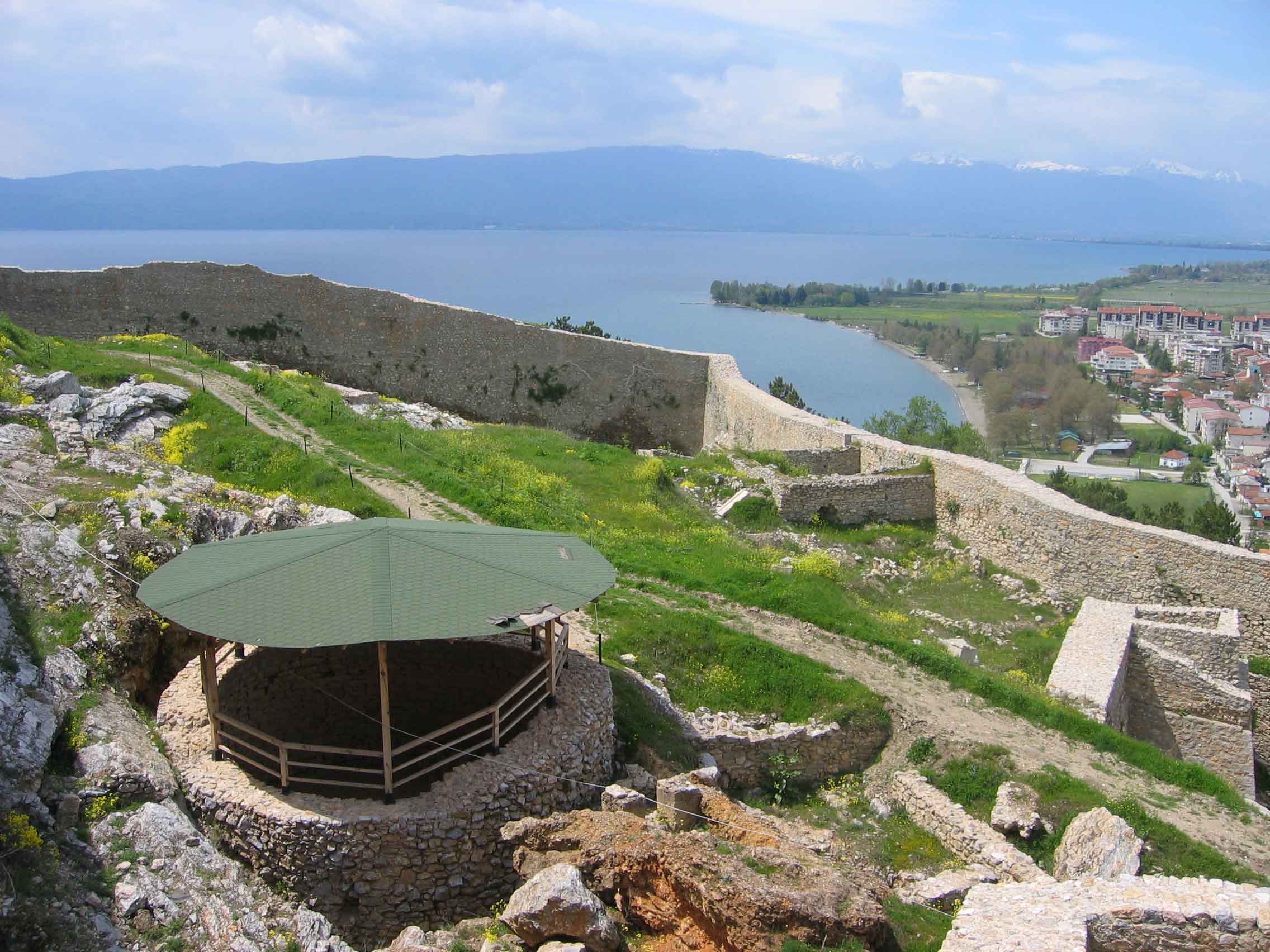
Tsar Samoil Fortress dates from the the end of the 10th century, but a fortress has been standing on top of Ohrid hill since at least the 3rd century BC. Although most of the walls are still standing, most of the inside of the fortress is destroyed. But surely worth a visit! The fortress offers good views over Ohrid and the lake. An admission fee has to be paid to enter the fortress, I think less than 100 denars (1.70 euros).
Archeological site Plaosnik
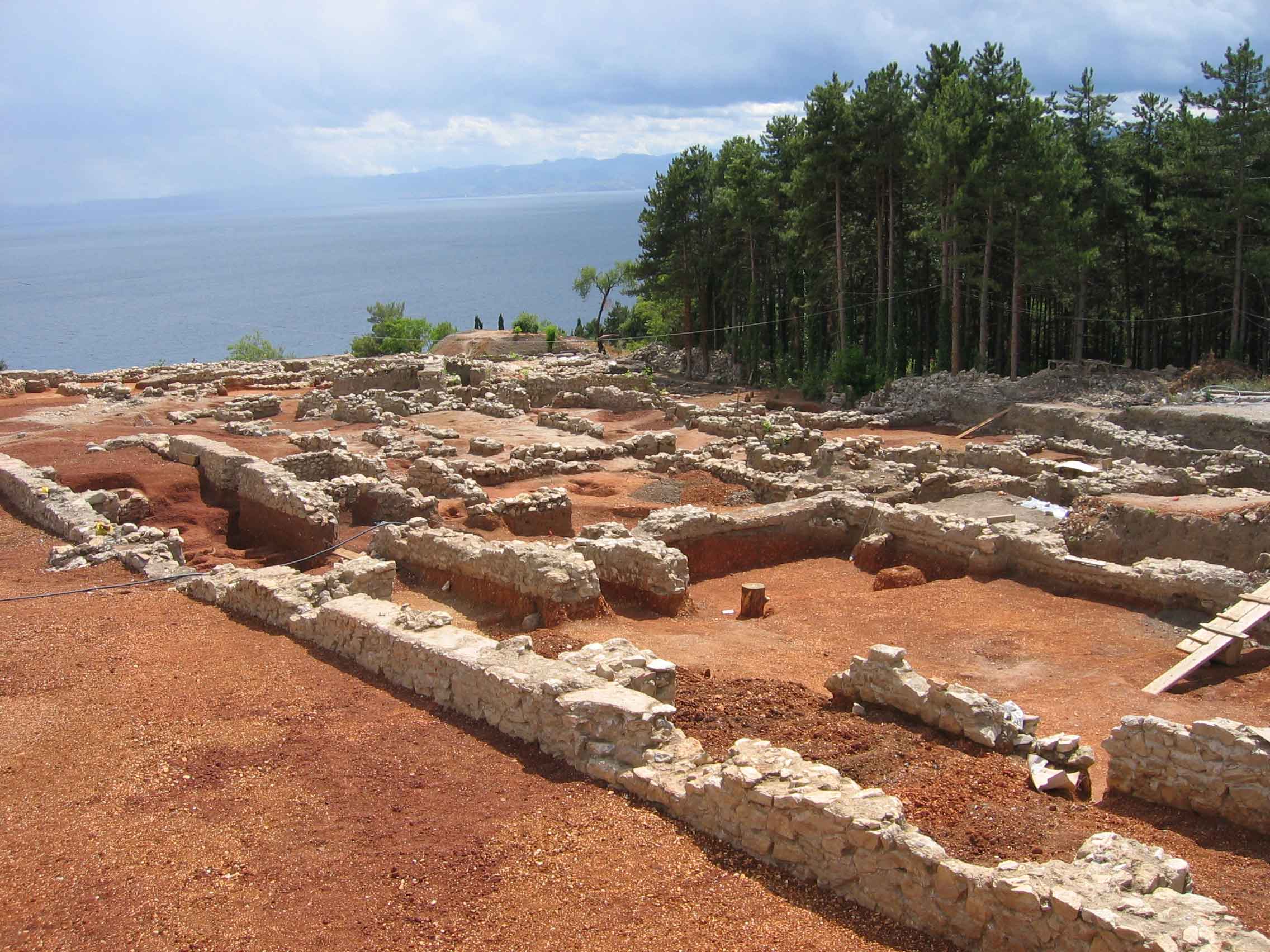
Every time I visit Plaosnik, there’s something new. New excavations and recently unfortunately also new buildings, which in my opinion disfigure this holy place. It was here that St Clement had built his church and Monastery School, and where he was buried in a tomb that he had built by himself. The new St Clement´s Monastery Church (2002) is also located at this location (see churches).
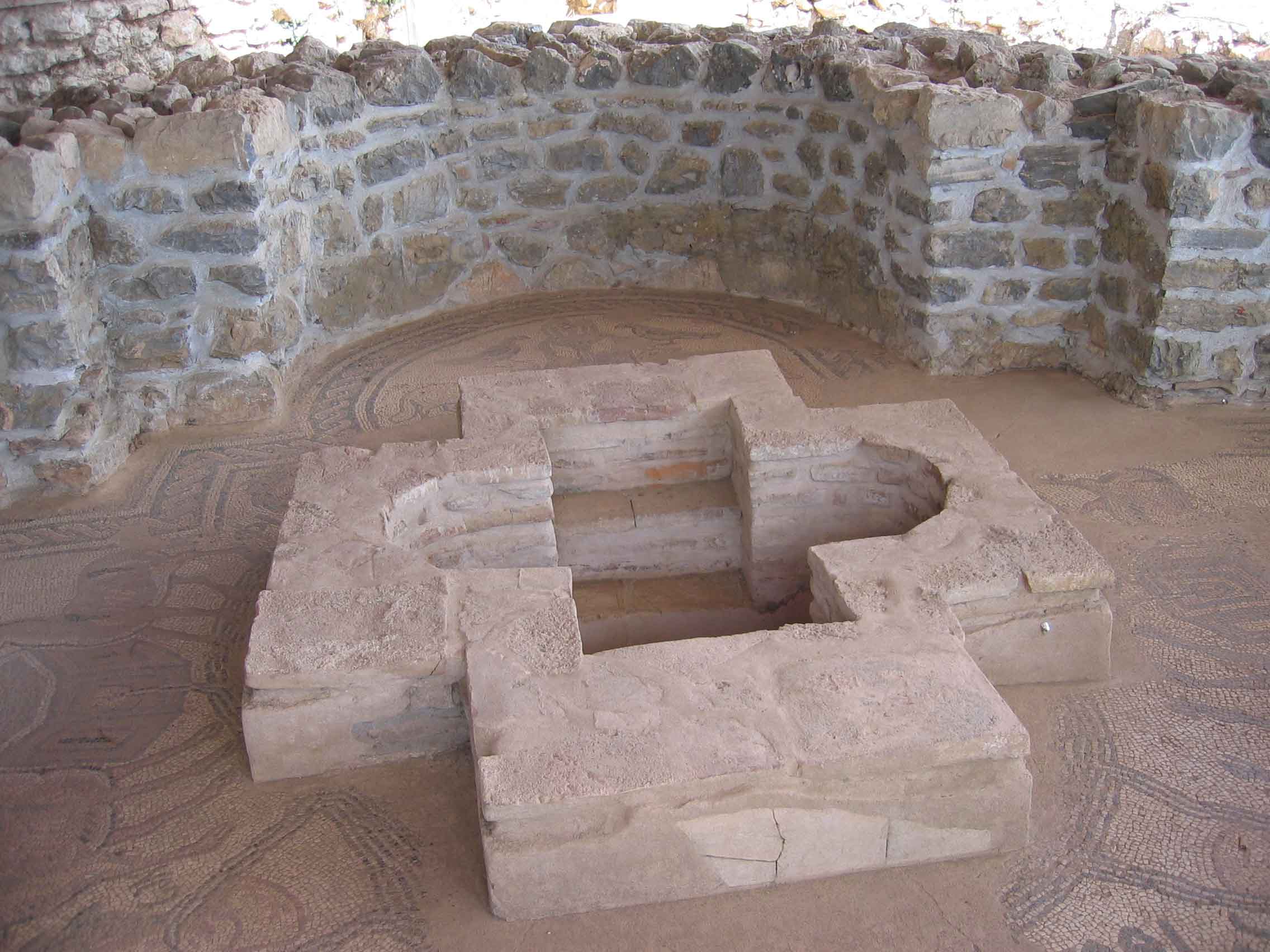
There are covered ruins of a 5th-century basilica with beautiful mosaics as well as two baptisteries. Plaosnik used to be free, but nowadays there is an entrance fee of 100 denars I believe (about 1.70 euros). Opening hours are from 08.00-23.00 h.
The 40 Martyrs of Sebaste
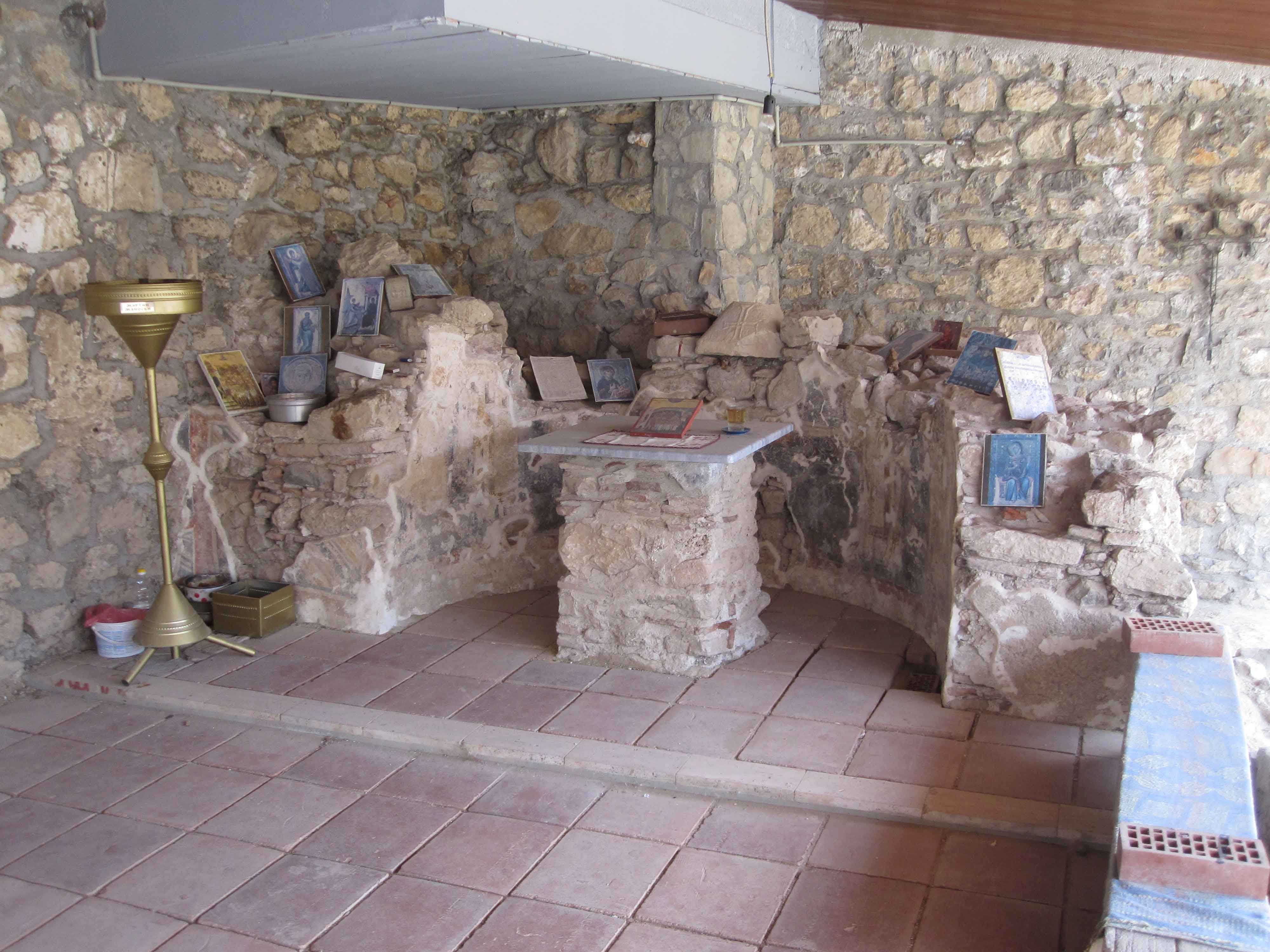
The cult of the 40 Holy Martyrs of Sebaste expanded throughout the Balkans in the 4th century. Among well known sacral buildings dedicated to them are the the medieval church dating from Tsar Samoil times near Bansko-Strumica, the church in Trnovo and this newly (2005) found church in Ohrid. Only ruins remain of the church. There are information panels in English and Macedonian available. The church is off the main roads in an ally, and actually in somebodies yard. There is a wooden sign that indicates the ally. Directions: Boro Shain Street, in the yard of the Shandanovi family house.
Mancevci archeological site
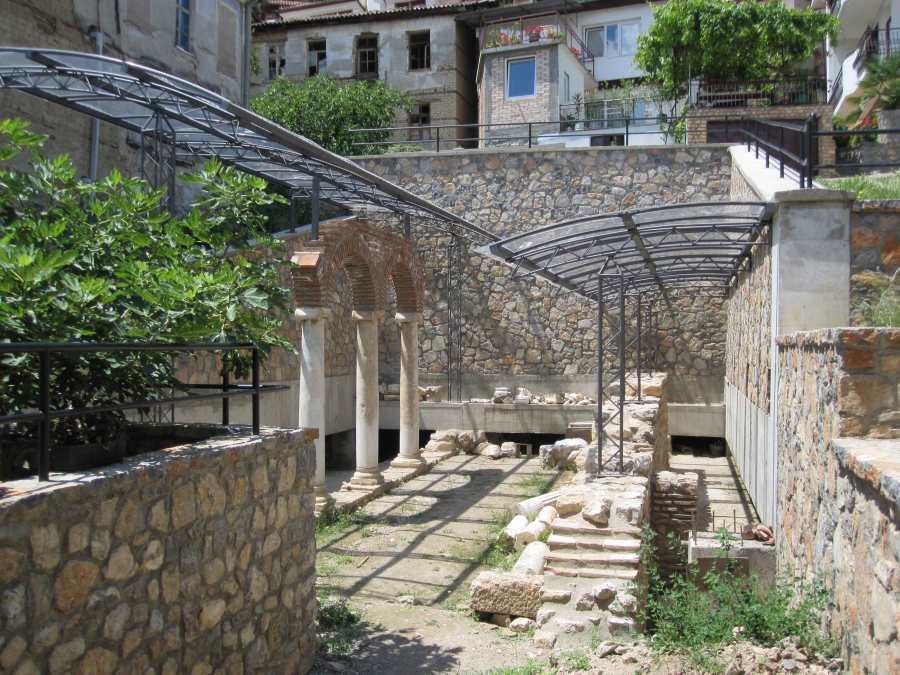
This site is located between the Church of St Sofia and the Roman theater. There are some mosaics to be seen, and some ruins and pillars. This is the archeological site Manchevci (Mancevci) and the remains are of an Early Christian Basilica originating from the 4th-5th century AD. It was discovered in 2007 during the demolition of an old house, and opened to the public in 2012. Address: Ilindenska, Ohrid. Directions: N41° 06′ 46.2″ E20° 47′ 36.4″
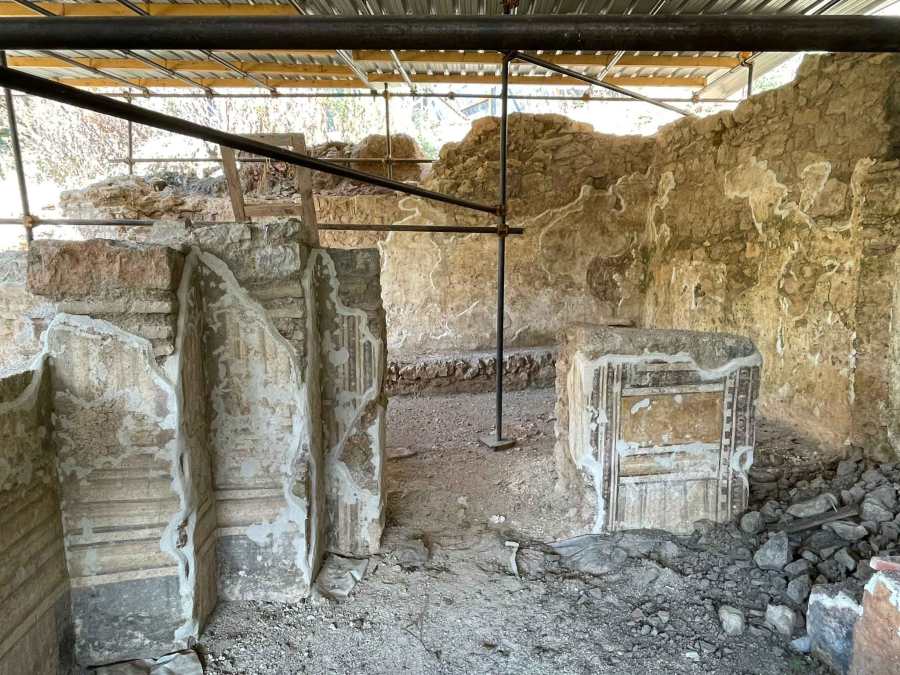
In 2024 I noticed this new archeological site right next to the Manchevci site. Hopefully it also will be open to the public one day. Location: N41° 06′ 46.8″ E20° 47′ 37.1″.
Clock Tower
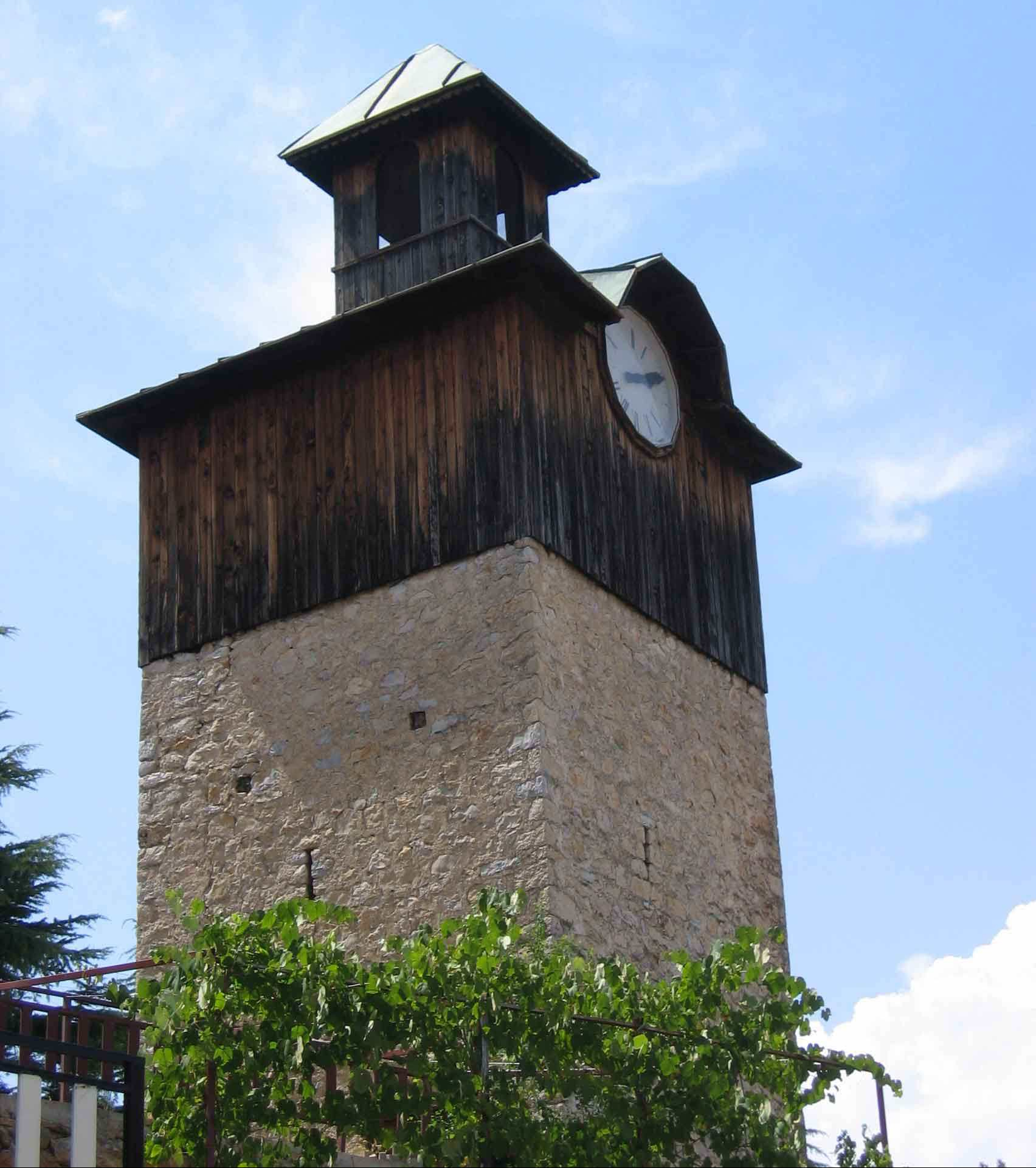
The Clock Tower dates from 1726 and is a monument from the Ottoman times.It can be found a bit more uphill from the church St Bogorodica Kamenska, close to the Krusevska Republika Square (the square with the 900-year old Plane tree Cinar and the fountain). When you follow the road past the Clock Tower uphill, you reach the Upper Gate.
Tombs in Ohrid
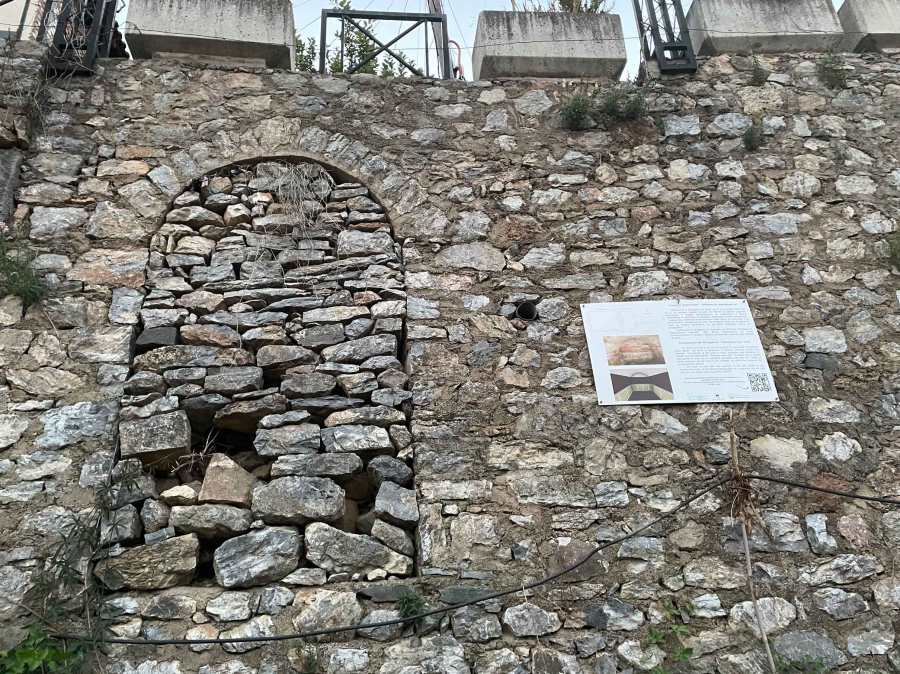
In 2023 we visited the Royal Tomb of Pavla Chuka at the village Bonche near Prilep. While searching for information, I read that there is a second tomb of the “Macedonian type” on the current territory of Macedonia. It is located in Ohrid on a location that we had visited many times before without being aware of the existence of this tomb. The tomb is at the archeological site “Karagjulevci”, located right at the famous Antique Theater! The tomb was built in the late 4th or early 3rd century BC (!!) using massive stone blocks. The tomb is composed of a dromos (corridor), atrium and a chamber.
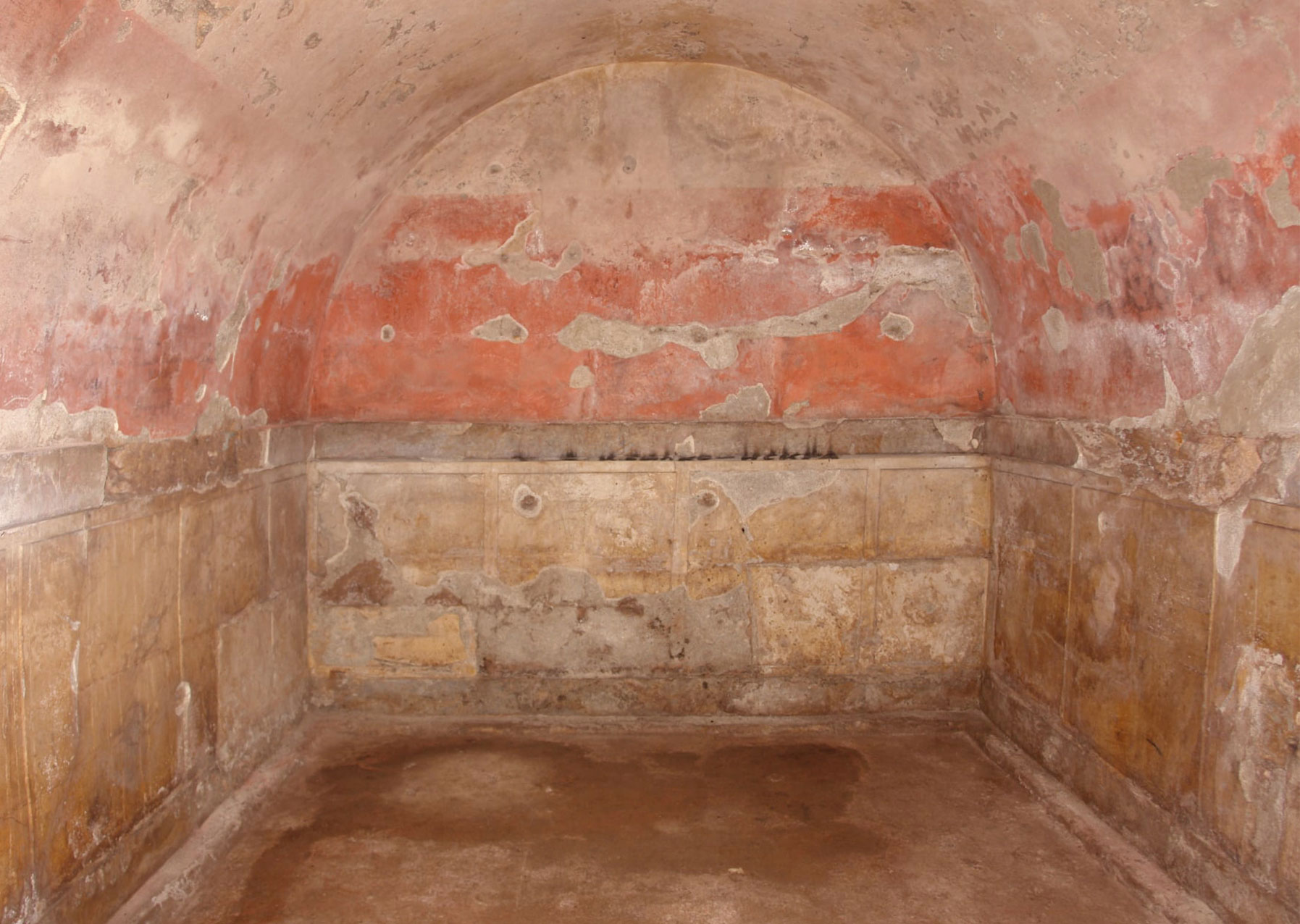
A sign next to the tomb states that “the interior is richly decorated with imitations of marble and the characteristic Pompeian-red color. The tomb has a vaulted (arched) roof painted in blue, as an association with the sky. Traces of stone pedestals are found in the chamber, on which the bodies of the deceased were placed. The tomb is built after the example of the rich tombs of the Macedonian Kings, as the eternal resting place of a nobleman and his wife from the rich ancient city of Lychnidos (Ohrid)”.
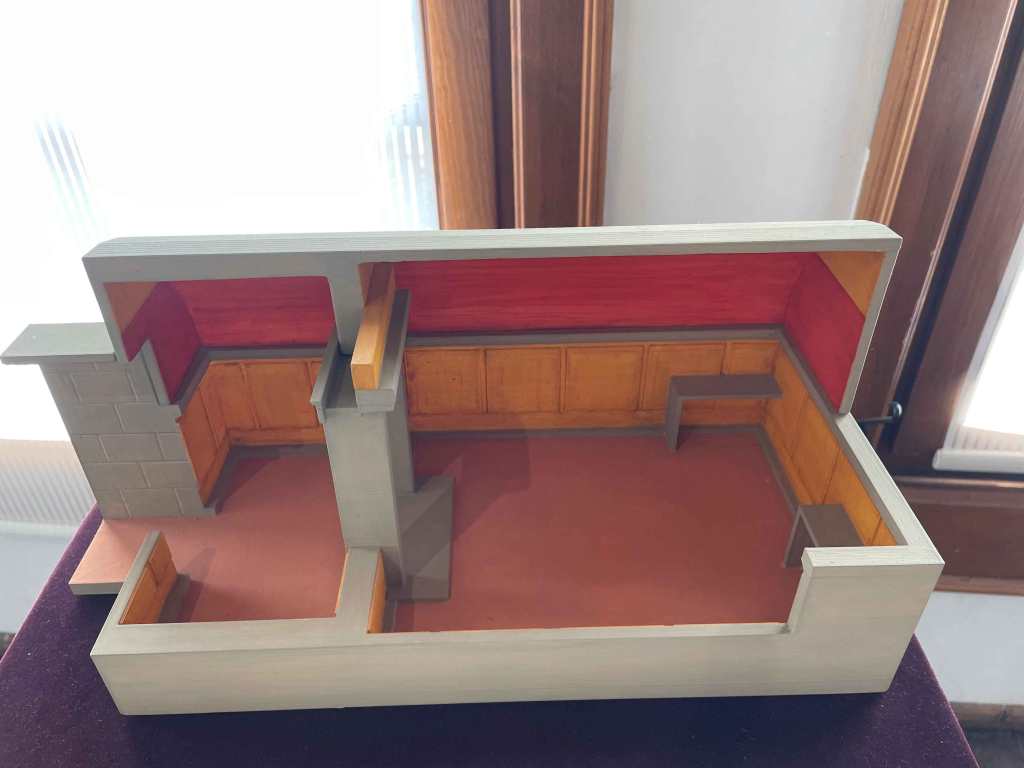
Nowadays the tomb is completely bricked up and cannot be entered. In the Museum of Ohrid in the Robevci House there is a 3D-printed model of the tombs and on YouTube you can watch a virtual reconstruction of the tomb as well as some real video material. Location of the tomb at Karagjulevci: N41° 06′ 53.4″ E20° 47′ 36.7″
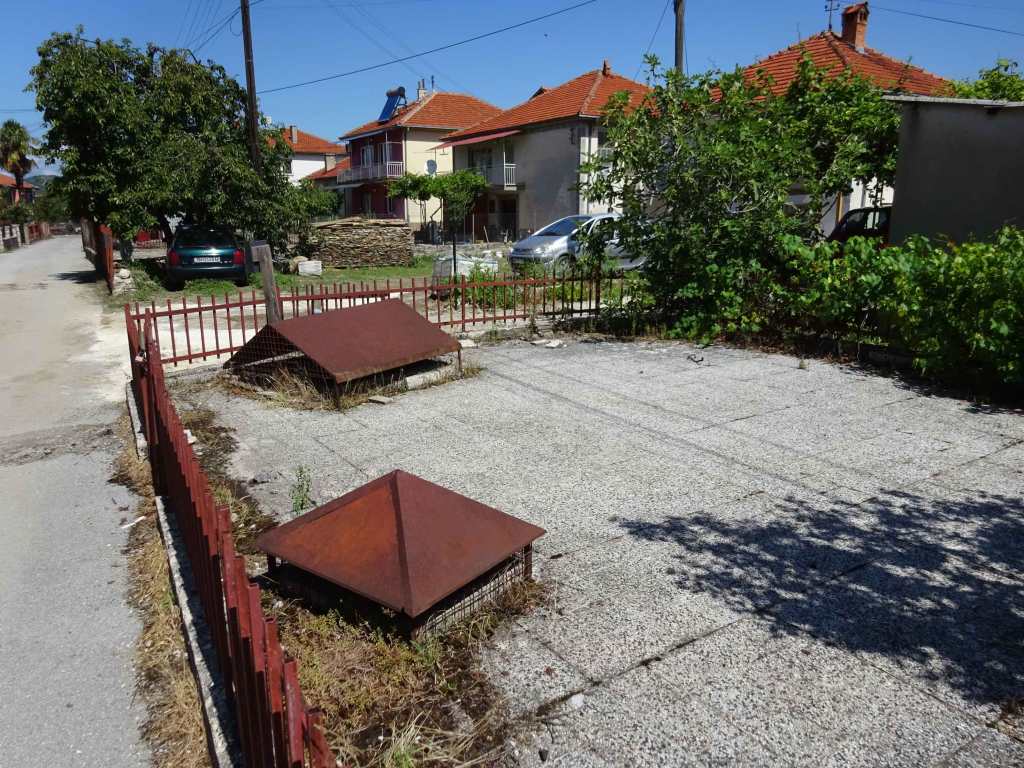
Once I started looking for one tomb I found another. It turns out there is a Roman Family Tomb as well in Ohrid at the archeological site Vidobishta. The tomb was discovered by chance in 1979. The tomb was partially looted and archeological material of gold, precious stones, bronze, glass and ceramics were discovered. According to the information in the Ohrid museum “The Roman Tomb was built in the period between the first half of the 3rd century AD to the first half of the 4th century AD. It consists of an antechamber, a chamber and a vaulted roof. It is built with stone and mortar. On the southern wall of the chamber a pyramidal opening was built that narrows outwards, which means that the outer opening was at ground level and the tomb was underground. In the antechamber, there is 1 burial with inhumation (the ritual placing of a corpse in a grave), while in the chamber of the tomb there are 10 burials, 9 of them with inhumation and 1 with cremation.”
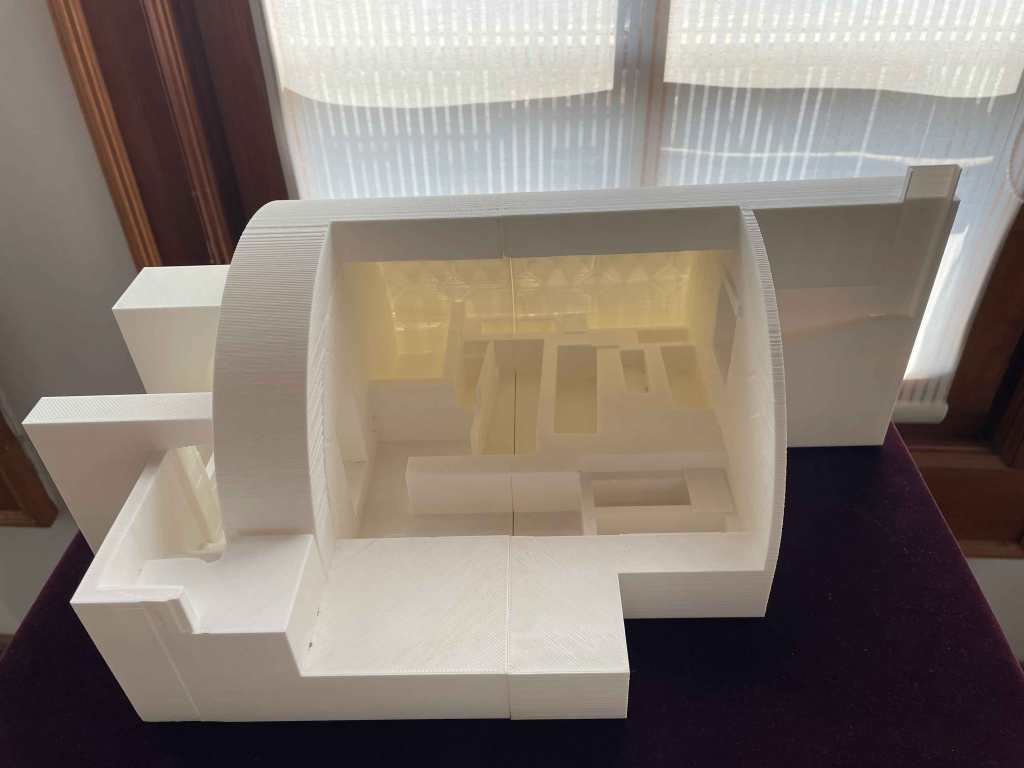
Also for the Vidobishta Tomb you can find a 3D-printed model in the Museum of Ohrid and a virtual reconstruction on YouTube, as well as real video material. The paper by Pasco Kuzman in Folia Archaelogical Balkanica III (2015, p131-202) is mainly in Macedonian but with a summary in English and has a lot of interesting pictures.
The Vidobishta Roman Family Tomb is not so rigorously bricked up as the Macedonian-type tomb Kragujevac at the Antique Theater, but still the entrance is locked. The Museum in Ohrid has the key and we went there to ask if we could get somebody to open it up for us. Unfortunately that was not possible, they said nobody had been in the tomb for some time and they did not know in what condition they would find it. Maybe next time! Location of the Vidobishta Roman Family Tomb: N41° 07′ 13.9″ E20° 49′ 21.6″
Biljana Springs
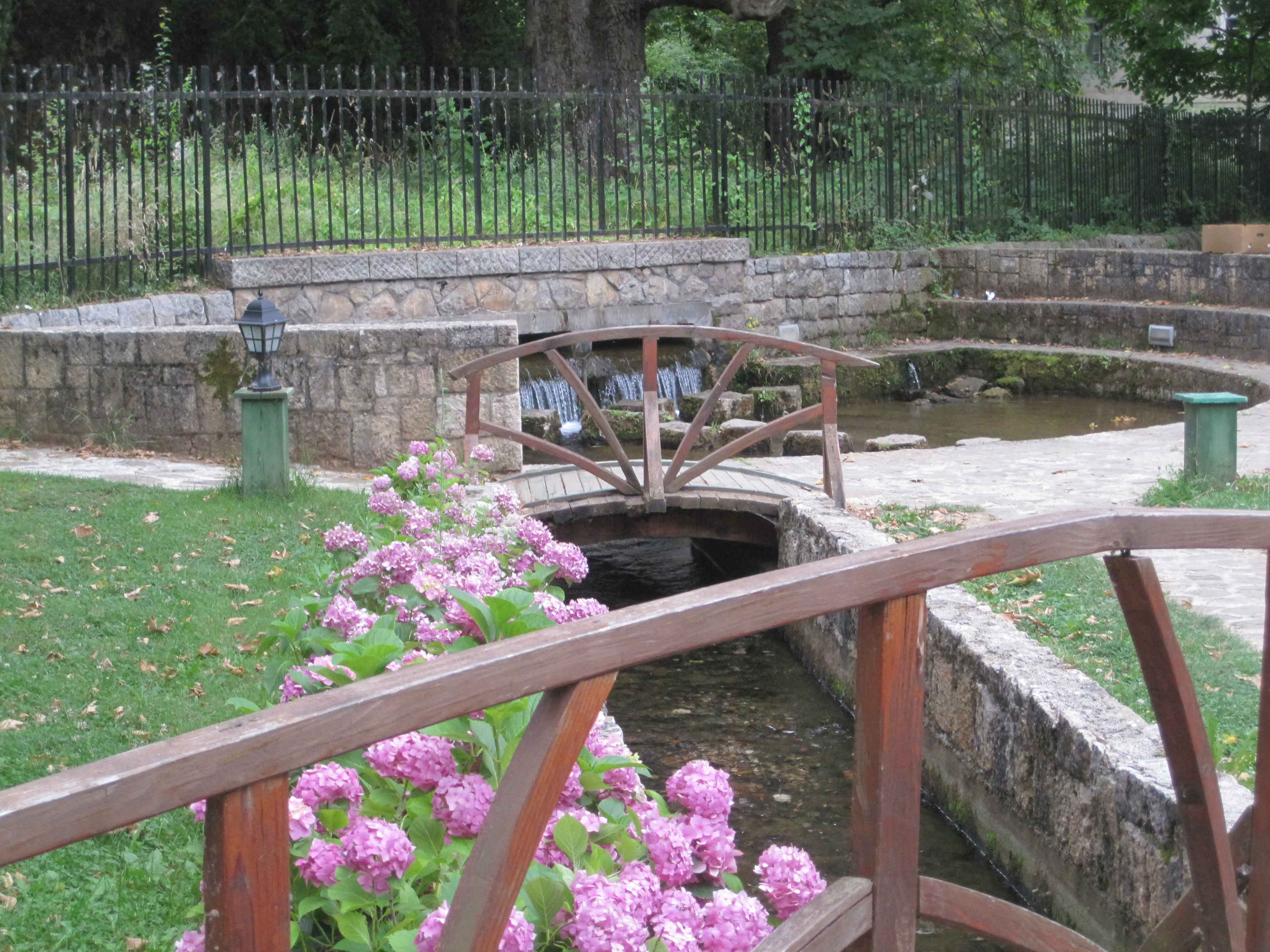
The Biljana Izvori (Biljana Springs) are one of the springs that feed Lake Ohrid. Many songs and legends are written about these springs. The water is very clean and drinkable, you will see many people filling up plastic bottles at the springs. Near the Monastery of St Naum there are more springs that can be visited. The Biljana Springs can be reached if you walk south along the lake on Quay Marsal Tito from the center of Ohrid and turn left before the high bridge. The springs are close to the petrol station on the roundabout, just before you leave Ohrid via the road to St Naum. The water from the springs enters the lake, and leaves the lake again via the river Crni Drim in the village Struga.
Voska Amam
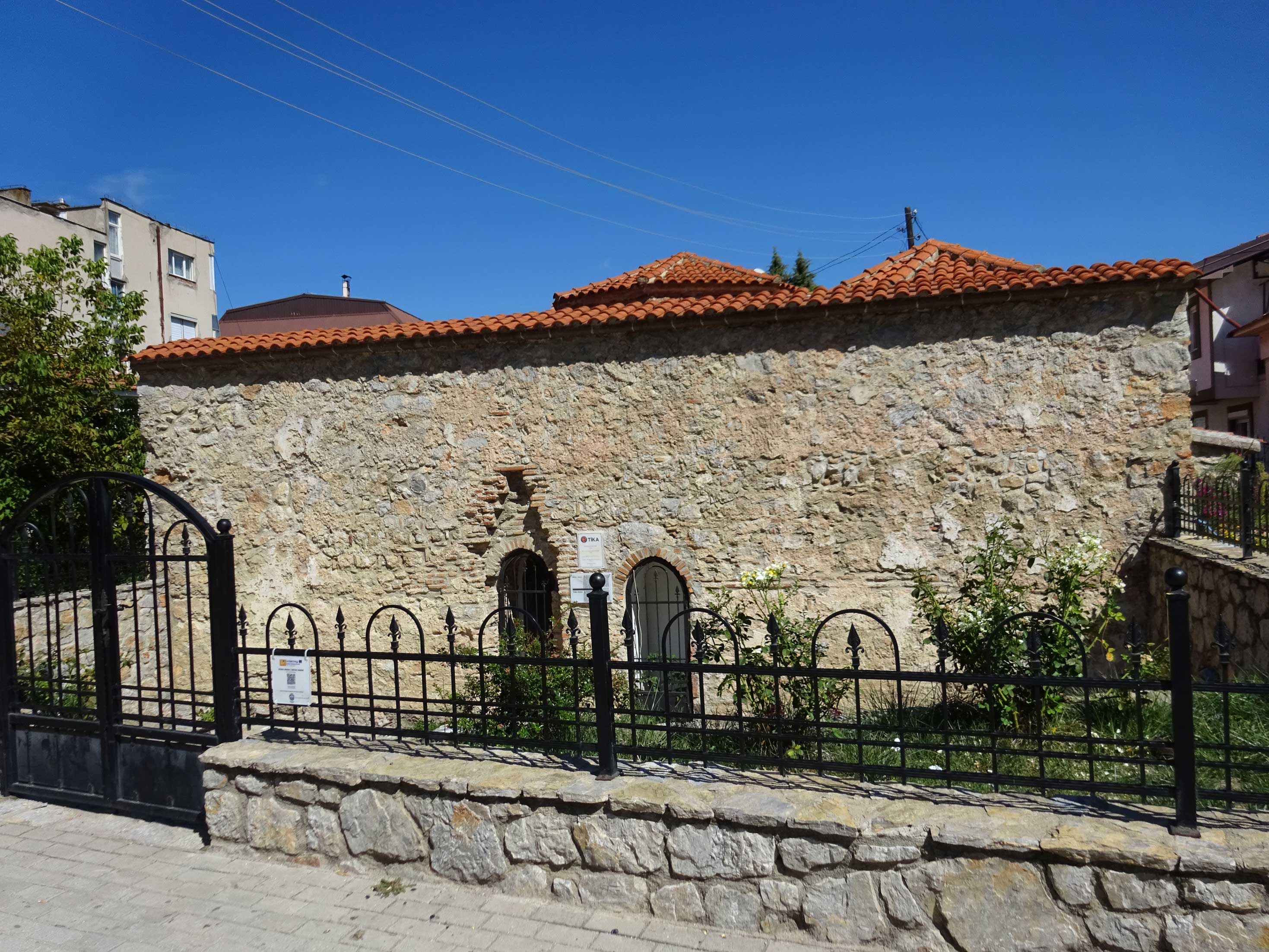
The Voska Amam or Upper Aman is a Turkish Hamman (bath house) built during the Ottoman ruling. The exact date of construction is unknown, but it is thought to date back to the first half of the 17th century. The Voska Amam is the only authentic preserved amam from the Ottoman period in Ohrid. The amam was restored in 2012 and nowadays may sometimes serve as a gallery. It looked deserted and was closed when we visited in 2022. You can combine a visit to the Voska Amam with a visit to the Emin Mahmud mosque across the street, the Mehmed Chelebi Kuloglu Mosque and the 600 year old plane tree “Voska Cinar” which are all found along Goce Delchev street. Location: N41° 07′ 05.3″ E20° 47′ 32.4″
Ruins of an Early Christian Basilica
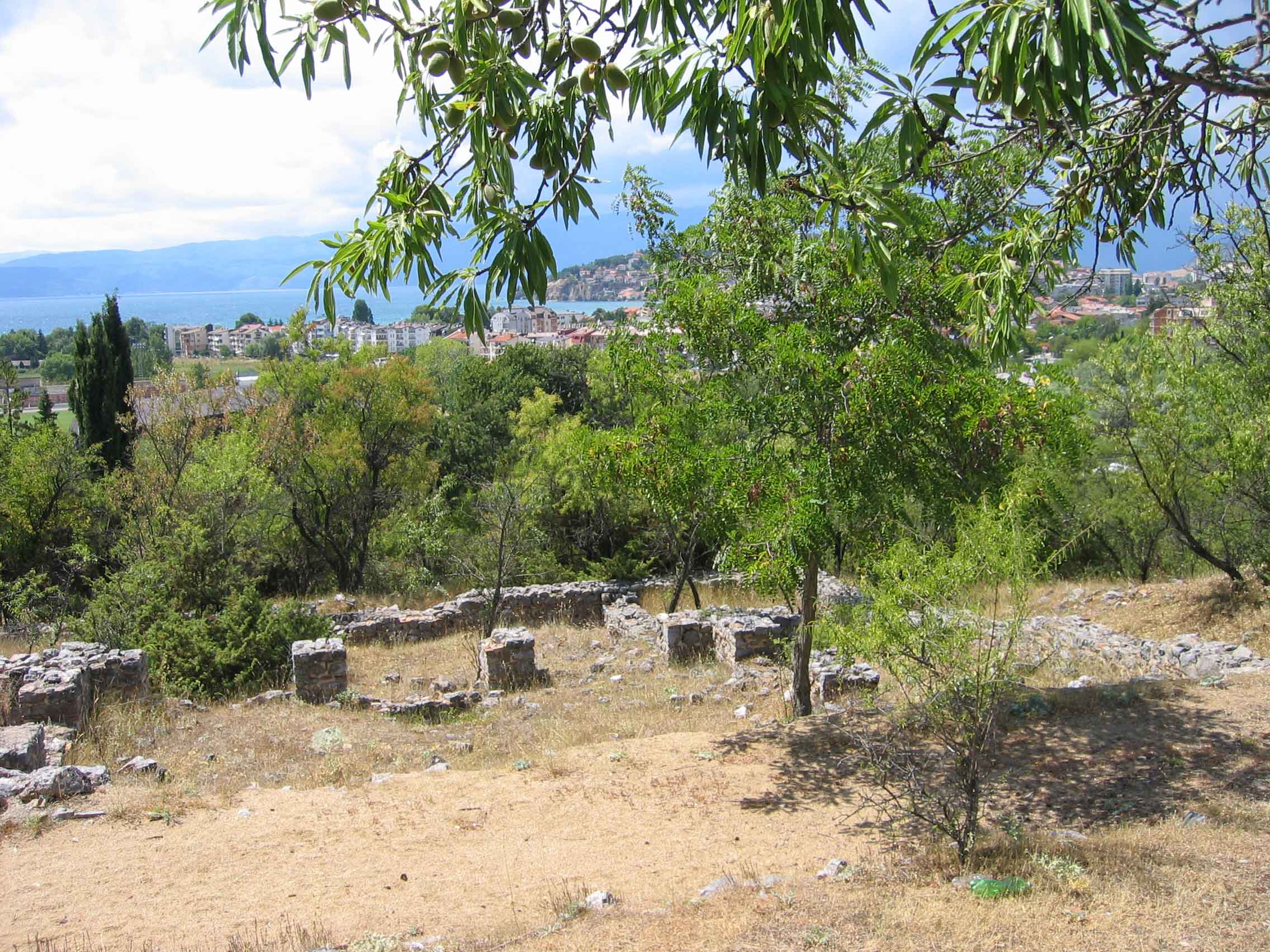
The ruins of this basilica from the 5th or 6th century can be found in the hills above the Biljana Springs. To get there, go up the long stairs behind the petrol station on the roundabout on Bulevar Turisticka, just before you leave Ohrid on the road to the Monastery of St Naum. The ruins of the basilica are to the right at the top of the stairs. There’s not too much to see actually. When you go left at the top of the stairs, you can find a WWII memorial and the Galicica National Park Office.
St Erasmus Basilica
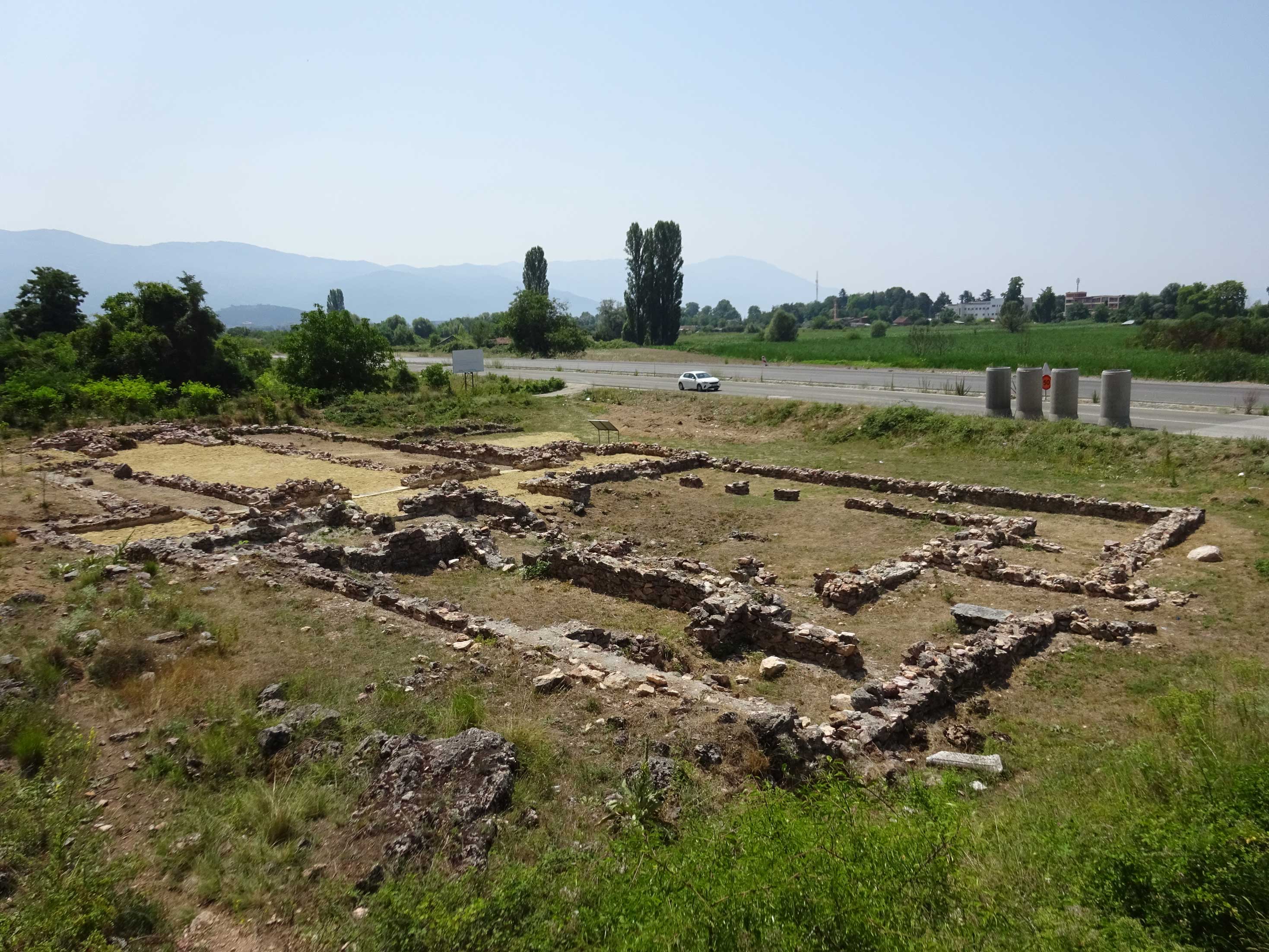
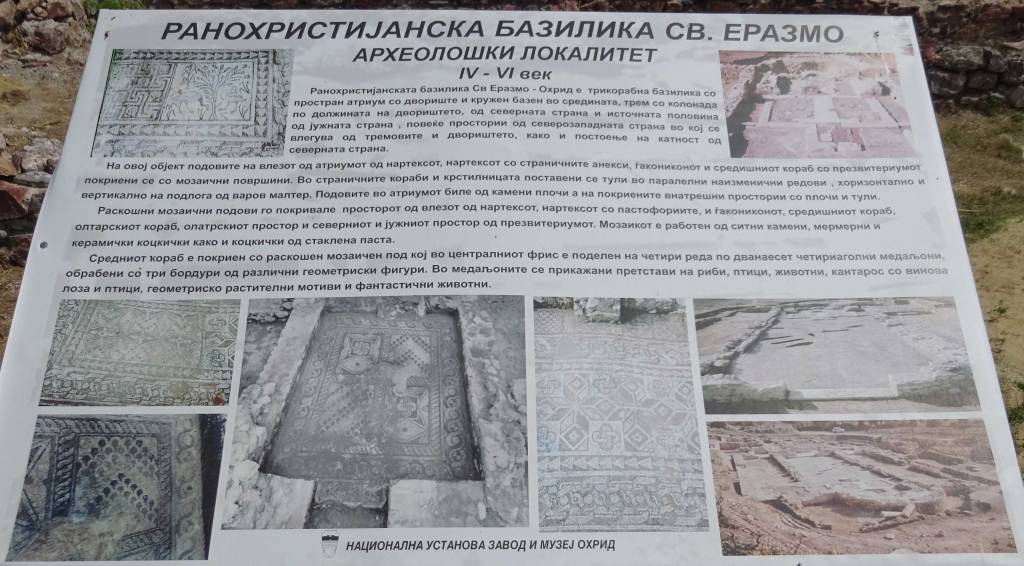
Along the road from Ohrid to Struga there are the recently excavated ruins of the 4th-6th century Basilica of St Erasmo (Erasmus). It is quite a large complex, which has a circular basin in the middle. An information panel shows that nice mosaics have been found in the basilica, but unfortunately they have been covered with sand to protect them.
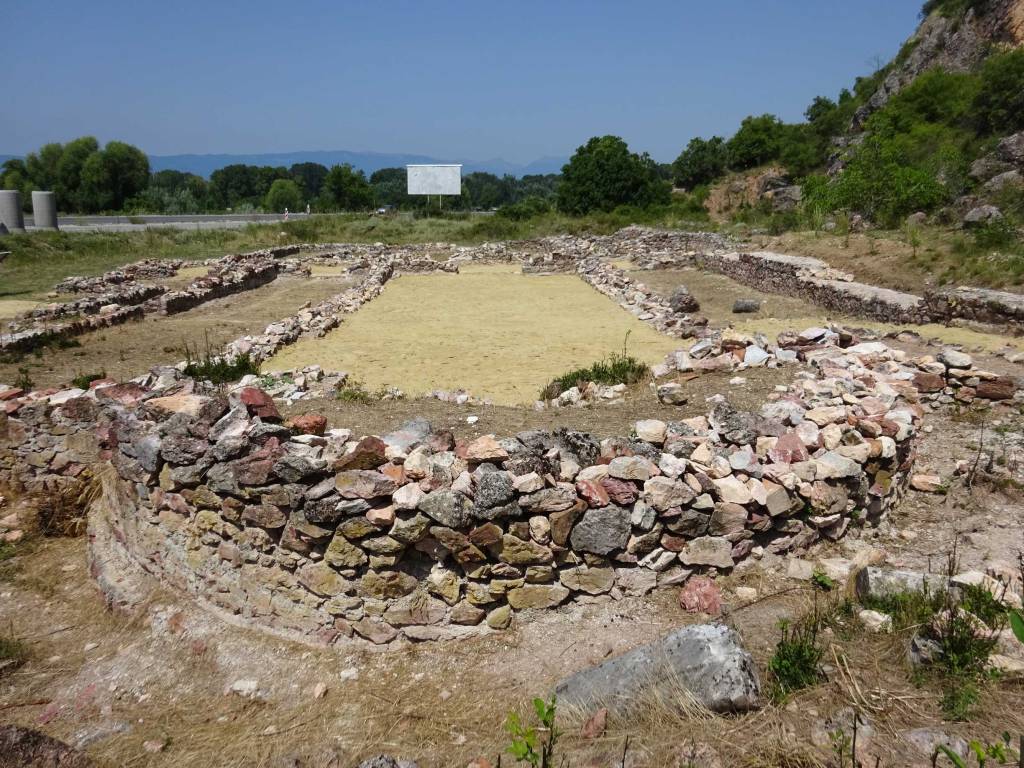
The Basilica and necropolis are located very close to the Monastery of St Erasmus and the Cave Church of St Katerina, which are also along the road from Ohrid to Struga. High on the Gabavski hill above the Baslica of St Erasmus are the ruins of an ancient Hellenistic Fortress, the Erasmo-Kulishta Fortress.
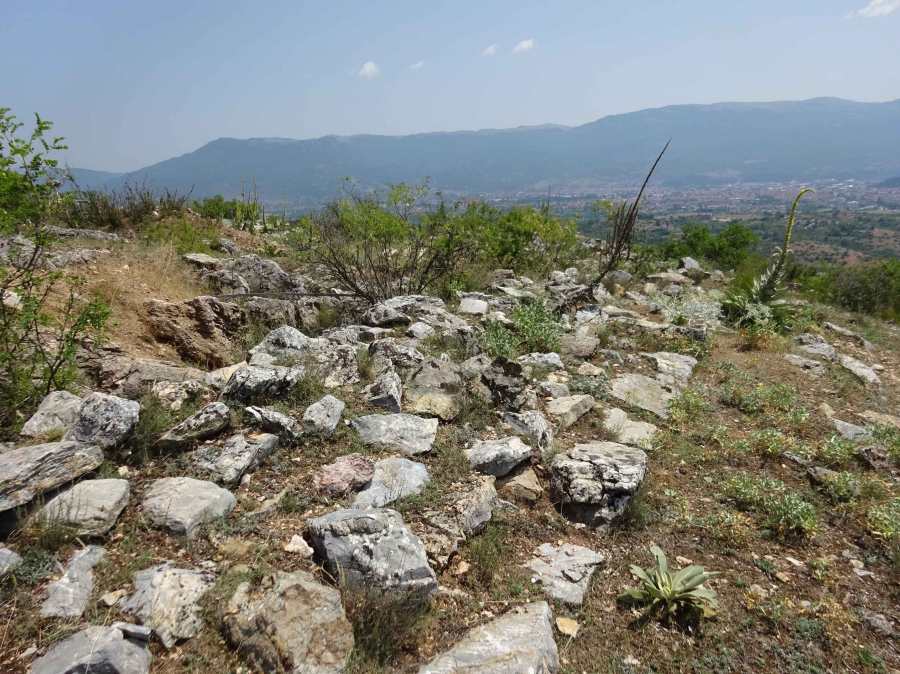
You can see here how to get to the St Erasmo-Kulishta Fortress.
WWII Memorial
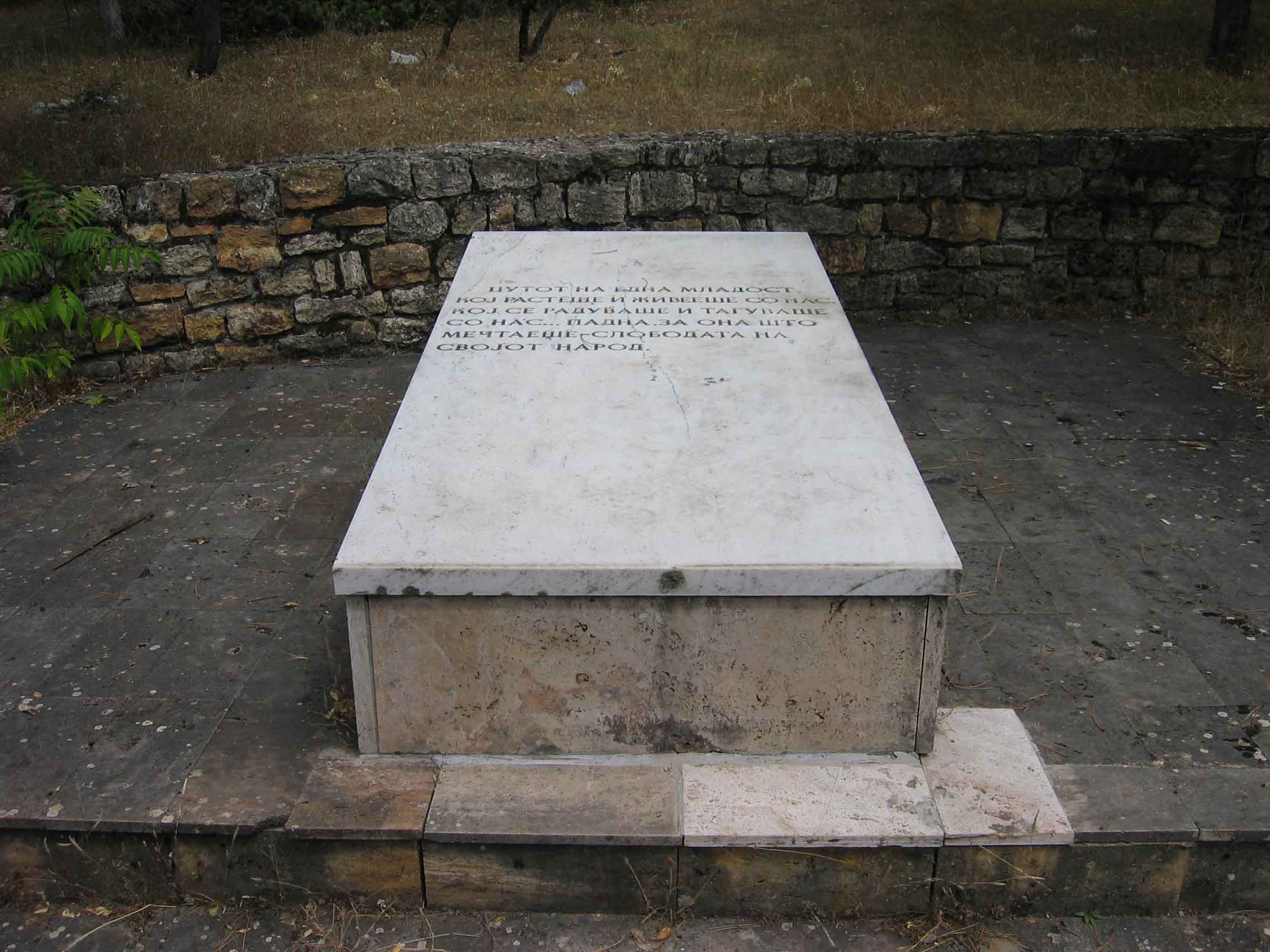
This WWII memorial and graves of those who fell, are on the same hill above Biljana Springs as the ruins of the basilica. When you go left at the end of the stairs behind the petrol station on the roundabout you will find the graves and memorial. If you walk on further, you reach the Galicica National Park office. The text on one of the grave says, roughly translated:
The blossom of a youth
Who grew and lived with us
Who was happy and sad with us
Fell for what he was wishing
The freedom of his nation
 My Macedonia Blog