Vevchani Springs

The village Vevchani, northwest of Lake Ohrid, is known for its scenic springs. The spring area has recently developed into a small park with picnic areas. The water from the springs flow everywhere through the village, and the sound of the running water really adds to the special atmosphere of this village. The springs are located on the eastern slopes of the Jablanica Mountain, close to the village, at about 936 m above sea level. The main spring is situated in a small cave The amount of water produced is about 1500 liters per second! Nowadays you pay a small admission fee to see the springs.
St Rusa Sreda and St Nedela


The Church of St Rusa Sreda (Blond Wednesday, left picture) is located at the Vevchani Springs. It was built in 1972. Inside the church there is a source with holy water from the springs. Also the Church dedicated to St Nedela (St Sunday, right picture) is located at the Vevchani Springs.
Vevchani Information Center
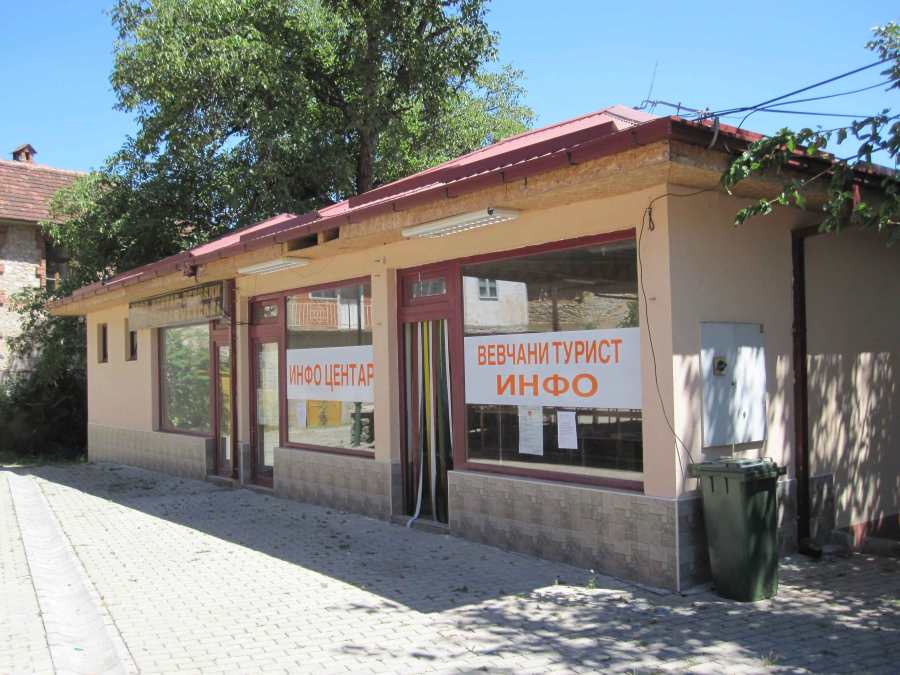
Vevchani has a new tourist information center! Unfortunately, the friendly woman who was working there, did not speak English. The information center has a useful free map of Vevchani, with all the important sights on it, as well as the restaurants and accommodation. You can buy the famous Vevchani Passport here as well, for 100 MKD (1.70 euro). Allegedly the people of Vevcani held a referendum during the break-up of Yugoslavia in order to make their own republic. Although they did not gain independence, they created their own coat of arms and printed their own specimen money. The information center also had a very interesting free booklet called “Ohrid-Prespa Region; Municipalities of Ohrid, Struga, Resen, Debarca and Vevcani, Republic of Macedonia”. You can easily miss the information center, since the sign saying “Info Center Vevchani” in English can hardly be noticed unless you are looking for it. The employee asked us if she could take our picture. I guess that was not because of my good looks, but probably to show her boss that people actually found their way to the information center! Once you know it is next to the Green Market, you cannot miss it! Directions: Next to the Green Market, at the central square with the fountain.
Green Market & Fountain


According to a sign the Green Market was constructed with the help of the American people, through the United States Agency for International Development, in collaboration with the Municipality of Vevchani in February 2005. The Vevcani Information Center is right next to the Green Market. The fountain in the center of Vevchani is supplied with water from the Vevcani Springs. Remarkably, there are fish swimming in this fountain and they apparently don’t jump out!
Church of St Nikola
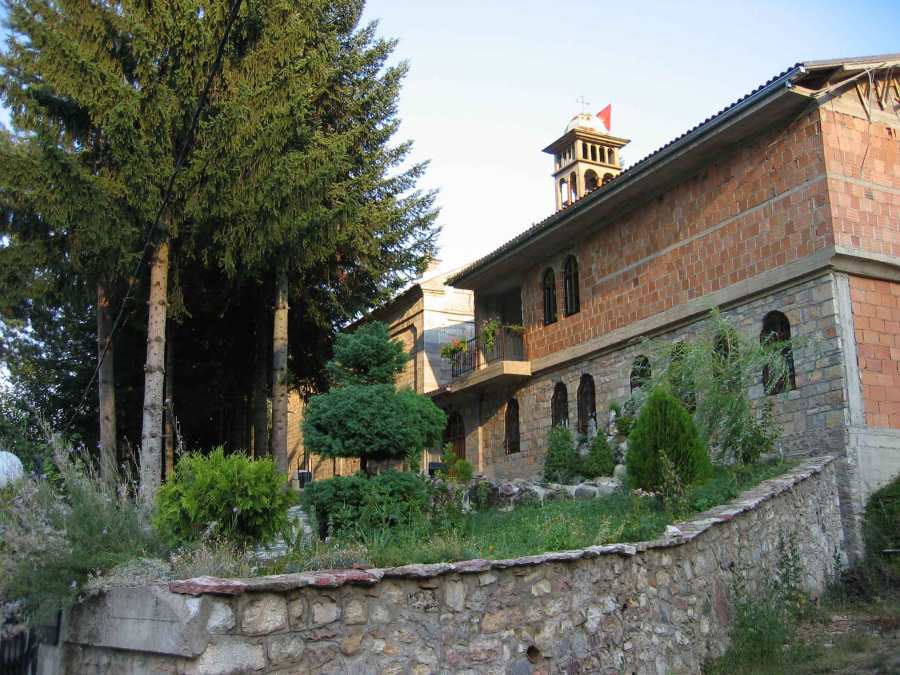
The construction of this church dedicated to St Nicholas started in 1834 and was finished in 1862. The church has the shape of a three naval basilica and it quite large for Macedonian standards. It is supposed to have beautiful frescoes painted by Dico Zograph and his son Avram, but the church was closed when we arrived. However, in the backyard were some picnic tables with a nice view over the village.
Watermills


Not surprisingly, the locals made good use of the endless stream of water from the springs. There is an old but working watermill in Vevcani, close to the Vevcani Springs. The mill is still used to grind e.g. grains. Very interesting to see how effective the simple construction is! It is extremely dusty inside. When we entered, there was an old woman sitting inside completely camouflaged by a white layer of dust and we did not even notice her at first! The picture on the lower right is from the watermill south of the Church of St Nikolas, at the river. It is used for washing. You can see a carpet drying next to it.
Monastery of St Spas

The Monastery of St Spas (The Holy Savior) is located on the slopes of the Jablanica Mountain. The view from the monastery offers an exceptional view of the Struga valley. The present location of the monastery dates back to the 19th century. The Monastery of St Spas is built on a rock, and the western wall of the church itself is natural rock. The iconostasis is from the first half of the 19th century. The former locations of the church were first near the village of Veleshta, then at the entrance of Vevchani and after that on a place called White Slab. The new location, high in the hills, was chosen to prevent violation by the Ottoman Turks. Three times a year there are church services in this monastery, the first one is on the feast of St Spas the Holy Savior, the second on the Thursday before St Demetrius’ day and the third service is on the Thursday before the feast of St Atanas. The monastery grounds includes the Church of St Spas, a bell tower with a covered picnic place with table and benches. You can reach the monastery by a hike of less than one hour from Vevchani.
Lower Church of St Spas

The lower Church of the Holy Savior (St Spas) – White Slab is at the entrance to Vevcani, on its north-east side. It is called “Lower” (Dolni) because of the other Church of St Spas high in the mountains above Vevchani. It is also called “White Slab” (a white flat stone plate) because of a legend: The location of the church used to be at a spot called Pelvec, close to the village Velesta, near a stone slab. The Christians of Vevchani used to go here to pray and light candles. The citizens of Veleshta wanted to take the slab with horses and bullocks in order to put it in the courtyard of their cemetery. When they did not succeed, they started to desecrate the sanctuary. However, God appeared in an old man’s dream and told him his cow would bear two calves. When the calves would be three years old, he should hitch them to a sled, go to Pelvec and bring the slab to Vevchani. When the old man asked where he should put the slab, God said he should leave it on the place the sled breaks. So it happened and this place is now called White Slab.
Church of St Barbara
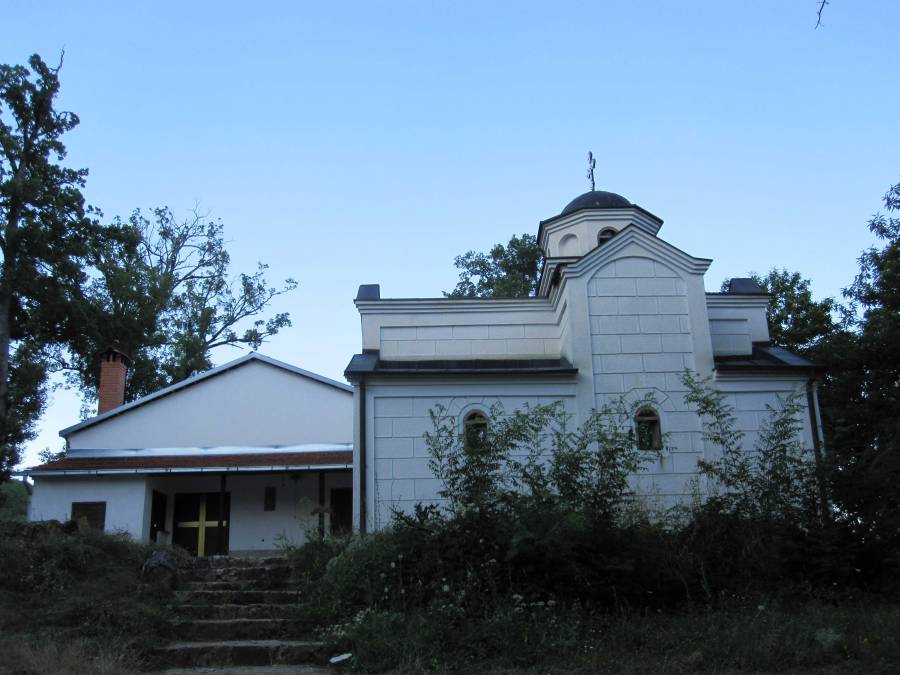
The church dedicated to St Barbara and St Cava dates from the end of the 18th or beginning of the 19th century. It can be found on the graveyard of Vevchani. Several graves have been discovered that indicate that the site itself dates back to much older times, probably the Roman period. Directions: In the north of Vevchani.
Pupin’s house
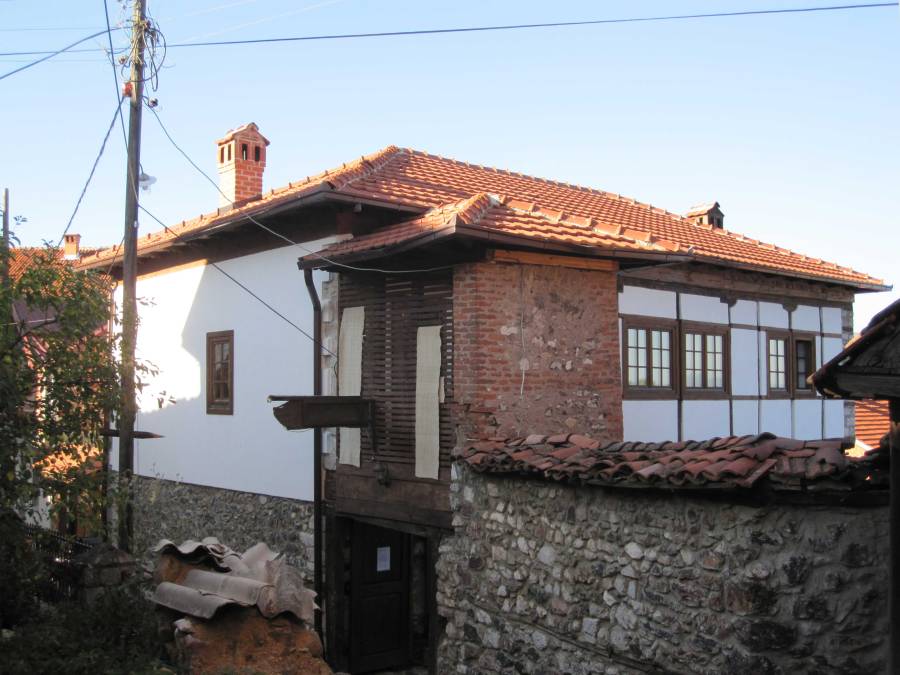
Mihajlo Idvorski Pupin (1858-1935), also known as Michael Pupin, was a physicist and physical chemist. Pupin is best known for his numerous patents, including an invention of greatly extending the range of long-distance telephone communication by placing loading coils (of wire) at predetermined intervals along the transmitting wire (known as “pupinization”). This was the house of his parents. It now houses a hotel and restaurant, which also serves as a small museum. We were shown around by the cook, he let us see the rooms of the house which now serve as rooms for the hotel guests. Directions: South east of the Church of St Nikola.
House of Gogoski family
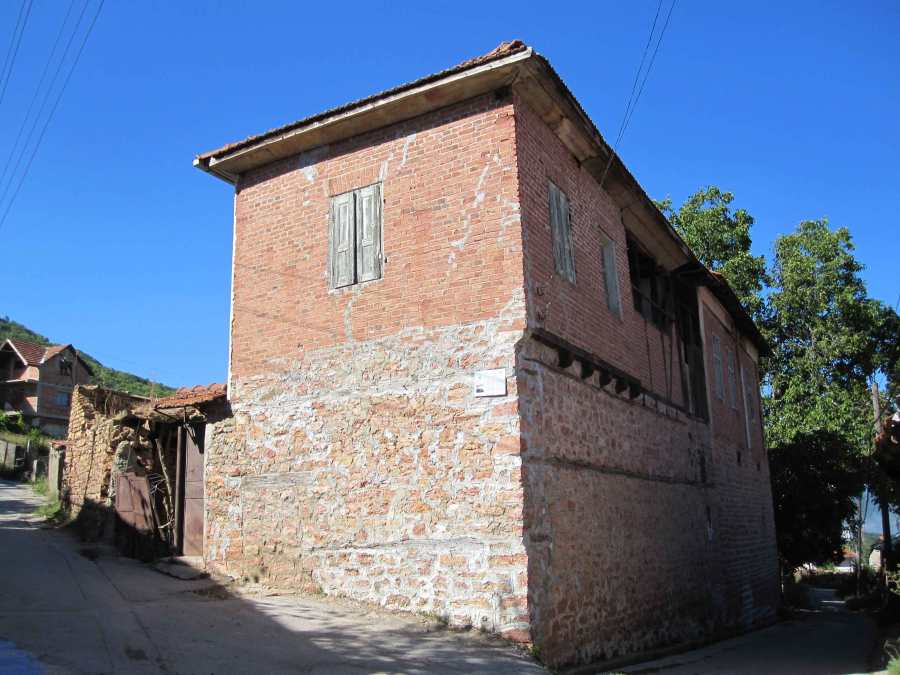
This is the description of this house, on a sign mounted to the house. This sign was mounted so high up the wall that it was impossible to read. I took a picture of it and had to magnify the text. The sign says: “Deep house with double orientated central terrace (1887). This house is connected with an influential personality that stays in the memory of Vevchani inhabitants – Kuzman Gogov. He was a great tradesman who built the house one century ago, adding onto an already existing house. As the major of the village (1928-1932) he proved to be a great organizer. In his time the hospital was built, the streets were paved and the road to the Monastery of St Spas was built. The inhabitants say that in this period Vevcani developed much more than other neighboring villages”.
Hiking trails near Vevchani
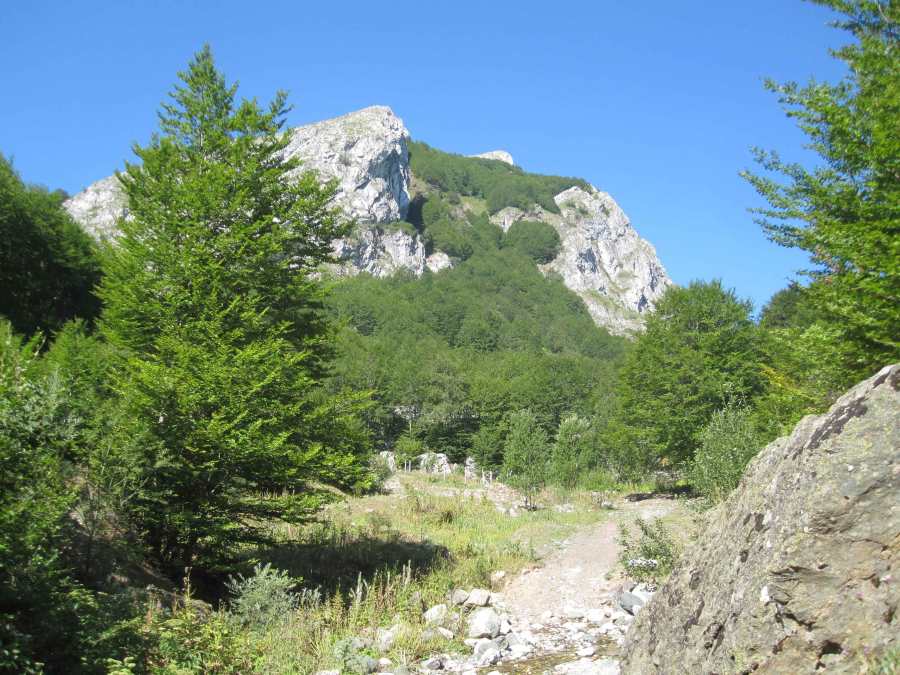
There are several hiking trails around Vevchani. The hike to the glacial Lake Lokva via the village Gorna Belica (20 km) is among my favorite hikes I have done in Macedonia. A shorter and less demanding hike to the Monastery of St Spas was already described above.
Bakery Almiko
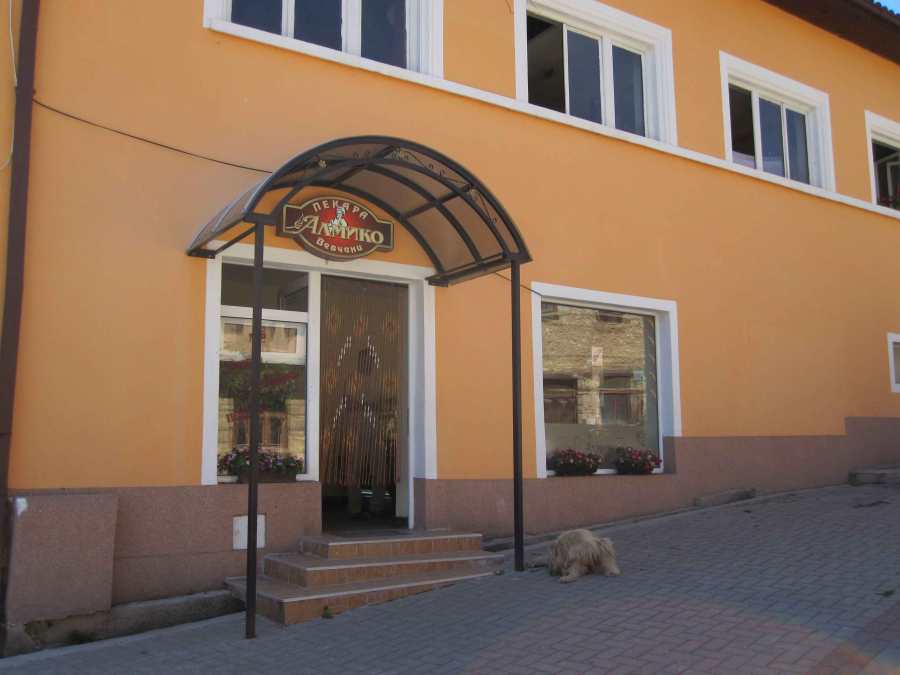
We bought some very good burek here, not too fatty and abundantly filled with de licious cheese. You might want to get there early, because we had the last pieces of burek around 13.00 h. I brought the burek with me during our hike to the Monastery of St Spas, where you can have a good picnic since there are tables and benches next to the church. Directions: Close to the central square with the fountain.
Vevchani impressions


 My Macedonia Blog