
The Church and Monastery of St Spas (Holy Salvation) can be found a bit south from the main entrance of the Kale Fortress. Some of the foundations date back to the 14th century, before Ottoman times. The church was partly rebuilt underground in the 16th century, since under Ottoman rule churches were not allowed to be taller than a mosque.
The church is famous for two reasons: 1) The iconostasis was made by three of the most famous woodcarvers of that time: The brothers Marko and Petar Filipovski from the village Gari, and Makarije Frckovski from Galicnik. The iconostasis is made from walnut tree and about 10 m wide and 6 m high, it took 6 years (1819-1824) to make it! Besides many religious scenes, the woodcarving-team itself can be found at the right side of the iconostasis, as some kind of humoristic signature. This team also made the iconostases of the Monastery of St Jovan Bigorski in Mavrovo National park and the Monastery of St Gavril Lesnovski (St Gabriel) in Lesnovo.


2) The site houses the sarcophagus with the remains of Goce Delcev (1872-1903), the leader of the Independence for Macedonia Revolutionary Organization (IMRO). Goce was beheaded in 1903. His remains were exhumed in 1946 and moved to the Church of St Spas. The wooden box in which his remains were transported to the church is at display in the small Goce Delcev Museum on the site.
Opening times: Tuesday-Friday 09.00-17.00 h, Saturday-Sunday 09.00-15.00 h, CLOSED on Mondays. Address: Makarije Frckovski 8,
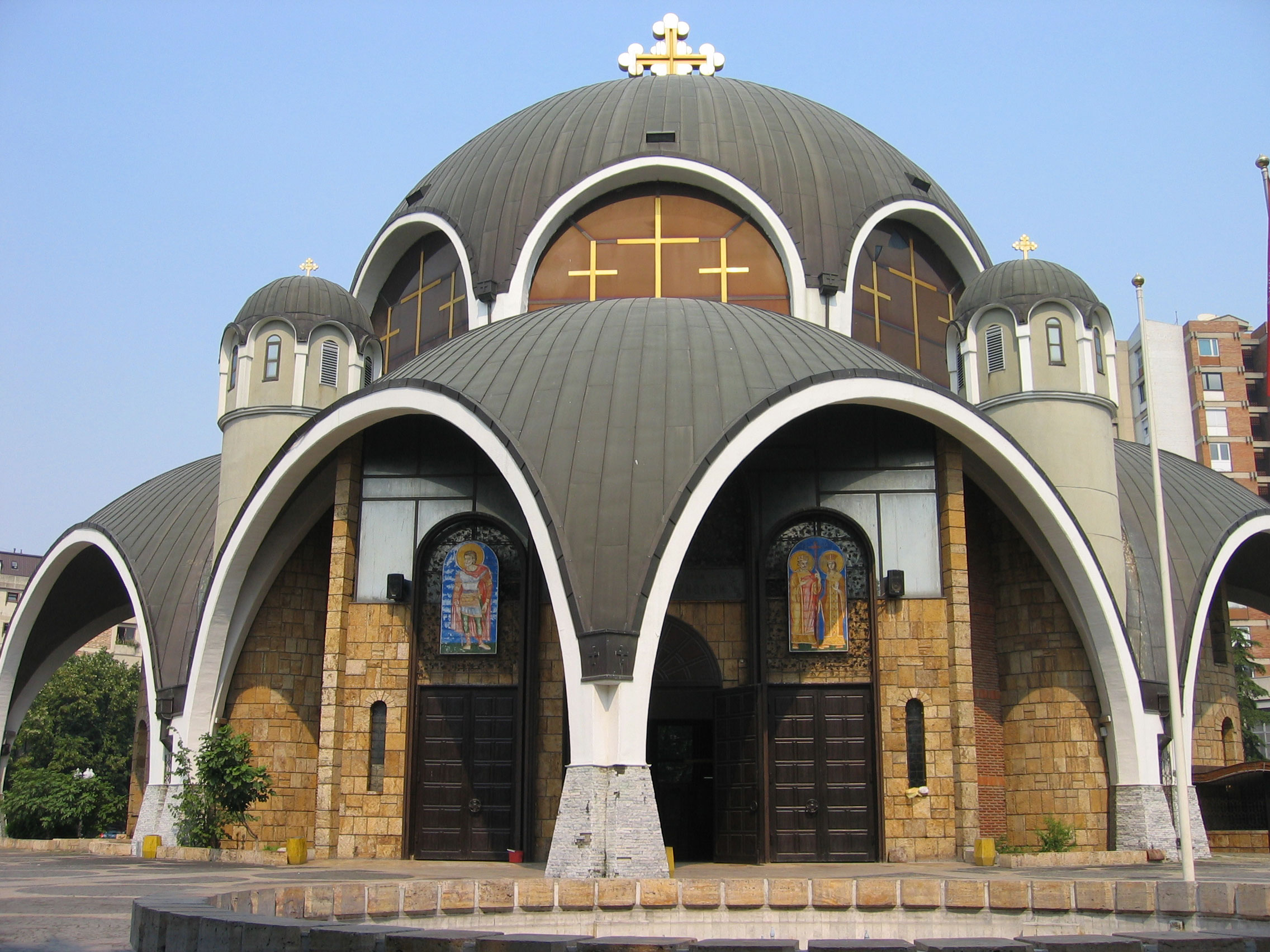
The orthodox cathedral St Clement of Ohrid is the main church of Skopje. The cathedral can be found at the corner of Partizanski and Ohridski, it is a modern 20th century building and part of the Skopje Brutalist and Modernist architecture tour.

The Church of St Dimitri can be found in the old part of Skopje. St Dimitri dates from the 14th century, but the present structure is relatively new (1886). The bell tower is separated from the main building, in a typically Macedonian fashion. St Dimitri became the temporary cathedral after the Bulgarians burnt down the Virgin Mary Cathedral at the end of World War II. To me the church has a special memory because my brother in law married here! Directions: North of the river Vardar and west of the Stone Bridge.

This church dedicated to St George lies in the north of Skopje. Address: Kemal Ataturk 3a.

The Church of Archangel Michael lies north of the river Vardar, between the Gazi Baba Woods and the road Bulevar Aleksandar Makedonski. Next to the church is a British Cemetery from the first World War.

The Church of Rodestvo na Presveta Bogorodica or Birth of the Most Holy Mother of God was built in 1835 on the place of an older church from the 13th century. It was destroyed during the earthquake in 1963 and restored in the beginning of the 21th century. It is also called Church of the Most Holy Theotokos. Address: Presveta Bogorodica Square, north of the river Vardar.

The Mustafa Pasha Mosque in Skopje is on Samoilova road close to the main entrance of the Kale Fortress. The mosque was built in 1492 and is the most ornately decorated of all the mosques in Skopje. Unfortunately, when we visited the mosque was closed due to restorations. Currently the mosque should be open again.

The Ishak Bey Mosque was built in 1438-1439, and is also called Aladza Mosque. The mosque was restored in 1519 and after the earthquake in 1963. The Ishak Bey Mosque is one of the oldest mosques of Skopje. The name “Aladza” means “Decorated” and refers to the richly colored decoration. After the restoration in 1519, the mosque was expanded with the side areas that give the present day appearance. The mosque can be found north of the market Bit Bazaar.
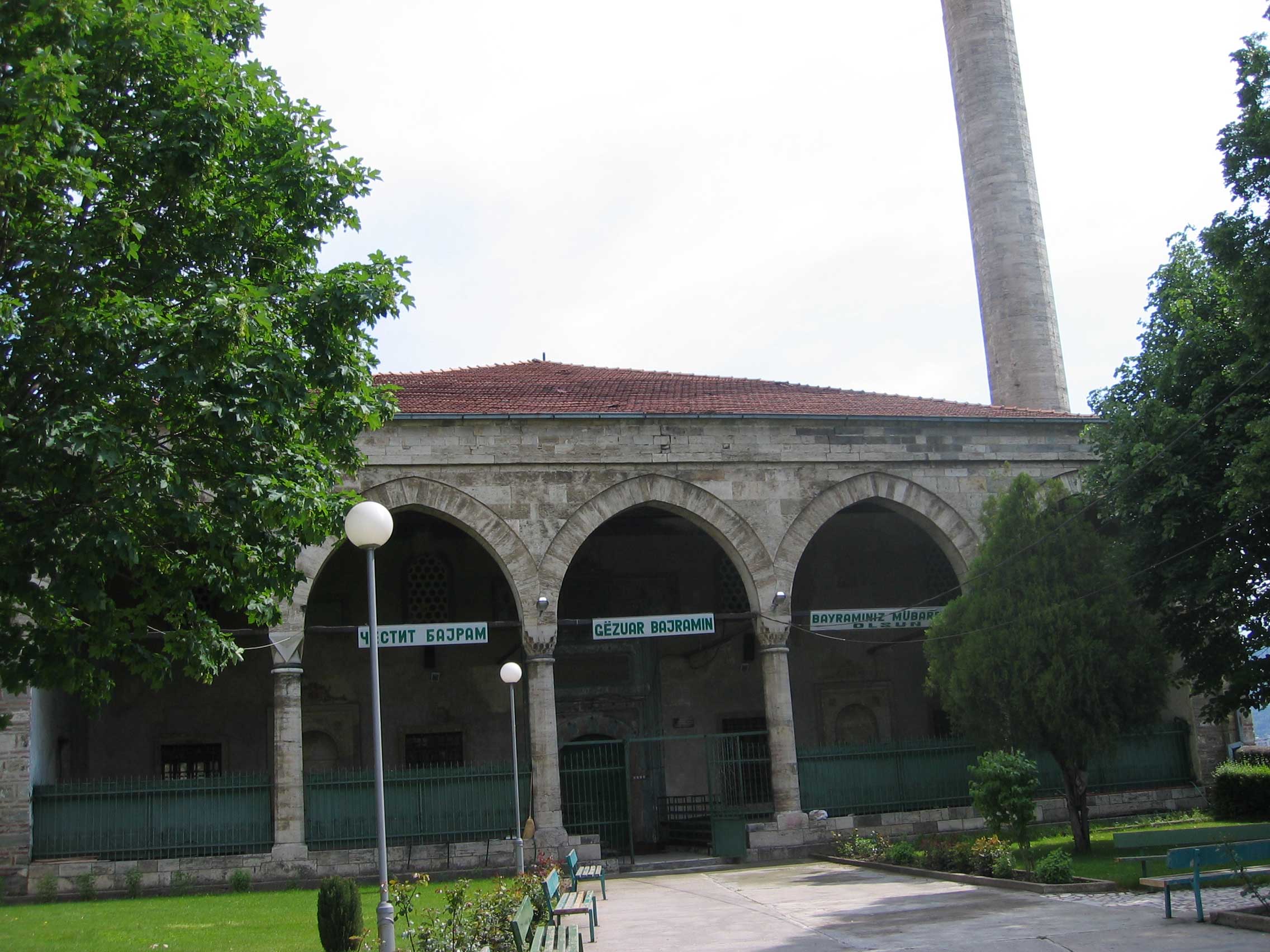
The Sultan Murat Mosque is also called Hjunkar Mosque. Because the mosque is right next to the Clock Tower, it is also known as the Clock Mosque. The mosque was built on the foundations of the monastery St George Skoropostiznik from the 11th century. It dates back to 1436 and is the oldest mosque of Skopje. It has been destroyed several times by fire and was also damaged by the earthquake in 1963. The present look dates from 1912. The mausoleums of Sultan Beyhan and of Ali Pasha of Dagestan lie in the grounds of the mosque.
If you are shy to enter a mosque, the Sultan Murat Mosque is a good place to start. The friendly Imam is more than willing to take you inside and show you around. He even had a paper with facts about the mosque written in English, so he can explain you some details. Take off your shoes outside of the mosque. Women have to cover their heads and the imam will borrow you a scarf in case you do not have one yourself. After the tour he will ask you for some money for his mosque.
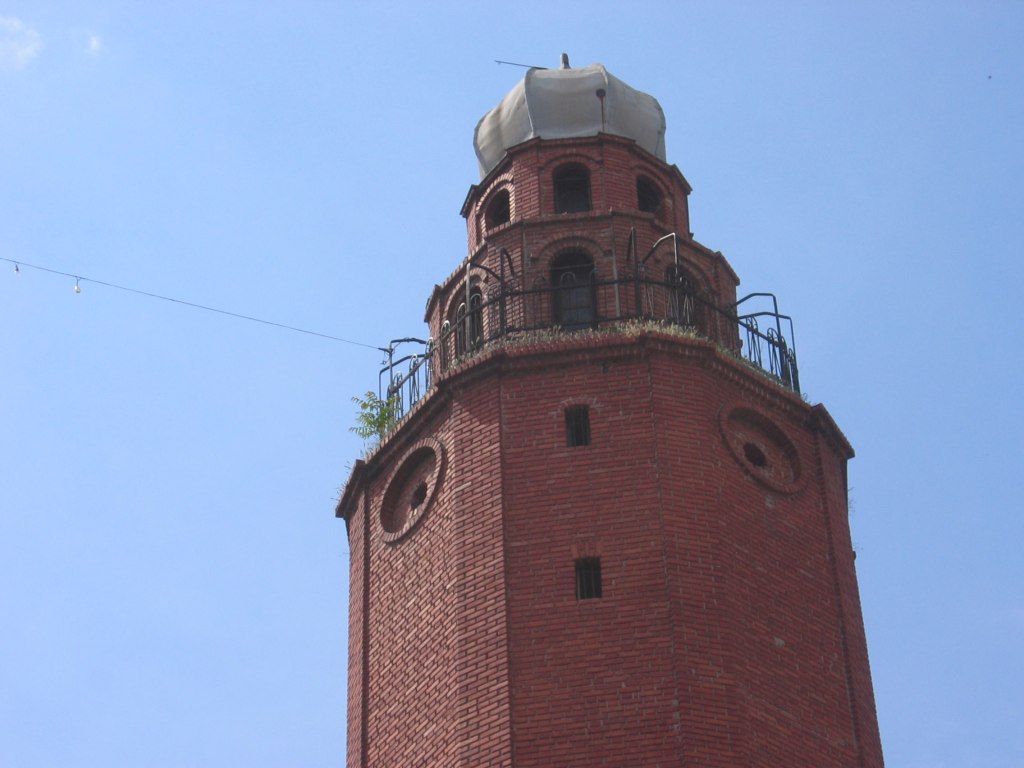

The Clock Tower (or Saat Kula) next to the mosque was built in 1566 and originally the top was made of wood. Its clock came from Hungary. The original structure was burnt in 1689 when the Austrian general Piccolomini set Skopje on fire during his retreat. The present Clock Tower dates from 1904. With its height of 39.8 m it is the highest clock tower of Macedonia. The clocks were damaged during the earthquake in 1963. Allegedly the were sent to Sofia for repair but were stolen or disappeared. The pictures were taken in May 2008, just before new clocks were installed!
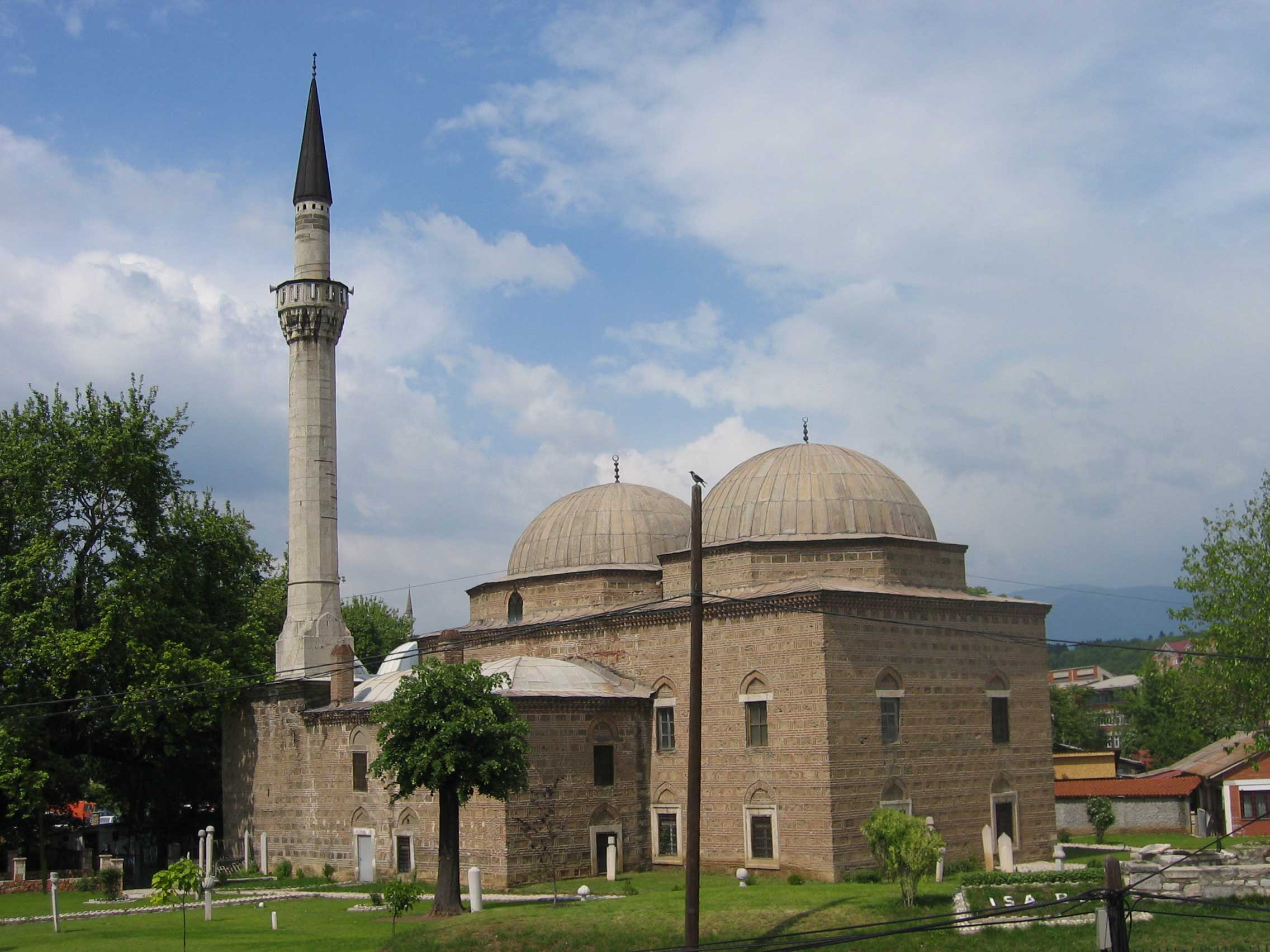
The Gazi Issa Bey Mosque was constructed in 1475-1476. Its founder was Issa Bey, commander of the Skopje district in the Ottoman times. The mosque was restored after the earthquake in 1963. The mosque is located between the Bit Bazaar market and the Clock Tower.


Next to the Gazi Issa Bey Mosque grows a very old plane tree (Platanus Orientalis). The mosque was build in 1475 and the tree dates from that time. Allegedly it is even older, over 560 years! The tree is 20 m high and 7.30 m wide. Another very old plane tree can be found in Ohrid.

The Yahya Pasha Mosque was built in 1504 for Yahya Pasha. The mosque has a modern four-sided roof. It can be found north of the Bit Bazaar, over the bridge. Once you are there, you might also want to give the Church of St George a visit! Address: Cvetan Dimov
Churches outside of Skopje

Half-way up Mount Vodno in the village of Gorni Nezeri, lies the Monastery of Panteleimon, certainly worth a short visit, especially if you hike up the mountain. The present church is built on the foundations of an older church from 1164 AD. There is also a restaurant and a hotel. The frescoes in the church are considered to contain signs of Renaissance art at a much earlier stage than the Italian Renaissance, suggesting that the Renaissance started in Macedonia. This fact is also mentioned in the Dutch roman “The Wedding of the Seven Gypsies” (De Builoft der Zeven Zigeuners) by A. den Dolaard, which is set in Macedonia. A must-read if you master the Dutch language! Opposite to the monastery you can find Makedonsko Selo, a replica of a Macedobian village.

Marko’s Monastery is about 20 km outside of Skopje near the village Markova Susica. The monastery consists of a church dedicated to St Demetrius (Dimitri), lodging houses, bell tower, a well, a small museum and an old watermill. The building of the church was started in 1345 by the father of Marko, King Volkasin. After the death of his father in 1371, the church was finished by Marko in 1377.
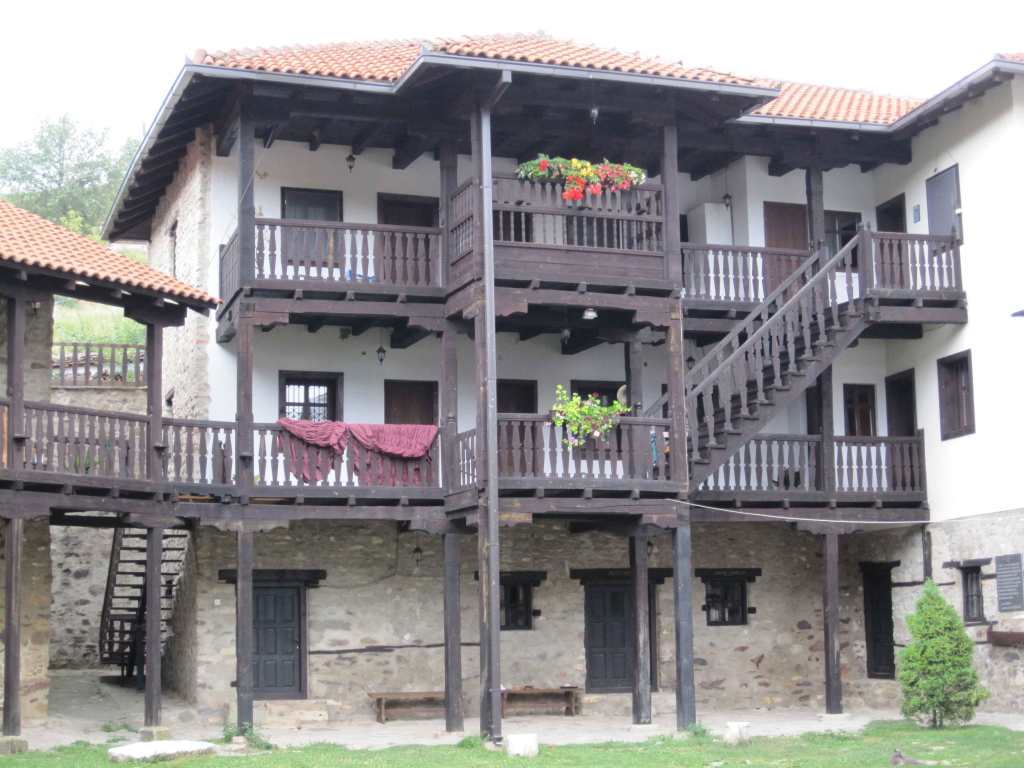


The Monastery of St Marko is a very peaceful place, with a well-kept green garden and flowers. To see more about King Marko, check out Marko’s Towers near Prilep and the Monastery of his brother Andrea at Matka Lake near Skopje.

The Monastery of St Nikita is located north of Skopje on Skopska Crna Gora (Black Mountain), near the village of Gornjani. The church dates from 1307, built by the Serbian King Milutin, and contains works by the Balkan painters Mihajlo and Eftihije. The church was probably built on the foundations of an earlier, Byzantine church. See also this hike of 12 km that starts at St Nikita.

The Church of St Trojca (Holy Trinity) is also located on Skopska Crna Gora (Black Mountain), near the village of Cucer. You can see the Church of St Trojca already from the Monastery of St Nikita (see above), which lies more uphill.
See here for a daytrip that visits many of the churches on Skopska Crna Gora, which is also called Skopje’s Holy Mountain because of the many, often very old churches and monasteries.
 My Macedonia Blog