During the controversial “Skopje 2014” project many classical-looking buildings, statues and monuments were built in Skopje. The project is said to have cost over 500 million euros. This page shows many of the old and new statues and other landmarks in Skopje.
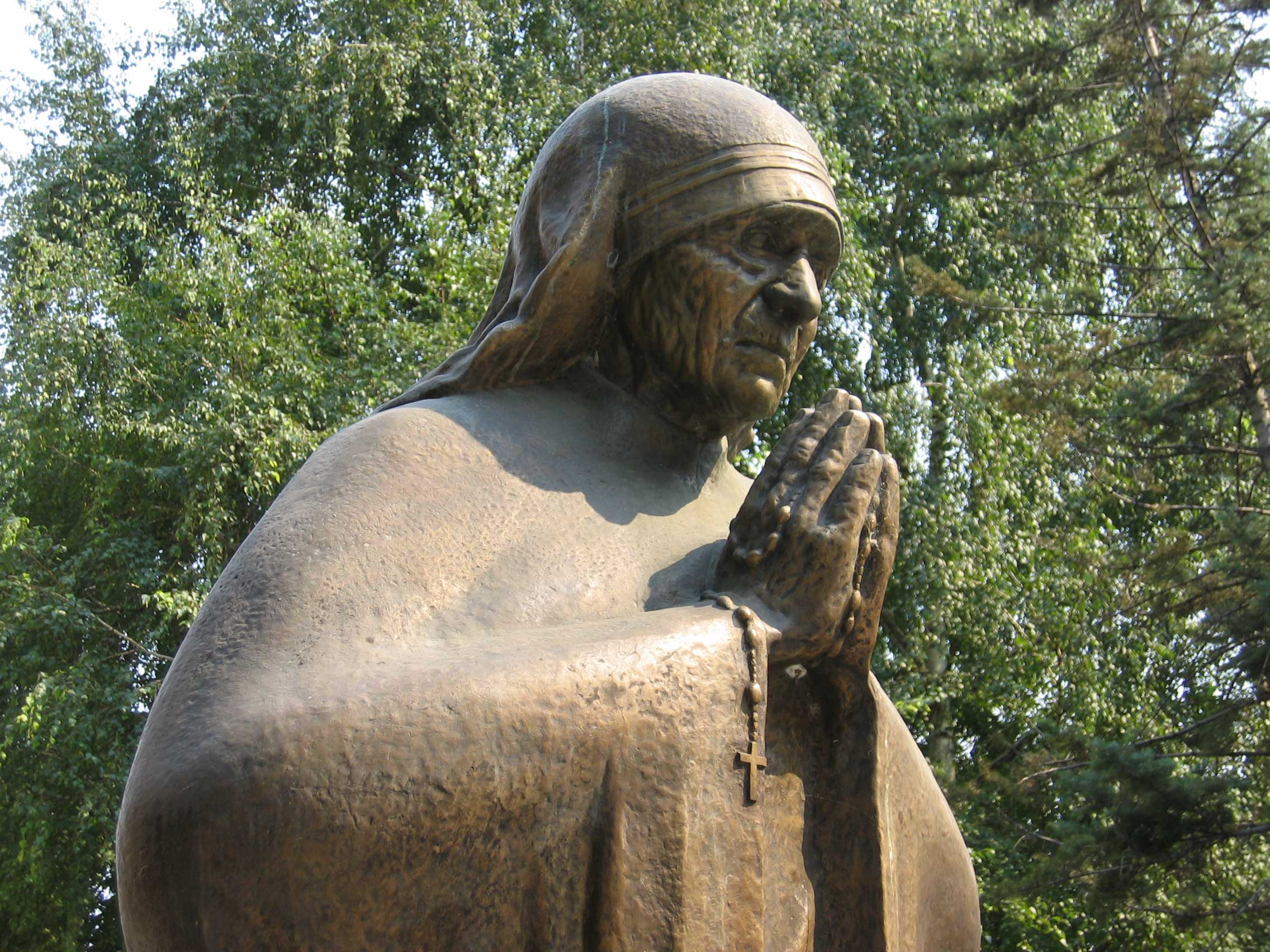
This statue of Mother Theresa can be found on Makedonija Street near the Memorial Museum for Mother Theresa. Mother Teresa was born on 26-08-1910 in Skopje from Albanian parents. Mother Teresa won the Nobel Peace Prize in 1979 for her humanitarian work.
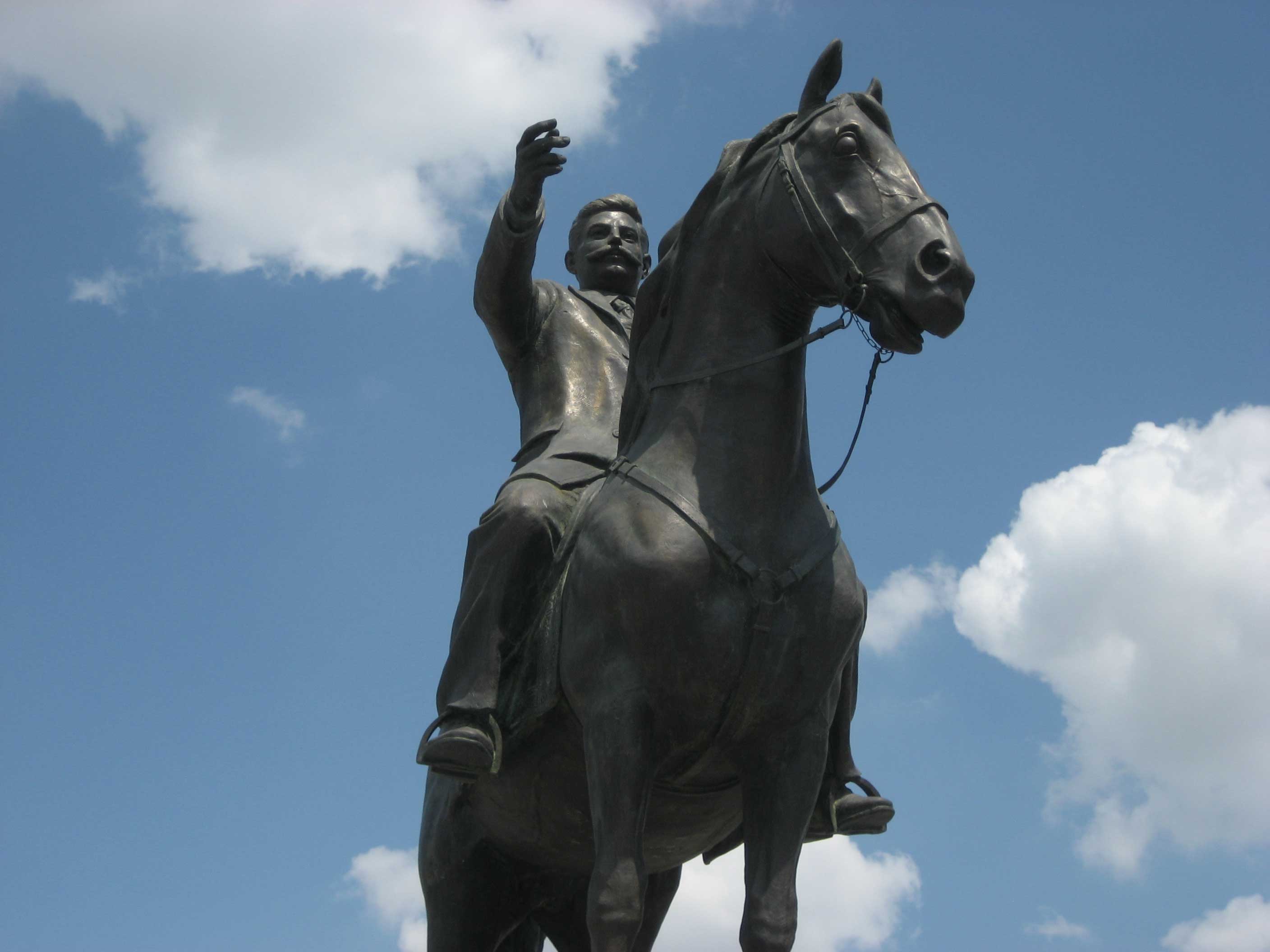
The Macedonian revolutionary Goce Delcev has two statues dedicated to him: One on Macedonia Square and one in the Citypark. Goce Delcev was born in 1872 and was a teacher in Novo Selo in the Stip region. He was one of the leaders of the Internal Macedonian Revolutionary Organization (VMRO) and was killed in 1903 during a fight with the Ottoman army. His tomb can be found at the Church of St Spas in Skopje. You’ll recognize his statue by his prominent mustache!
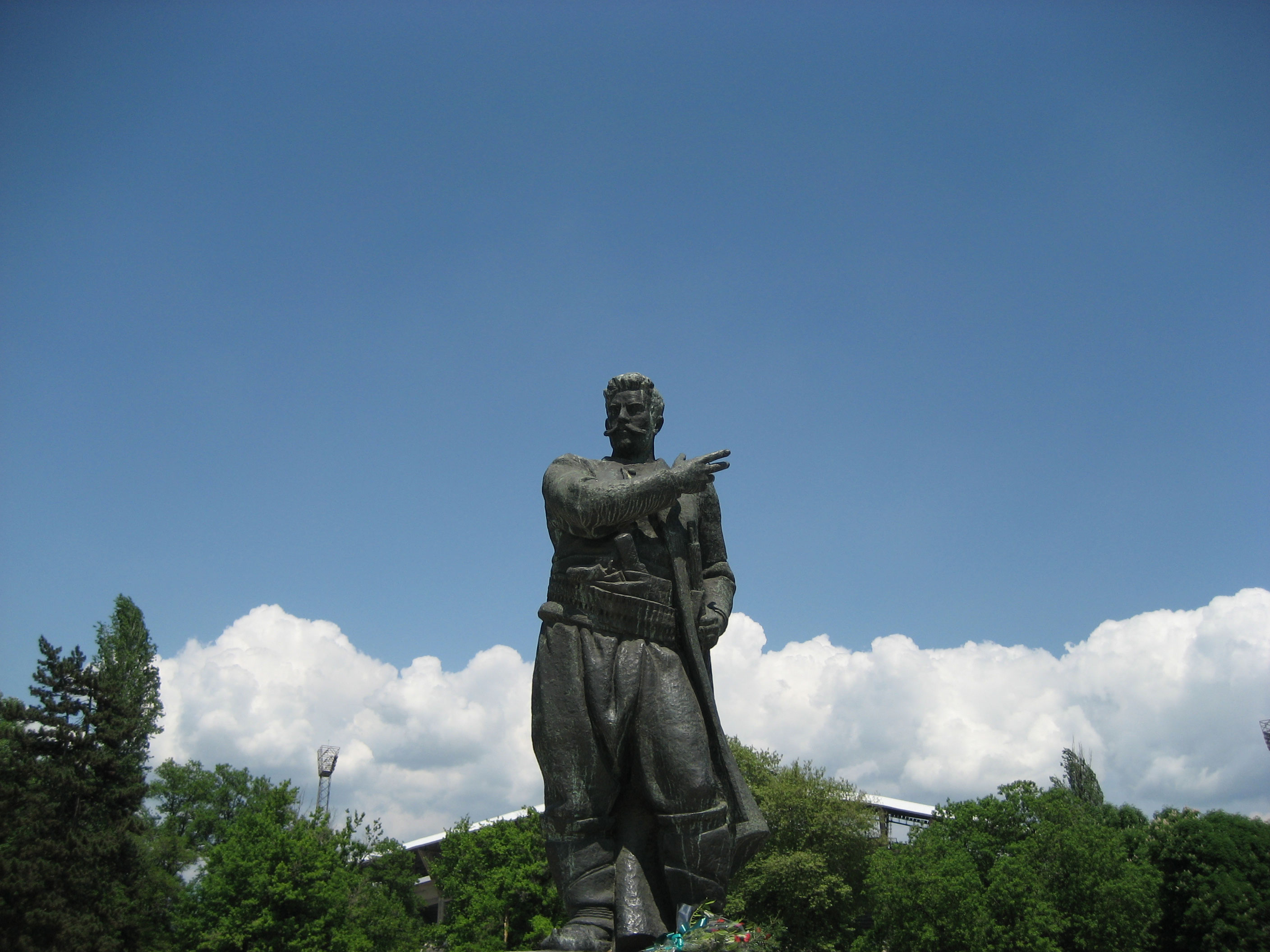
Goce Delcev in the Citypark 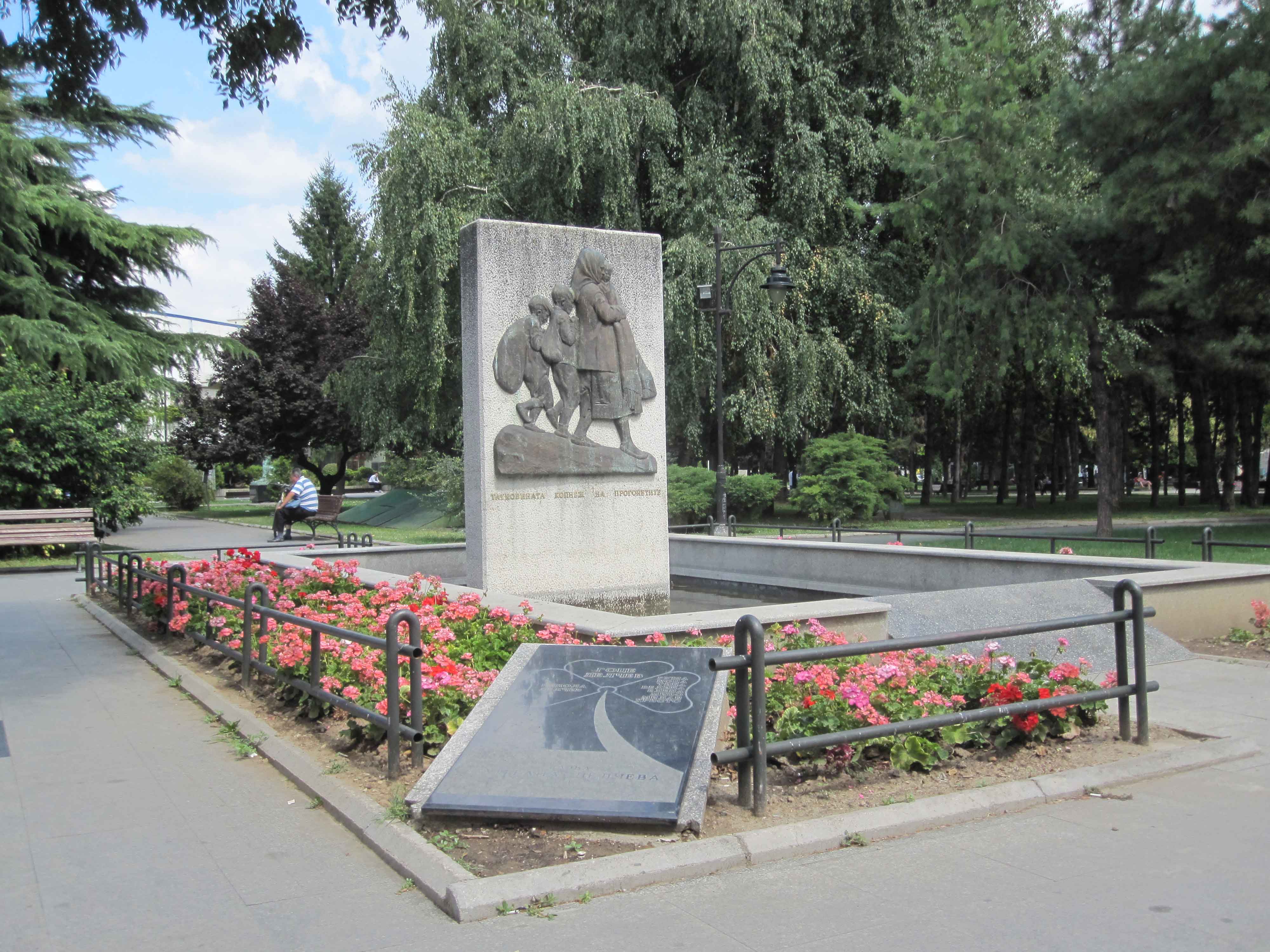
Exiles longing for the Fatherland
Sultana Delcheva , the mother of Goce Delcev, is mentioned on a plaque on the monument dedicated to “exiles longing for the fatherland” in Zena Borec park opposite the parliament building.
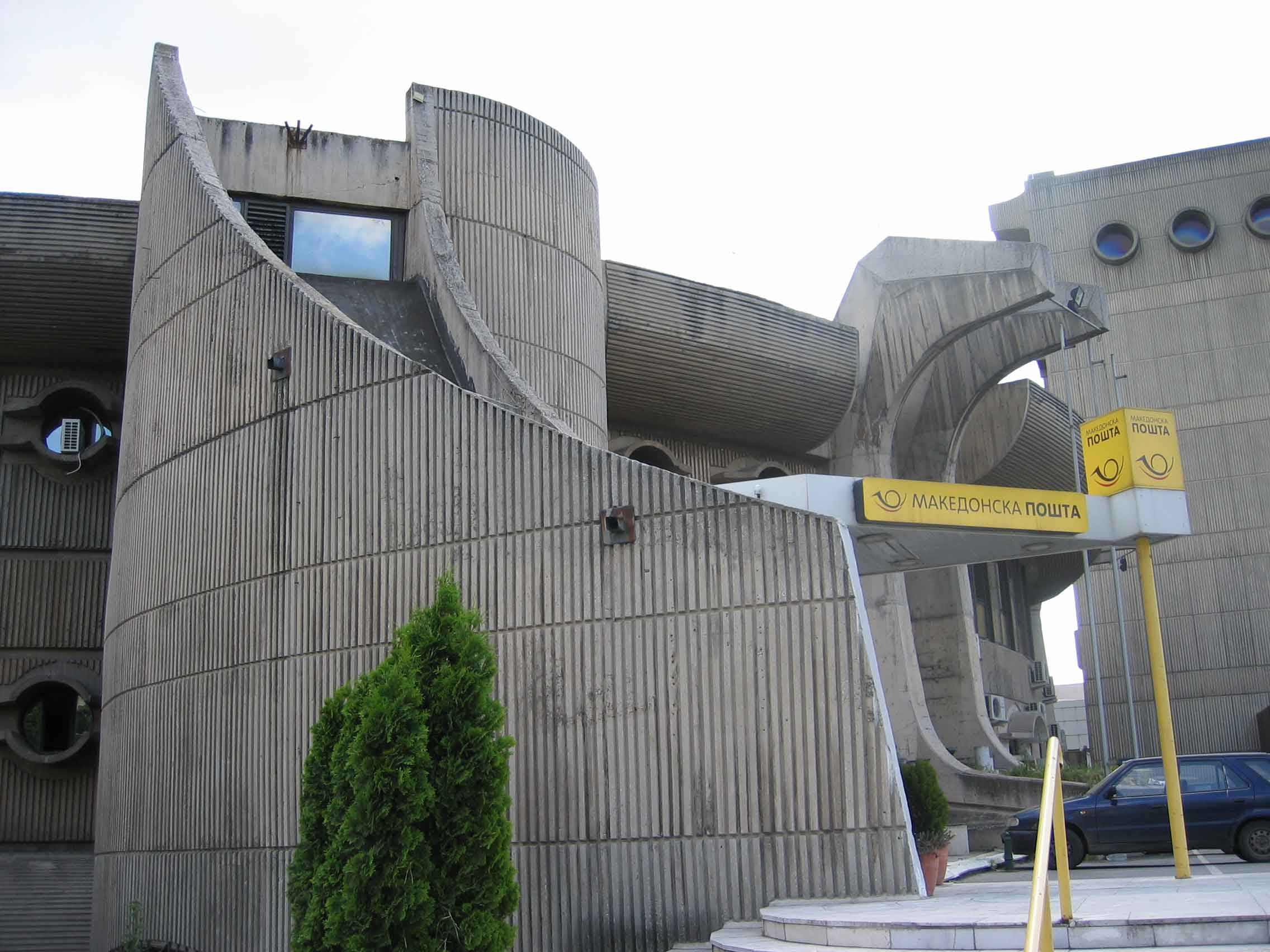
The communist style post office (1974-1989) is a very remarkable building (you either hate it or love it). You can have some good views of the main post office from the Kale Fortress. Address: Boulevard VMRO.
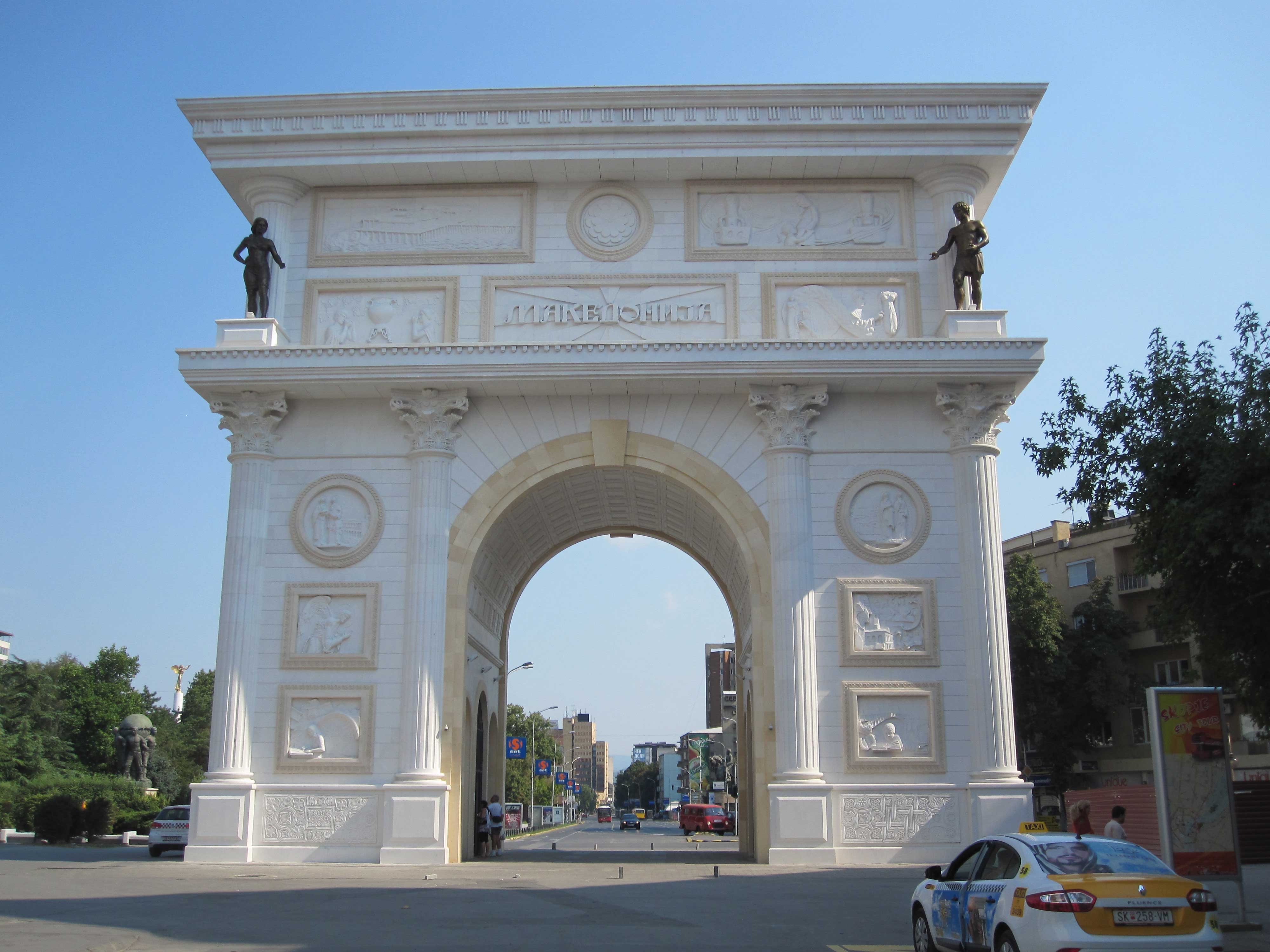
The triumphal arch “Porta Macedonia” on Pella Square is dedicated to 20 years of Macedonian independence and was erected as part of the Skopje 2014 project. Inside there is a souvenir shop.
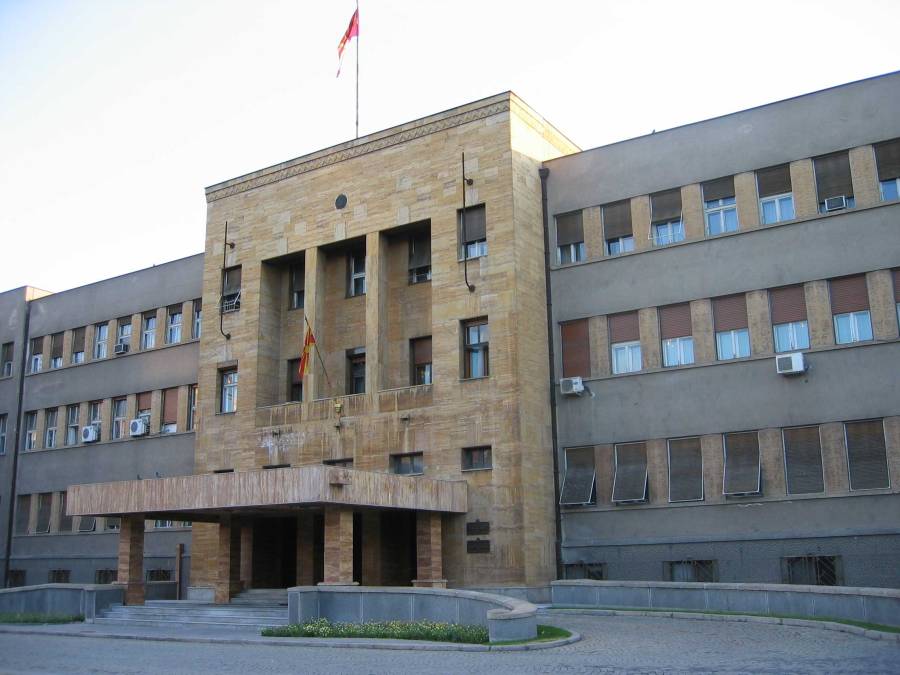
Building of the Parliament 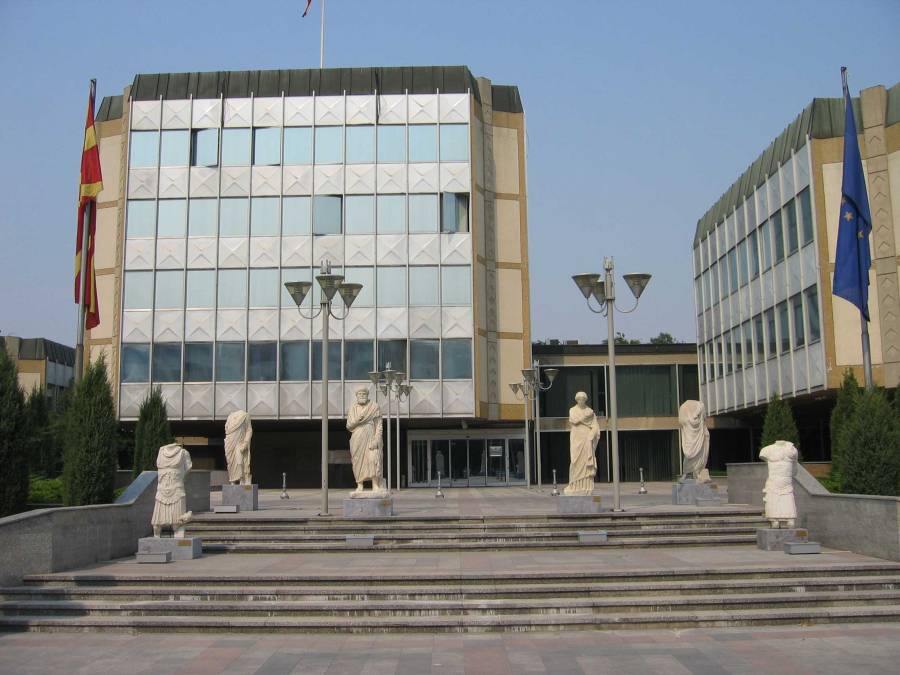
Government building
The government building is close to the main post-office, between Bulevar Ilinden and Orce Nikolov. The building of the Parliament is at 11th October Street.
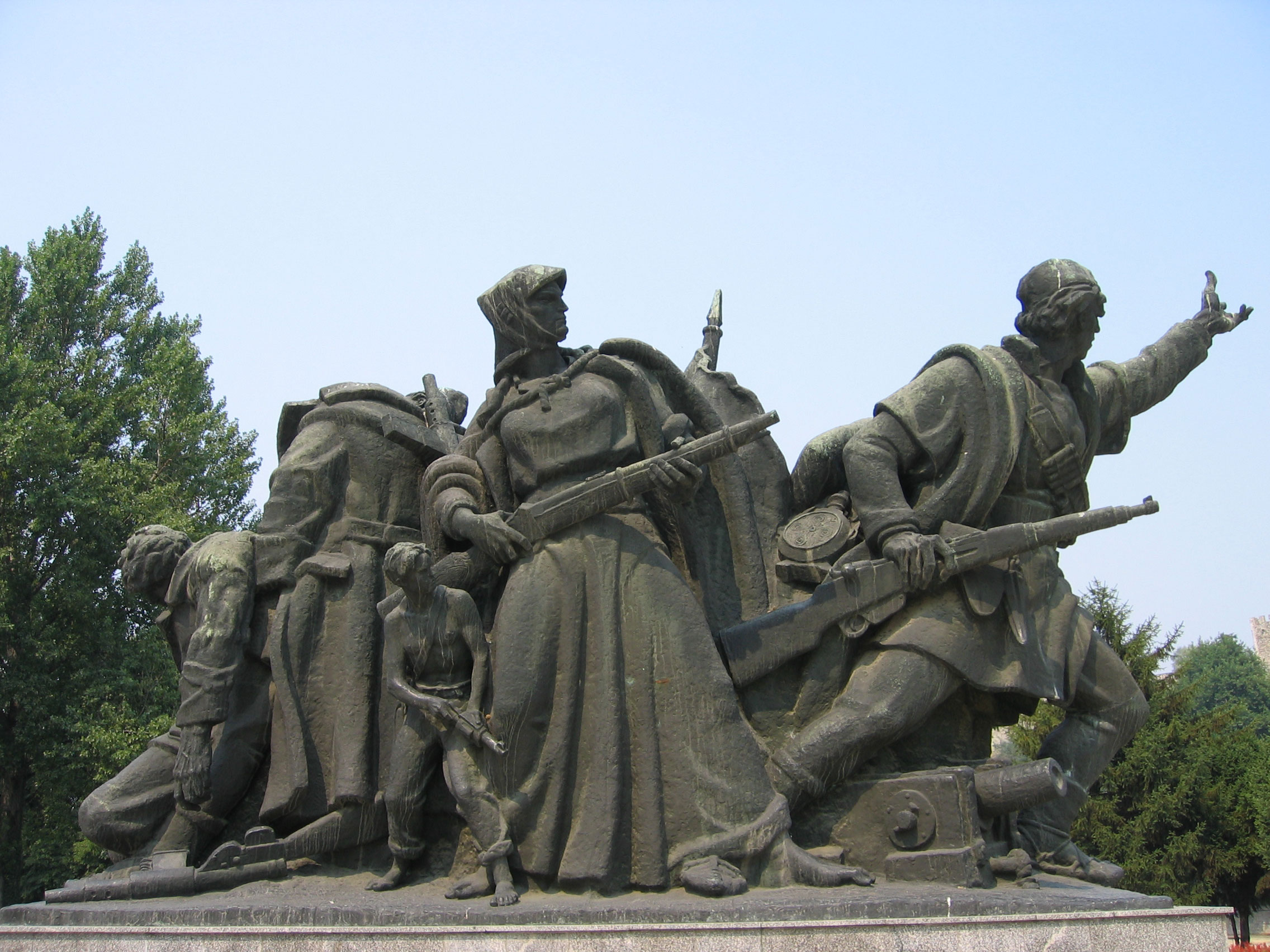
Between the post office and the government building is a World War II Memorial Statue for the liberation of Skopje in WWII (13-11-1944).
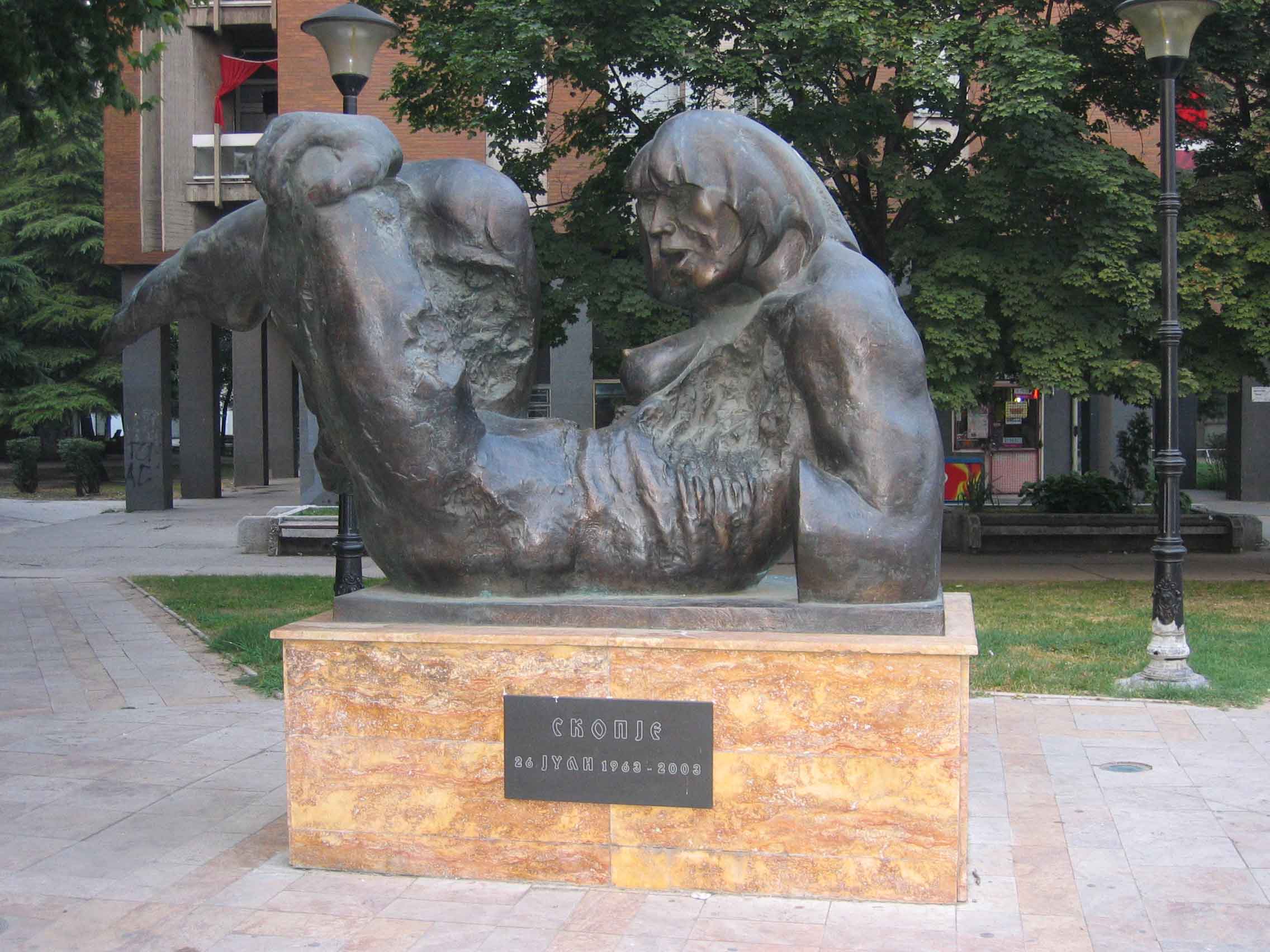
Opposite to the City Museum of Skopje is a statue to commemorate the devastating earthquake of July 26 1963, that killed over 1000 people and made more than 100,000 people homeless. Address: Mito Hadzivasilev Jasmin.
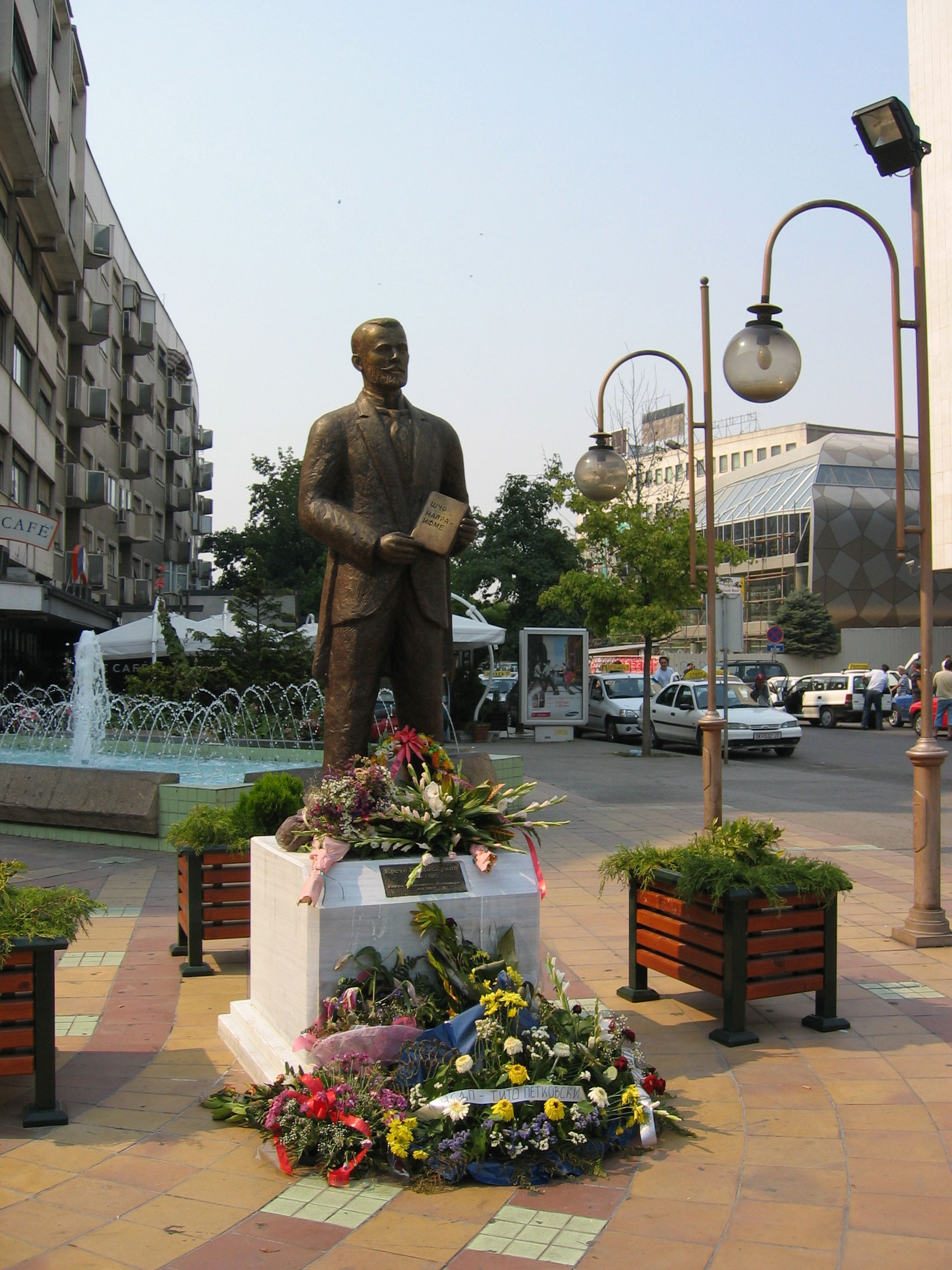
Krste Petkov Misirkov
Krste Petkov Misirkov (1874-1926) is the writer of the famous work “On Macedonian Matters”. The statue can be found at Pella Square close to the Trgovski Shopping Centre (simply called GTC by the locals).
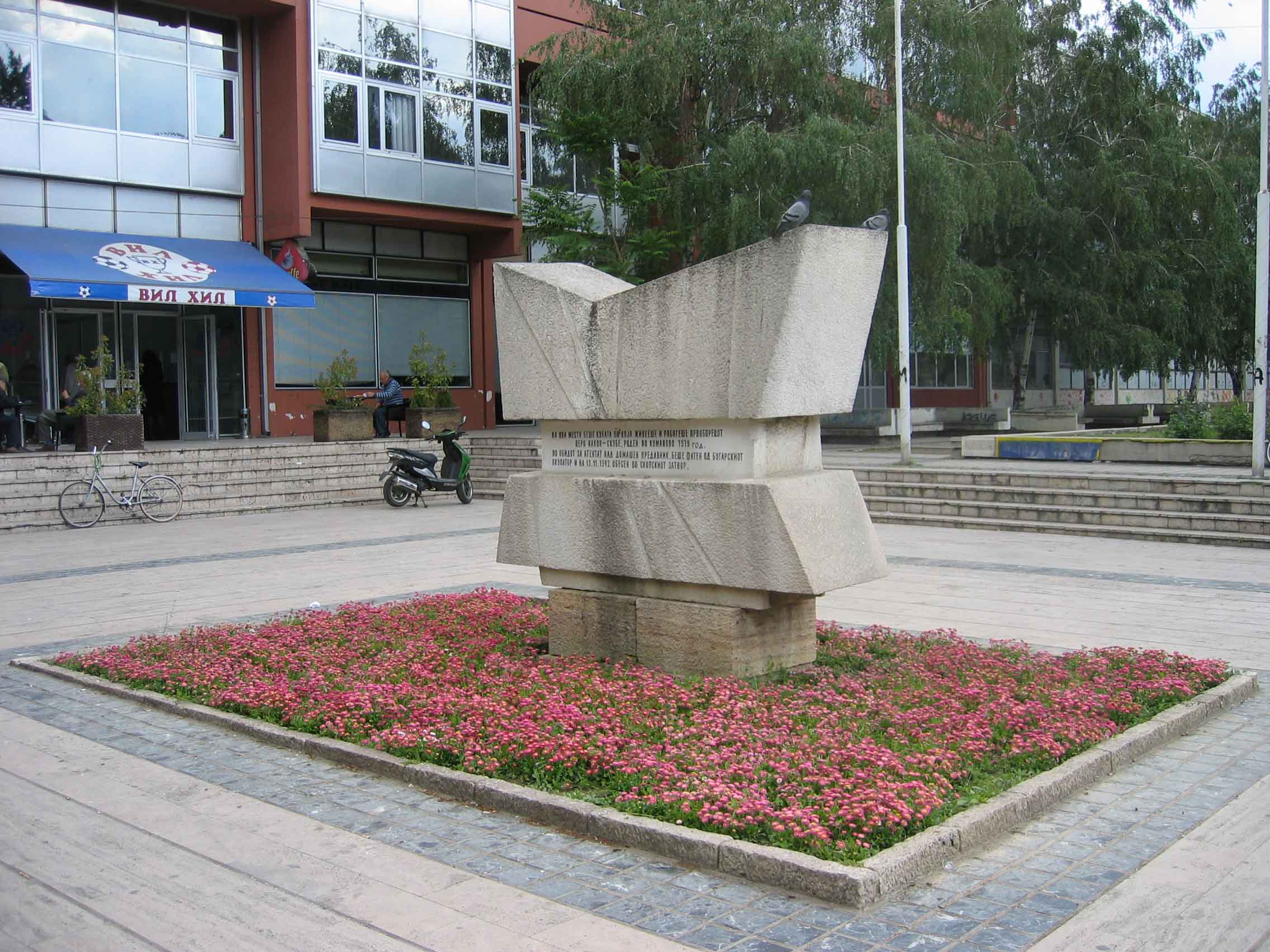
On this site was the house of Pero Nakov, born in Kumanovo in 1919. He was caught by the Bulgarian occupiers after the assassination attempt of a domestic traitor and hanged in the Skopje prison in 1942. The monument can be found on Makedonija Street, close to the museum of Mother Teresa in the Bey’s Tower.
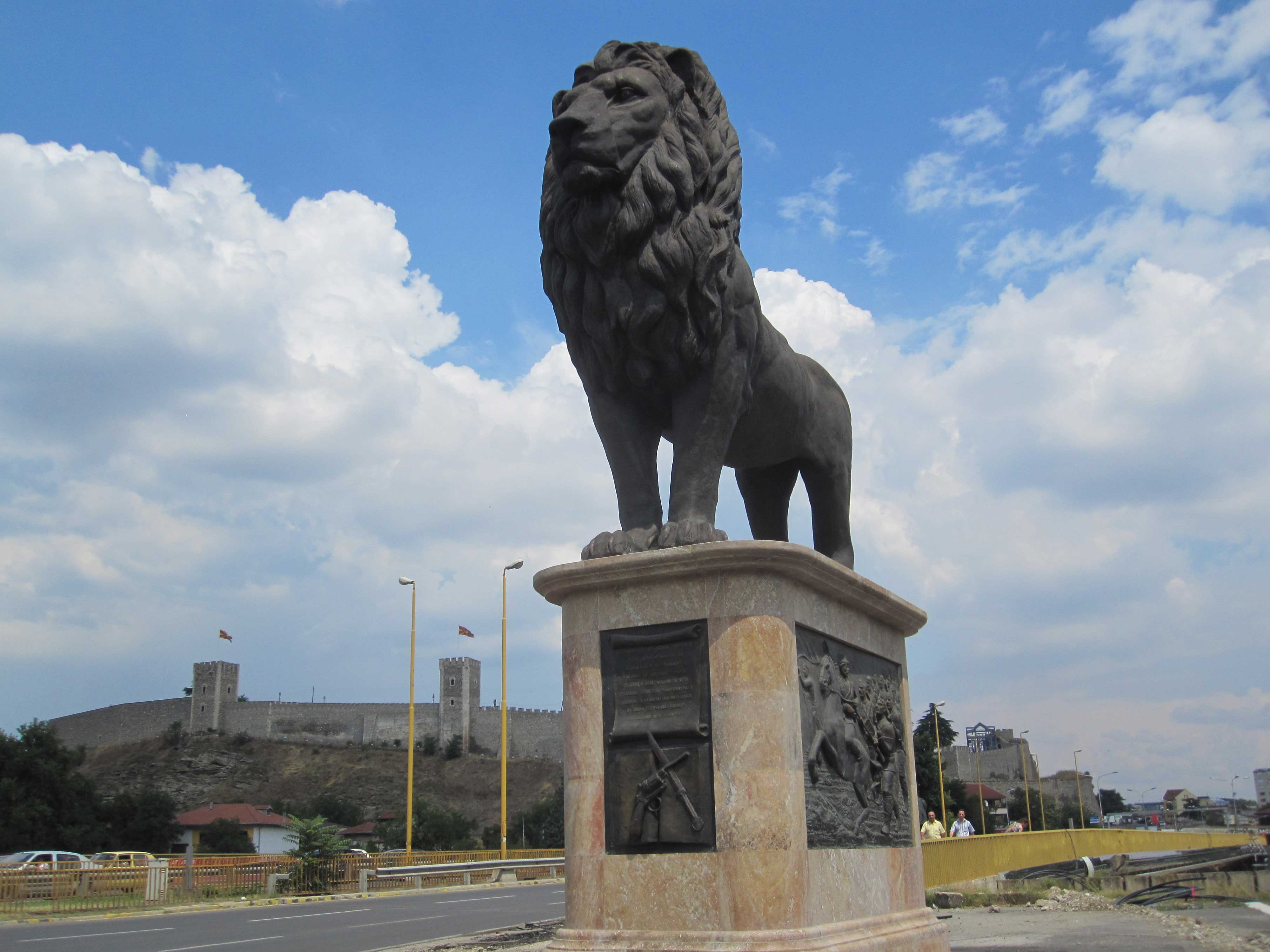
In 2010 four statues of the Macedonian Lion were placed, one on each site of the Goce Delcev bridge over the river Vardar below the Kale Fortress. The lion is the unofficial coat of arms of the Republic of Macedonia.
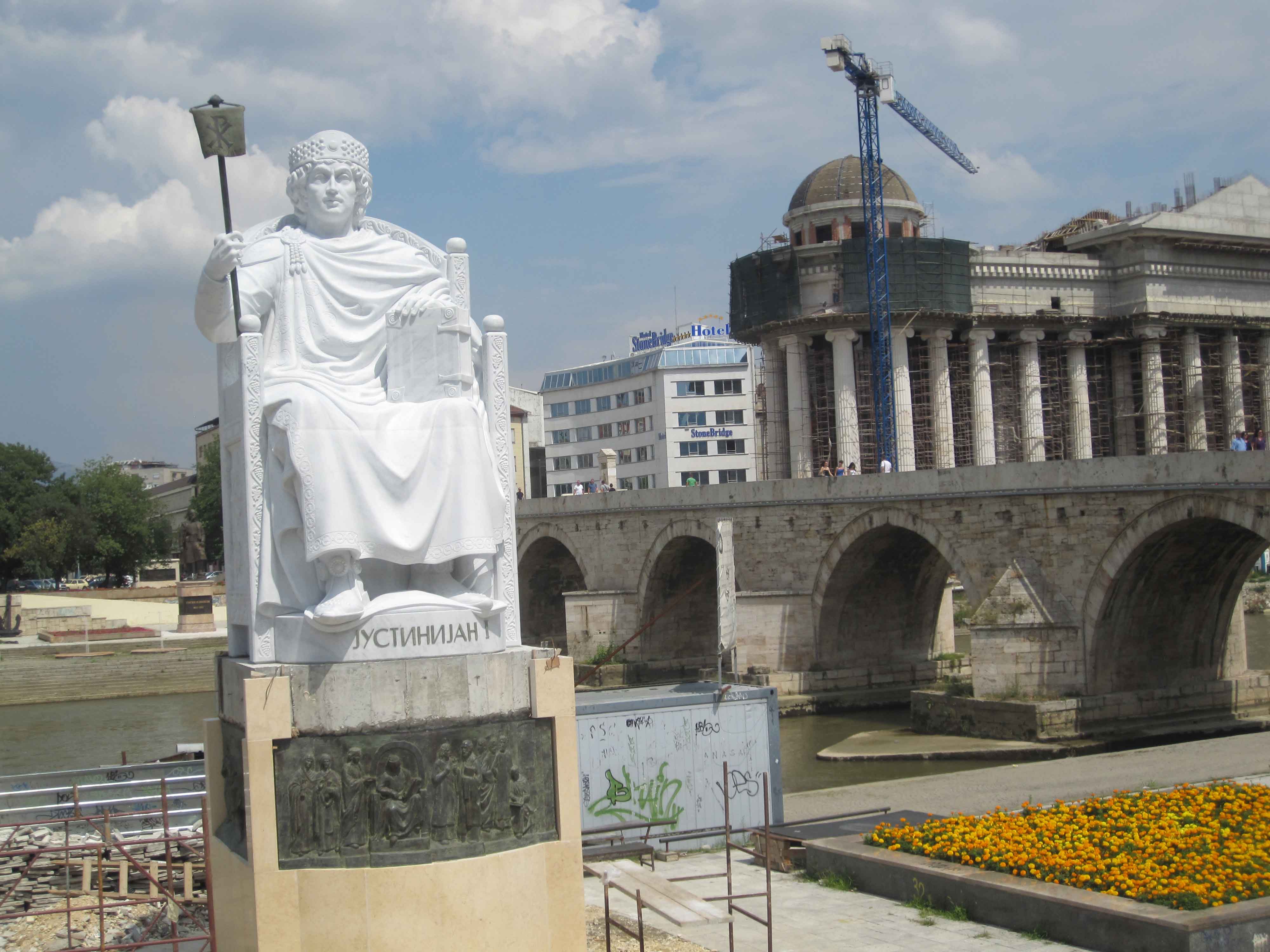
In 2011 a statue of Justinian I was placed at Makedonija Square near the Stone Bridge. Justinian I is commonly known as Justinian the Great and was an Eastern Roman Emperor from 527-565. His birthplace was near Skopje.
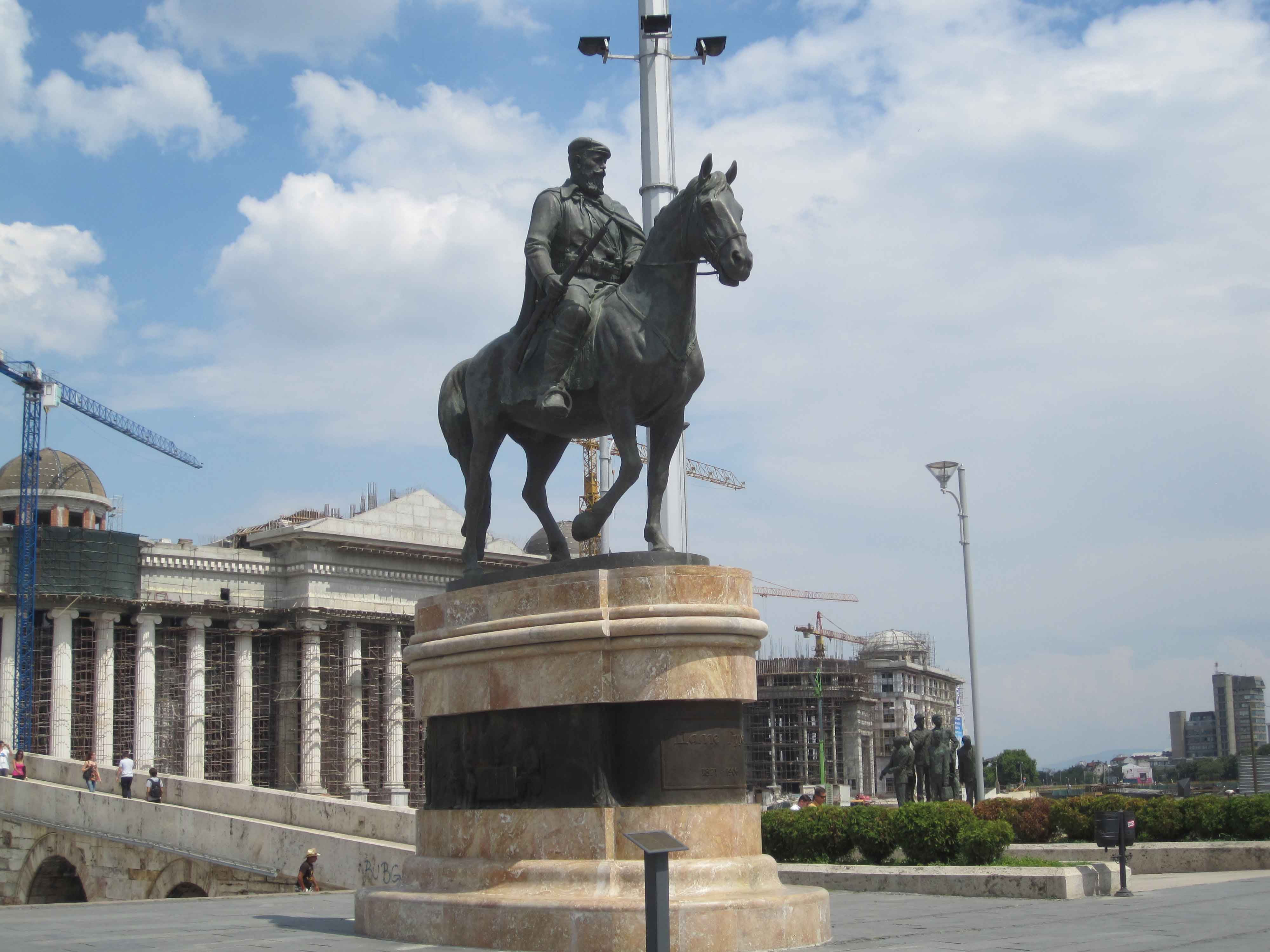
This statue of Dame Gruev was placed on Makedonija Square next to the Stone Bridge. “Dame” does not refer to a woman in this case, but is short for “Damjan”! Dame Gruev was born in 1871 near Bitola. He was one of the founders of the Macedonian Revolutionay Organization. Gruev was killed in 1906 in a fight with the Ottoman occupiers in the Berovo region. Some of his thoughts: “There is no freedom without revolutionary struggle“, “Freedom is a great thing – its takes many victims“, “It is better to experience an horrible end, than an endless horror“.
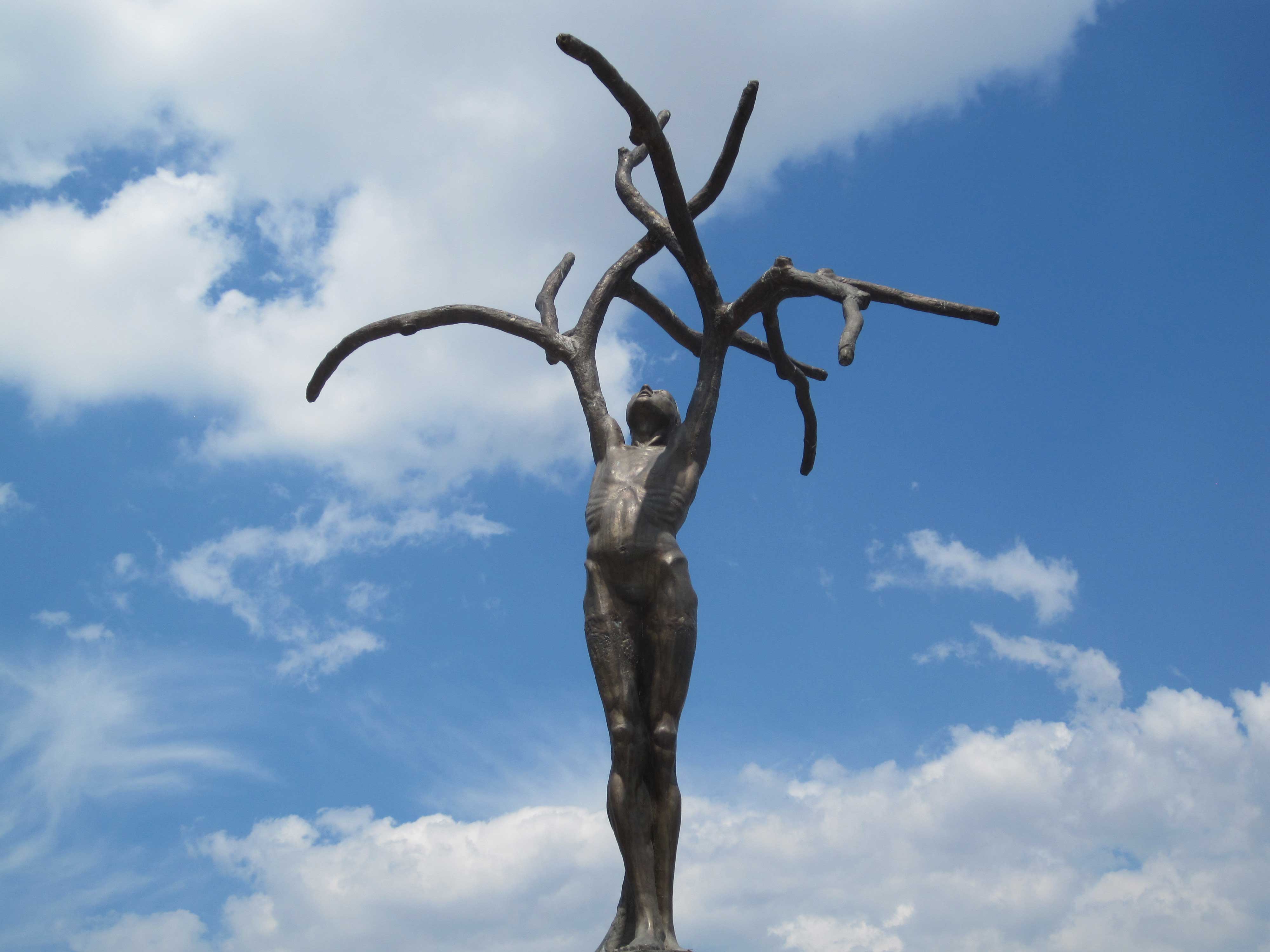
In 2011 this sculpture called “Tree” by the artist Damjan Gjurov was placed on Makedonija Square.
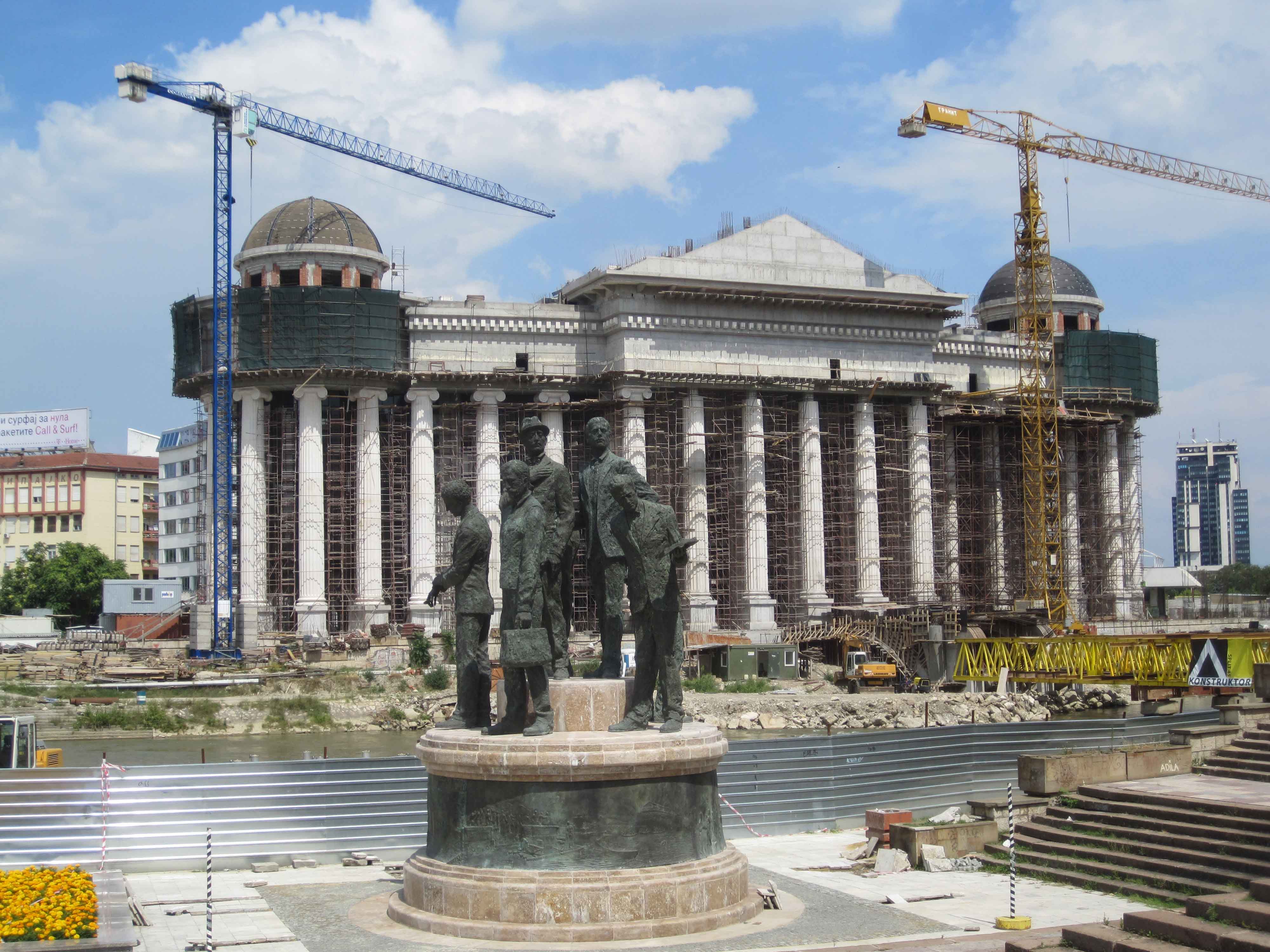
The Boatmen of Thessaloniki were an anarchistic group active against the Ottoman occupation of Macedonia. The statue is located on Makedonija Square. The Boatmen bombed targets in Thessaloniki (nowadays Greece) in order to attract the world’s attention to the suppression of the Macedonian people. The name “boatmen” was named after their ideology of “leaving behind the everyday life and the limits of law, and sail with a boat in the free and wild seas of lawlessness“. Most of the bombers were from Veles, where also a monument for the members of this group can be found.
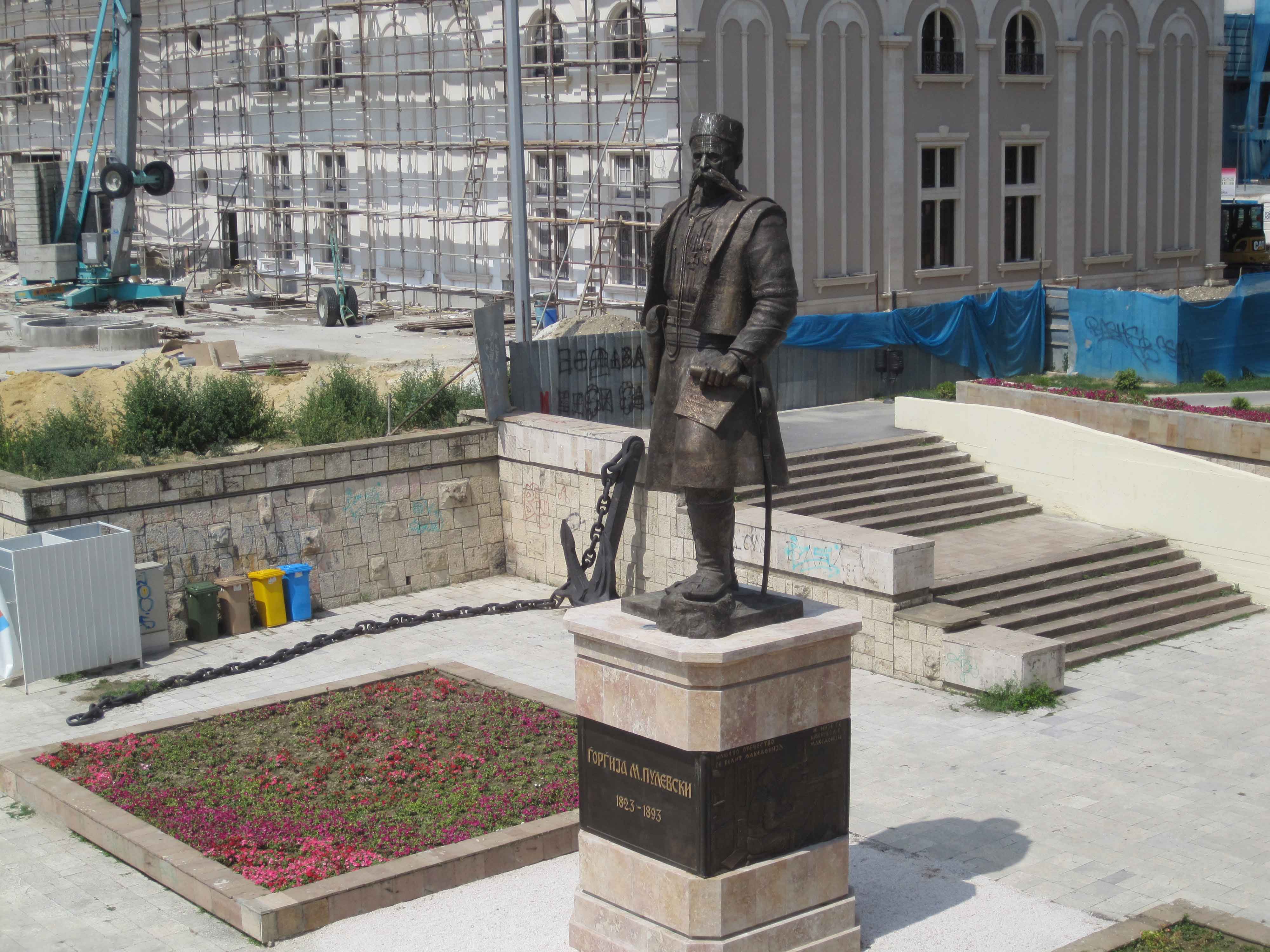
Georgi Pulevski (1817-1895) was a Macedonian writer and revolutionary from Macedonia. He is known as the first author to express the idea of a separate Macedonian nation distinct from Bulgarians, as well as a separate Macedonian language. His statue was erected next to the Stone Bridge facing Makedonija Square.
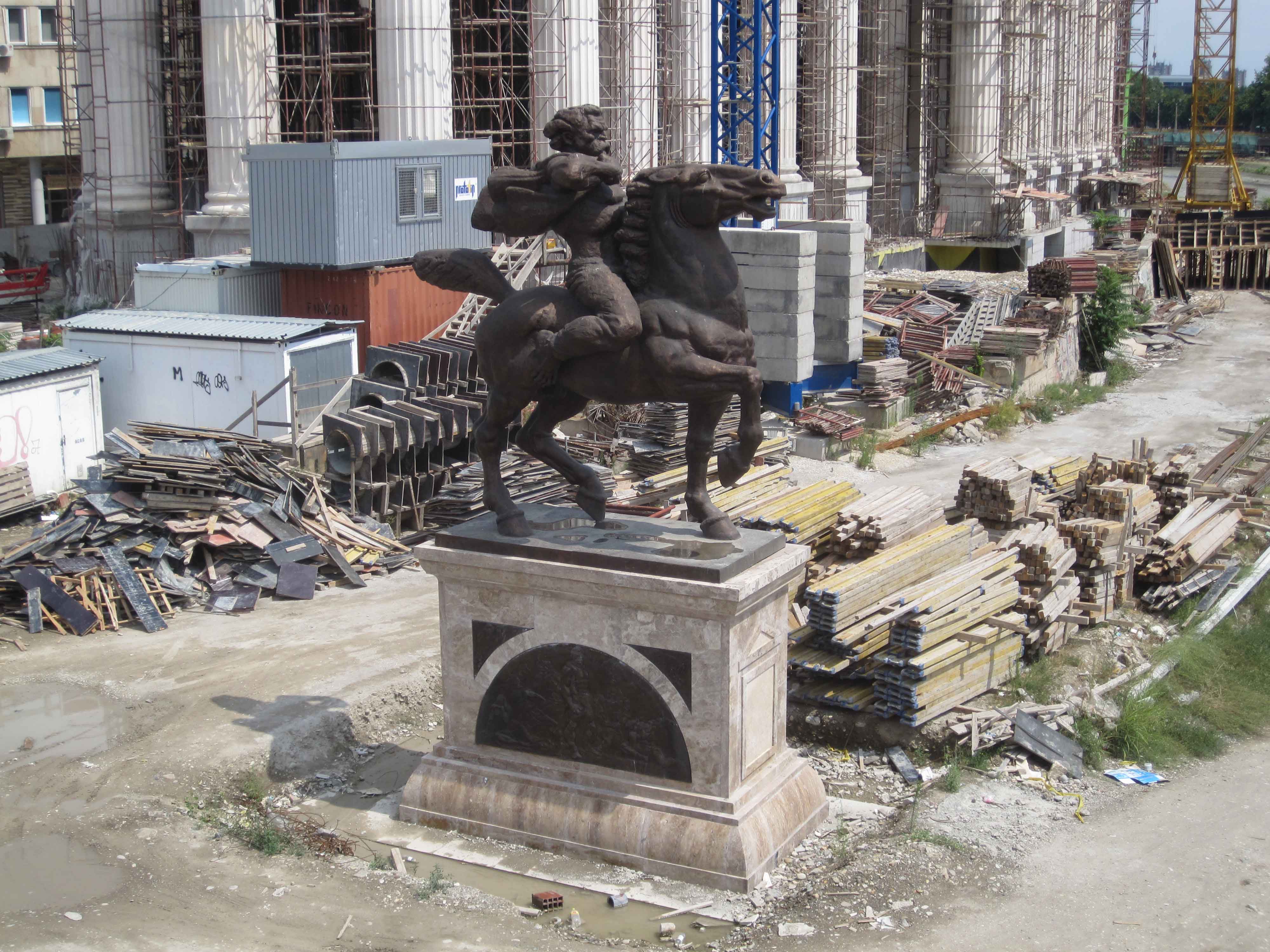
Karposh was a rebel leader and was killed by the Ottomans in 1689 after leading an Christian uprising. Karposh was known as the “King of Kumanovo”. When the battle was over, all rebels who resisted were slaughtered. Karposh and the others were taken prisoner. After conquering Kumanovo, the Ottomans left for Skopje where they executed Karposh and the others. The statue was placed next to the Stone Bridge where Karposh allegedly was gruesomely impaled.
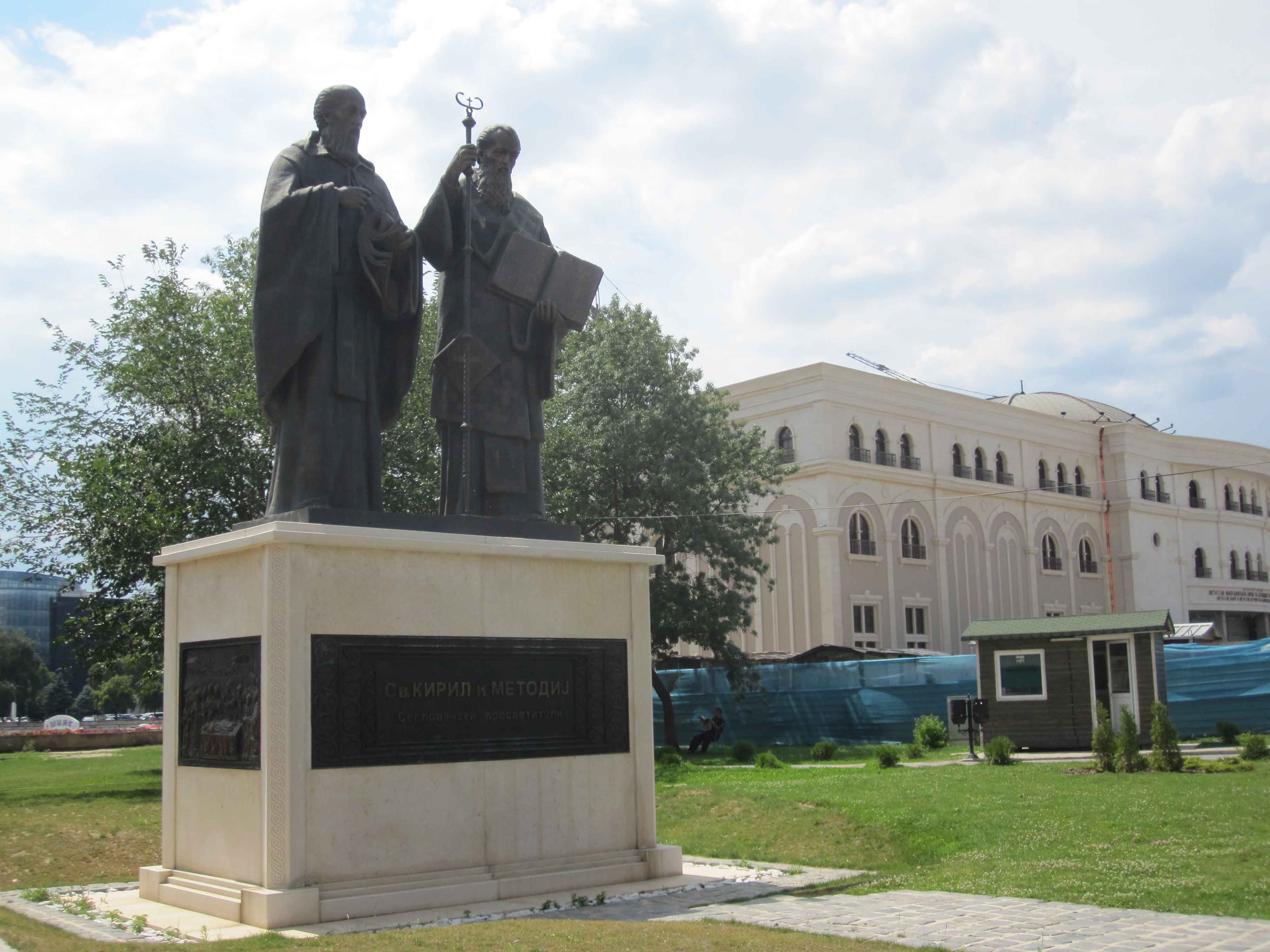
Saints Cyril (826-869) and Methodius (815-885) were two brothers who became missionaries of Christianity among the Slavic people. They are credited for inventing the Glagolitic alphabet. The Cyrillic language was called after St Cyril. Their statue is located next to the Stone Bridge.
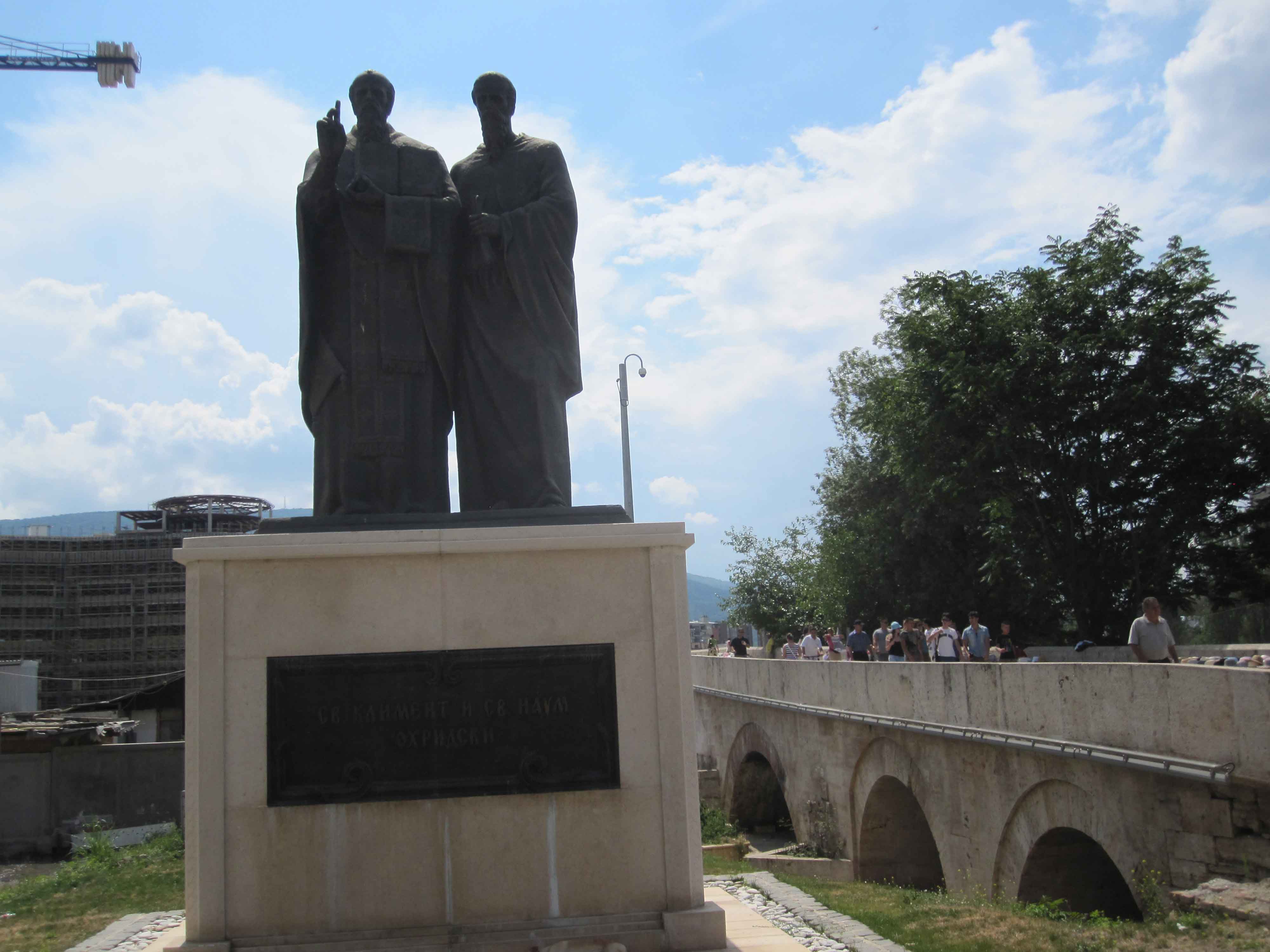
Saints Clement (840-916) and St Naum (830-910) of Ohrid were scholars, writers and teachers of the Glagolitic and Cyrillic alphabets. They were disciples of the Saints Cyril and Methodius. Their statue is located next to the Stone Bridge as well.
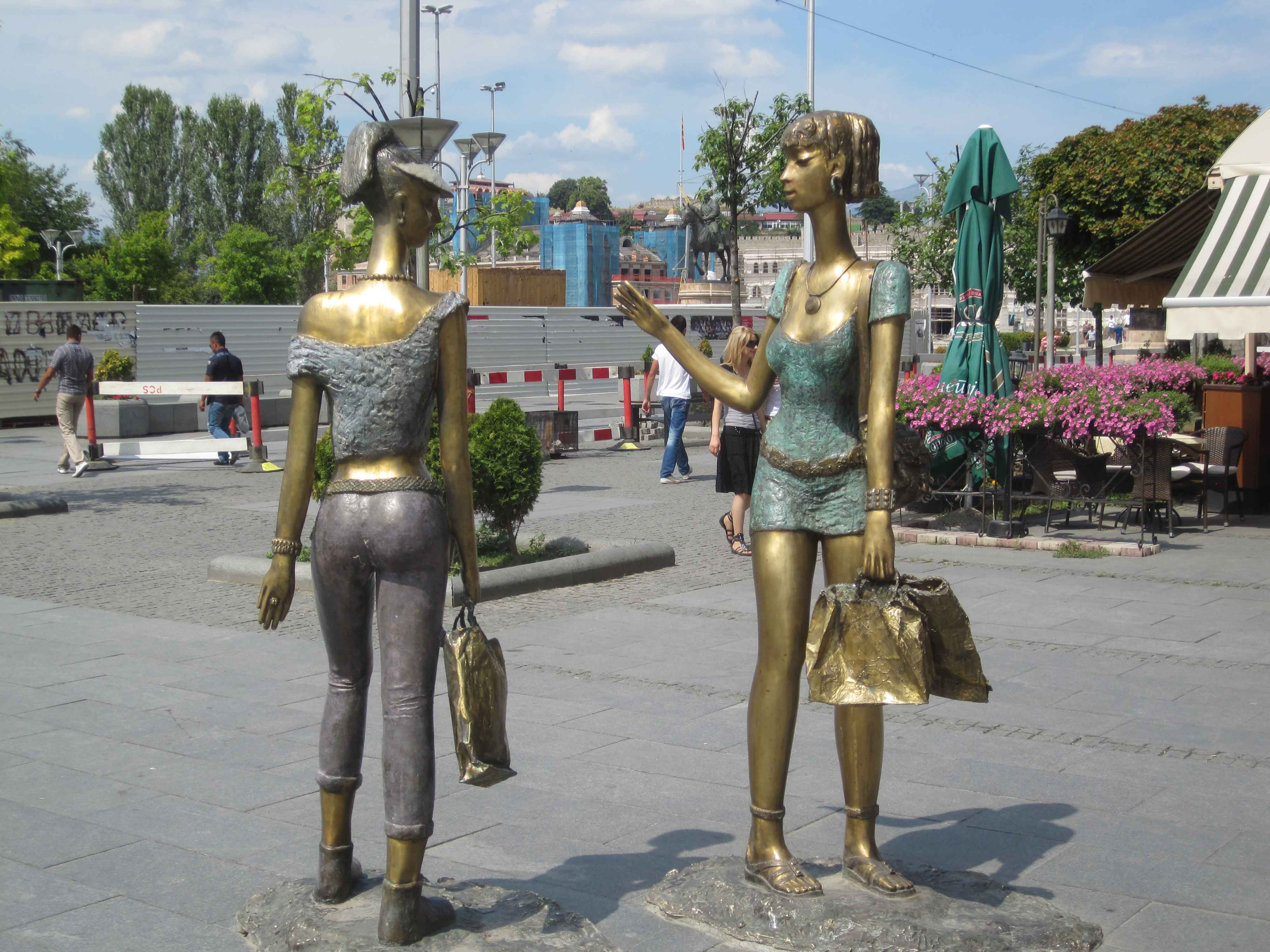
On a much lighter note compared to all the statues dedicated to saints and war heroes is this statue of two girls shopping on Makedonia Square.
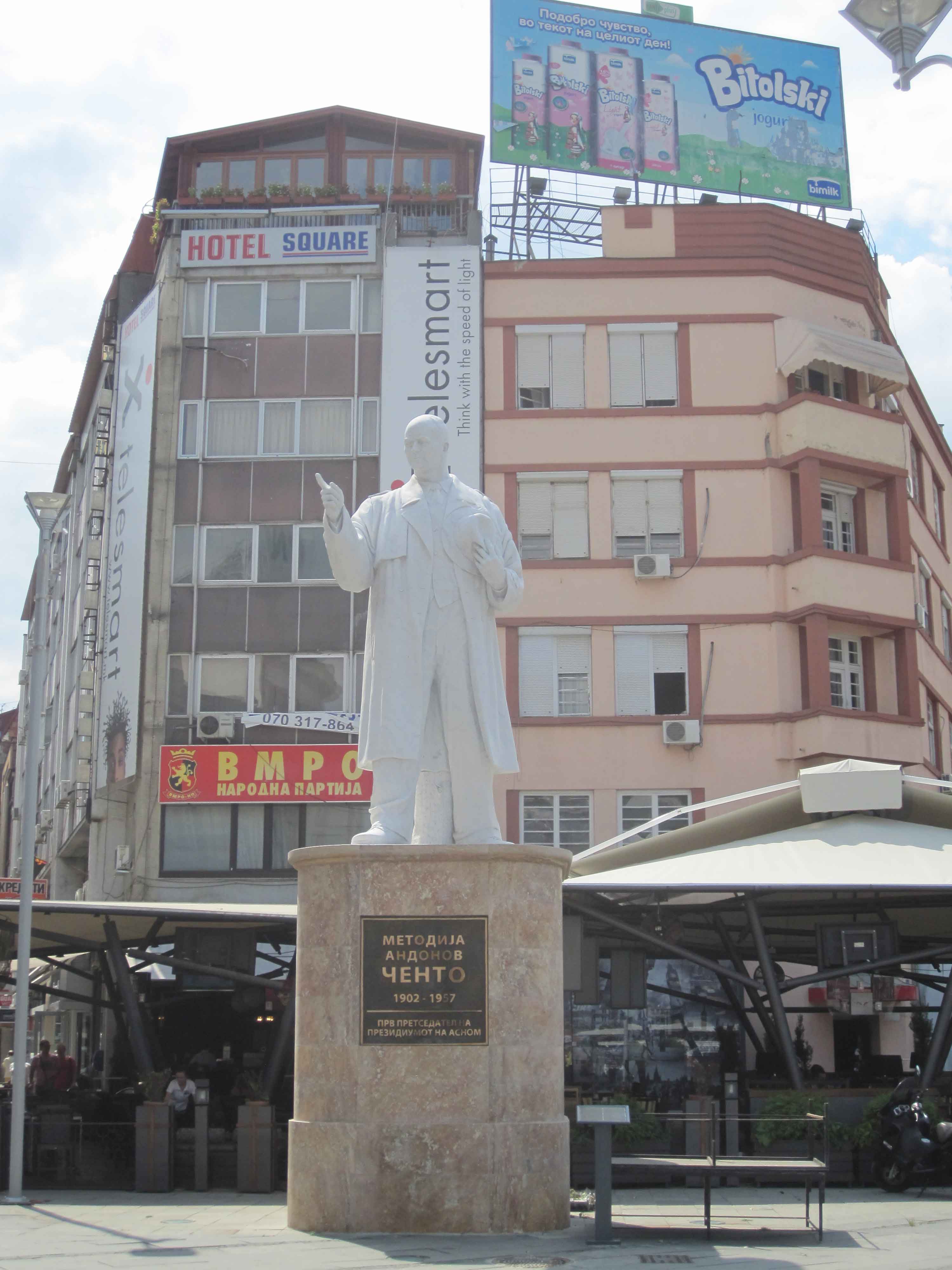
Metodija Andonov Chento 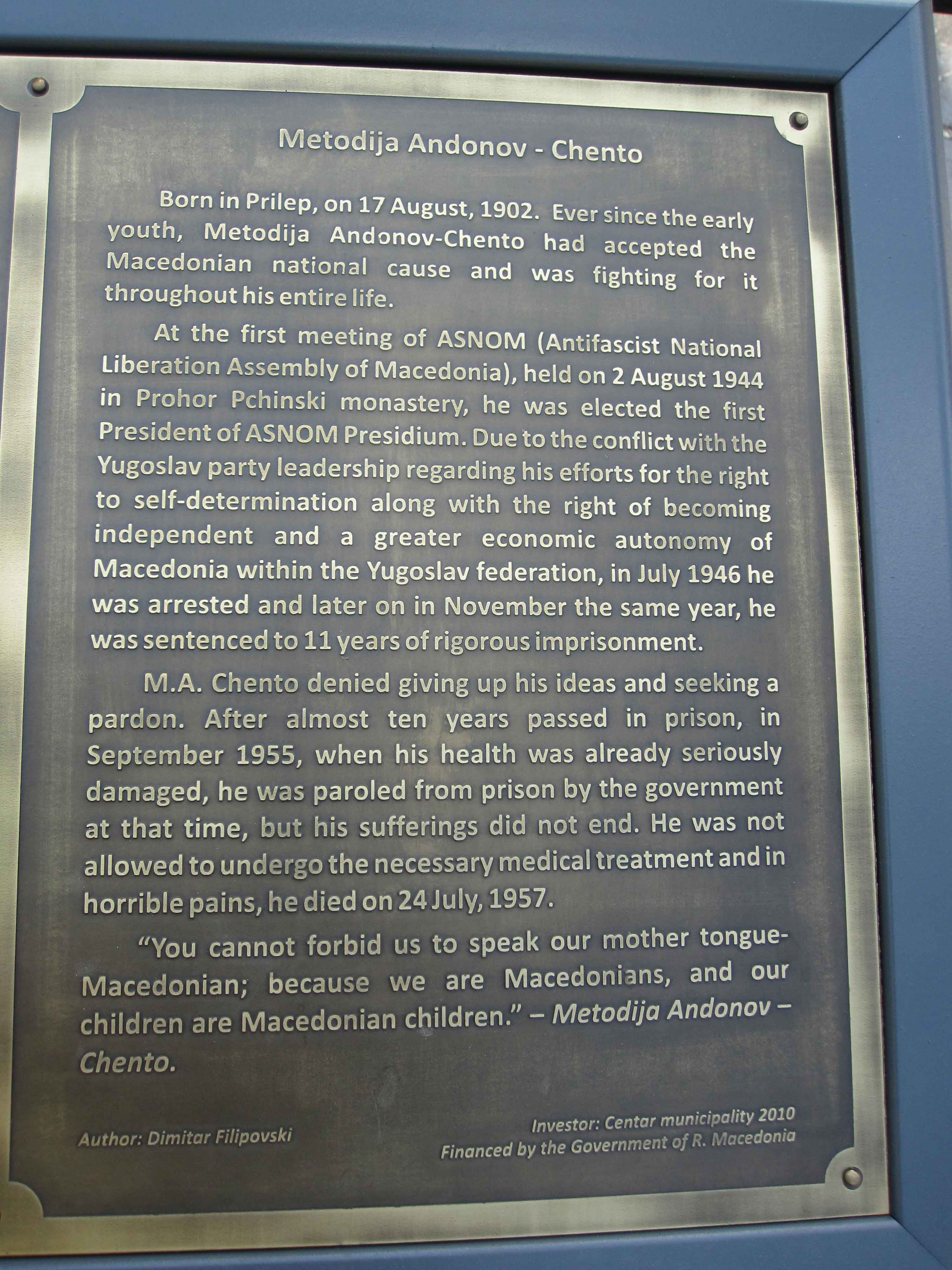
Metodija Andonov Chento
Metodija Andonov-Cento (1902–1957) was a Macedonian statesman, the first president of the Anti-Fascist Assembly of the National Liberation of Macedonia and of the Socialist Republic of Macedonia. Cento died at home after sickness from torture in prison. His statue is located at Makedonija Square.
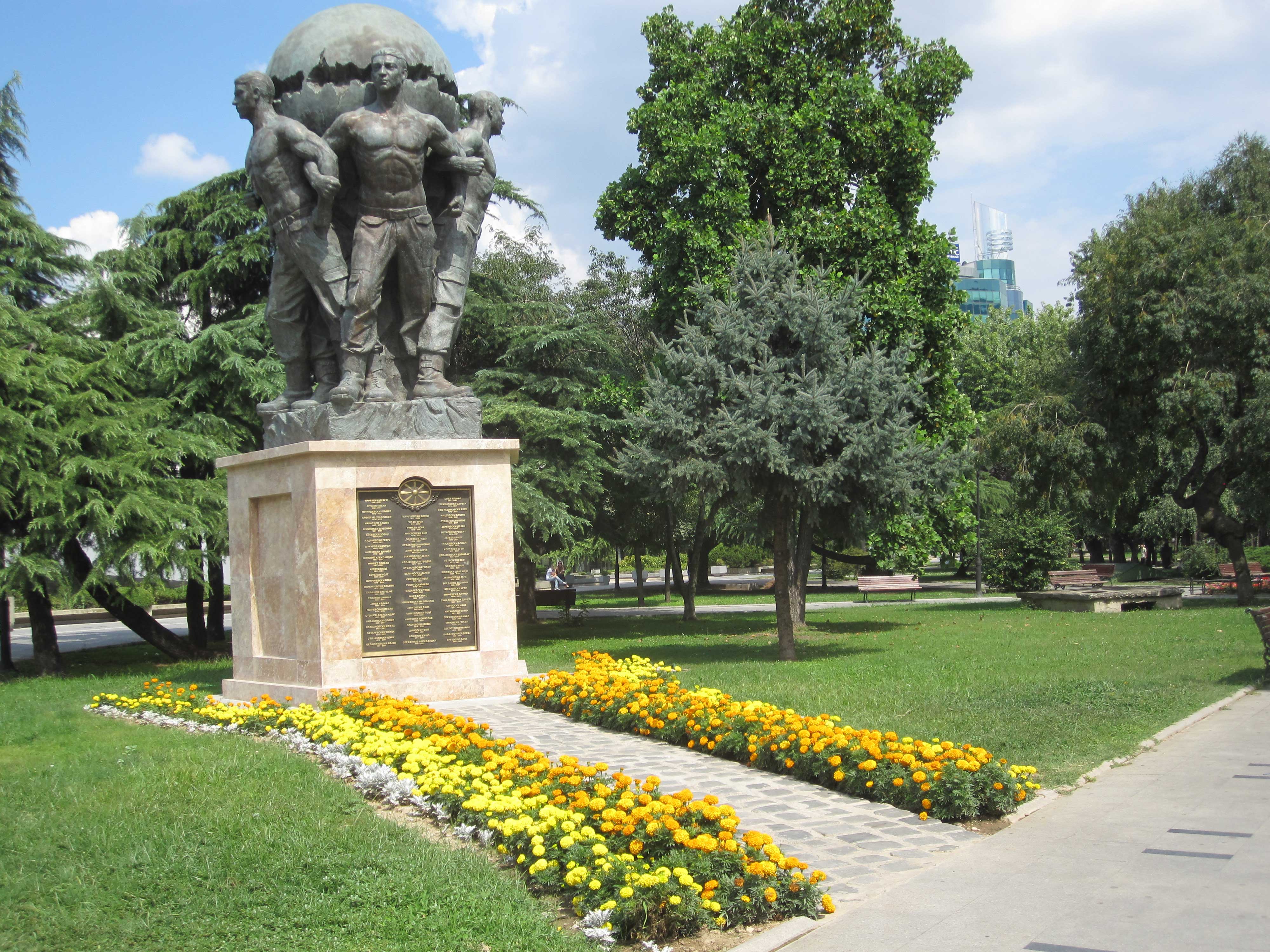
This monument commemorates soldiers and policemen killed in the armed conflict with ethnic Albanian militants in 2001. Located in the Zena Borec park opposite the parliament building.
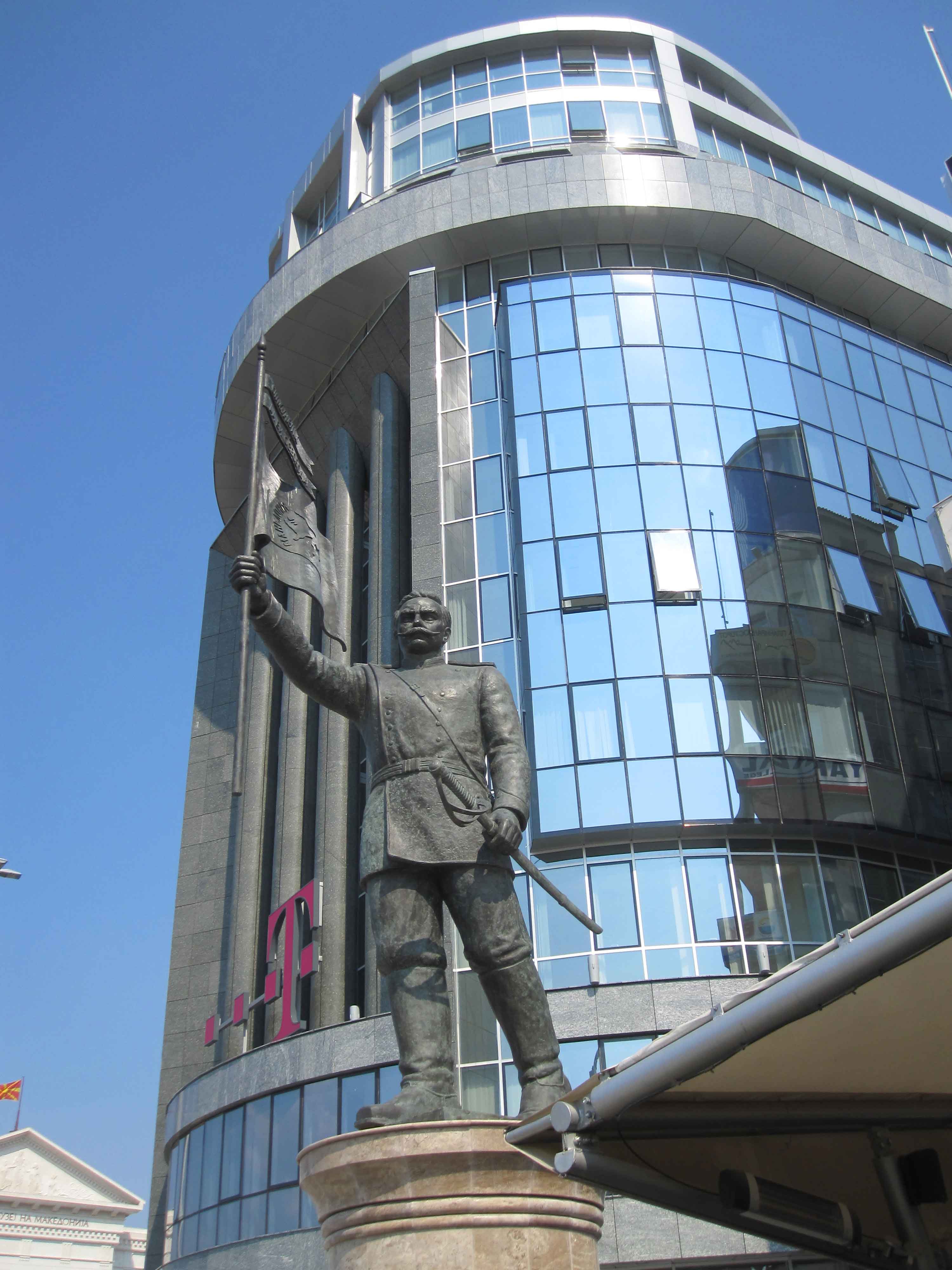
Dimitar Popgeorgiev Berovski 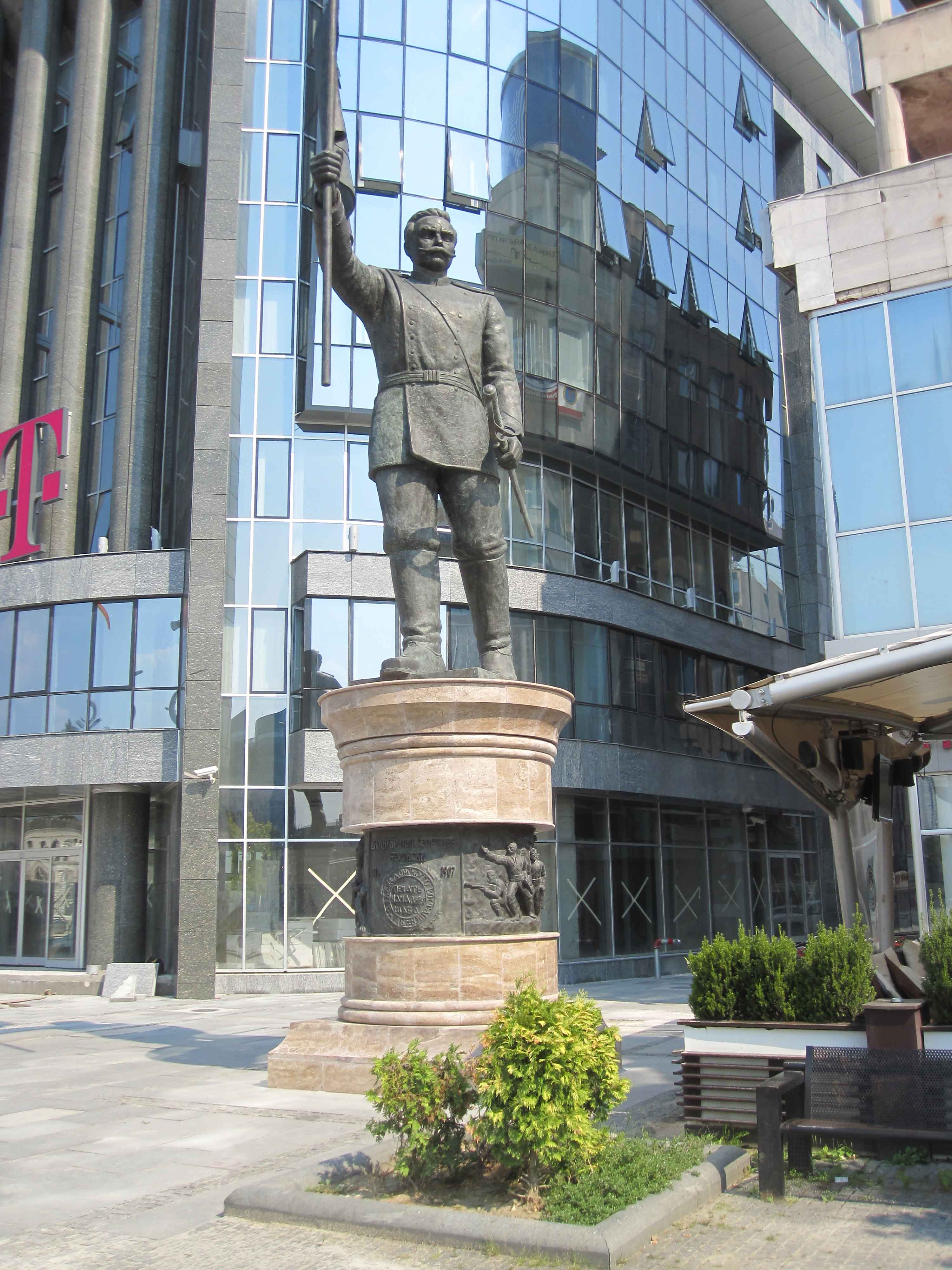
Dimitar Popgeorgiev Berovski
Dimitar Popgeorgiev Berovski (1840 – 1907) was a revolutionary born Berovo. The statue is located at Makedonija Square
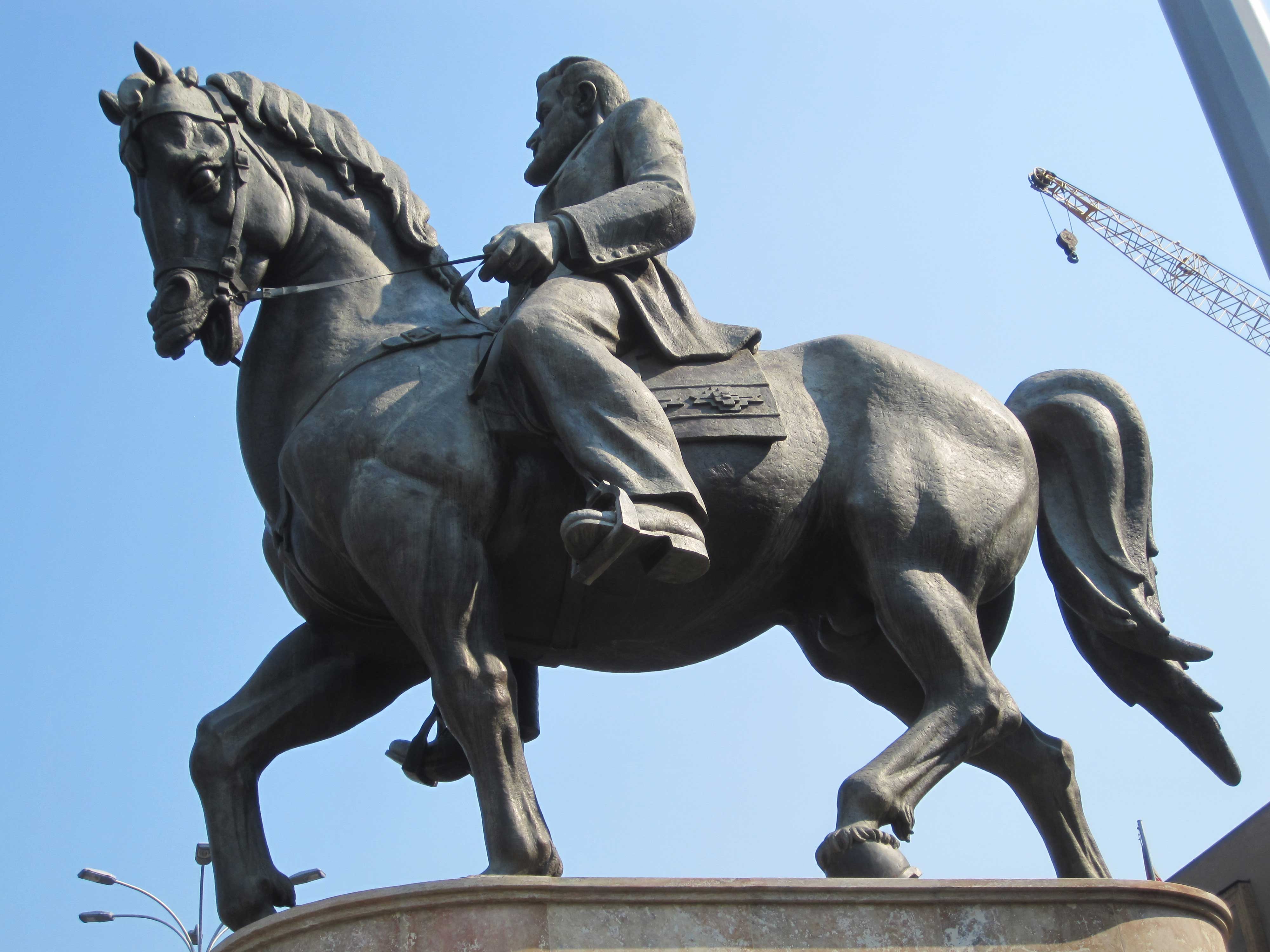
Nikola Karev was born in Krusevo in 1877. He was a Macedonian revolutionary and president of the Krusevo Republic. In 1903 he opposed the Ilinden Uprising, as he felt that the people were not prepared for an uprising against the Ottoman occupation. Nevertheless, the uprising, led by Nikola Karev, succeeded and Krusevo was liberated. He died in 1905 in a fight with the Ottoman army near Kocani. The statue is on 11th October Street close to the Porta Macedonia.
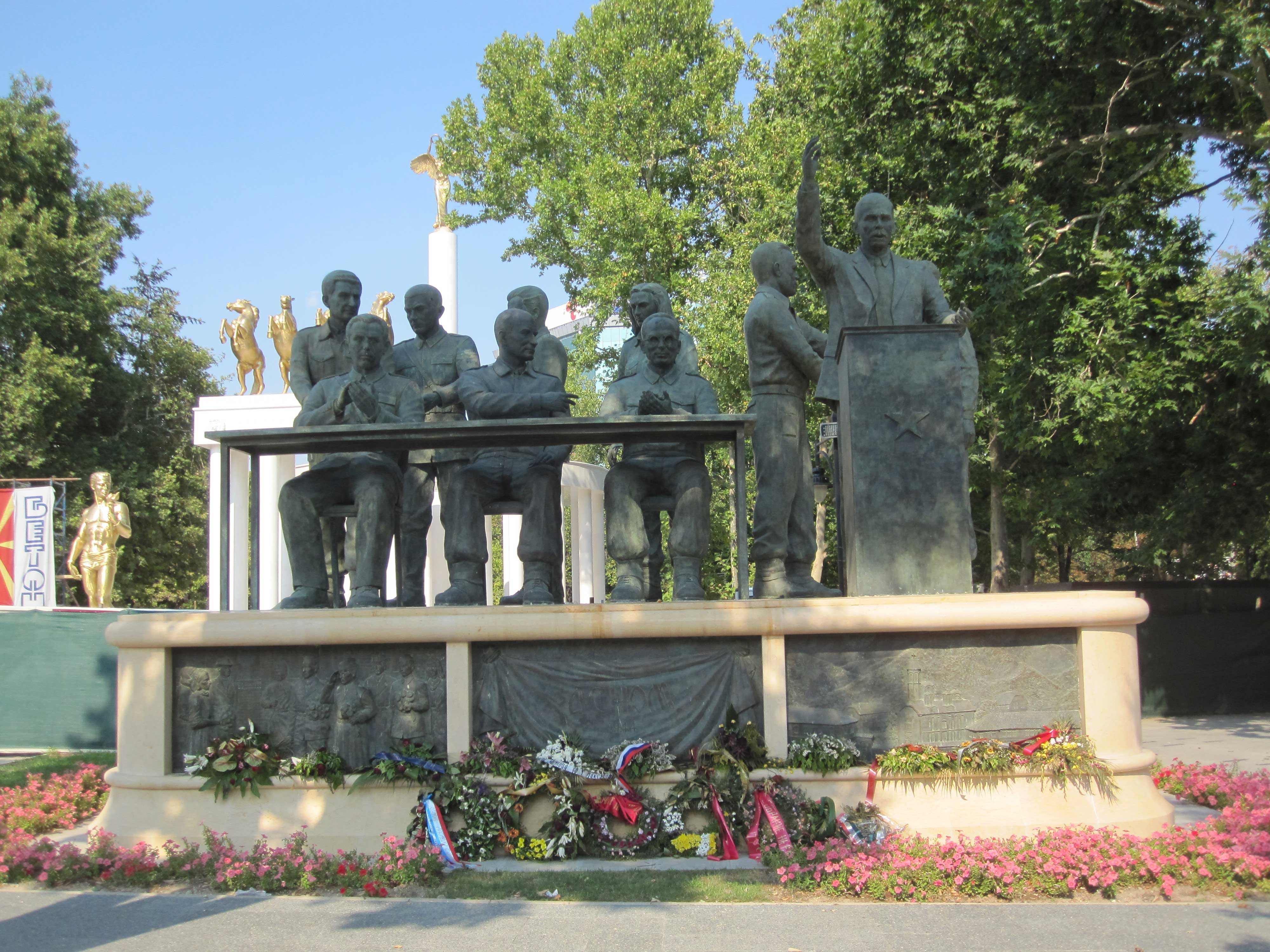
This statue commemorates the establishment of the Anti-Fascist Assembly for the People’s Liberation of Macedonia (ASNOM) in 1944. The first plenary session of ASNOM was held underground on the symbolic date of August 2 1944 (the day of the Ilinden Uprising in 1903) in the Monastery of Prohor Pcinjski in nowadays Serbia.
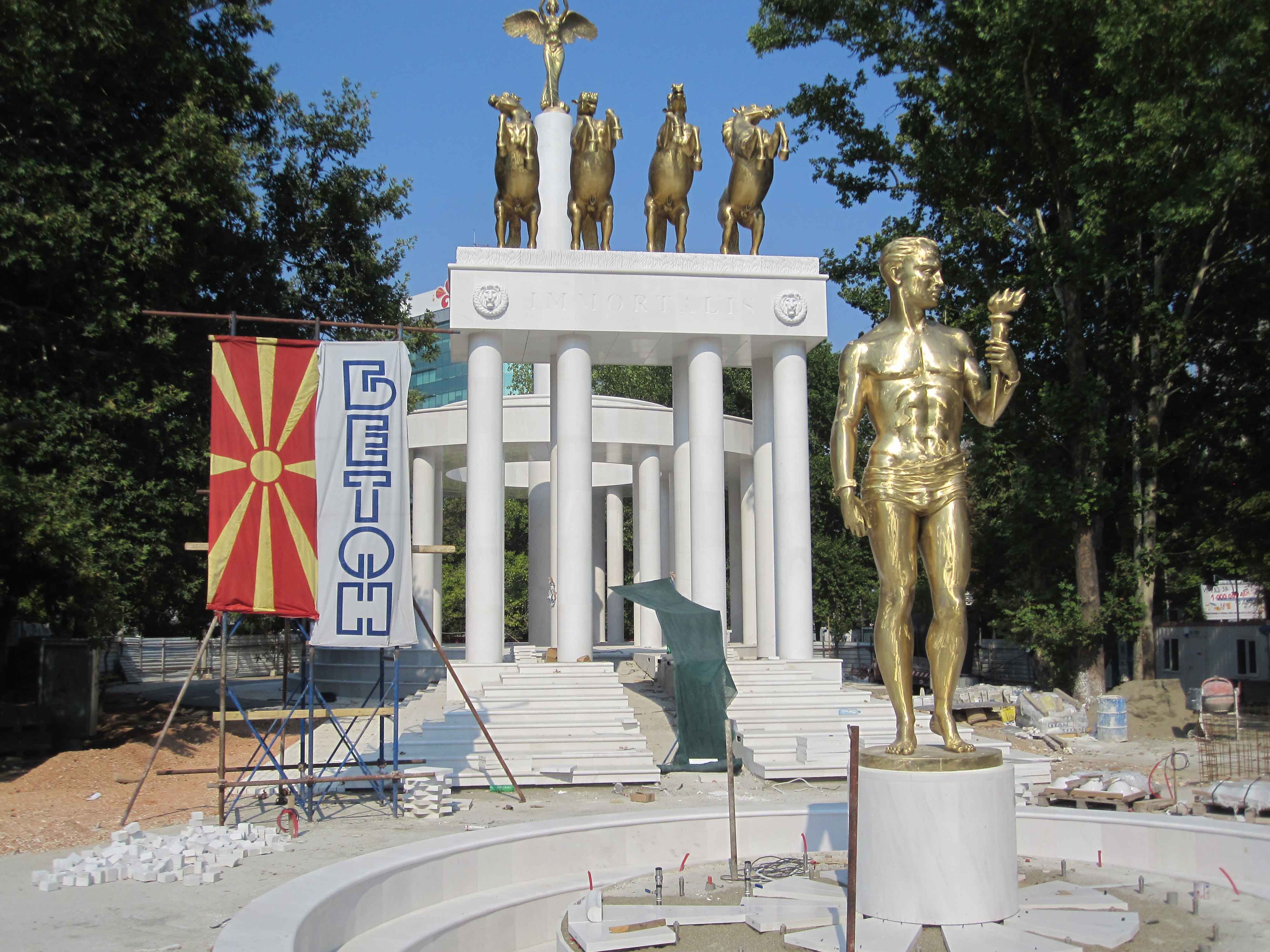
In August 2012 this monument in Zena Borec Park for the Fallen Heroes of Macedonia was still under construction. The statue represents self-sacrifice in the form of Prometheus, who stole fire from the gods. Funny fact: Prometheus was first naked, but after complaints by women’s organizations he was given some underwear.
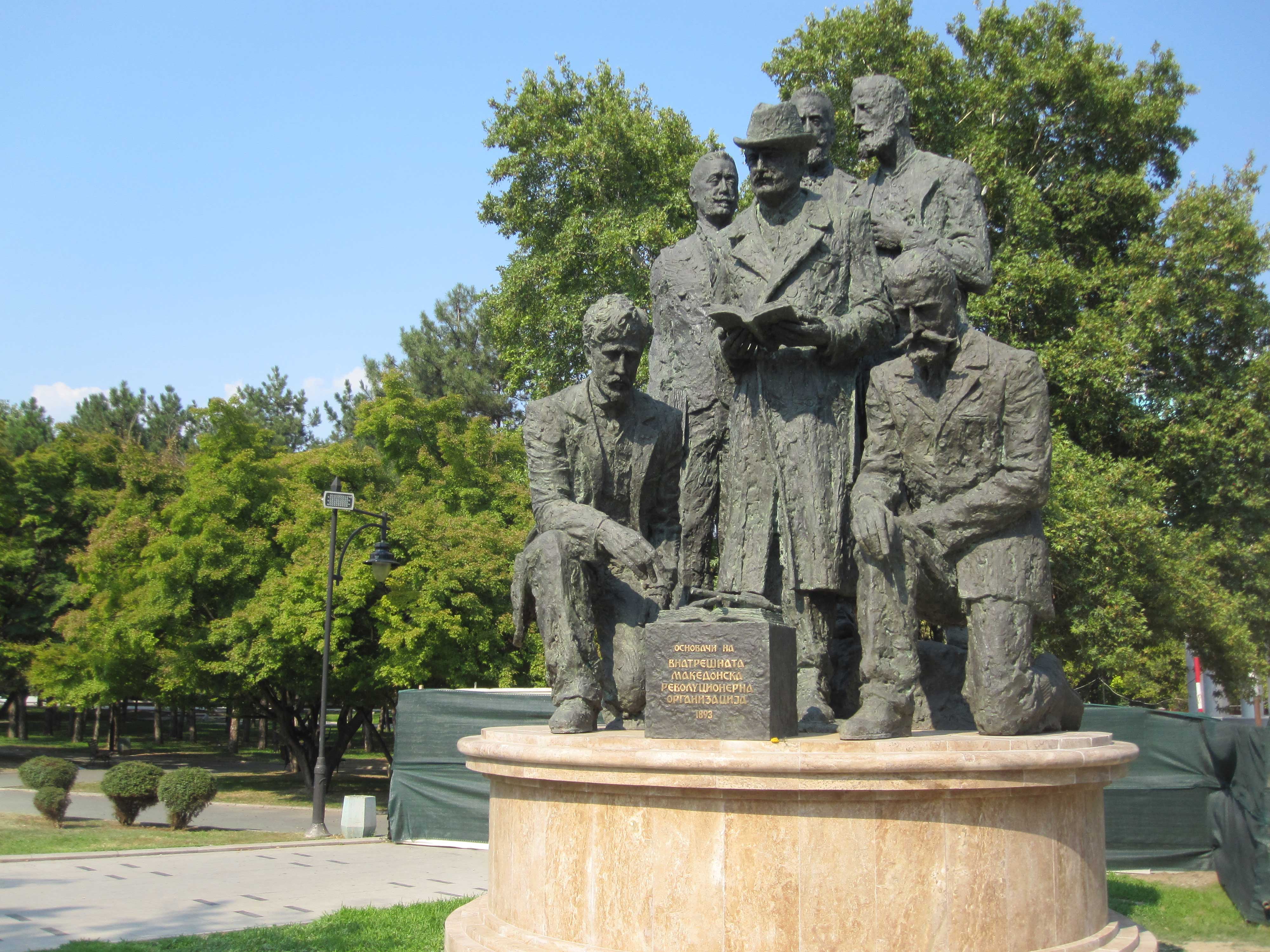
The Internal Macedonian Revolutionary Organization (VMRO) was founded in 1893. Its purpose was to obtain autonomy for Macedonia from the Ottoman empire. In 1903 this resulted in the Ilinden Uprising. The statue for the founders is in Zena Borec Park.
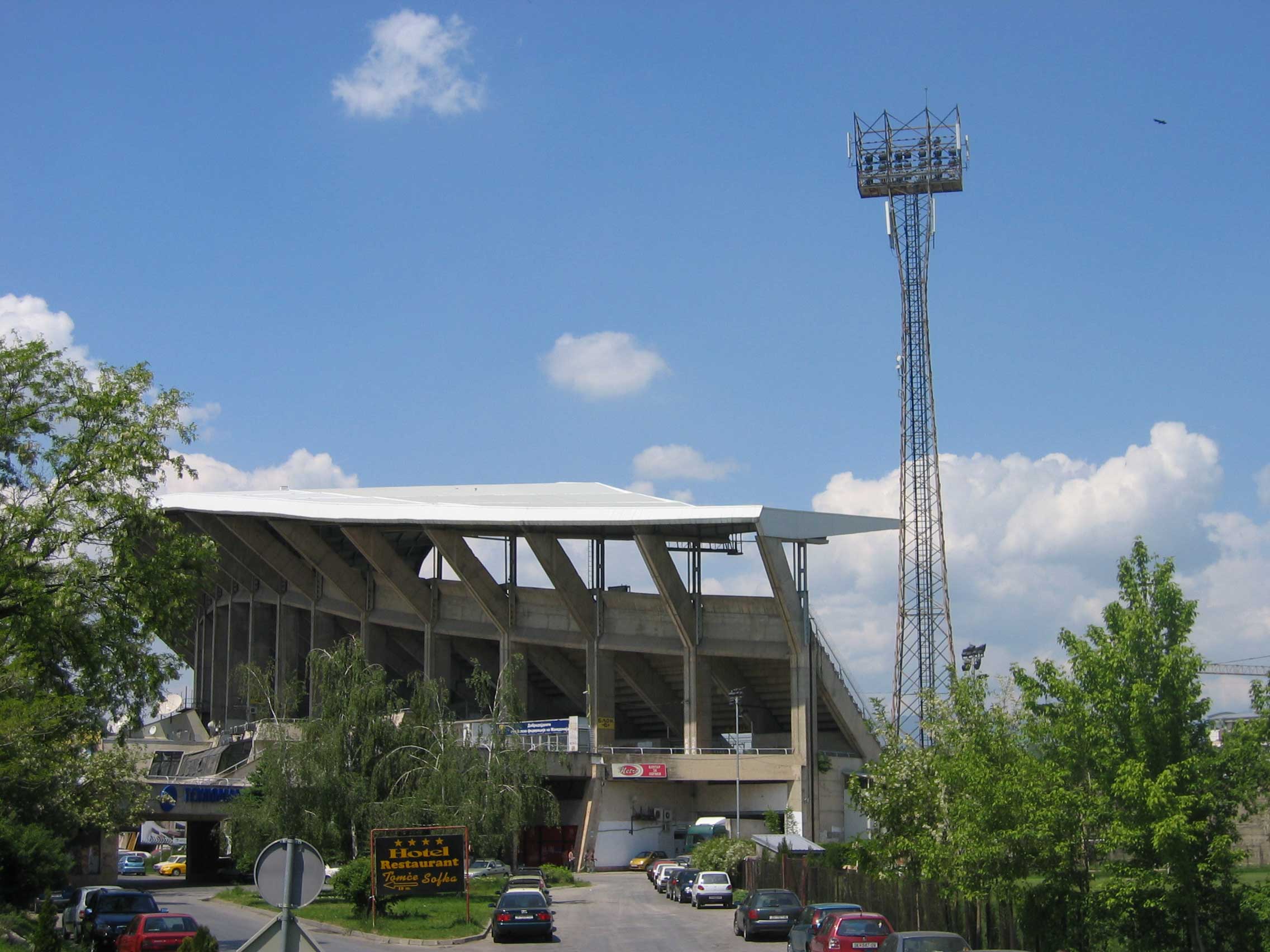
Another landmark in Skopje is the football stadium next to the City Park.
 My Macedonia Blog