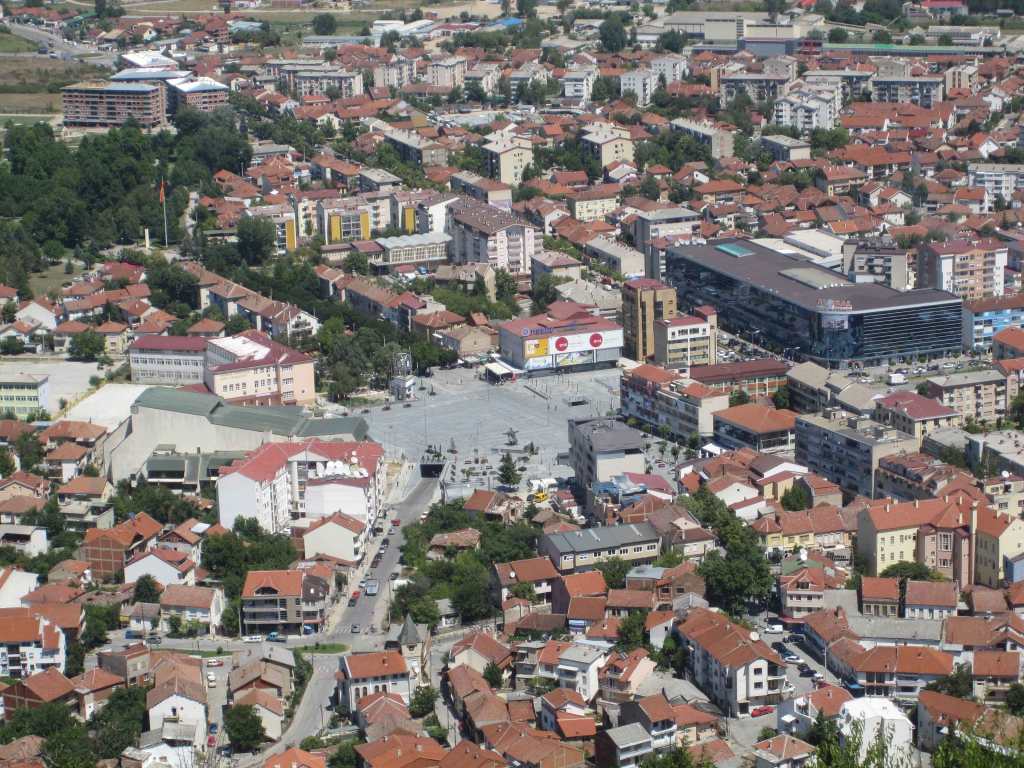
Strumica is located in the south-east of Macedonia. The town dates back to the 2nd century BC, when it was called Astraion, meaning City of Stars. Strumica is guarded by the Czar’s Towers from the Strumica Fortress, which dates back to the 10th century when Samoil ruled Macedonia and the surrounding region.
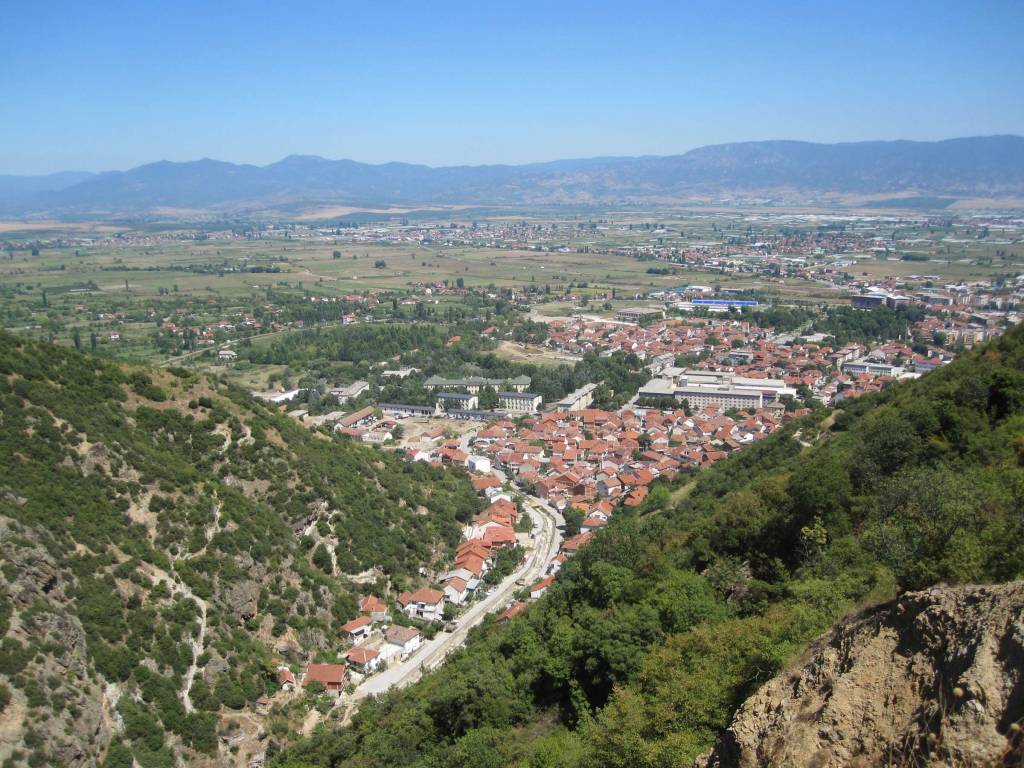
You will need more than one day to visit Strumica and all the interesting sights in the surroundings. The Monastery of the 15 Martyrs of Tiberiopolis offers great accommodation if you are looking for something else than yet another ordinary hotel.
Czar’s Towers
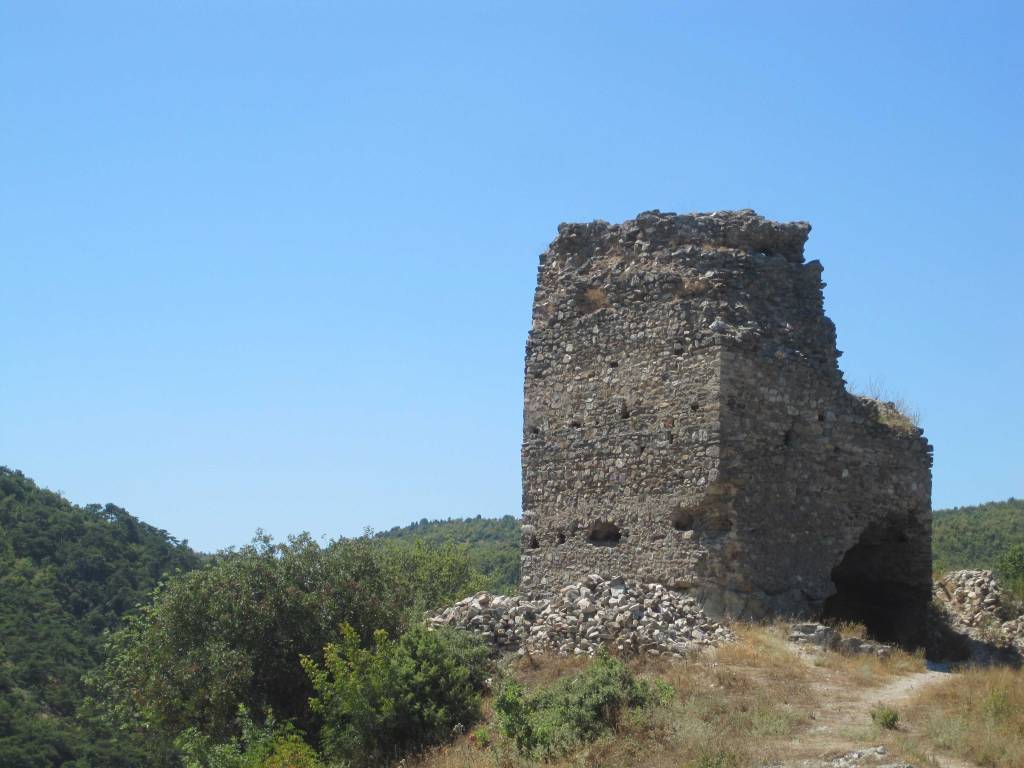
The Czar’s Towers (Carevi Kuli) are located on the hill overlooking Strumica. They are the remains of a medieval fortress from the 11th-12th century which was extended during the 12th-14th century. Life on this hill is thought to go back to 4750 BC, and many artifacts from different time periods have been found at the location.
There is not much left over from this once so powerful fortress. The only well visible remains are the so-called Pirg Tower, the main tower of the fortress where the commander of the fortress stayed. The lower floor was a water tanker filled with rain water. You can see the holes in the walls that were used to make wooden floors above the water tanker.
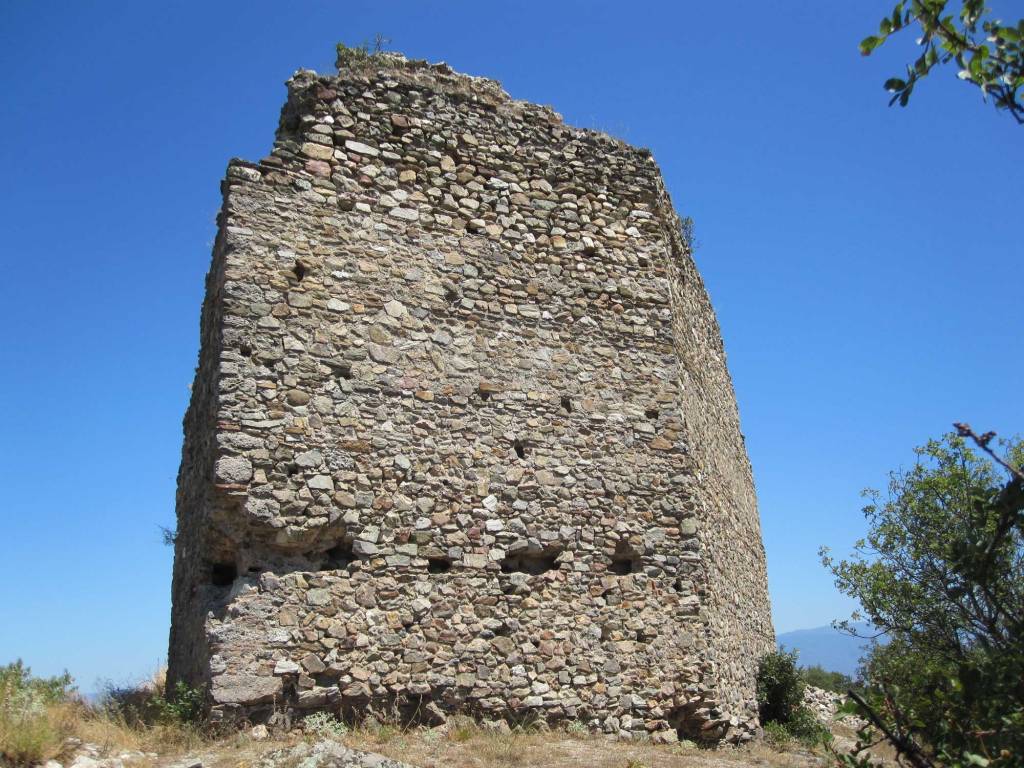
Pirg Tower 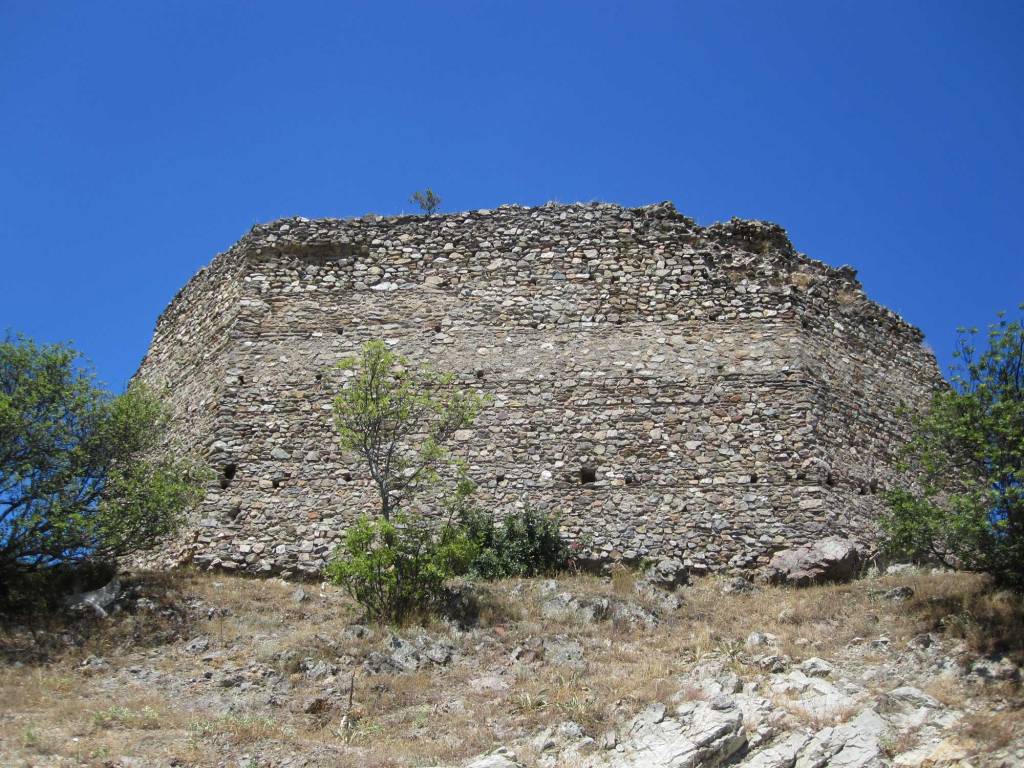
Czar’s Towers
The Pirg Tower has a hexagonal shape, but was originally build as a rectangle. The other major ruins are from the west entrance tower or gate, and another huge water tanker in the middle of the fortress. At the moment of visiting (2011) this tanker was completely covered with a roof and not well visible or accessible.
Structures of a church that was probably dedicated to St George, and graves from the 12th-14th centuries can be seen next to the antenna on top of the hill. Just before you enter the Czar’s Towers from the asphalt road, there are also several graves dug in the white rocks.
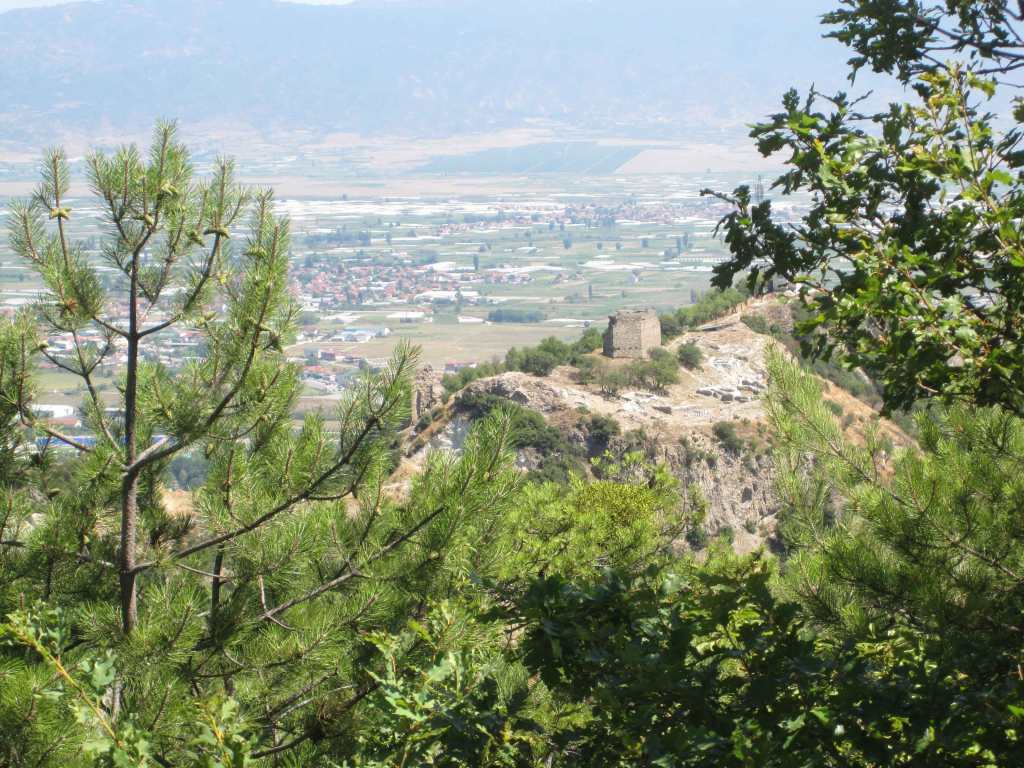
At the City Hall of Strumica we got an interesting booklet called “On the way of ancestors” describing the Czar’s Towers in very much detail. You can reach to Czar’s Towers via an asphalt road by car, or climb very steeply uphill to the antenna on top of the hill from the foot path that is close to restaurant Loven Dom. We made a detour walked first 2.5 km to the Monastery of St Ilija. From there we walked over a 4×4 track that leads to the asphalt road to the Czars Towers. See here for more details of this 7 km hike to the Monastery of St Ilija and Czar’s Towers.
Monastery of St Ilija
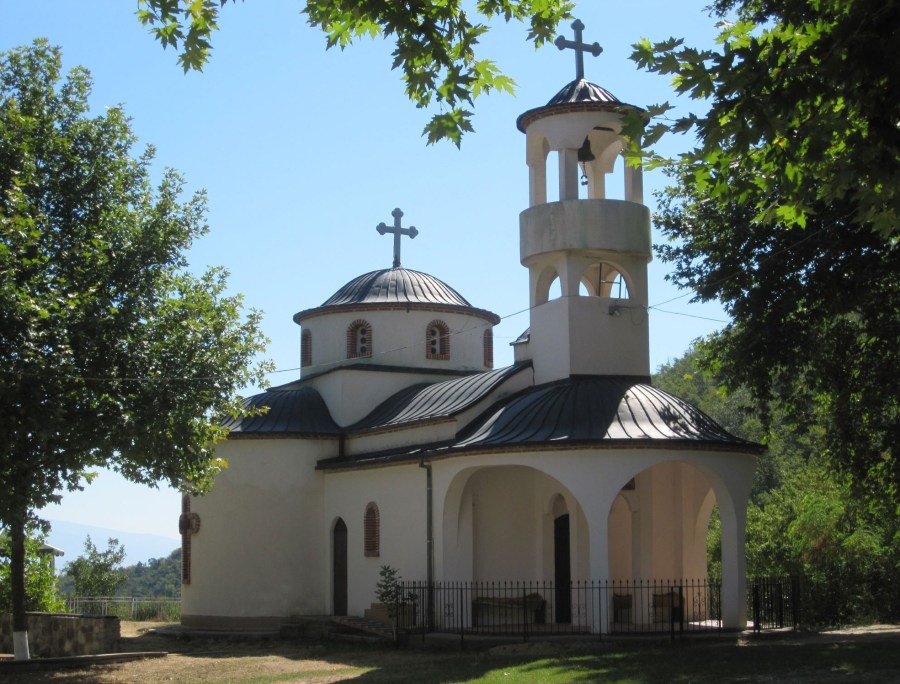
The Monastery of St Ilija is located in the mountains above Strumica. The monastery was probably build at the end of the 16th century, although there is speculation that it may be older. It was destroyed in 1923, but rebuilt between 1975 and 1984. Recently, lodging quarters have been added to the monastery but i don’t know if it is possible to stay there. The church itself was closed when we were there.
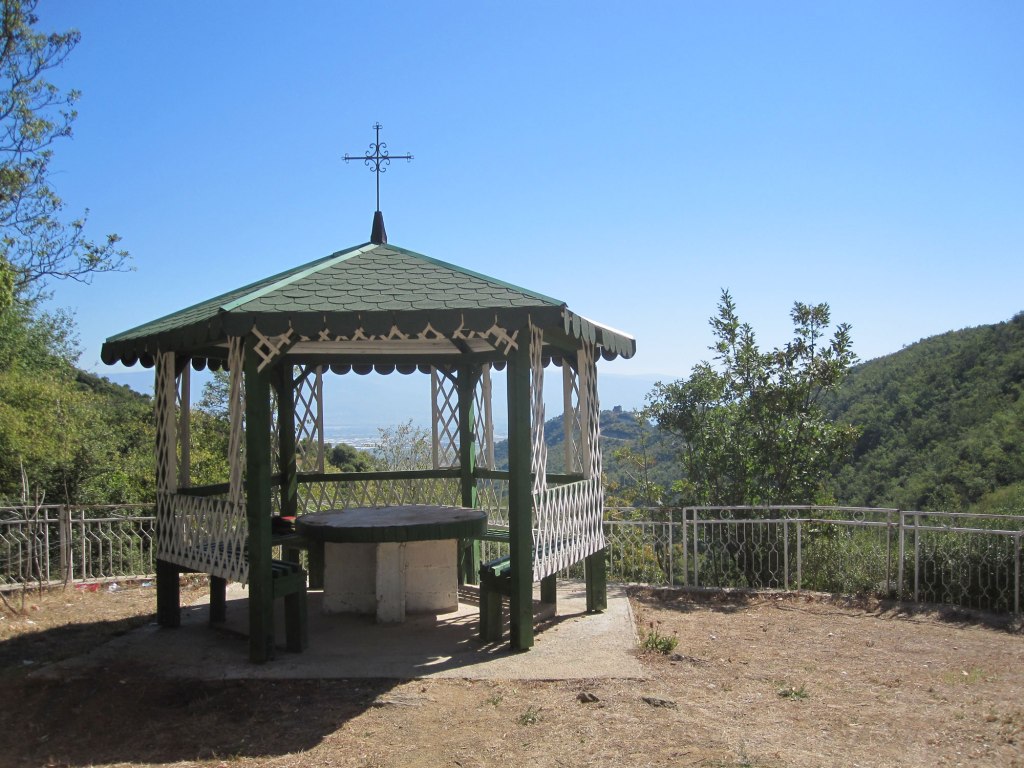
Monastery of St Ilija 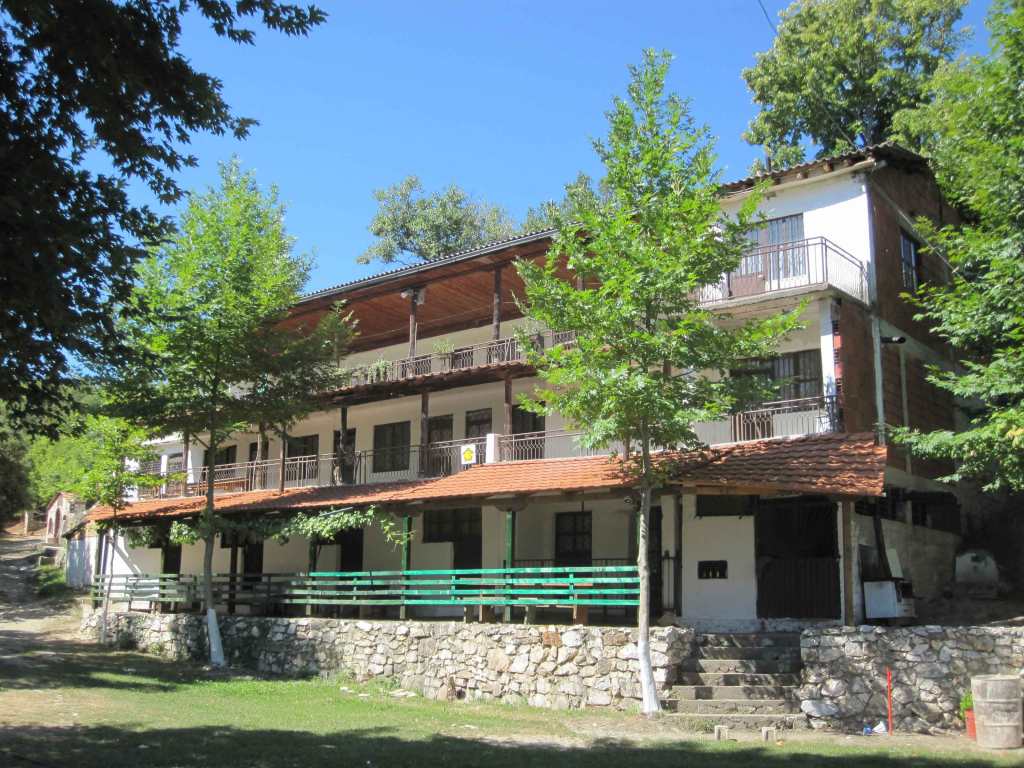
Monastery of St Ilija lodging houses
The site offers a good opportunity for a picnic. A very pleasant walk of about 2.5 km uphill will get you from the border of Strumica to the monastery. From there, you can also walk to the Czar’s Towers, an additional 3.5 km. This walk is on a well-kept path that is popular by jogging locals, see here for more info on the hike. Directions: N41.42972 E22.61363
15 Martyrs of Tiberiopolis
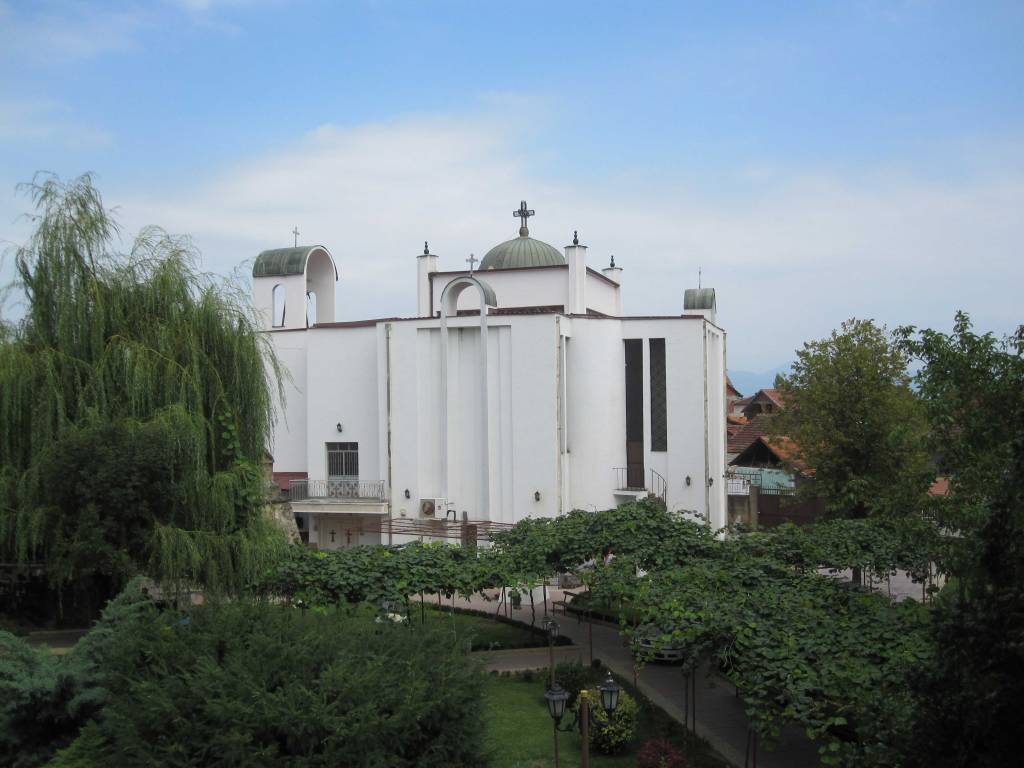
The Monastery contains the archeological site of the Holy 15 Martyrs or Tiberiopolis, the name that Strumica had in the Roman period. The new church is from 1972, and the foundations of the older church from the 5th century were found when the new church was constructed. There also is an icon gallery at the premises, but it was unfortunately closed during our stay. Allegedly, there are icons from the burnt down Church of St Dimitri, where nowadays the Church of St Cyril and Methodius can be found. Address: Slavco Stoimenski; Directions: N41.42962 E22.6412
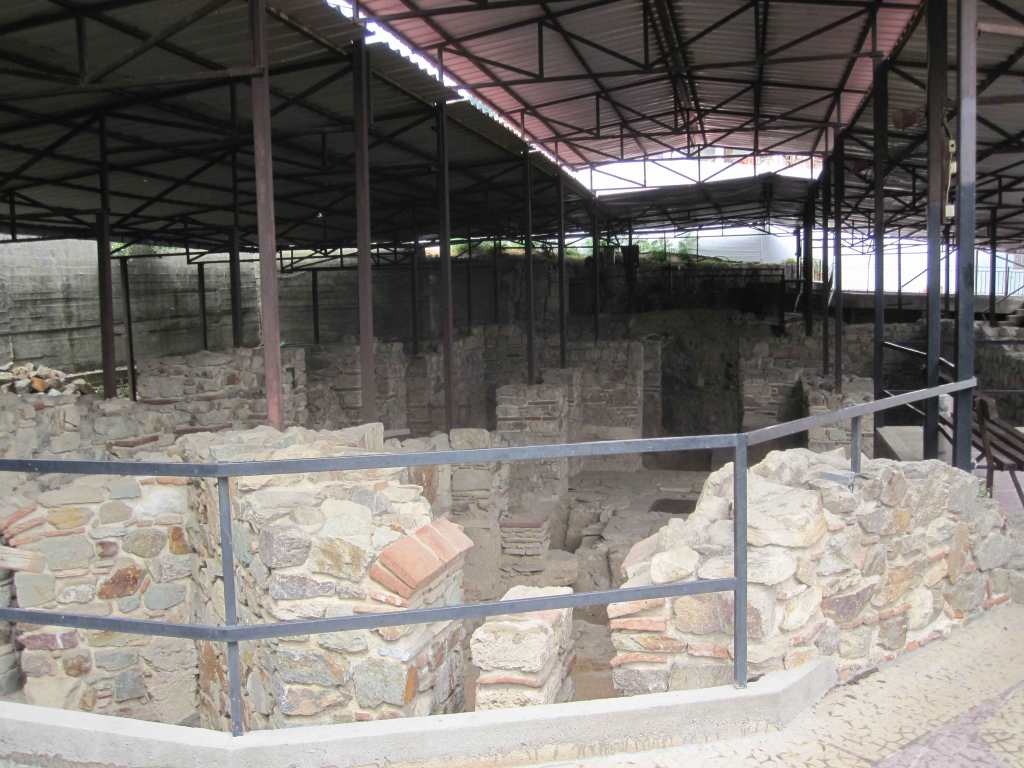
On the premises of the Monastery of the 15 Martyrs of Tiberiopolis there are the remains of older churches from the 5th and 10th century, dedicated to The 15 Martyrs of Tiberiopolis. These older churches were built on top of the tombs of the Fifteen Holy Martyrs of Tiberiopolis. The 15 Martyrs of Tiberiopolis refer to Christians who were tortured and killed during the reign of the Julian Apostata (361-365, a.k.a. Julian the Philosopher, and the last non-Christian Roman ruler). The mosaics of the ancient church were unfortunately not visible because they were covered with sand for protection.
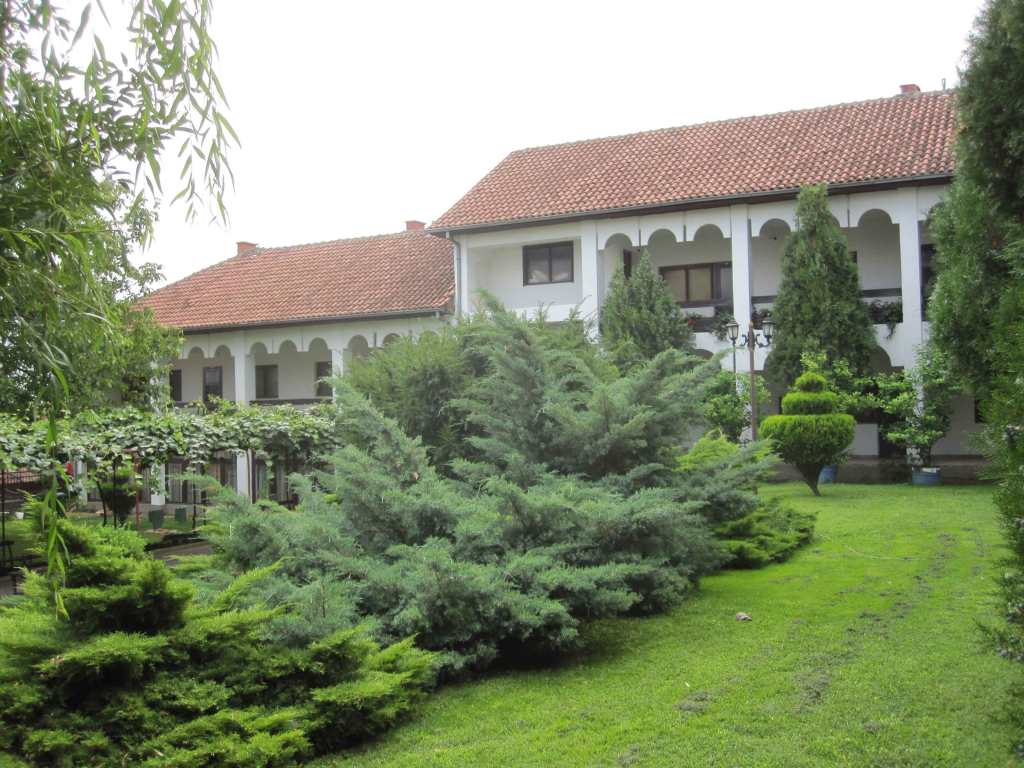
The Monastery of the 15 Martyrs of Tiberiopolis is a working monastery where you can overnight, and one of the nicest places we have stayed in Macedonia. The monastery grounds are very well kept, there are several animals in the garden and the people are extremely friendly. We stayed here in 2011 for three days while exploring Strumica and surroundings. You can rent a room for 600 MKD per person per day (about 10 euros), including breakfast and dinner.
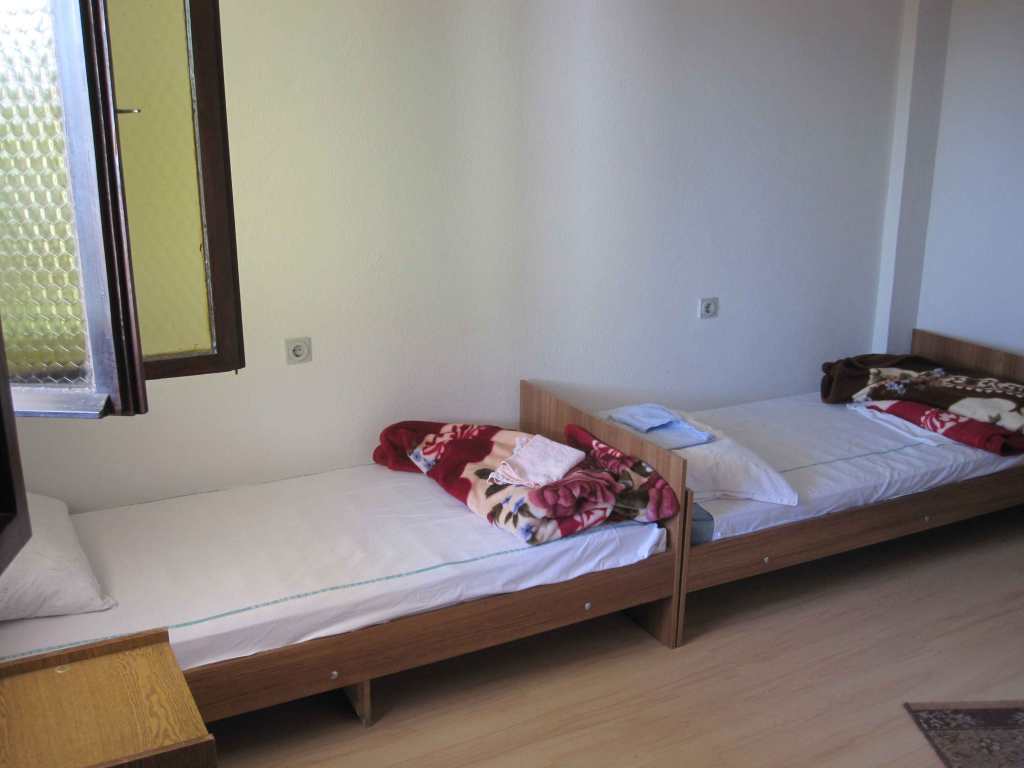
Monastery lodging 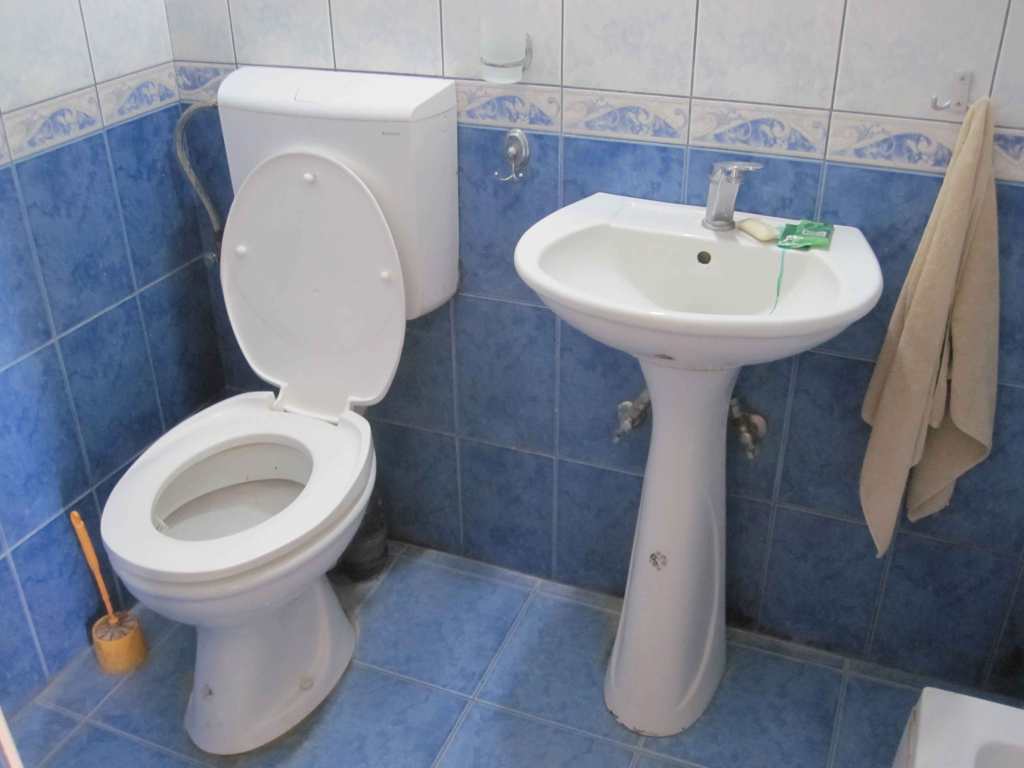
Monastery lodging
The rooms are relatively new, but could have been cleaner. Just remember this is not a hotel! When we were there, most rooms were booked for construction workers from all over Macedonia, who were working near Strumica. They left early in the morning with a big bus and we only saw them in the evening. We were the only two tourists staying here. The dinner is the same for everybody, you just have to eat what they prepare. It is a simple but tasty meal, and was a very welcome change from the usual restaurant food we already had for days while we were on the road.
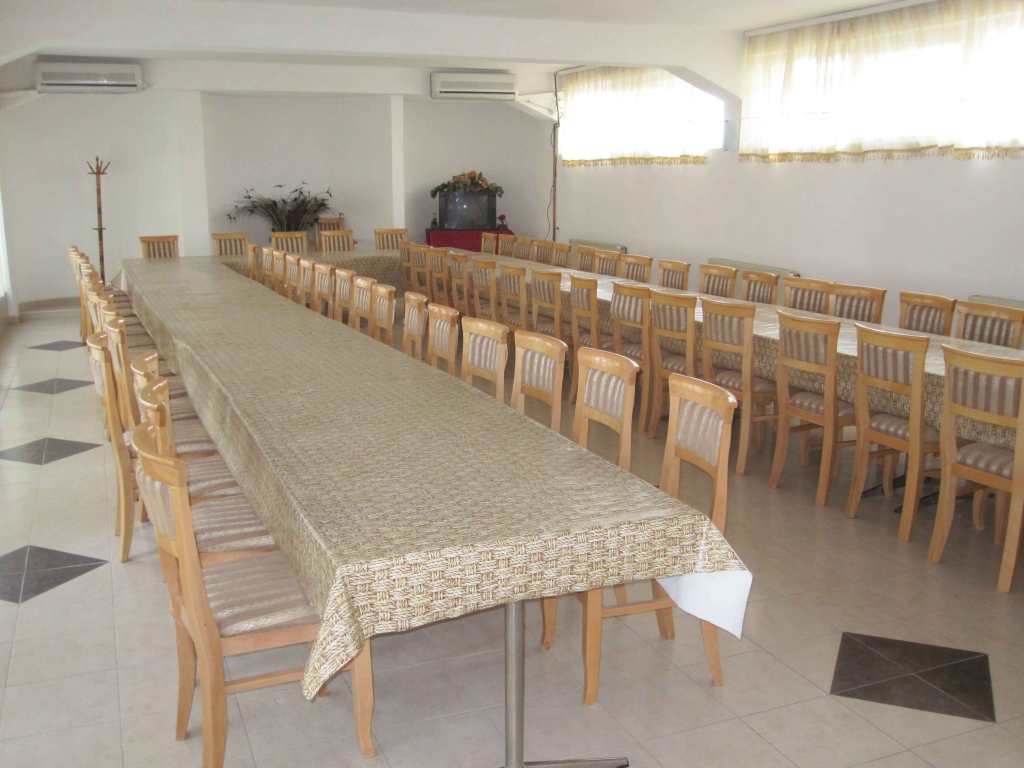
The woman who cooked was almost like a mother to us, taking really good care and giving us extra portions during dinner (to the dismay of the construction workers who probably earned the extra food much more after their hard work under the burning Macedonian sun). We could park our car within the monastery premises, safely behind a big gate. We were told not leave the car outside the gates because of the possibility of theft. The monastery is not in a remote quiet area like most monasteries, it is in the middle of a Roma part of town where you can hear Roma music all day long. This certainly adds to the experience of staying in this monastery!
Medieval Feudal Tower
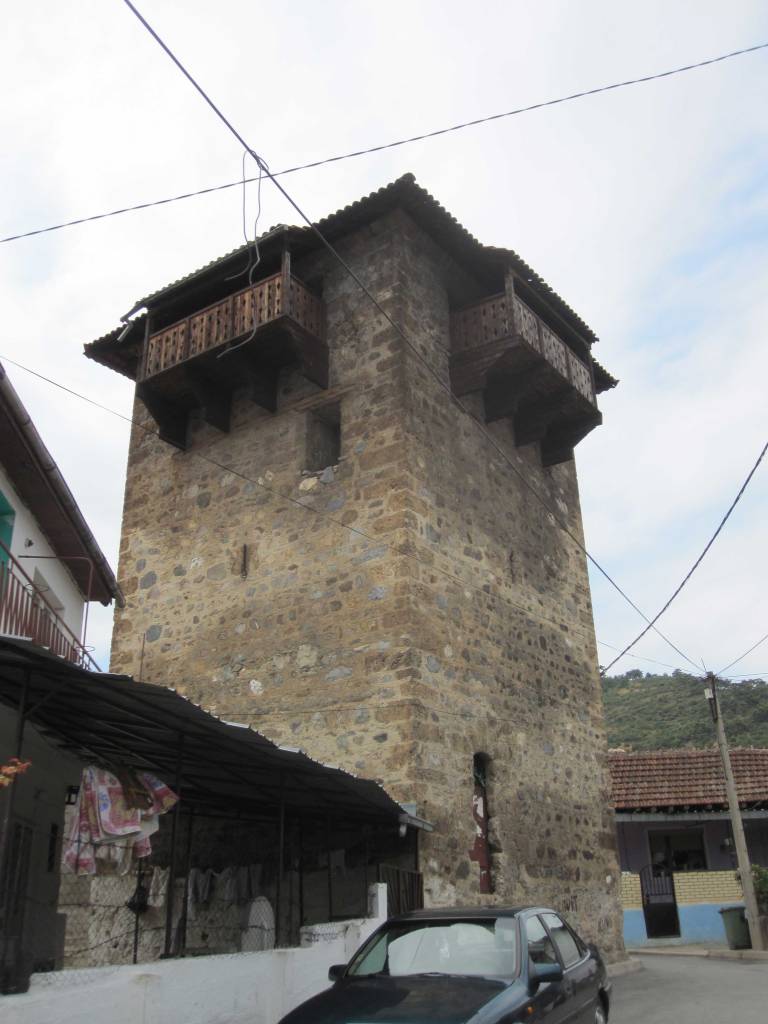
Medieval Feudal Tower 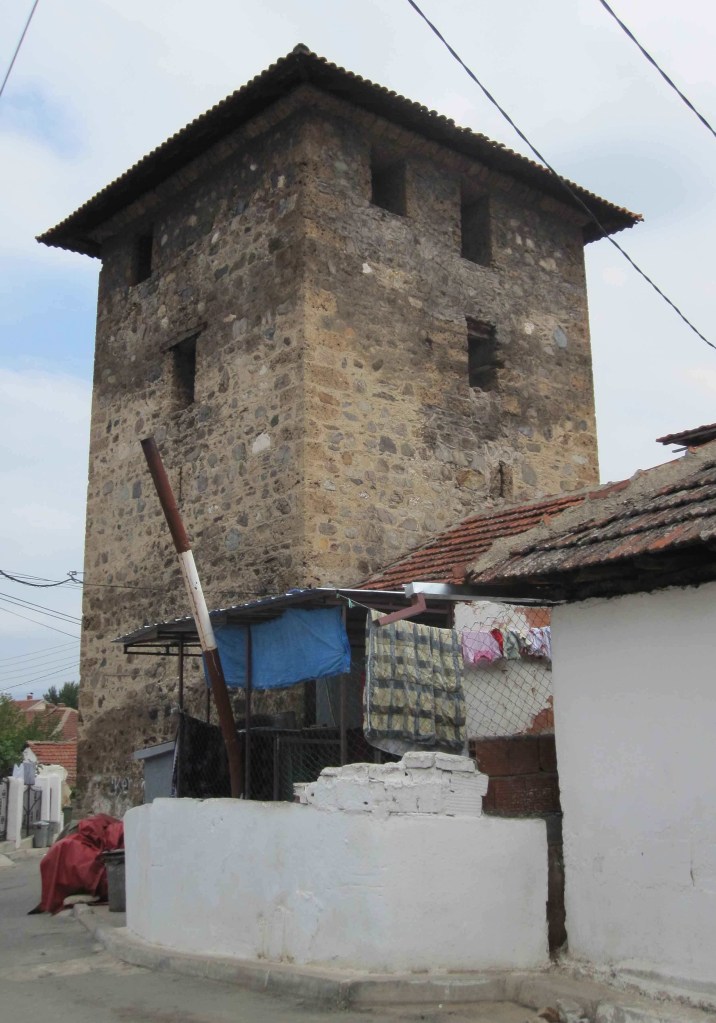
Medieval Feudal Tower
This two-floored medieval Ottoman tower has an overhanging balcony on the second floor. It has small windows because it was used for defense purposes. Nowadays the ground level is used as somebodies storage room. It is located not far from the Monastery of the 15 Martyrs or Tiberiopolis in the Roma part of town. Address: Ohridska Street Directions: N41.43027 E22.64290
Museum of Strumica
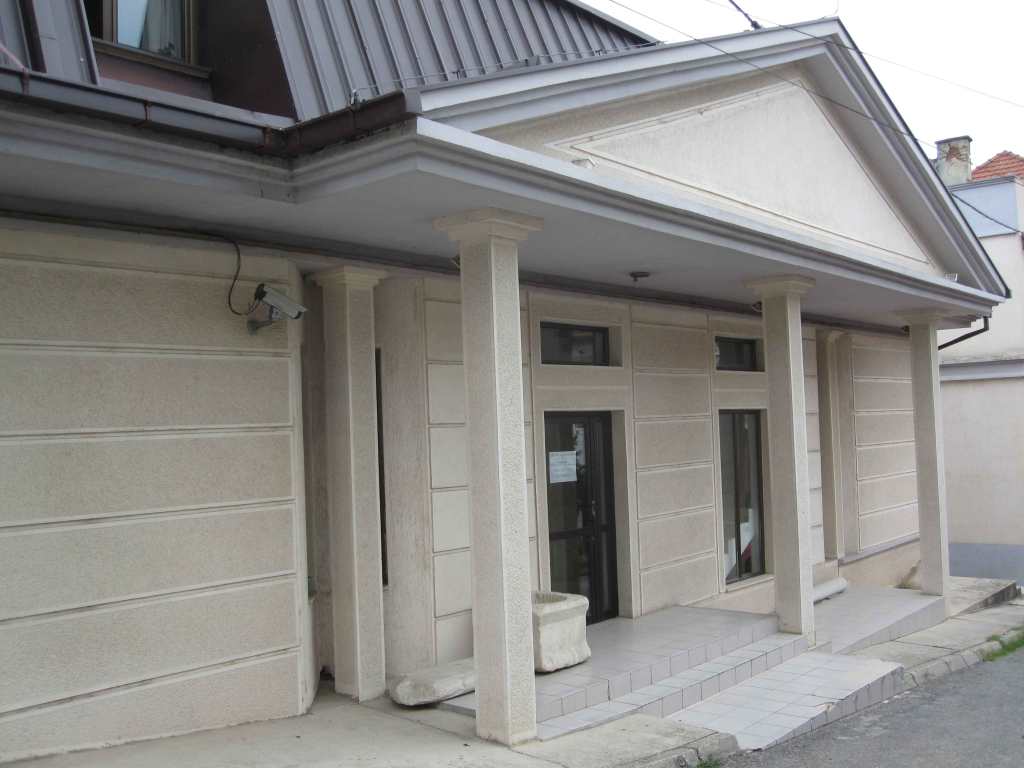
As usual in most museums that we visit in Macedonia, we were the only visitors in the Museum of Strumica and we got a private tour from one of the archeologists. He only spoke Macedonian, but could understand some English. My girlfriend translated for me. At ground level there was a temporary exposition (2011) with archeological findings from southeast Macedonia. Texts were in Macedonian and in -bad- English. The main exposition is on the first floor and you enter via an air-bridge connecting two buildings. It has ethological , historical and more archeological objects. Descriptions here were only in Macedonian. Address: 27 Mart Directions: N41.43536 E22.63630
Orta Mosque
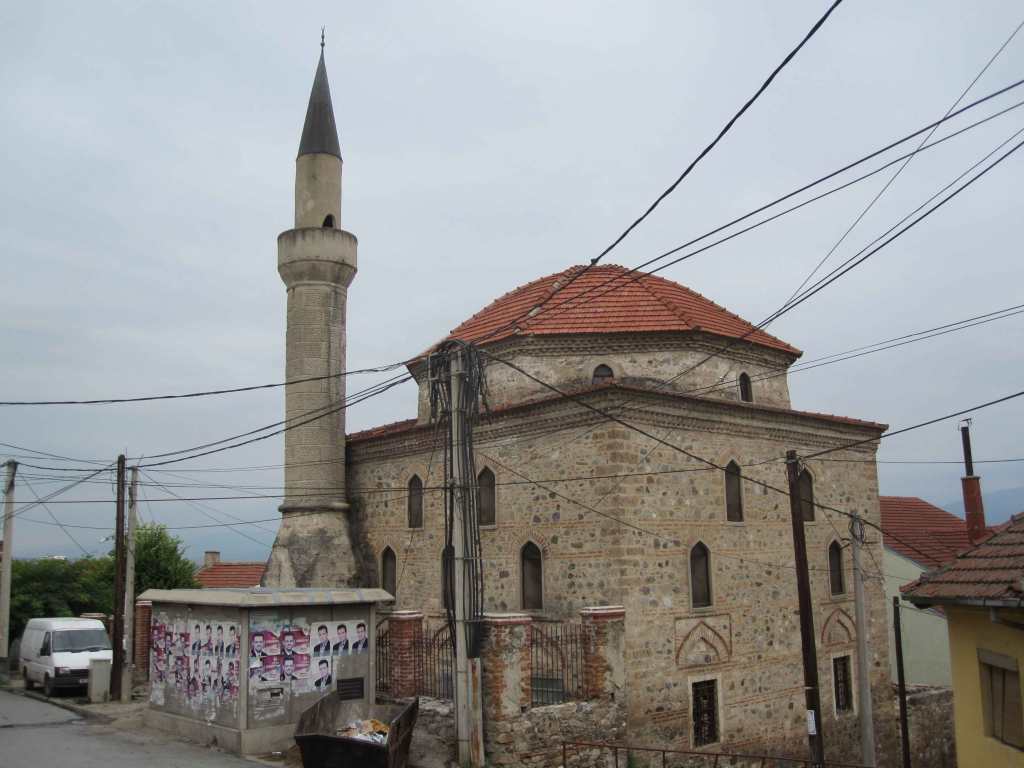
The Orta Mosque was built in 1614 AD on the foundations of a church dating from the 11th or 12th century. This church burnt down in the 13th century and a necropolis was built on the same place, which was used until the 17th century.
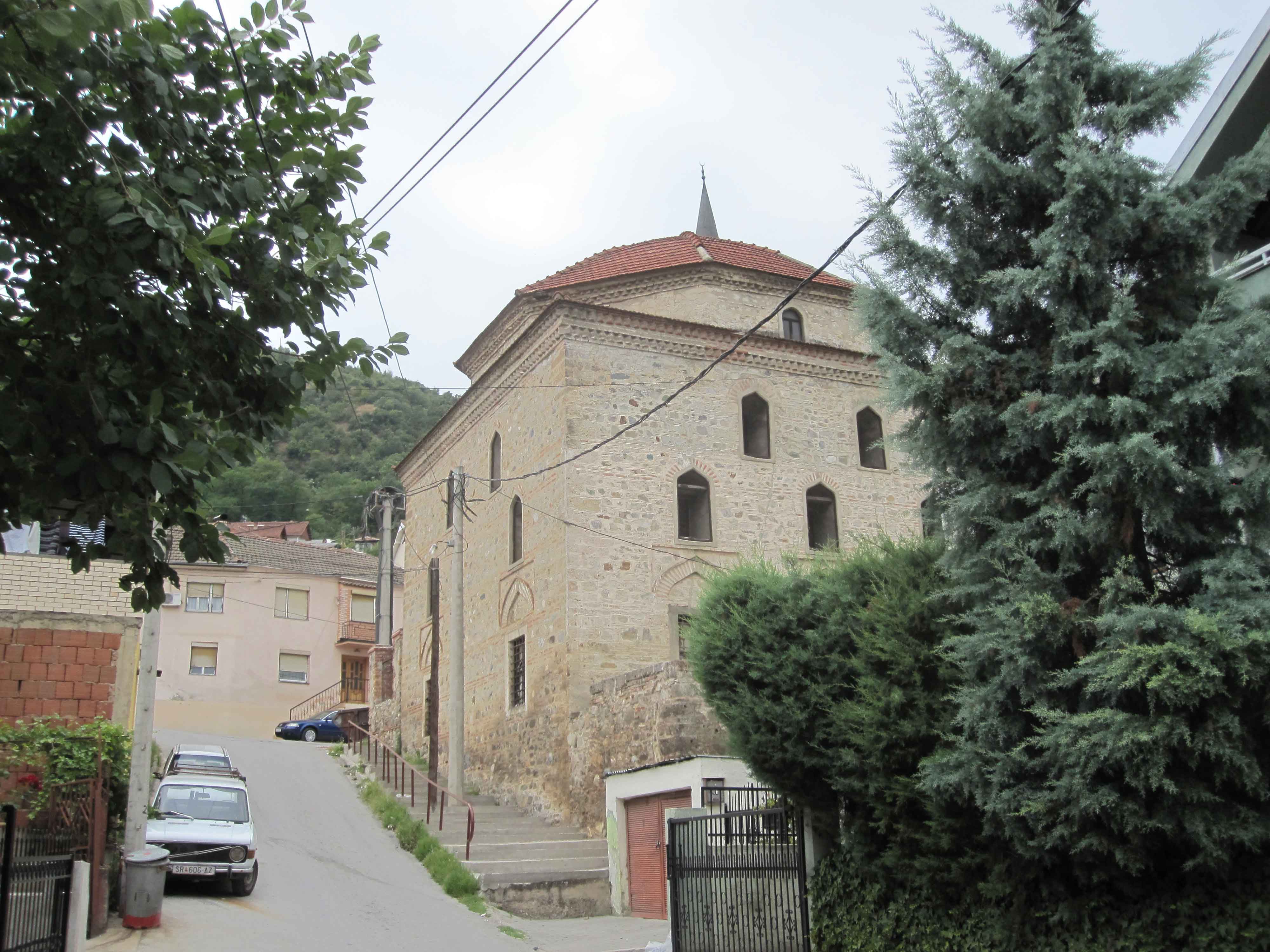
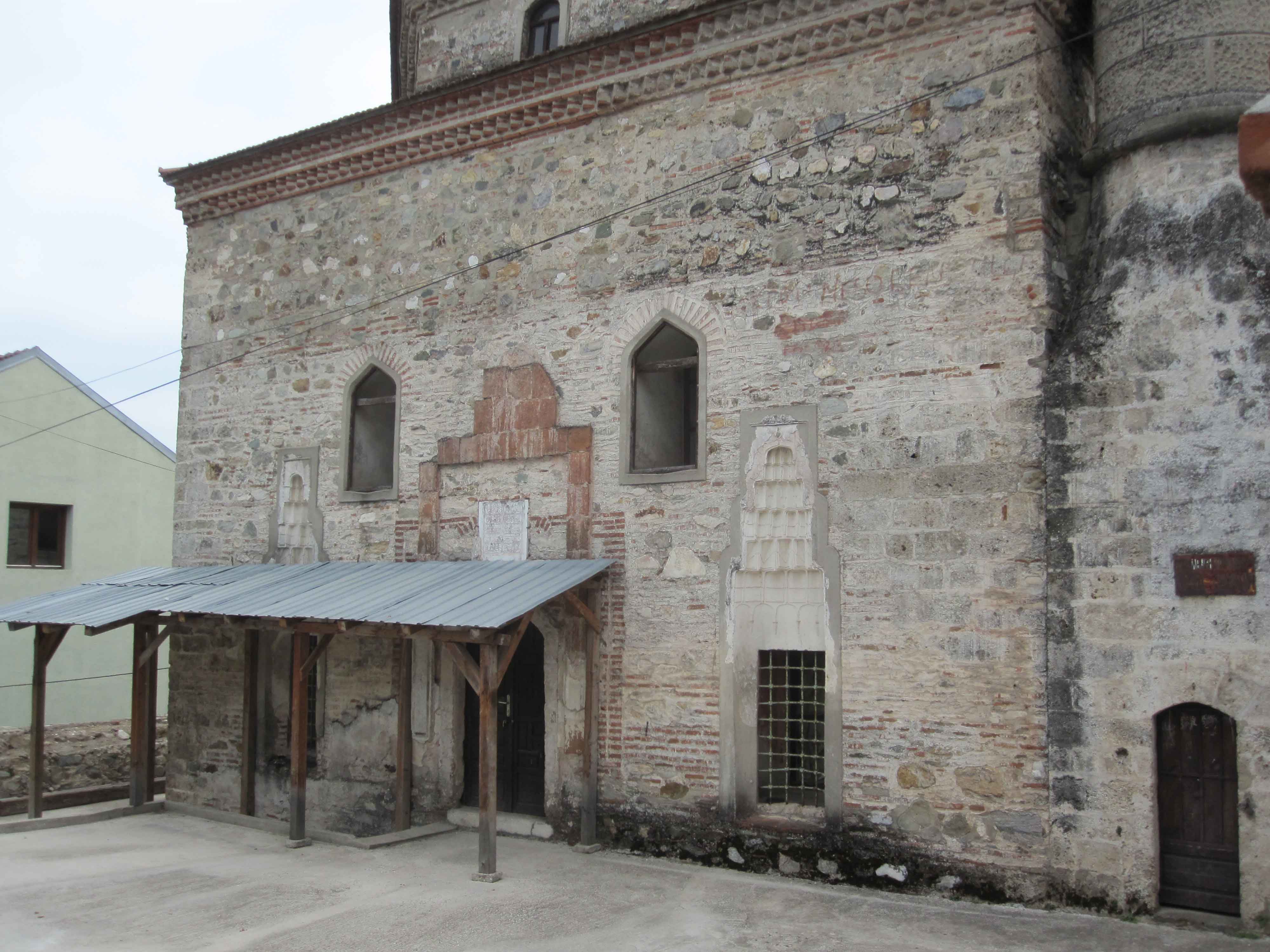
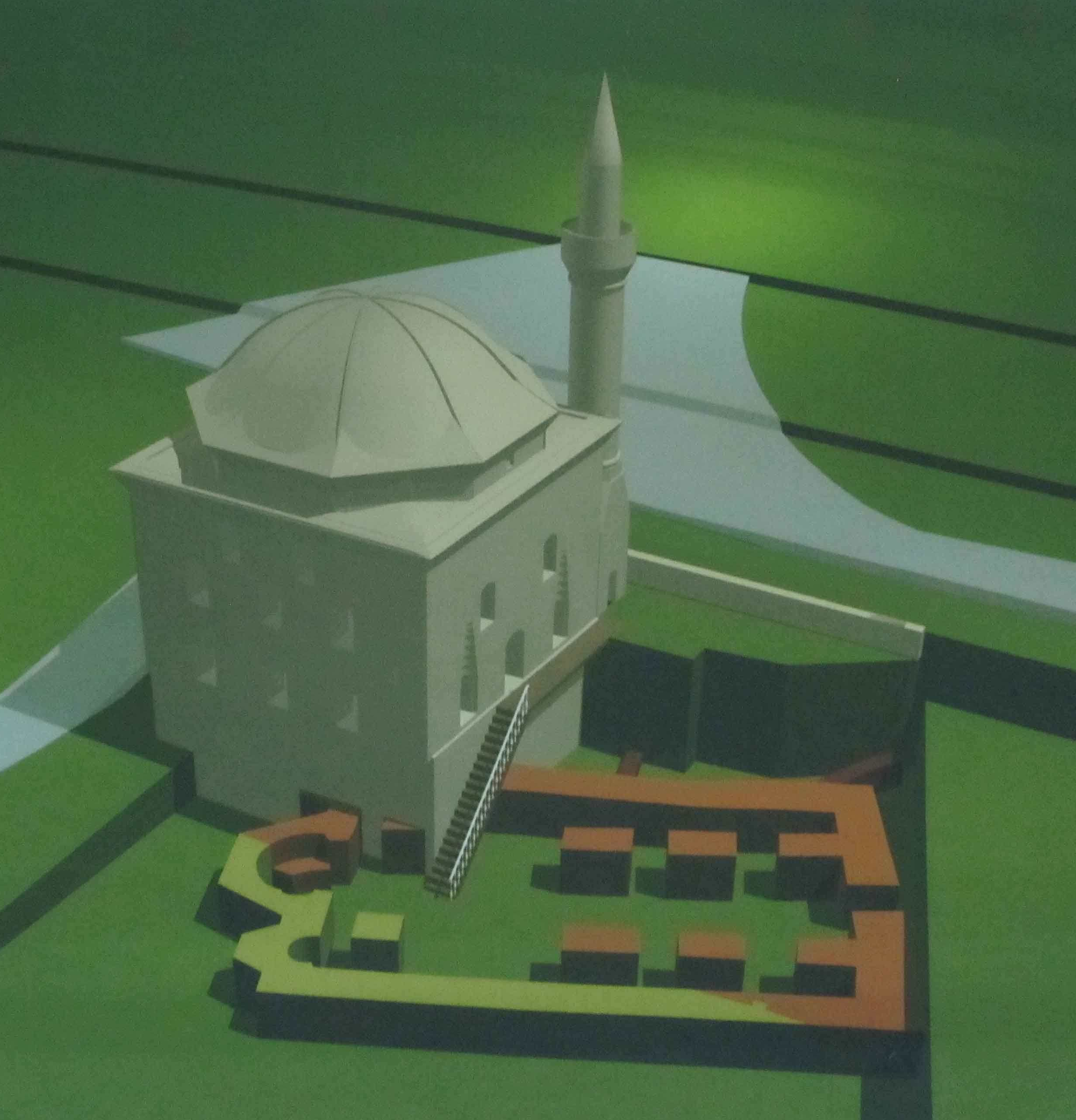
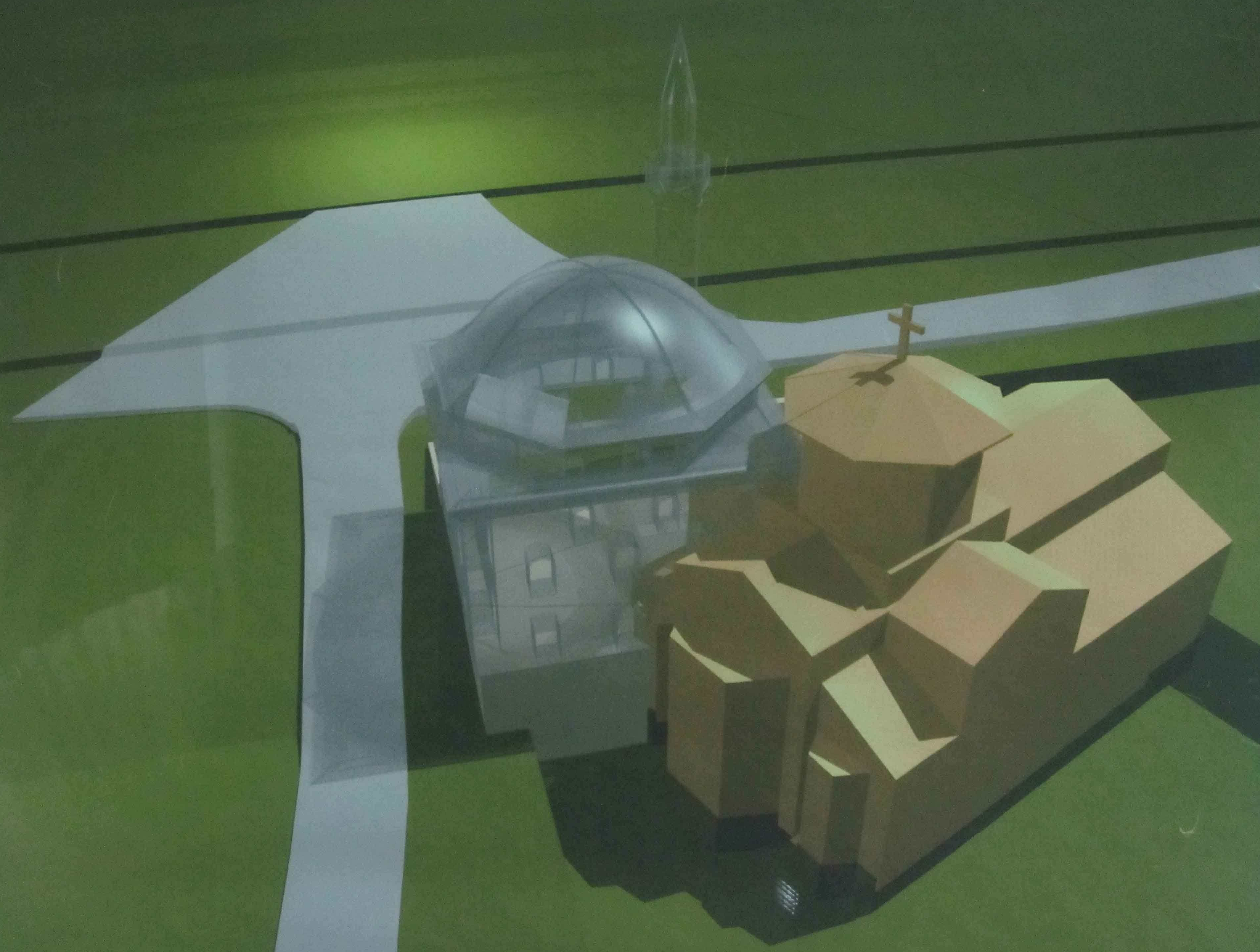
In the Museum of Strumica there is a model that shows how the mosque is located with respect to the old church. The Orta Mosque was closed when we visited and I am not sure if you can still see the foundations of the old church from the inside of the mosque. Address: Stiv Naumov; Directions: N41.43574 E22.63462
Machuck ancient urban building
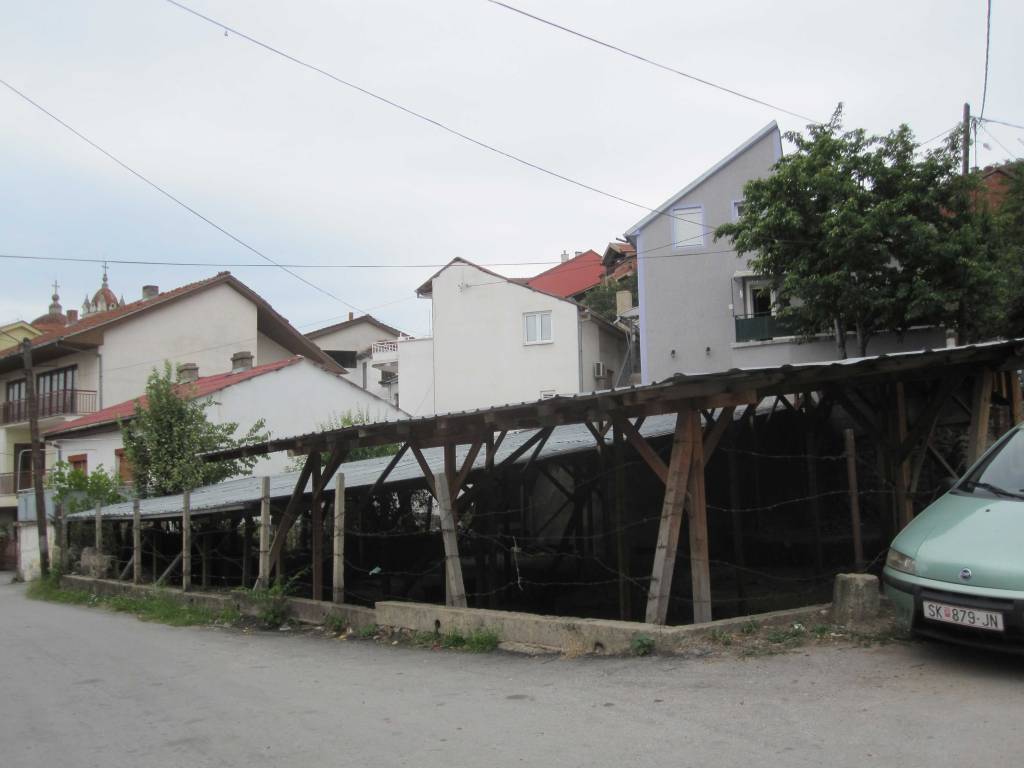
This site of the Machuk Urban Building is located next to the Orta Mosque and can be easily overlooked when you don’t know about it. When you DO know about it, there’s not much to see, just some ruins. The mosaics which are described in the guides are covered with sand for protection. These ruins are the remains of an urban mansion or palace from the 4th-6th century. Address: Stiv Naumov; Directions: N41.43535 E22.63484
Strumica City Hall
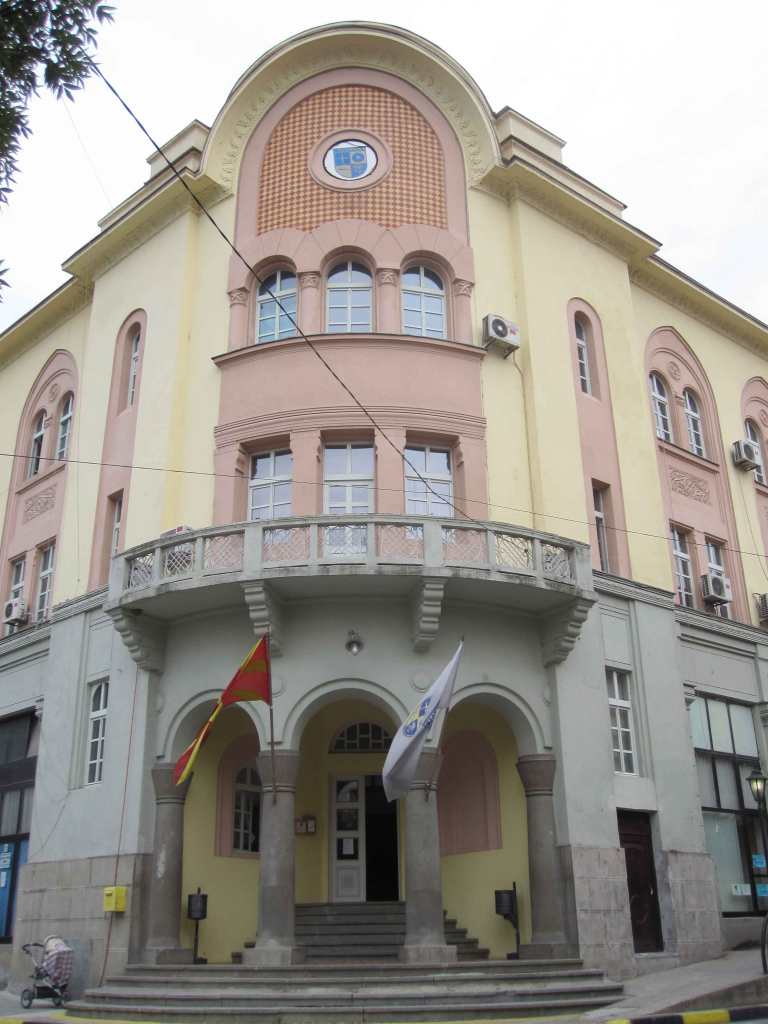
The City Hall of Strumica is located in a nice building in the center of the city. It was built between 1926-1931 and allegedly had the role of the first brothel in Strumica. The Tourist Information is on the 3rd floor, rooms 8-10. They gave us several free English booklets and maps, among which a very informative 50-page guide about the cultural and historical heritage of Strumica, a booklet called “Some legends about Struma” about the Struma Tomb (see below) and a 30-page booklet called “On the way of ancestors” which describes the Czar’s Towers in very much detail. Address: Sando Masev 1; Directions: N41.43715 E22.63727
City Park and Statues
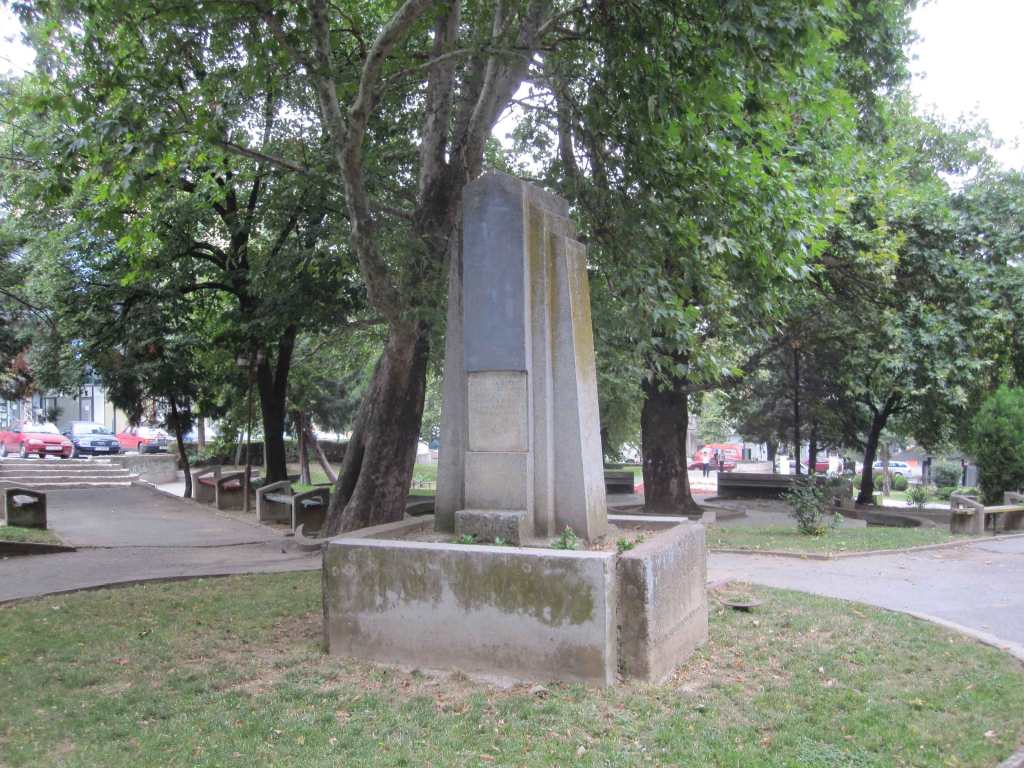
11th October Monument 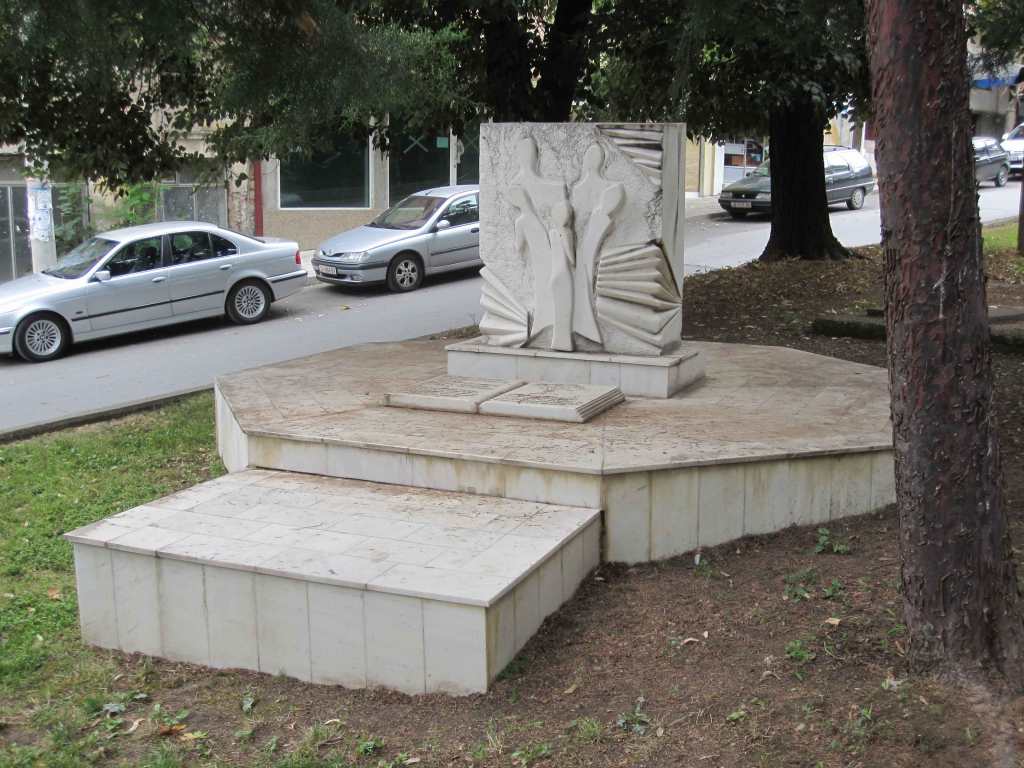
Monument for 5 students
The small City Park next to the City Hall has several statutes. One of them, the Monument of 11th October is a small obelisk, and is dedicated to the fallen fighters in the National Liberation Struggle against fascism. The other monument on the pictures is dedicated to five students from Strumica, who were killed on August 13, 1951, near the village Dorlombos.
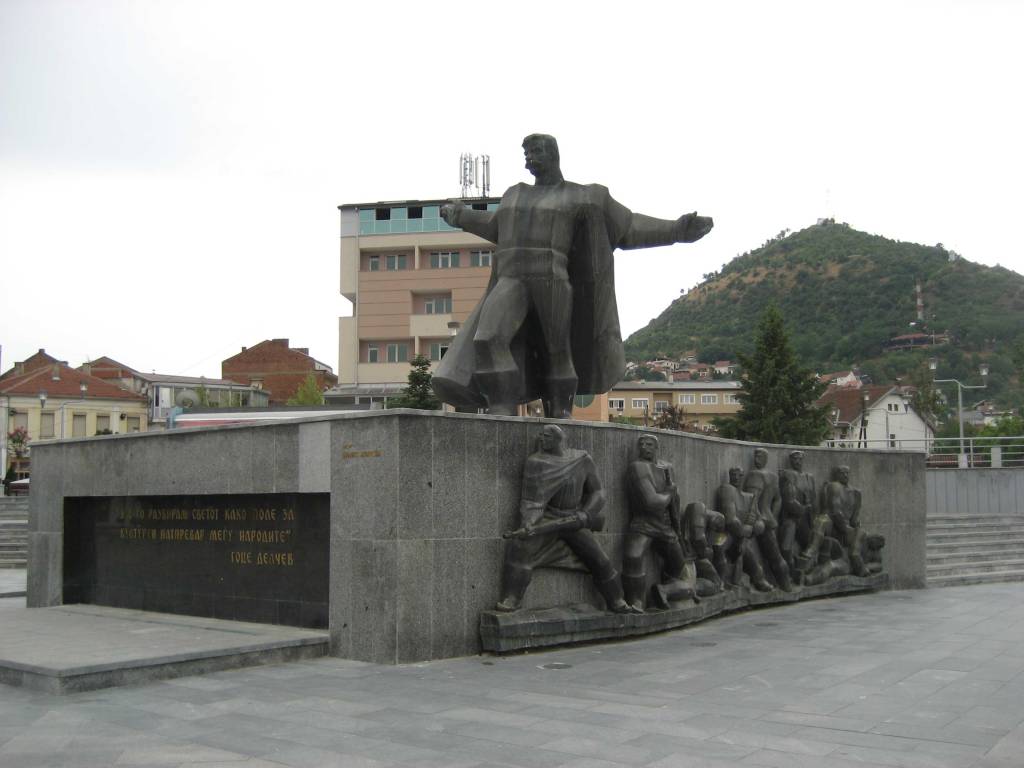
Goce Delcev 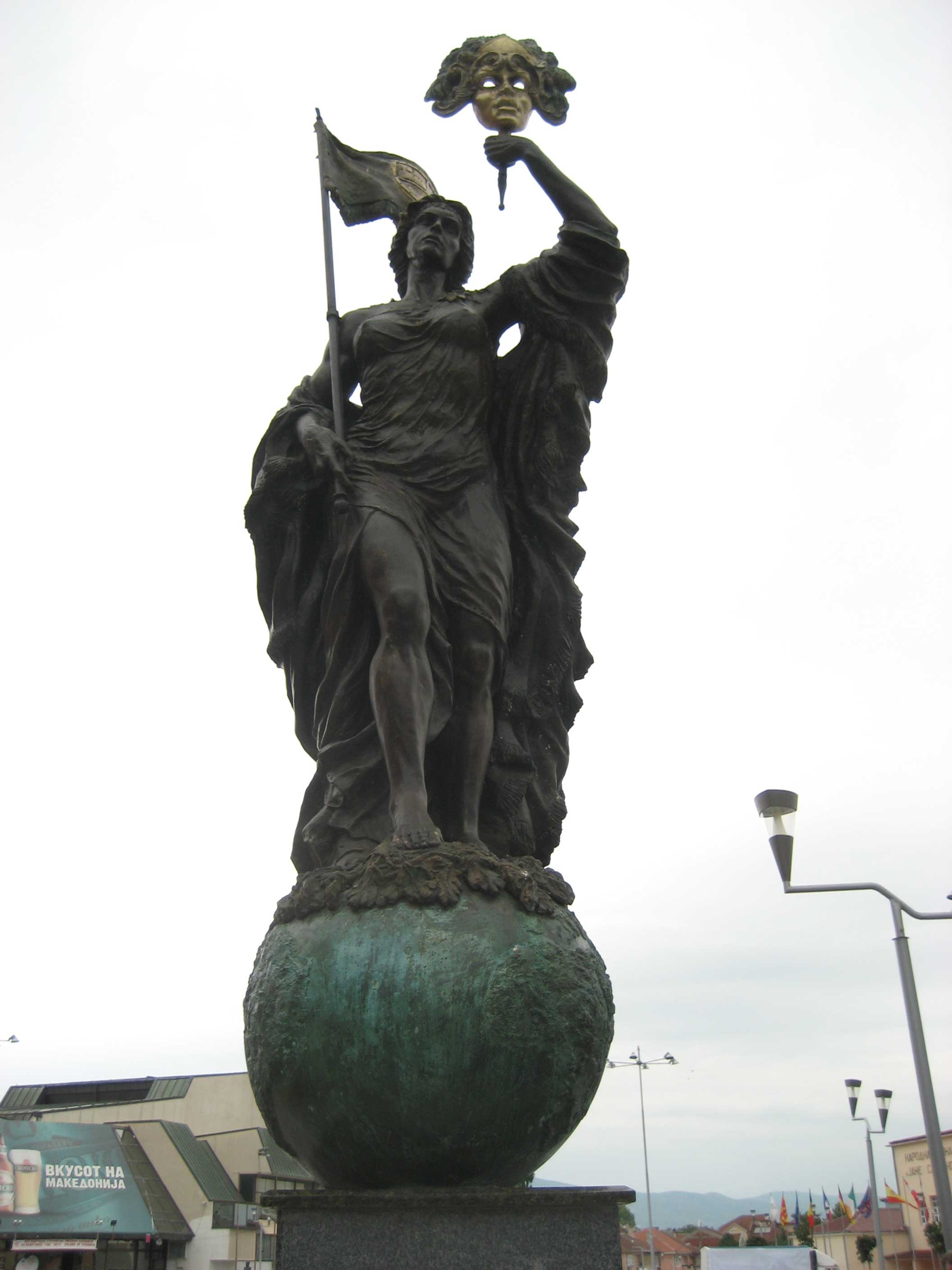
This powerful statue of the famous Macedonian revolutionary Goce Delchev (1872-1903) was erected to commemorate his 100th birthday and his frequent visits to Strumica. It is a huge statue, over 5 meters high. The text on the statue says: “I understand the world only as a field for cultural competition between the nations”. The other statue is dedicated to the Carnival, which is celebrated big in Strumica. It is located close to the Statue of Goce Delchev. Address: Central Square; Directions: N41.43873 E22.63729
St Cyril and Methodius
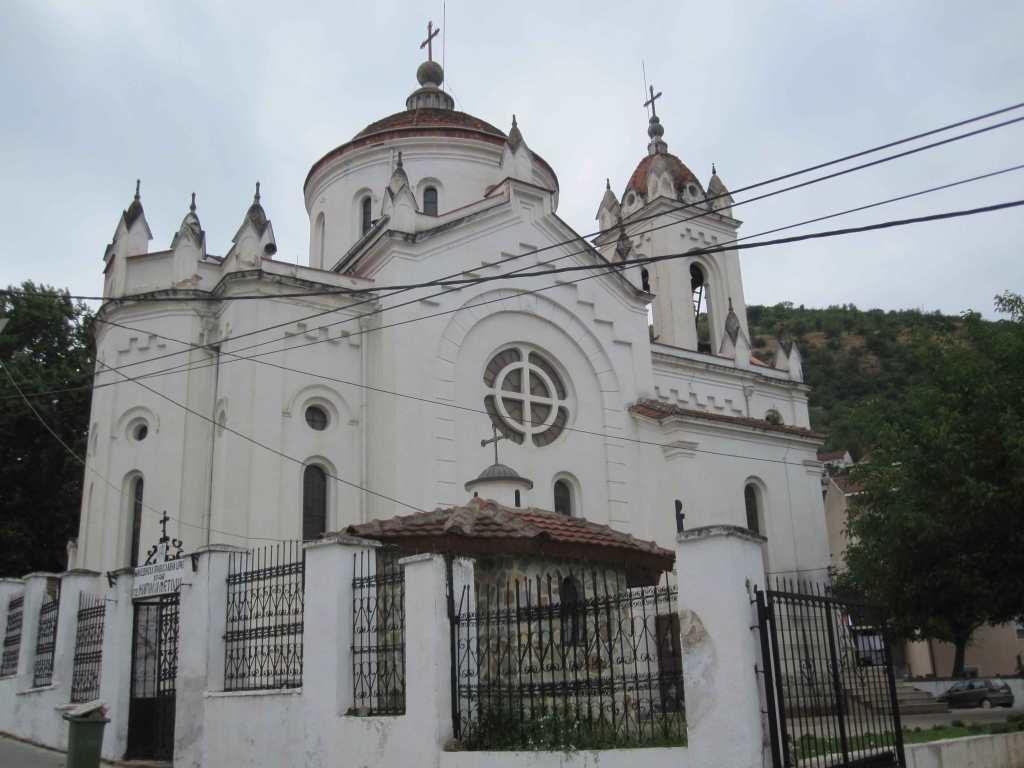
This large church dedicated to St Cyril and Methodius was finished around 1912. It is on the same location as the 14th century church dedicated to St Dimitri, which was burned down. Allegedly icons from the burned down church of St Dimitri can be found in the icon gallery of the Monastery of the 15 Martyrs or Tiberiopolis.
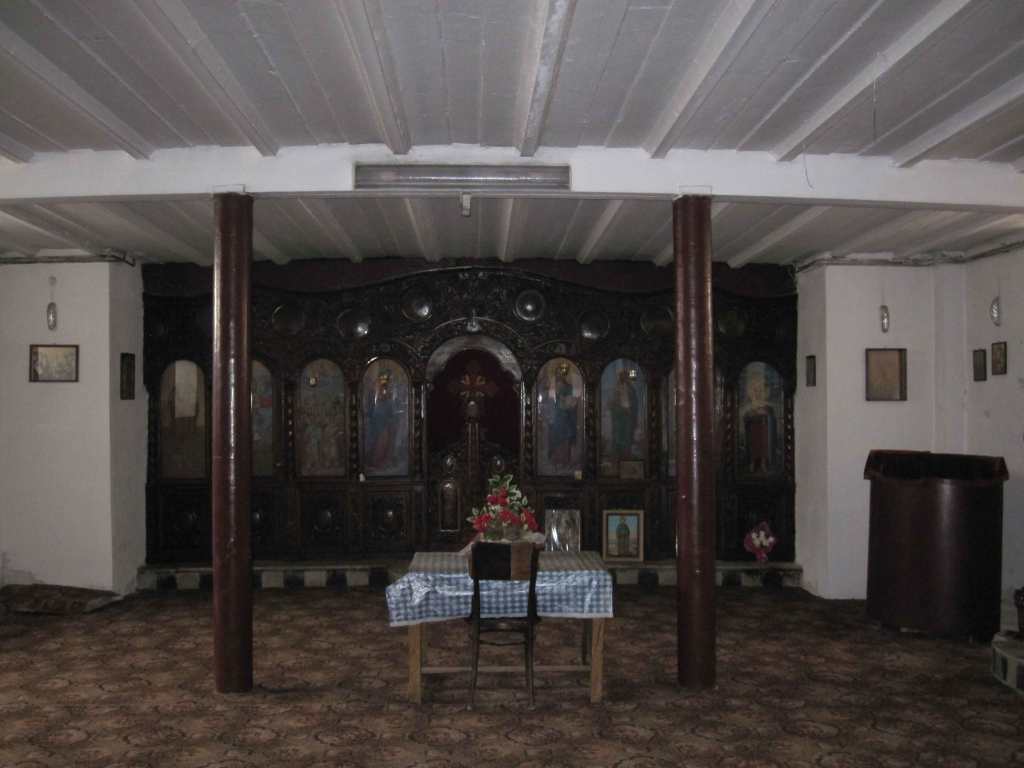
St 15 martyrs of Tiberiopolis 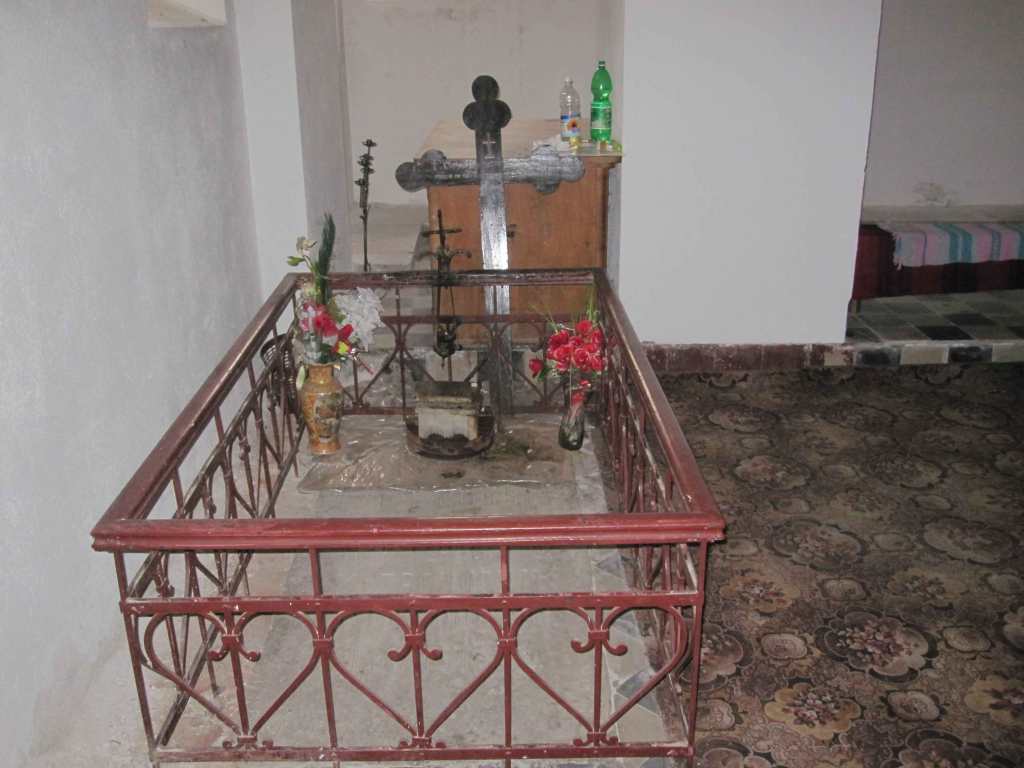
Tomb
There are actually two churches, one is in the basement and was constructed in 1750-1760. This lower church is dedicated to the 15 Martyrs of Tiberiopolis. Do not forget to go down the stairs and have a look at this lower church! The tomb of Gerasim, who initiated the building of the new church dedicated to the Saints Cyril and Methodius, is located in the lower church. Address: Kiril and Methodi; Directions: N41.43449 E22.63593
Catholic Church
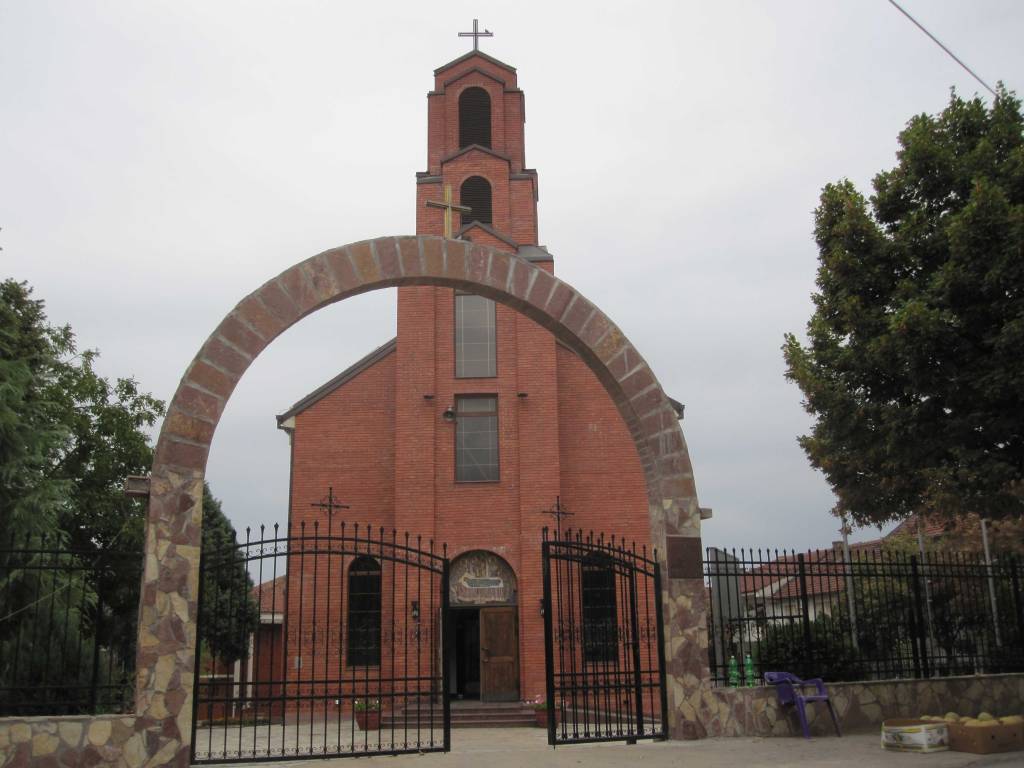
The Catholic Church of the Ascension of the Holy Mother of God was built in 1925. Address: Gjuro Gjakovikj; Directions: N41.43508 E22.63985
Biser Bakery
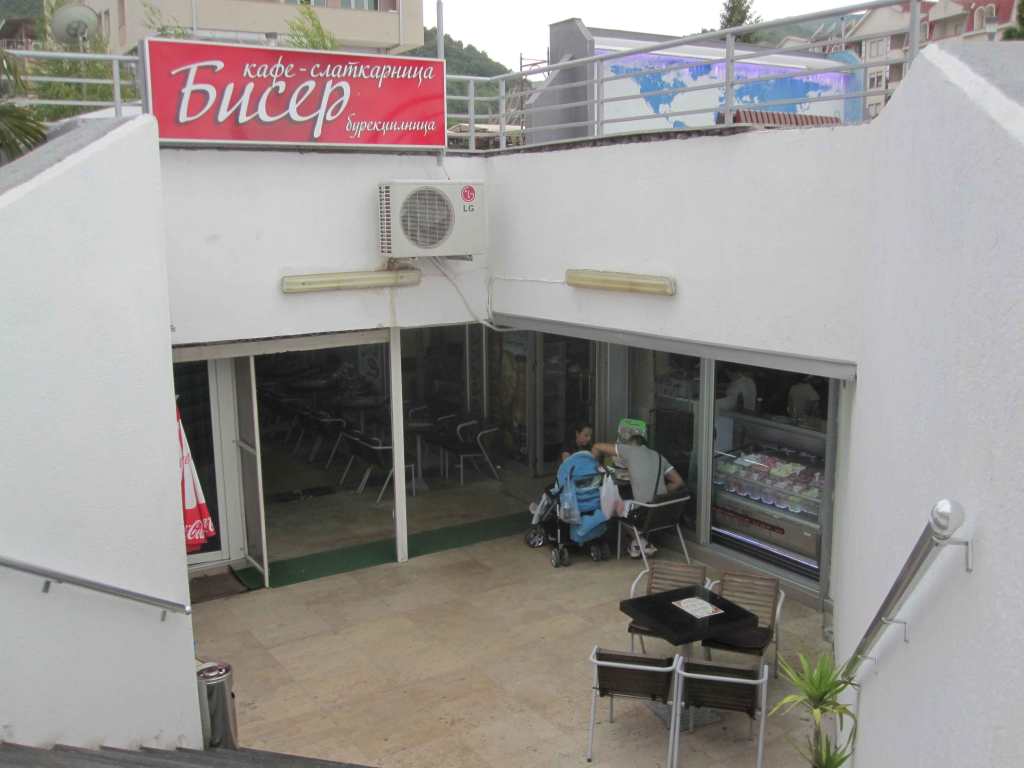
This small burek, pastry and pizza lunch place is located at the central square, close to the Statue of Goce Delchev. It can easily be missed, since you have to go downstairs to get to the entrance. When we were there, it was very busy with locals, which is always a good sign!
Outside Strumica
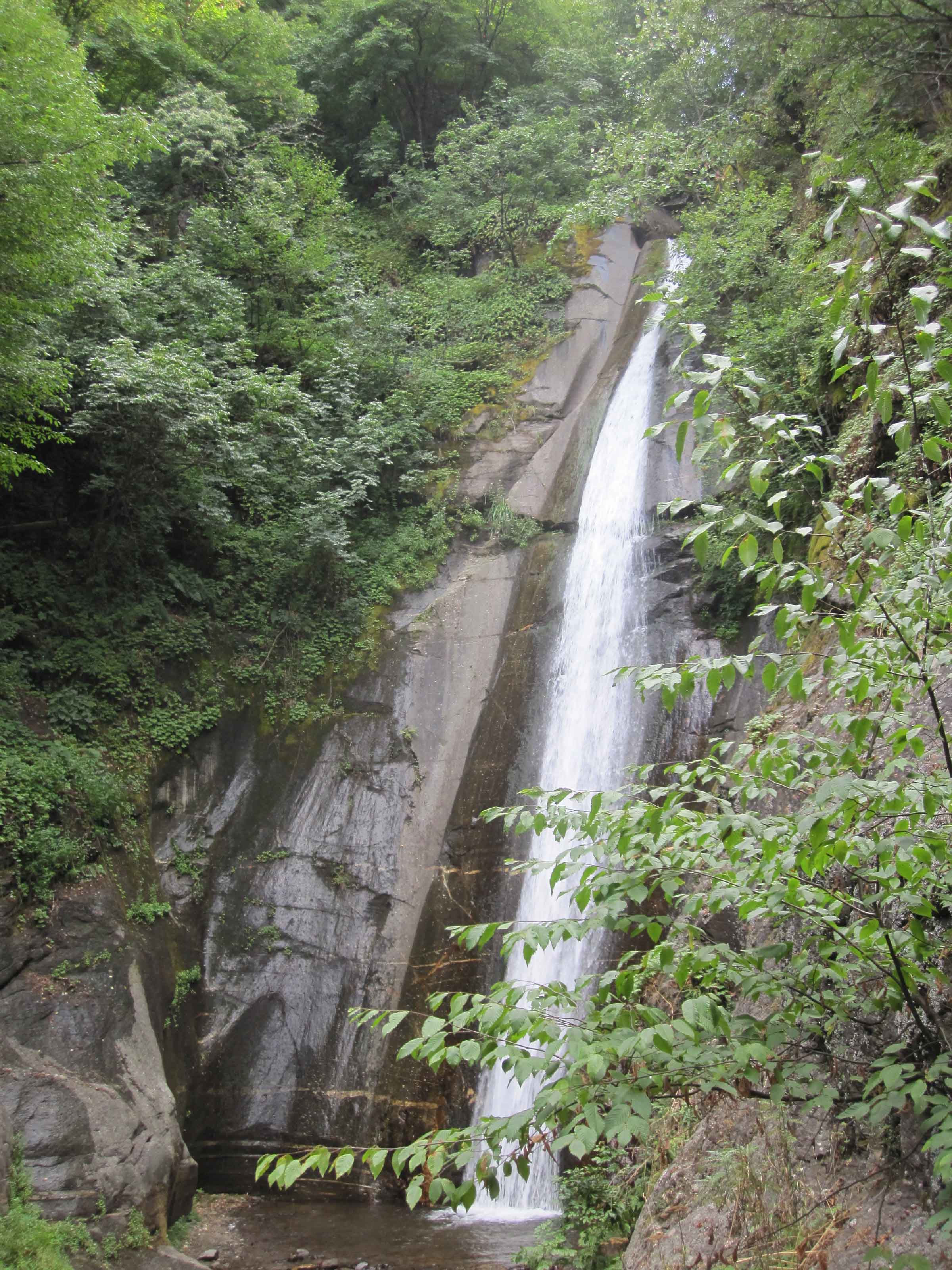
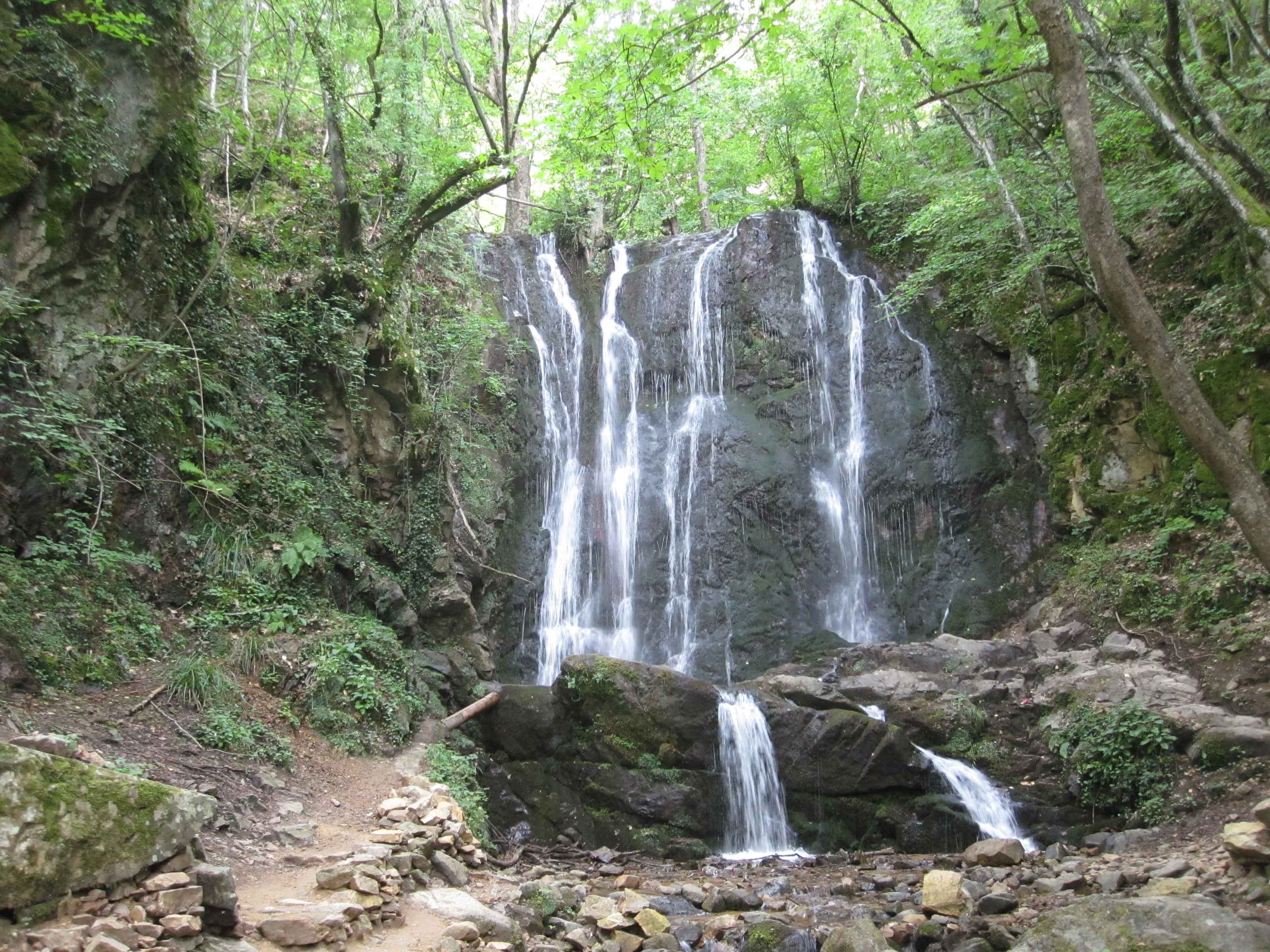

Strumica is a good base to explore the surroundings. There is the Smolare Waterfall, ruins of Roman Baths at Bansko, famous monasteries at Vodoca and Veljusa and much more to see. See here for things to do outside Strumica!
 My Macedonia Blog