With the Monastery of the 15 Martyrs of Tiberiopolis in Strumica as our base, we explored the surrounding sights that can be divided in two parts. South-east of Strumica: Roman Baths at Bansko and numerous waterfalls. West of Strumica: Struma’s toms at Banica, ruins of the 40 Martyrs of Sebaste church and two famous monasteries in Vodocha and Vejlusa.
Roman Baths in Bansko
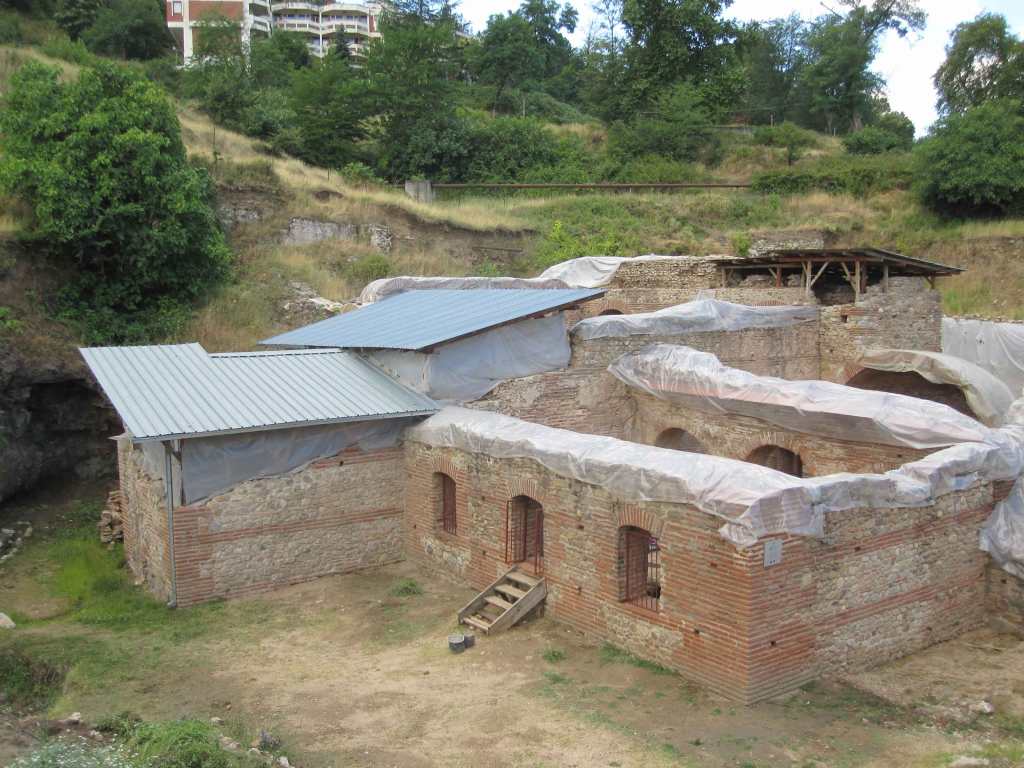
About 12 km south-east of Strumica you can find well conserved ruins of an ancient Roman bath house, which was a thermal spa. They are located near the village Bansko. This bath house dates back to the 3rd and 4th centuries. The site was discovered in 1978 during the construction of the Czar Samuil Hotel. So far 11 rooms of the spa have been discovered (2011) .

Roman Baths 
Parilo Spring
The bath house used the thermal mineral water of the spring Parilo located right next to the baths. This spring has a capacity of 42 l/s at a constant temperature of 72 degrees Celcius.

There is also a more sophisticated tap with hot spring water behind the hotel. People were filling bottles with this very hot water in order to cool it down and drink it later. it is supposed to be tasty and healthy. It smelled too much like sulfur to me to try it! WARNING: this looks like an ordinary tap, but hot water (72 degrees Celcius or 162 degrees Fahrenheit!) comes out. My girlfriend nearly burned her hand when she wanted to wash some freshly picked blackberries! (Another warning: do not laugh when your girlfriend burns her hand on a hot spring, this can get you into some serious trouble!) Directions: N41.38248 E22.75449
Turkish baths at Bansko

Next to the Roman Baths in Bansko there is a former Turkish Bath. The bath was closed in 2005, and the building now appears to be in use as one huge public toilet. Be warned.

These are the ruins of an old Turkish Bath near Bansko. It is situated in the middle of a field and completely overgrown. The roof is almost completely gone. If you enter, you can still see the piping in the walls at some places. Probably also this bath used the water from the Parilo hot spring. A friendly local brought it to our attention when we informed how to get to the ruins of the Church of the 40 Martyrs of Sebastea. If you click on the coordinates below, you can see it from the air in Google Earth. Directions: N41.38503 E22.74140
Ruins of a Mosque at Bansko
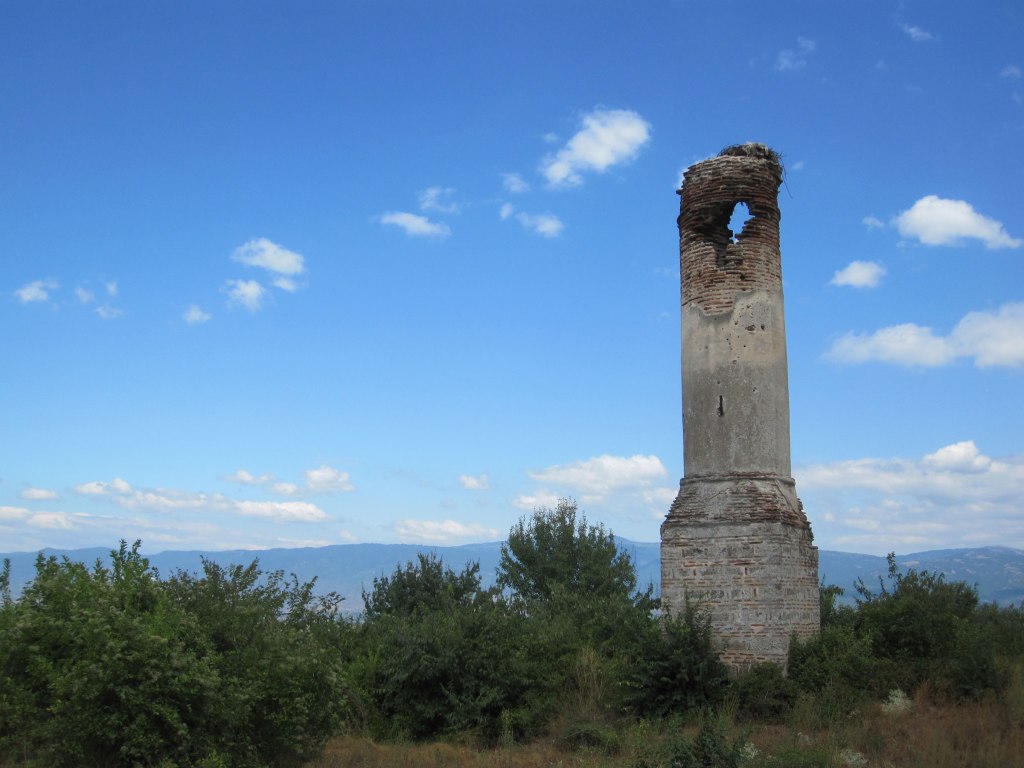
The ruins of this mosque are located on a Turkish cemetery near Bansko.
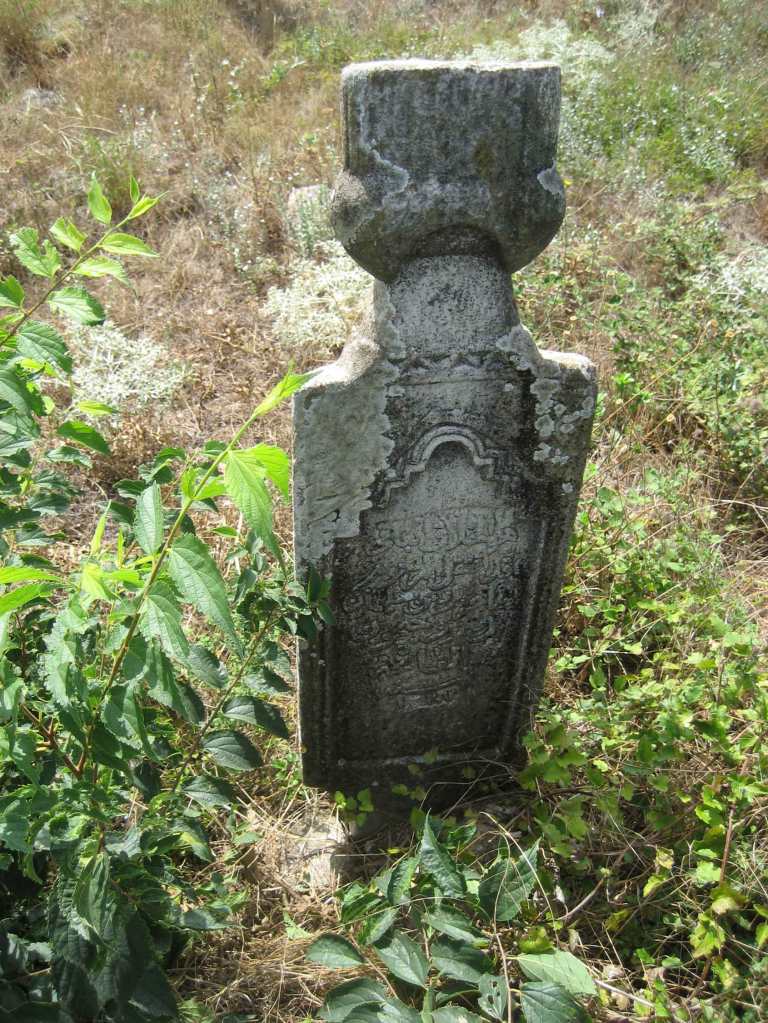
Turkish Cemetery 
Turkish Cemetery
The Turkish Cemetery is next to the road from Bansko to Svidovica, on your right if you’re traveling towards Svidovica. Directions: N41.38699 E22.74046
40 Martyrs of Sebaste Church
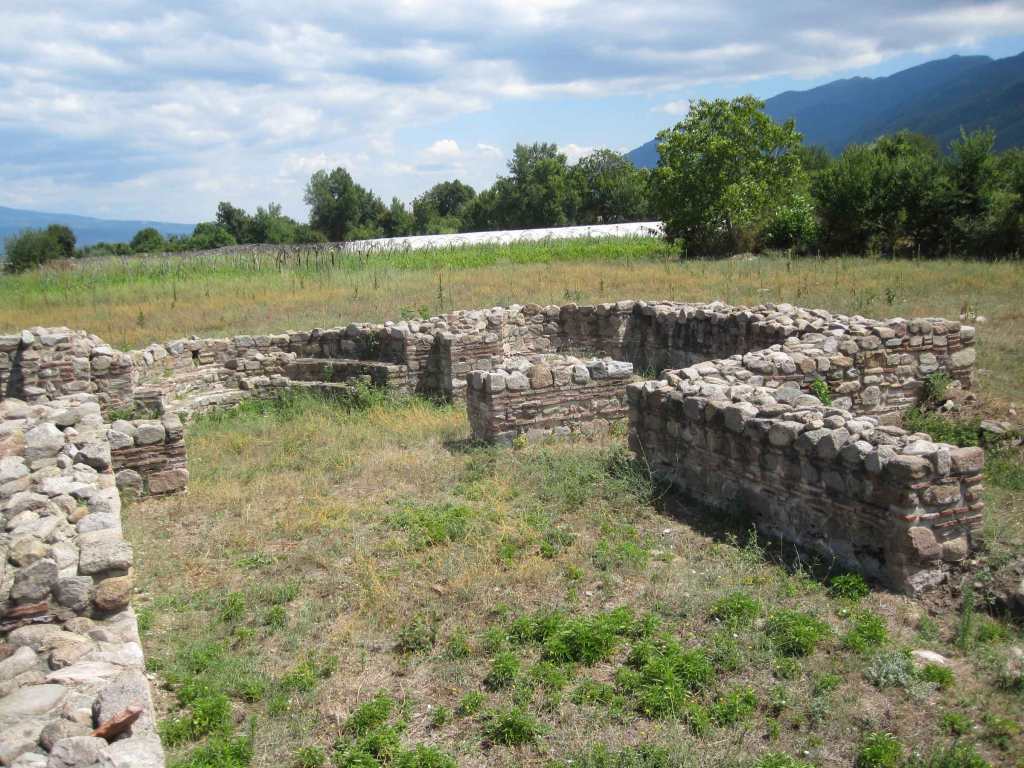
The foundations of the Church of the 40 Martyrs of Sebaste are somewhere in the fields near the village Bansko. This church was from the 12th-13th century, but work on it also had been performed during the Ottoman period. Near the church a necropolis was discovered originating from the 13th century. If you click on the coordinates below, you can see the shape of the church from the sky in Google Maps. Directions: N41.39082 E22.74338. If you drive further to the east from Bansko, you can visit numerous waterfalls, see below.
Gabrovo Waterfalls
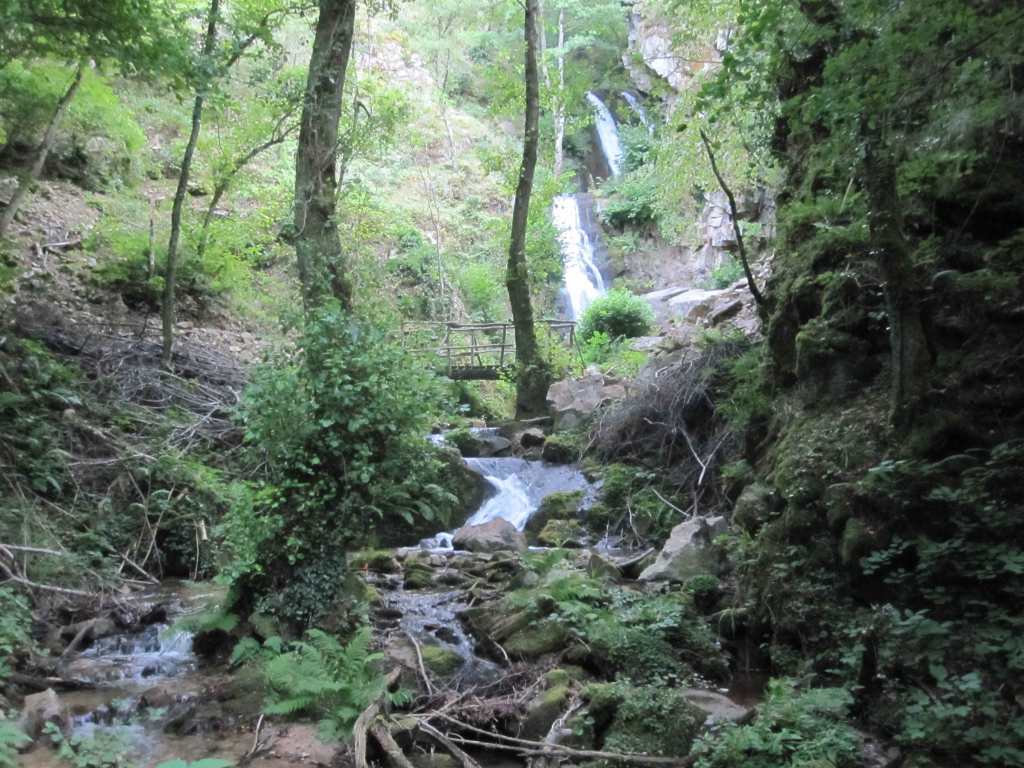
Gabrovo is a village about 18 km south-east of Strumia. The waterfalls of Gabrovo are less spectacular than the Smolari Waterfalls and the Koleshino Waterfalls (see below), but certainly worth a visit. There are some good picnic opportunities. In the summer the air is cool and the trees provide shadow. You can park at the small roundabout. If you go left at the roundabout, you go to the main waterfalls. This is a walk of about 1 km and an elevation of 80 meters, that will take about 20 minutes. If you walk right at the roundabout, you arrive at a smaller waterfall and some picnic places after a few minutes. Directions: N41.37090 E22.78766 (If you drive further back to Strumica, you will pass Bansko with its Roman Baths, see above).
Kolechino Waterfalls

Kolechino is a village about 19 km south-east of Strumica. It is know for it’s waterfalls. Especially on a hot summer day, a visit to the waterfalls can be really relaxing. The forest around the waterfalls is nice and cool. There are several good picnic places on the site. The last part of the road is not asphalted. From the parking, it is about 1 km walking, elevation about 80 m. You can walk a bit further upstream from the main waterfall, there are some more smaller waterfalls as well. Directions: N41.36926 E22.80692
Mokrino Springs
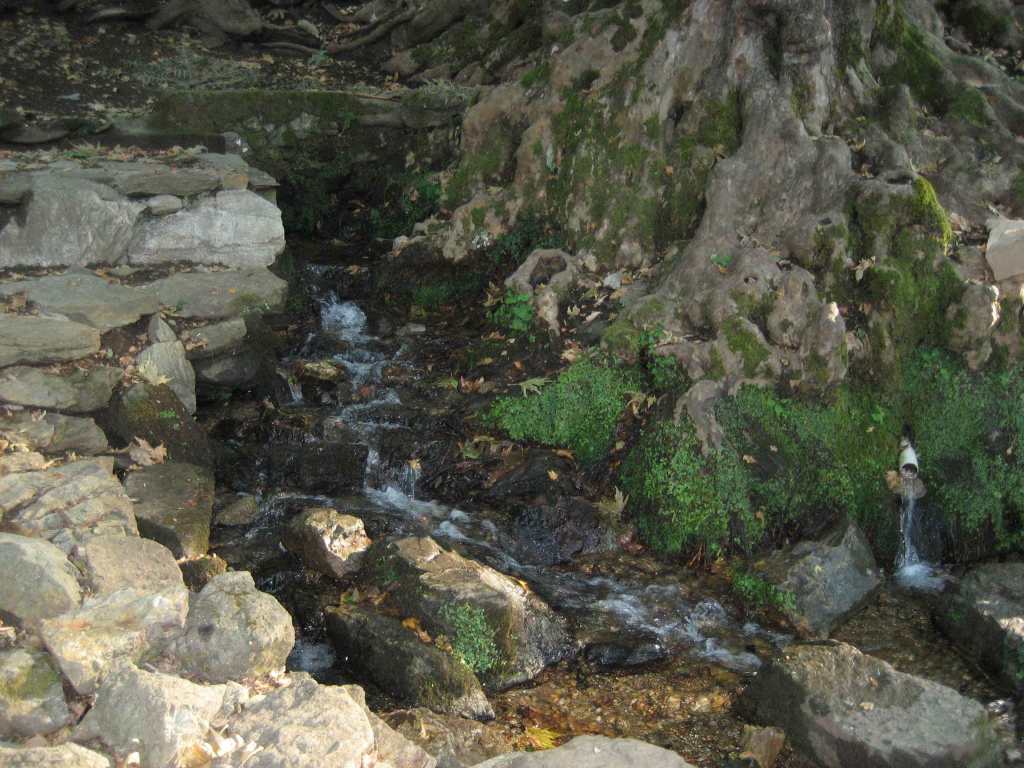
Mokrino is a village about 25 km south-east of Strumica. About 1.5 km east from the center of Mokrino there is a area with some springs. Mokro means “wet” in Macedonian. There’s not much to see except from some huge old trees with huge roots and water coming from the ground. But it is a very tranquil and cool place, perfect for a picnic. Forty liters of water flow from the three Mokrino springs every second. The temperature of the water is always the same and is not affected by the outside weather. Some think that the springs are connected with Dorjan Lake, which is located on the other side of the mountain, but no one has investigated this theory.
Every year on the 2nd August, a bull is sacrificed at the springs and cooked on a fire. This ritual is performed in order for the spring not to go dry, which happened once in the past after skipping the ritual. Seems like a good excuse for a BBQ to me!Directions: N41.37875 E22.86929
St Konstantin and Elena
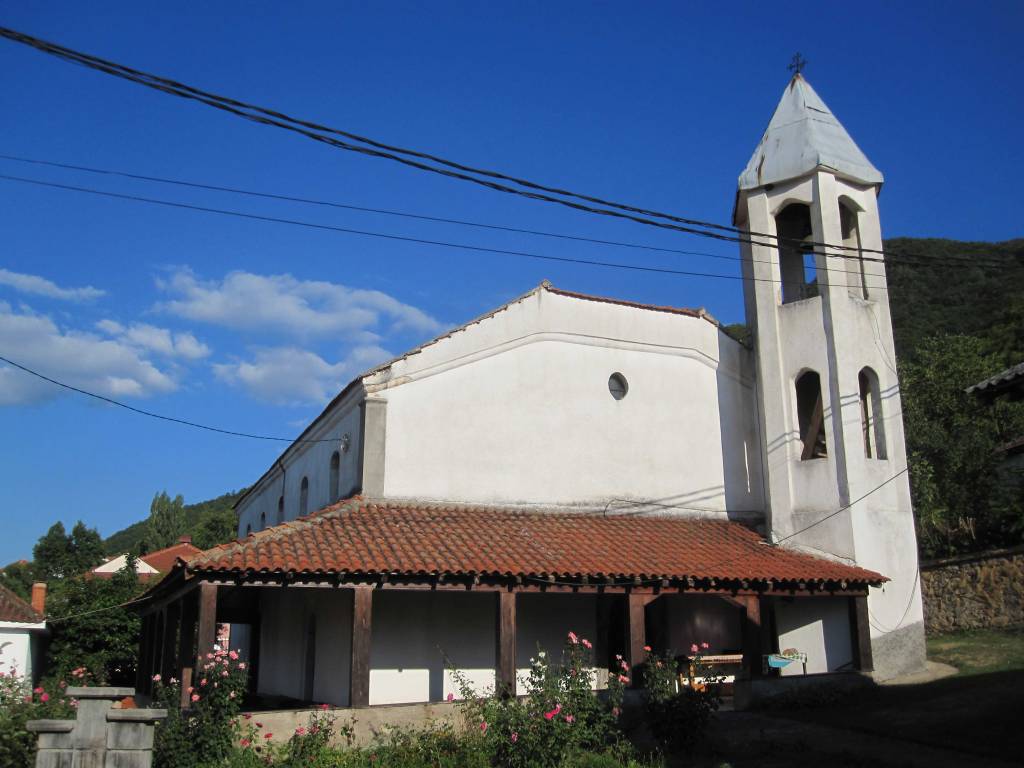
The Church of St Konstantin and Elena lies in the center of the village Mokrino. It dates from 1876. The Saint’s day is on August 3rd. Directions: N41.37735 E22.85554
Smolare Waterfall

Smolari is a village about 28 km south-east of Strumica. The water from the waterfall near the village drops about 40 meters! You have saved the best for last if you visited the waterfalls in the same order as listed here! From the parking it is a pleasant but steep uphill walk of some 700m length, elevation about 100 m, that will take about 30 minutes. Especially on a hot summer day, a visit to the waterfalls can be really relaxing. The forest around the waterfalls is nice and cool. Directions: N41.36607 E22.89933
Tomb of Struma at Banica

The Tomb of Struma is found in the fields just north of the village Banica, about 3 km west from the center of Strumica. It is a medieval tomb, that looks like a mausoleum and consists of 9 layers. There are three legends about for who the tomb was made:
1) Struma, the sister of King Marko
2) the sister of Perseus, a relative of Alexander the Great
3) Struma, the daughter of a commander of the fortress Czar’s Towers in Strumica, who fell in love with the commander of the enemy. She told him the secret how to defeat her father’s troops in the impregnable fortress. Struma’s father was so angry after his defeat that he cursed his daughter. After her death, the earth would not take her but throw her out of her grave eight times. Hence the 9 stone layers of the tomb. Several versions exist of the last legend, you can read all about them in the booklet “Some legends about Struma” by Vanja Izova Veleva which we got in the City Hall of Strumica. Nowadays, the top of the tomb is broken and a tree grows out of it. What a shame! Directions: N41.44938 E22.60940
Turkish Bath at Banica
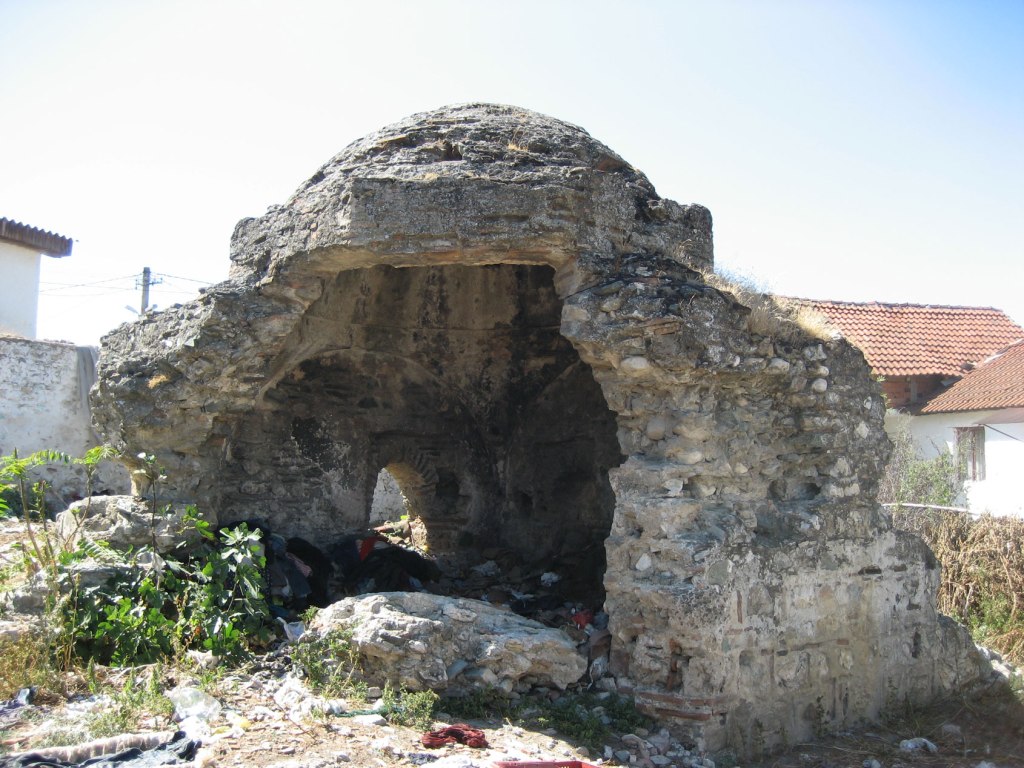
These ruins of a Turkish Bath can be found close to the Tomb of Struma, in the fields just north of Banica. Directions: N41.44546 E22.60872
Old Mosque at Banica
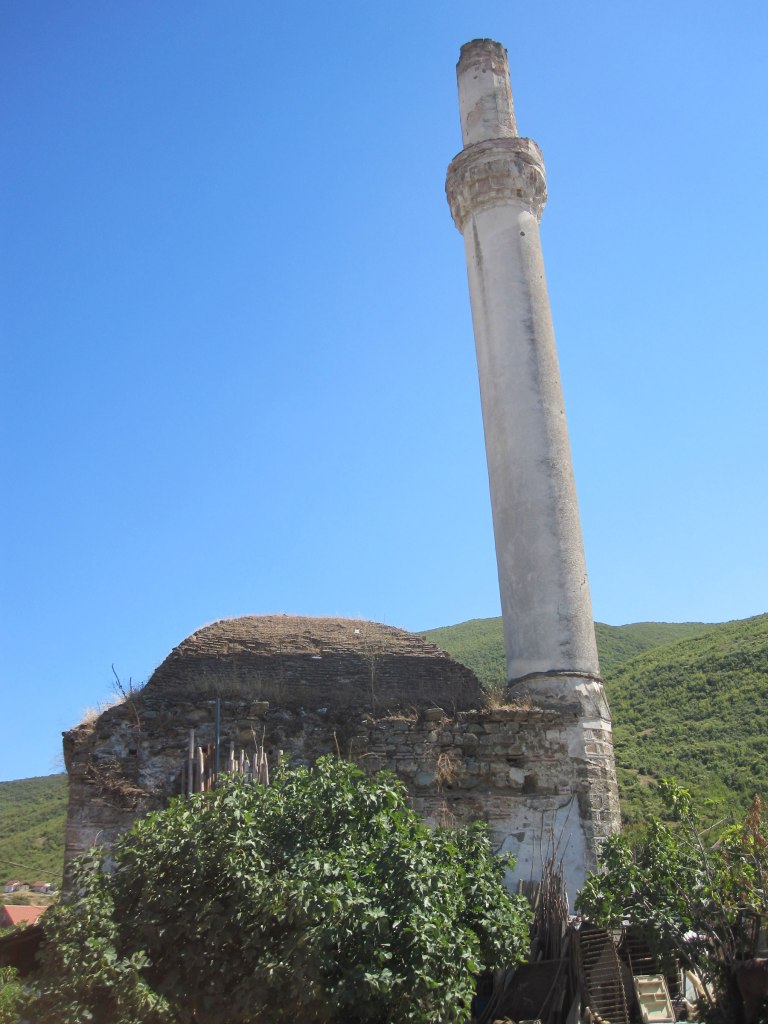
Old Mosque 
Old Mosque
This old mosque can be found next to the ruins of the Turkish bath above. We asked if we could see inside but that was not possible, most likely because the mosque seems to be used as a stable or storage by the people living next to it 🙂
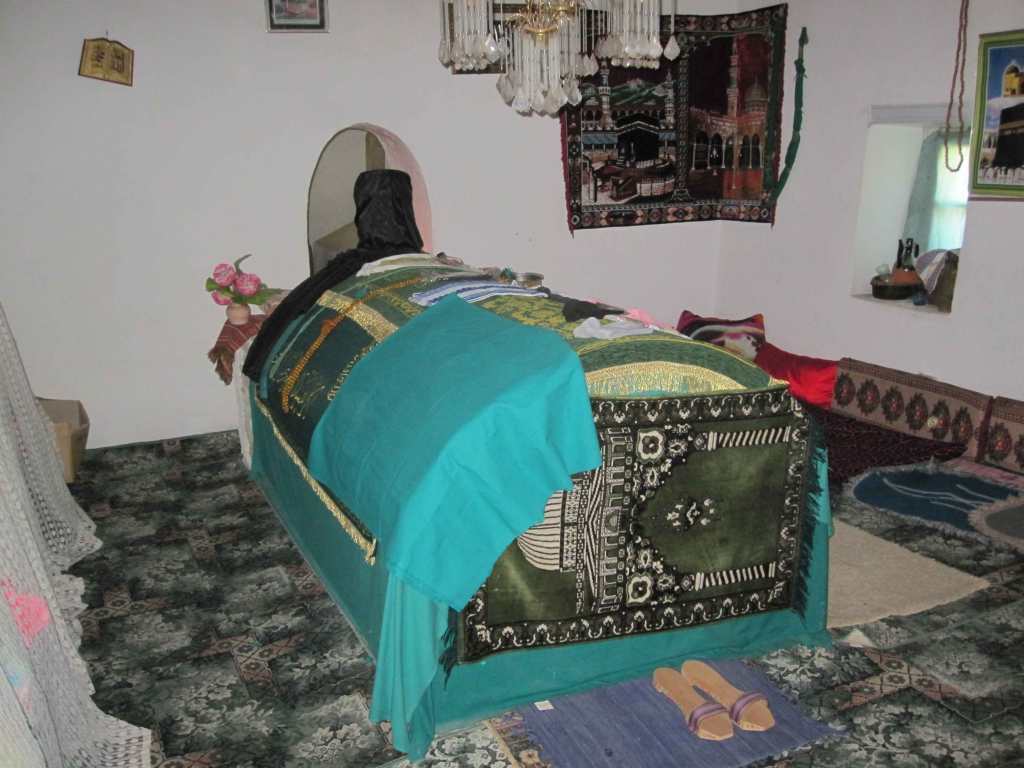
Muslim Temple 
Bath and Mosque
Next to the old mosque is a temple, where we were allowed to see the graves/tombes of the Muslim saints.
St Leontius in Vodoca

The Monastery of St Leontius can be found in the settlement Vodoca. To reach Vodoca from Strumica, you also travel through the Roma village Banica (see above). The monastery is dedicated to St Leontius, who was martyred in 320 AD for refusing to renounce Christianity. He was frozen to death in Lake Sebaste in eastern Turkey. St Leontius is built at the grounds of an earlier monastery, which was built after the defeat of Tsar Samoil’s troops in which 15,000 of Samoil’s men were blinded by Byzantine soldiers. A fresco in the church reminds of this terrible fact. Right next to the church dedicated to St Leontius are the ruins of the original church.

Monastery of St Leontius 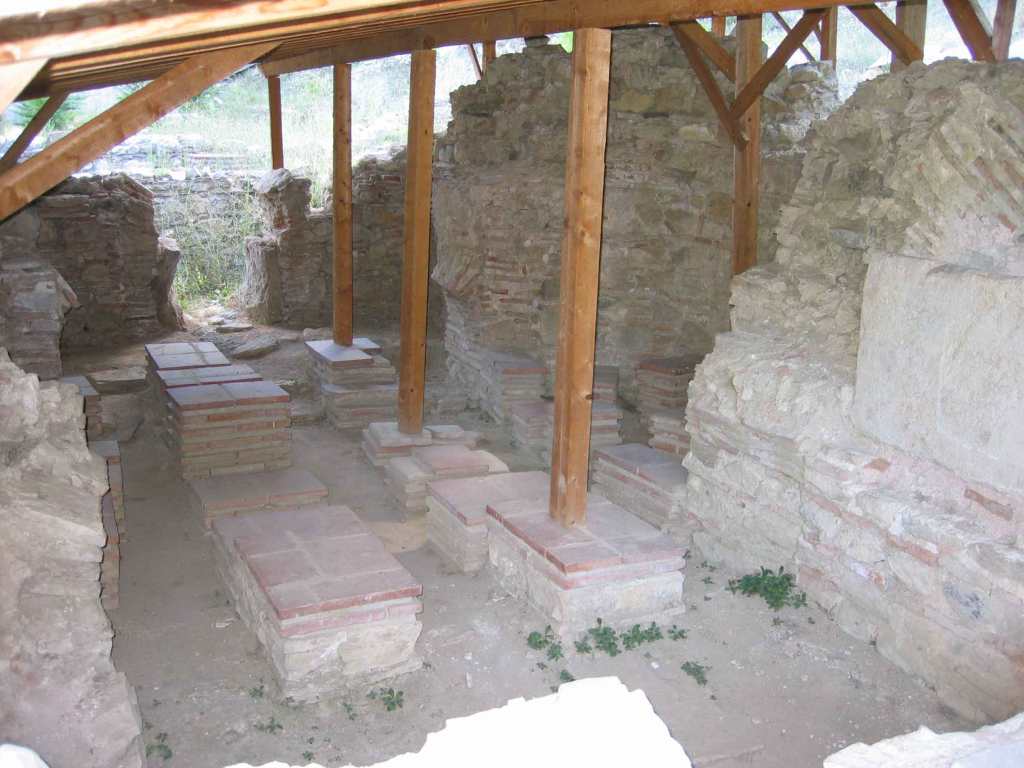
Monastery of St Leontius
The church was damaged by an earthquake in 1931, but has been restored in 1995. After the restoration, the monks from the Monastery St Bogorodica Eleusa in Veljusa moved into this monastery. The church is quite big and remarkably simple and you can see parts of the original walls. Allegedly, relics of the wife and son of St Kiril are kept in the vaults of the church. Website: http://www.mpc.org.mk/English/mpc/Strumica/vodoca.asp
St Bogorodica Eleusa in Veljusa

The Monastery of St Bogorodica Eleusa (Holy Mother of God – Eleusa) is in the village Veljusa. To get there from Strumica, take the road through the Roma village Banica and the settlement Vodocha where the monastery of St Leontius can be found (see above). Since 1996, when the monks moved to the Monastery of St Leonthius, only nuns live here. The Monastery St Bogorodica Eleusa has a very well kept garden and is an oasis of peace. The view over the village and the Strumica region is great. The church was originally built in 1080 and extended in the 14th century. It has suffered fires in 1913 and 1968. An interesting fresco of Jesus at the age of 12 can be seen on the ceiling of the eastern cupola. Another fresco of Christ as a young boy can be found in the Monastery of Treskovec near Prilep. Some of the nuns speak very well English and like to explain you more about the monastery. They also sell several things, from oil to hand-painted vases. Website: http://www.mpc.org.mk/English/mpc/Strumica/veljusa.asp
Hike to Ograzden peak

When we changed accommodation from Berovo to Strumica, we did 19 km hike to the Ograzden Peak. You can read more about this hike here.
 My Macedonia Blog