
Valandovo is a small town in the south-east of Macedonia, not far from Lake Dojran.
We had a pleasant stroll through the town and visited the Church of St Dimitri.
Church of St Dimitri
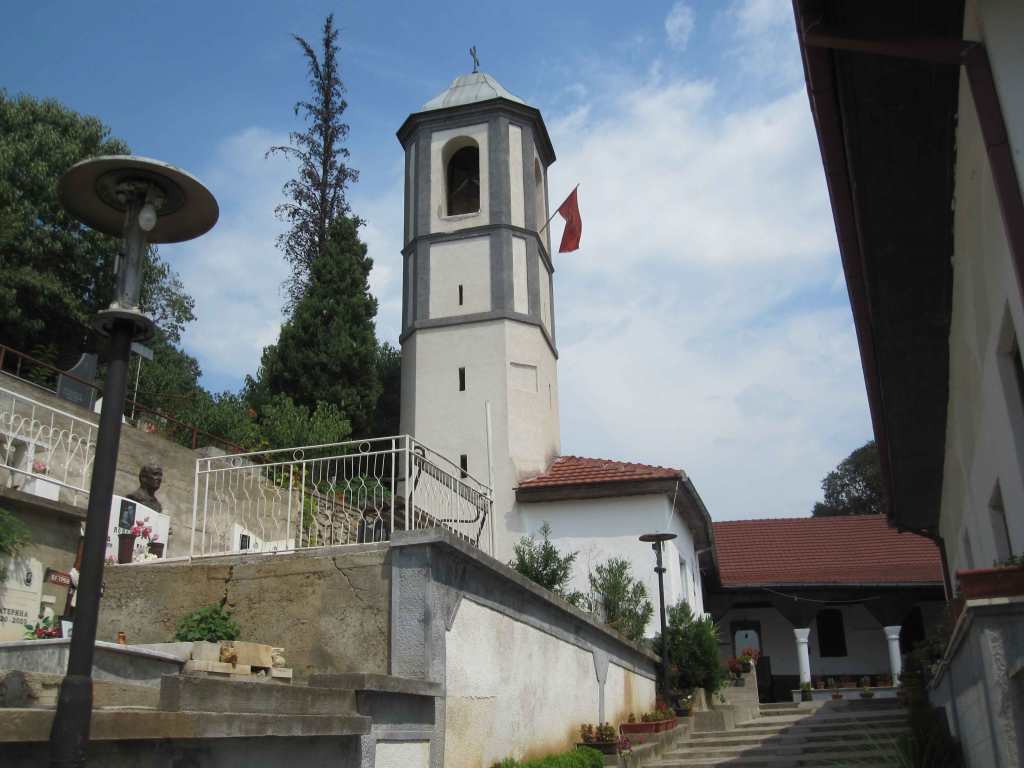
The Church of St Dimitri (Dimitrija) is located at the cemetery in the north part of Valandovo. The church was open when we arrived there, only it seemed closed at first because the door was a bit stuck. When we were admiring the inside of the church, the church bell suddenly started to work because it was 11.00h. The sound was really, really loud and I hope I will be forgiven for cursing inside a church 😉 An inscription on the church indicates that it was built in 1830, and the church bell tower in 1898. Address: 11 Oktomvri Street; Directions: N41.32140 E22.55725

We usually visit the town hall or municipality building when we are in a new town in Macedonia. They often have free goodies such as maps or booklets with touristic information about the town. Unfortunately this was not the case in the town hall of Valandovo, but In the House of Culture we were more successful and got some interesting flyers. Address: Lazarevachka street; Directions: N41.31630 E22.56029
House of Culture

In the House of Culture we got a booklet in Macedonian about some of the sights near Valandovo, e.g. about the site with springs called “Izvor” near the Monastery of St George. Address: Near Lazarevachka street; Directions: N41.31702 E22.56053
Monuments
Monument 
National Liberation Army Monument
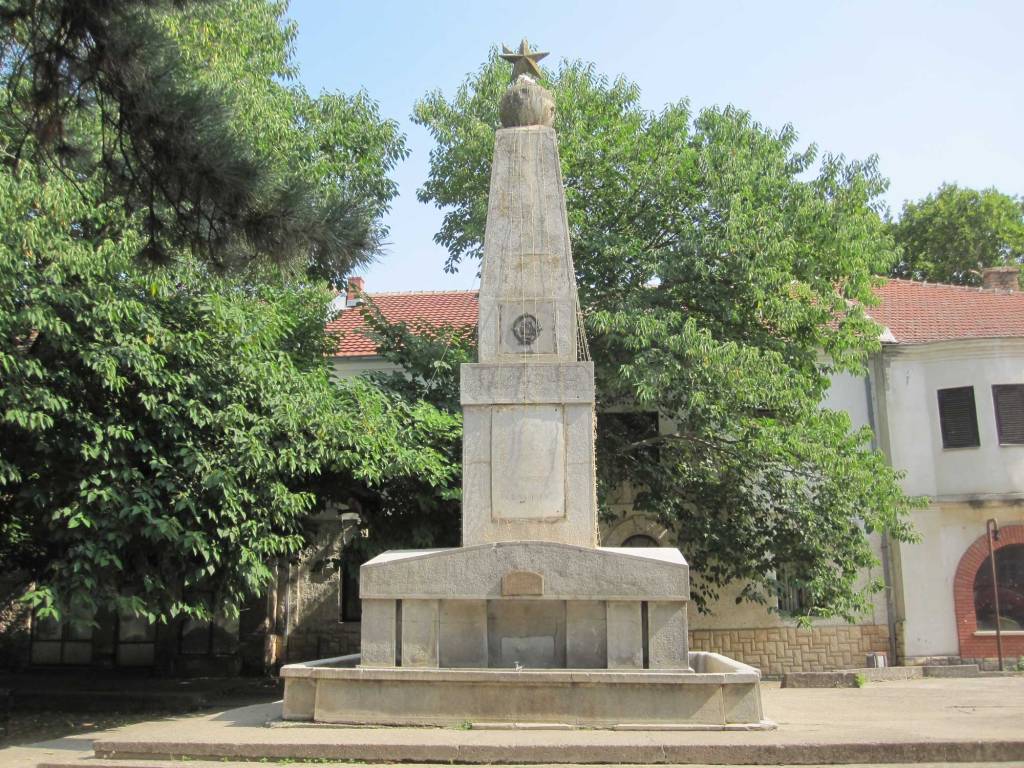
Along the main pedestrian street in Valandovo you can find the monument on them left picture. It is unclear to me what it exactly commemorates. What however can be read from the signs on the monument that it is forbidden to wash your clothes there?! This must be a huge problem in Valandovo, people washing their clothes in the town fountain 🙂 Address: Near Lazarevachka street Directions: N 41.318183 E 22.561215 The other monument is for the fallen fighters of the National Liberation Army and the victims of the fascistic terror from the Valandovo area. Directions: N 41.317883 E 22.560600, near the main pedestrian area.
Monastery of St George

The Monastery of St George (Gjorgi) is located in the mountains north-west of Valandovo. It can easily be reached by car, the asphalt road to the monastery also brings you along the springs named Izvor with a picnic place and some old hollow plane trees. According to a sign in the church, the Monastery of St George dates back until 1344. The present church was built in 1931 after an earthquake on the remnants of the old church. In 1934 the iconostasis was consecrated together with the new church. The Turkish writer Evlija Celebija (1611-1682) wrote in the 17th century about the monastery and mentioned iron gates on the eastern side.


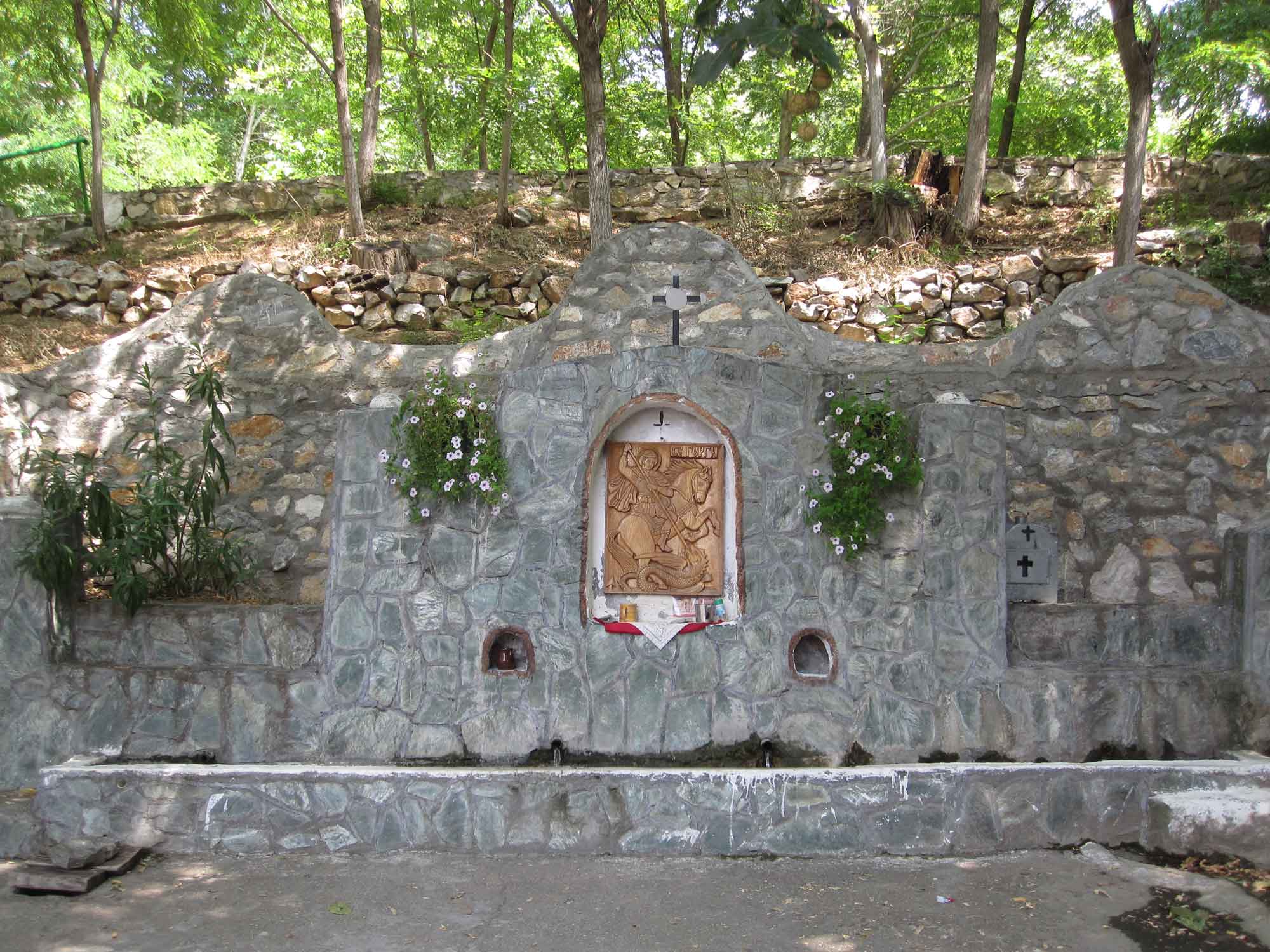
When we were there in 2012, the Church of St George was completely empty and they were renovating the inside. There are several springs/water taps on the monastery grounds. A few hundred meters above the Monastery of St George you can find Marko’s Tower.Directions: N41.32621 E22.54854
Marko’s Tower
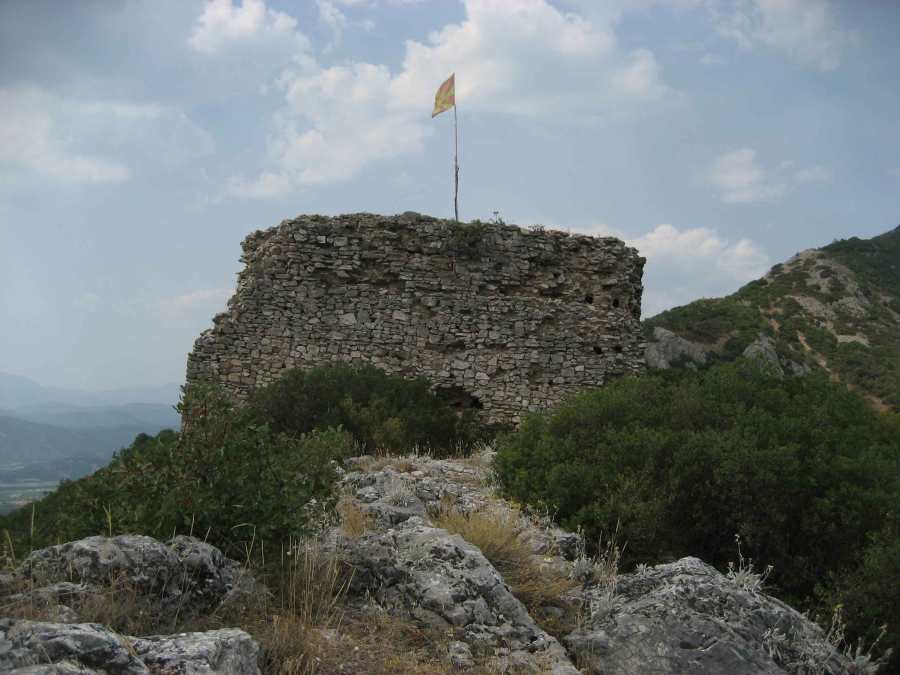
When you hear Marko’s Tower in Macedonia you probably immediately think about the Towers of Marko near Prilep. But Valandovo also has its own Tower of Marko! Just one tower, but still. It is located on a hill above the Monastery of St George, north-west of Valandovo. You have to do some serious walking uphill to reach the tower. It is difficult to find the right trail to approach Marko’s Tower, see here for more information. Directions: N41.33086 E22.54846
Izvor Springs and Picnic place

This interesting picnic place with several small springs/taps is located along the way from Valandovo to the Monastery of St George and Marko’s Tower.

Picnic place 
Hollow Plane Tree
There are some old hollow plane trees near the springs. The spring next to the big hollow plane tree is dedicated to Saints Peter and Paul. Directions: N41.32558 E22.55380
Isar Marvinci Archeological site

The archeological site Isar Marvinci is located south-west of Valandovo, near the village Marvinci. When we were there in 2012, there was not so much to see as in other archeological sites in Macedonia such as Heraclea Lyncestis near Bitola or Bargala near Stip. There may have been more to see in the past, the guard told us that after the archeologists had done their excavations, the holes were covered again with earth for protection. However, it was nice to stroll around the ruins that were still visible.
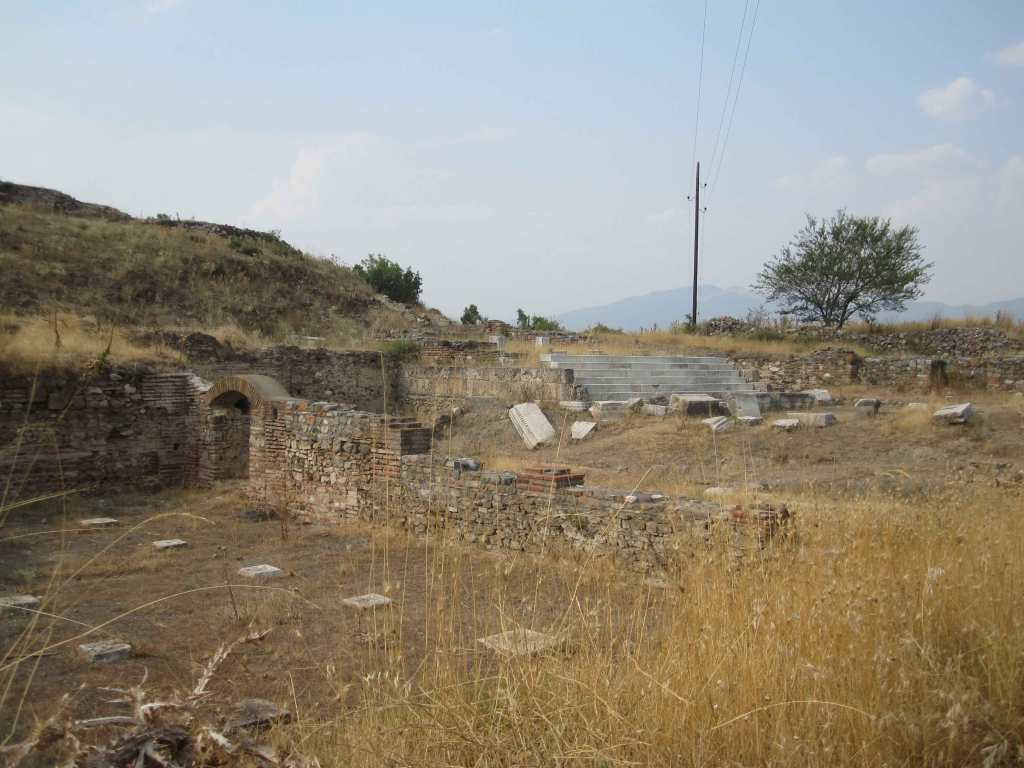
We parked our car at this location N41.271714 E22.488810, and walked about 500m uphill on the 4×4 track until we reached the house of the guard. The site itself is about 400m further uphill N41.27761 E22.49386). You are supposed to announce yourself at the guard, who lives in the small house next to the road leading to the excavations. Some of the guard dogs came running at us, but they were promptly called back by the guard .
The following is copied from a flyer that we got at the site:
Isar Marvinci is considered one of the most significant archeological sites in Macedonia. It is assumed that this place was one of the ancient cities called Dober or Idomena, based on a signpost that was found which mentions these two cities and the distances between them. Findings date from the early iron age (1200 BC) through the early antiquity, the Macedonian-Hellenistic and Roman periods, ending with the late antiquity, encompassing a period of 15 centuries.
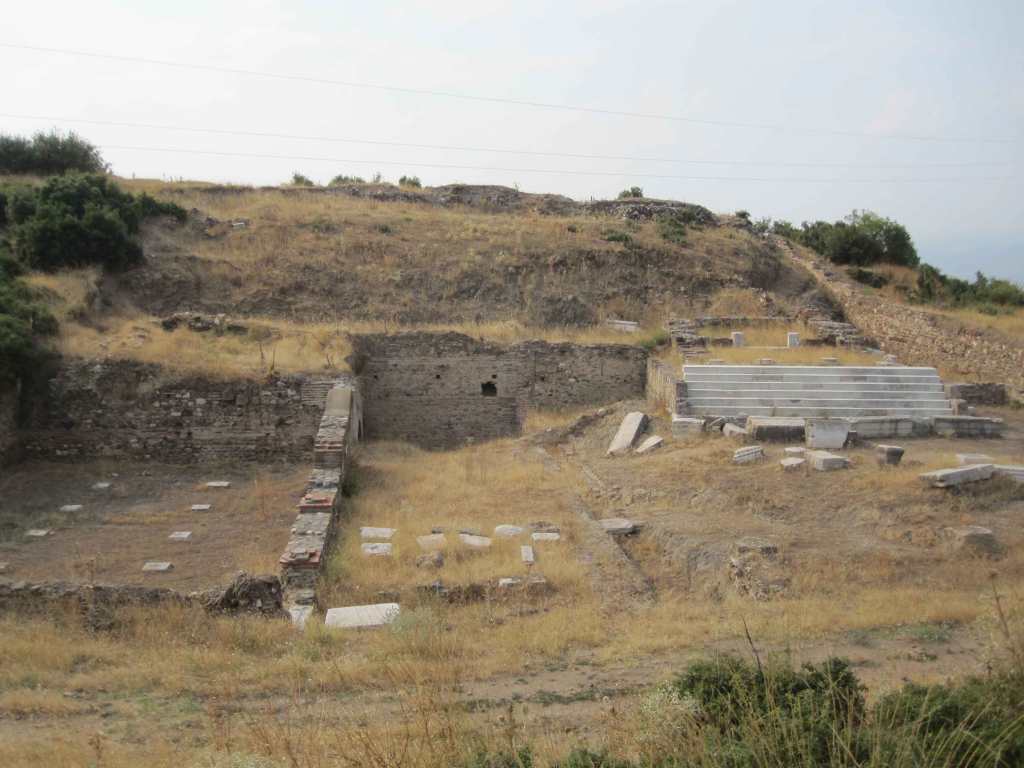
In its own time, the city was the principal social and economic center in the area around the midstream of the Vardar River. The city covers an area of 10 hectares, while the necropolis is much wider, covering an area of 100 hectares.
So far a Roman castrum (military camp) has been discovered, in which a temple dedicated to Heracles (Hercules as personification of the Roman emperor Commodus) used to stand, as well as the barracks where the soldiers used to live.
The necropolis is being excavated on three locations: the prehistoric Lisichin Dol, the southwestern part dating from the early antiquity and the Macedonian-Hellenistic period, and the Roman. The crypts reflect the burial ceremonies and the beliefs of the people who lived in this area.
An abundance of earthenware and ceramic items has been excavated, along with an Iron Age stove, golden jewellery and a iron helmet that used to belong to a Macedonian soldier. The artefacts are on display in the Museum of Macedonia in Skopje.
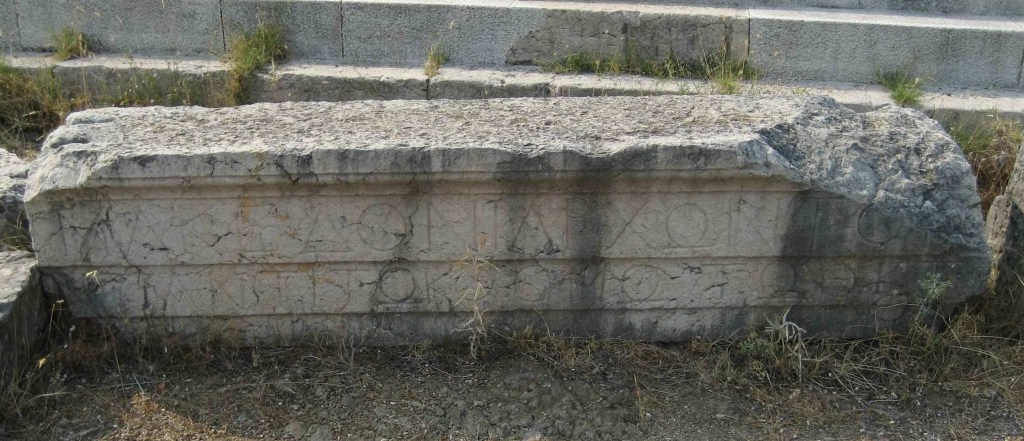
The most recognizable artifact that was found on the site is the architrave beam bearing the inscription “MAKEDONIAPX”, a copy of which has been placed in front of the seat of the government of Macedonia, as a symbol and witness of the historical past of Macedonia. “Makedoniarh” was a nobleman who restored the temple in honor of Commodus.
 My Macedonia Blog