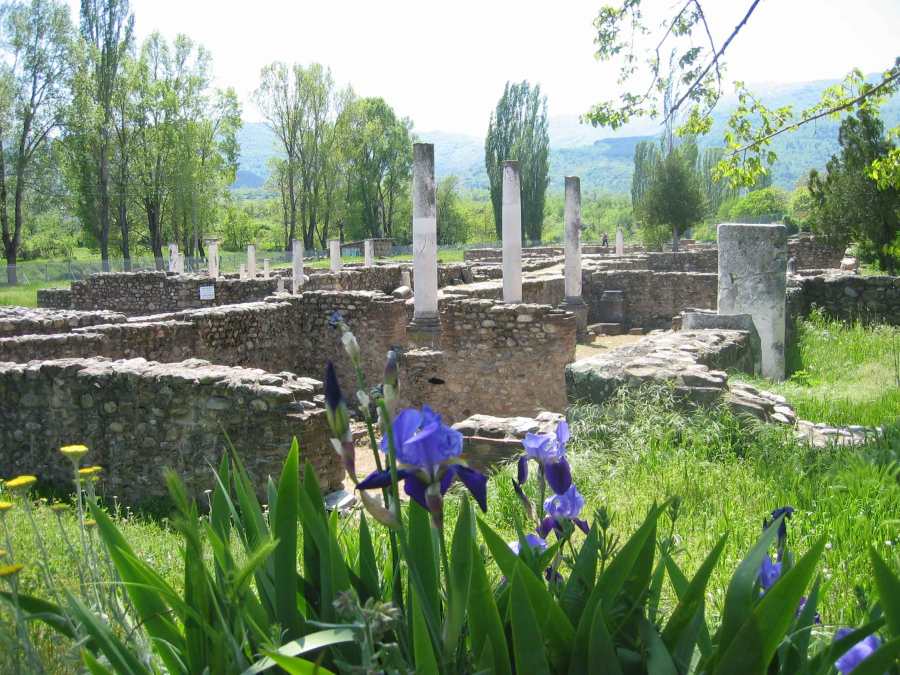
In the south of Macedonia, just south of Bitola, you can find the ancient city Heraclea Lyncestis, now an archaeological site. The ancient town of Heraclea Lyncestis was founded by Philip II of Macedon, father of Aleksandar the Great, in the middle of the 4th century BC.
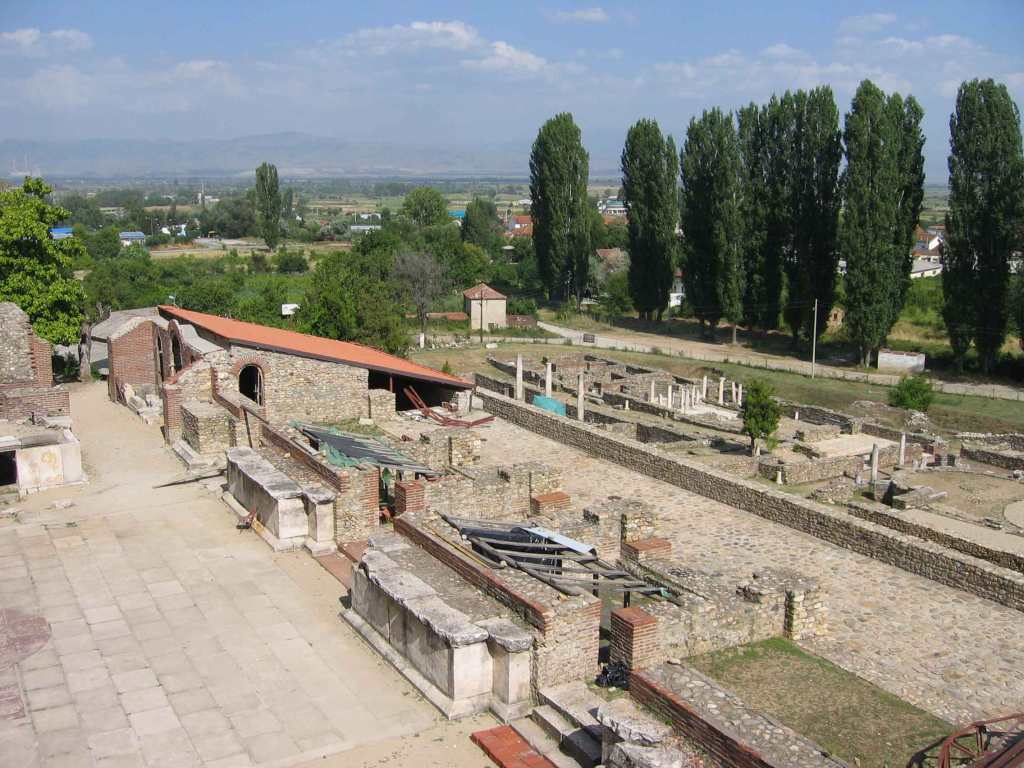
Heraclea Lyncestis was named after the mythological hero Heracles and in honor of an ancient tribe called Lyncestae (meaning lynx) who lived in the area already around 4500 BC. Macedonia fell under Roman jurisdiction at that time. Heraclea Lyncestis was an important stopping place on the Via Egnatia, a Roman road which connected Heraclea with Ohrid. Parts of the Via Egnatia can still be seen near the village Radozda at Lake Ohrid. The Diagonal Way connected Heraclea with the ancient city of Stobi.

Julius Caesar (100-44 BC) has used Heraclea as a supply depot during his campaigns. In the Early Christian period (4th-6th century AD), Heraclea became an episcopal seat, meaning the Bishop had his residence here. After a large earthquake in 518 AD the inhabitants eventually abandoned the city for other towns.
The Heraclea arheological site consists of an amphitheater, baths, basilicas and some impressive mosaics. In the small museum you can get a drink and leave your bags during your visit of the site.
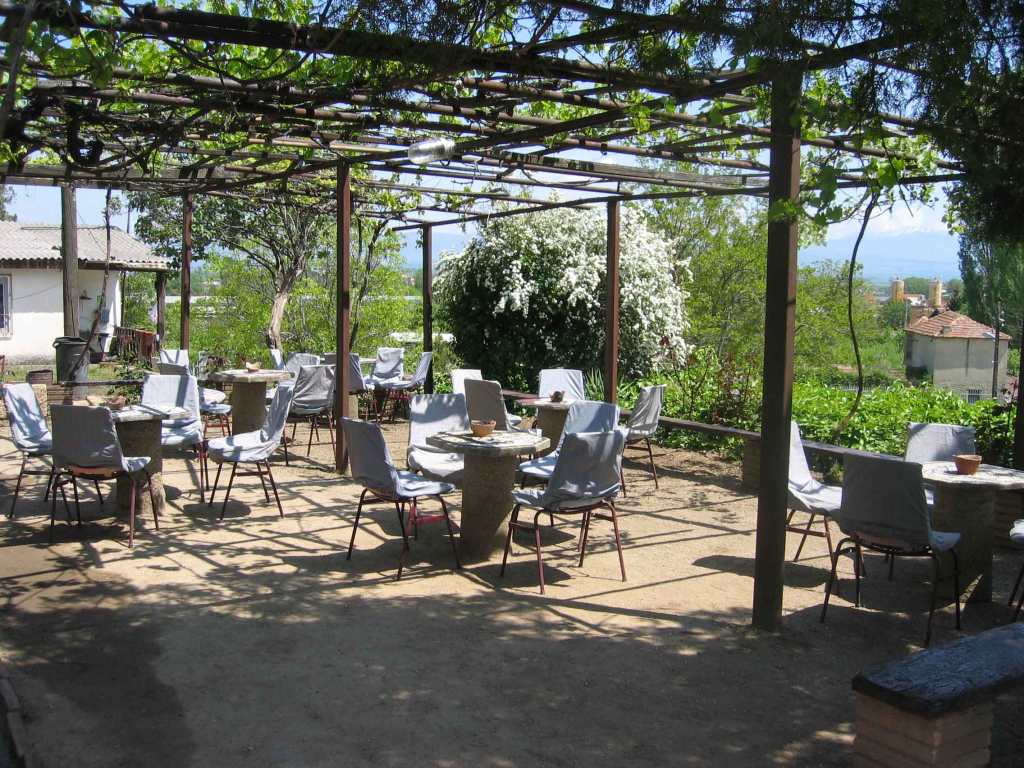
There was a small bar with terrace with interesting tables decorated with mosaics. The bar is probably the only place with some shadow. Especially in the summer it can be very hot! The admission fee was 100 denars (about 1.60 euros), and they ask 300 denars (about 5 euros) per camera to make pictures. However, we bargained a bit and only paid 1x the picture fee for 4 people.
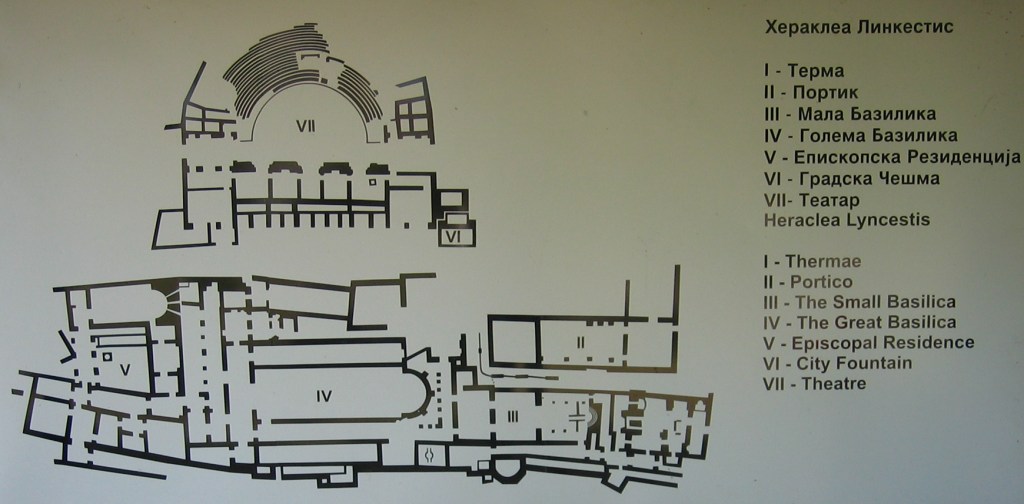
This map shows you the layout of the Heraclea Lyncestis site. More details and pictures of the individual ruins on the site are shown below.
Thermae (II-IV A.D.)
Thermae were facilities for bathing. usually large bath complexes

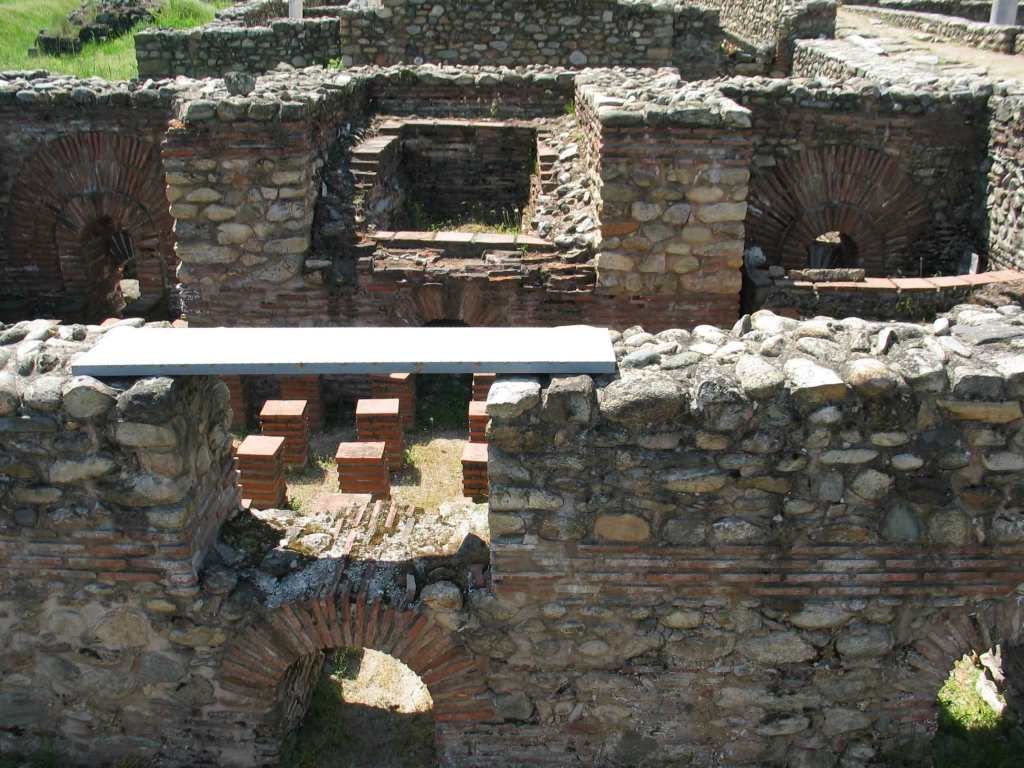
Portico of the Courtroom
A portico is a porch leading to the entrance of a building, in this case the courtroom.


Small Basilica (IV-VI A.D.)
The so-called Small Basilica is an early Christian church.

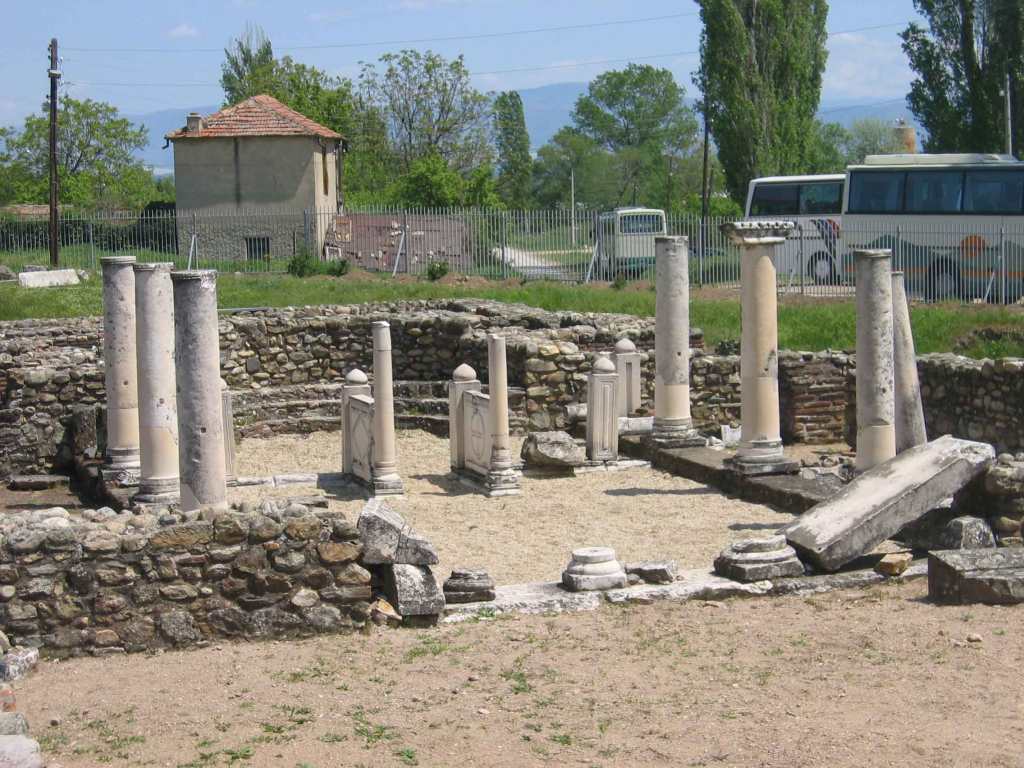


The baptistery is located close to the Small Basilica.
Large Basilica (V-VI A.D.)
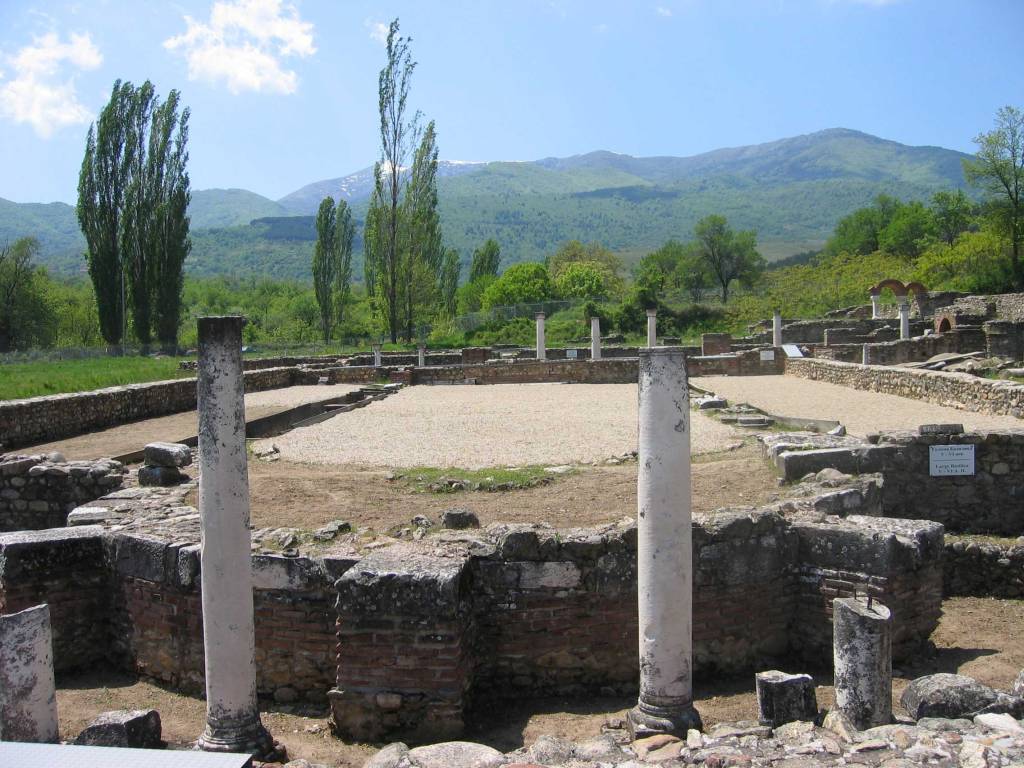

Bishop’s Palace
The Episcopal Residence is also called Bishop’s Palace.

City Fountain (562 A.D.)
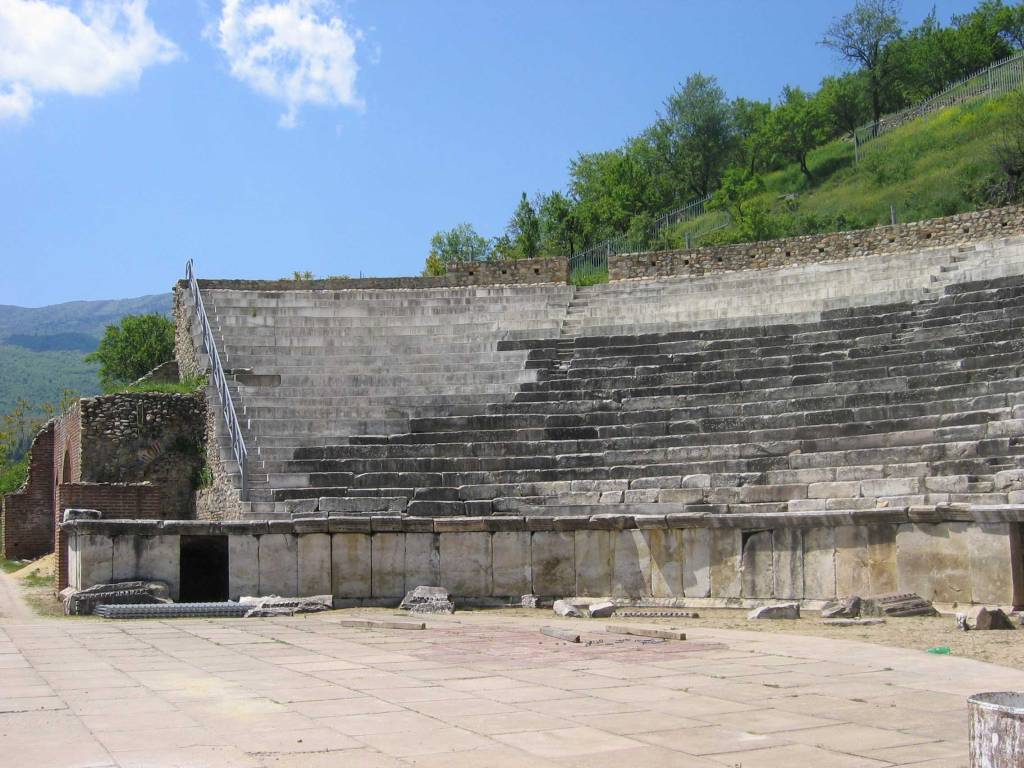
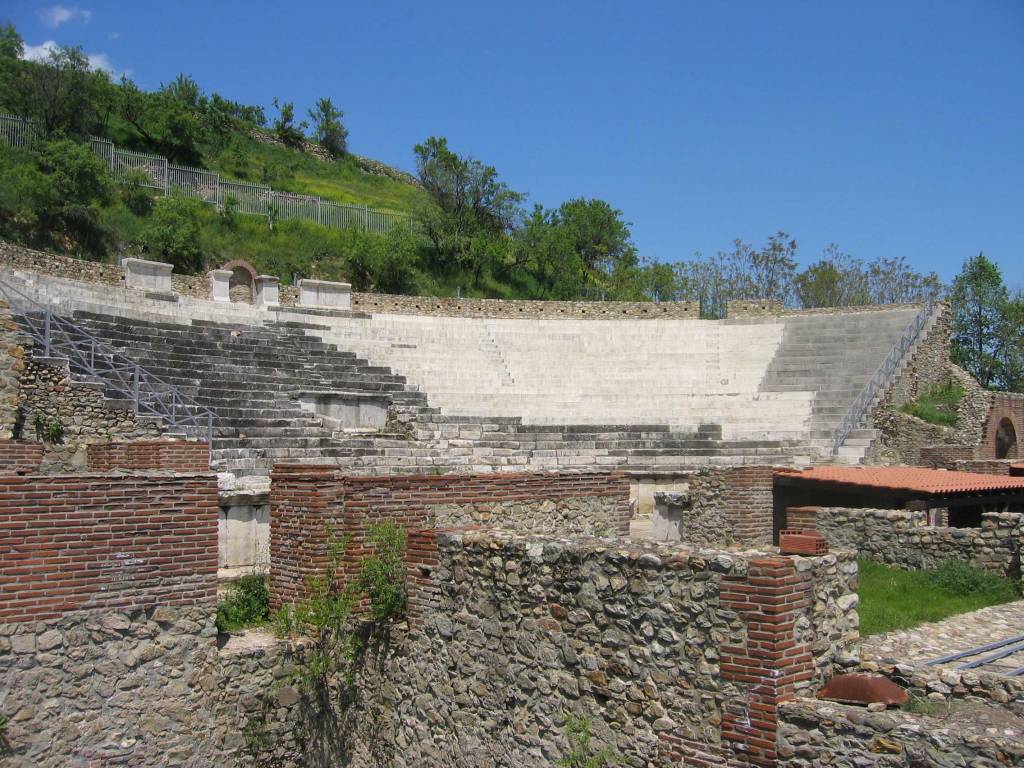
Amphitheater (II A.D.)
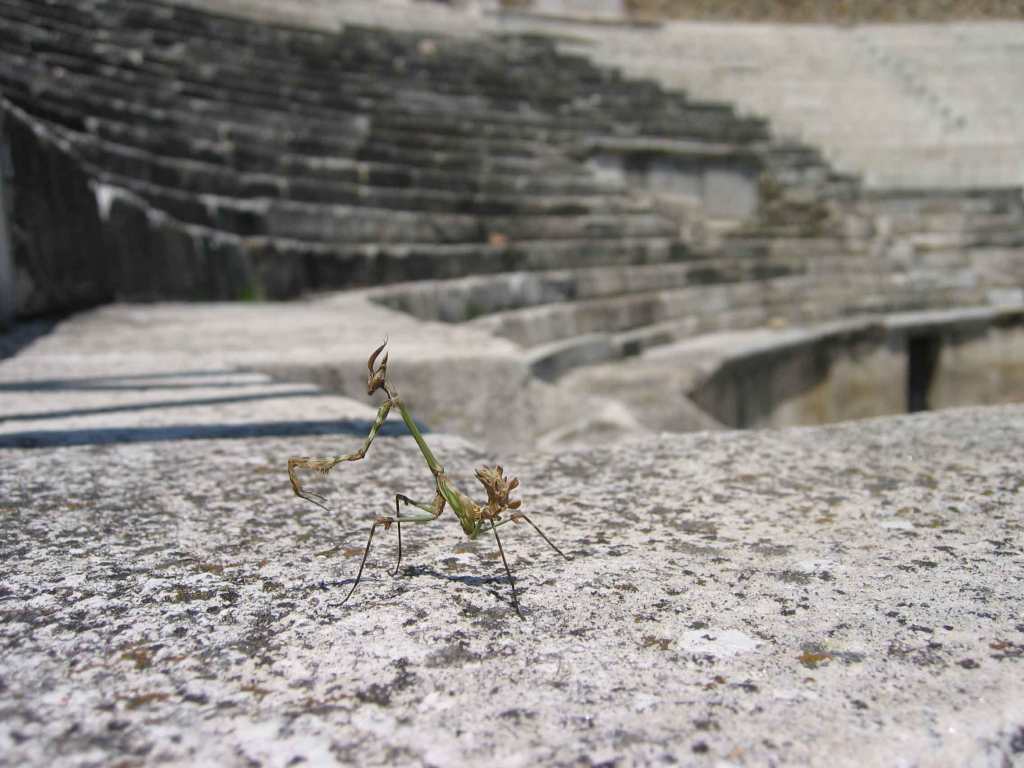
The amphitheater of Heraclea Lyncestis has been used for gladiator fights, and often Christians were the victims. When you are standing in the arena, it is gruesome to realize that people were fighting for their lives at the exact same spot centuries ago. This picture of a Praying Mantis reminds of the animal fights that were held here. I guess many Christians prayed for their lives here as well!
Aqueduct (VI A.d.)

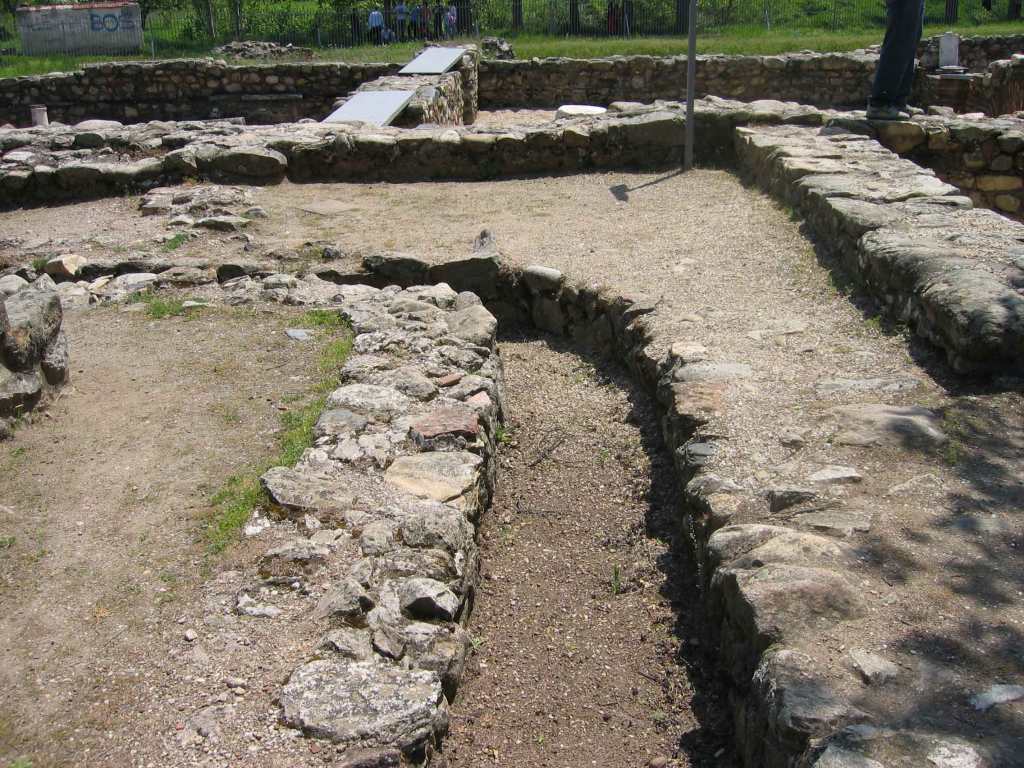
Street with aqueduct
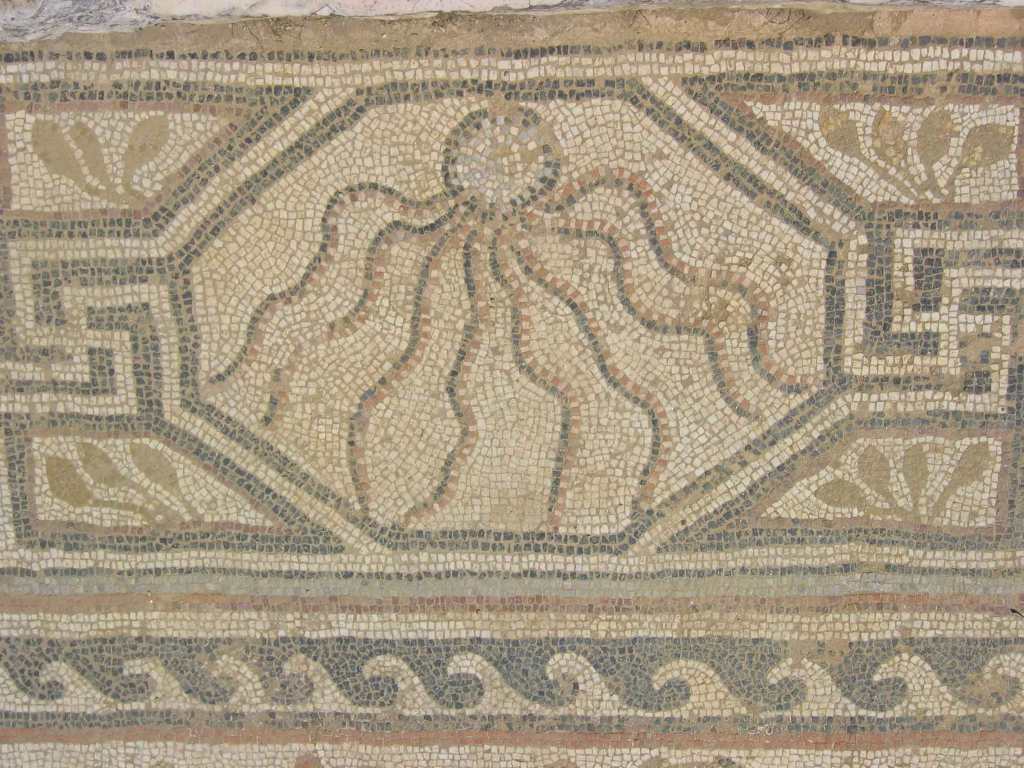
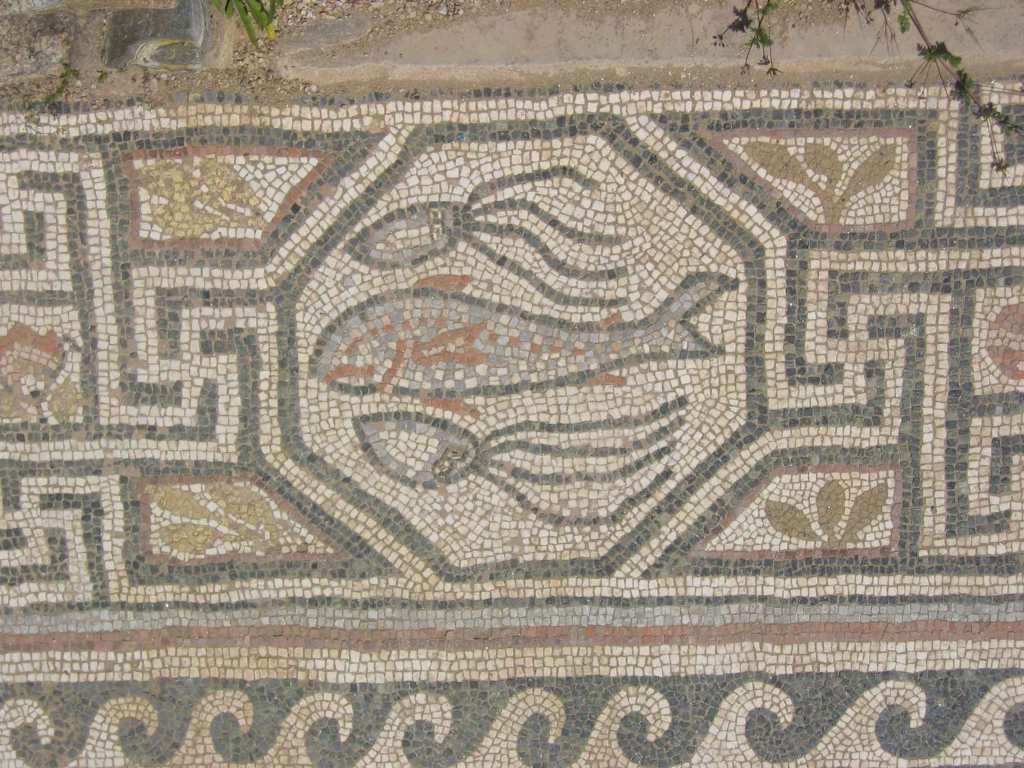
Mosaics
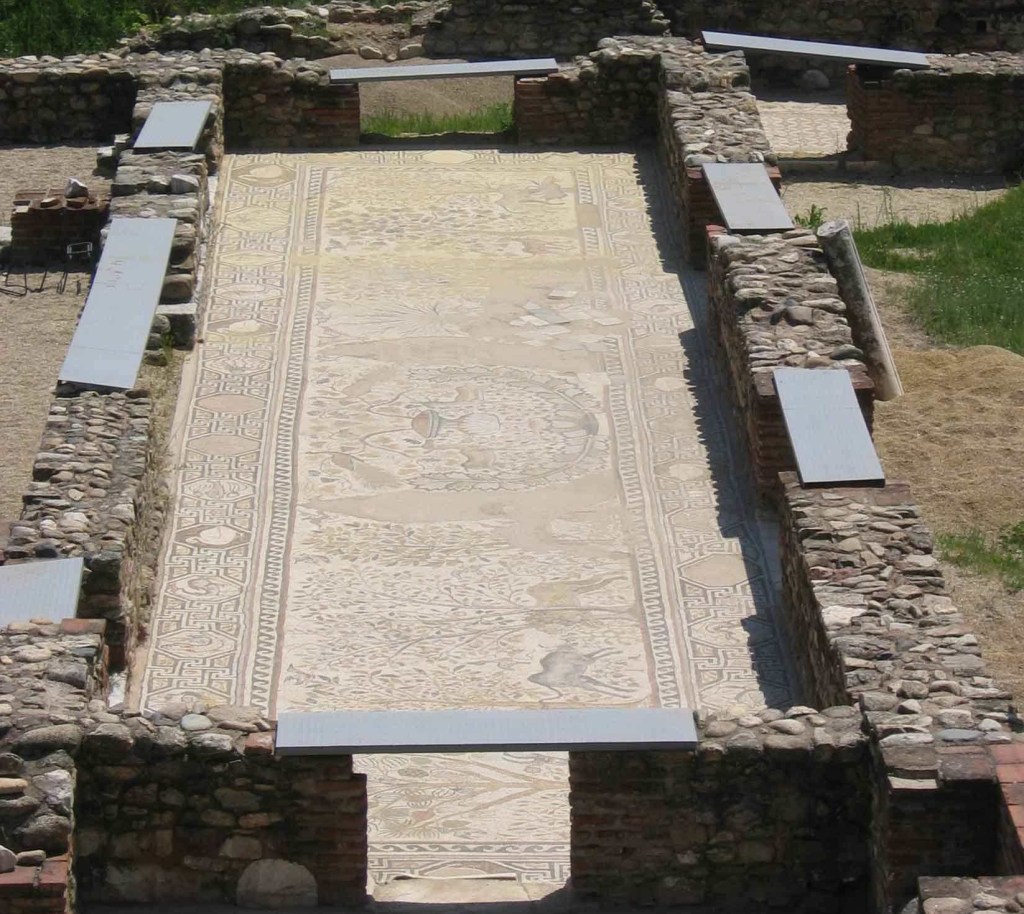
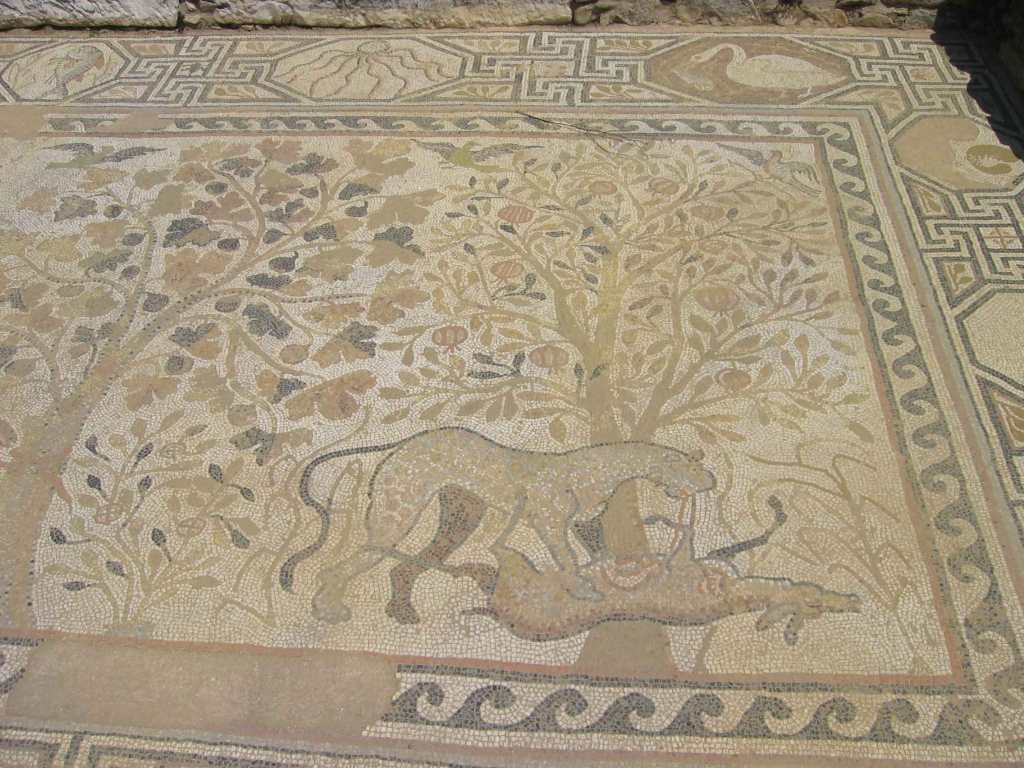
There are some beautiful mosaics to be seen at Heraclea Lyncestis. Note that these mosaics will likely be covered with sand during the winter period and therefore not visible. The pictures below show details of some of the mosaics.
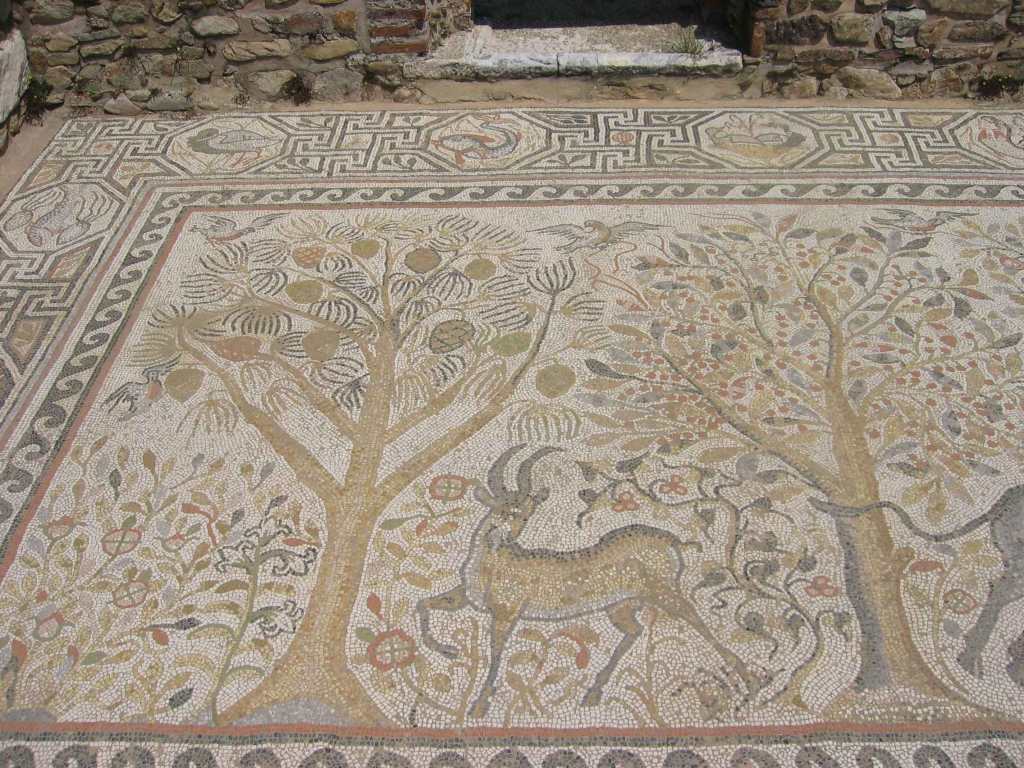
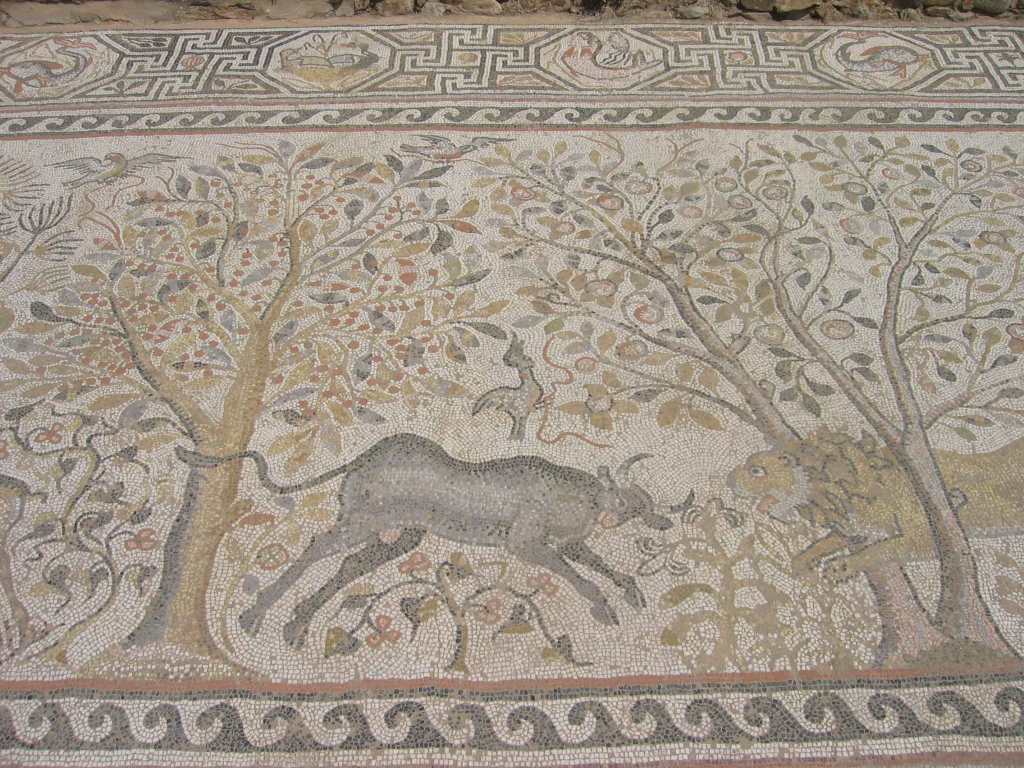


It seems that even the Romans already tied their dog to a tree when going on holiday…
 My Macedonia Blog