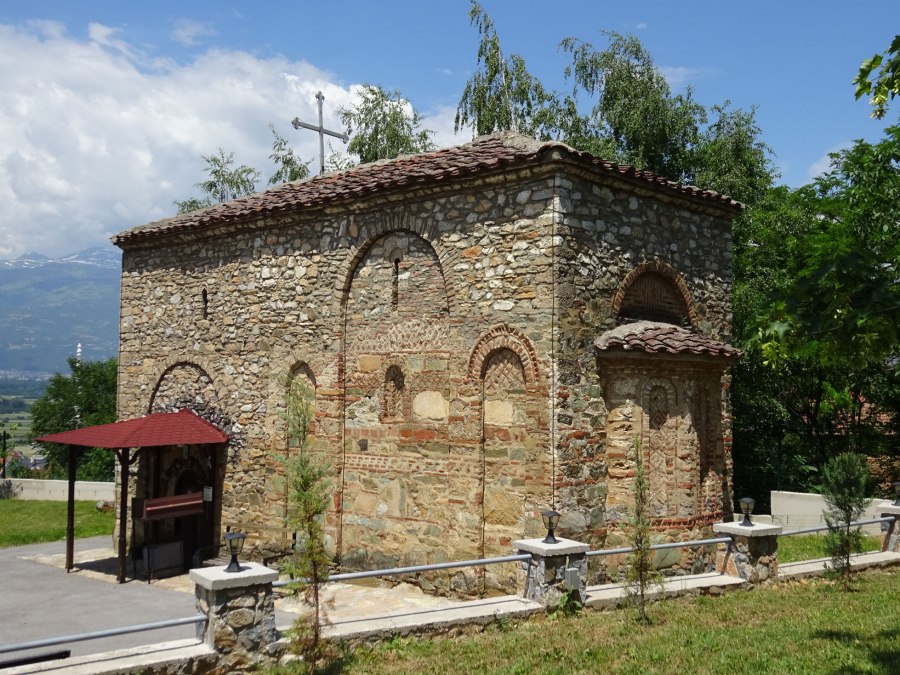
The Church of St. Nicholas is one of the region’s lesser-known medieval monuments. Although modest in size, it preserves traces of nearly 700 years of history.
The original church was built around the middle of the 14th century, some sources mention 1337-1347. Although no written records survive naming its founder, the church’s architecture and frescoes place it in this period.
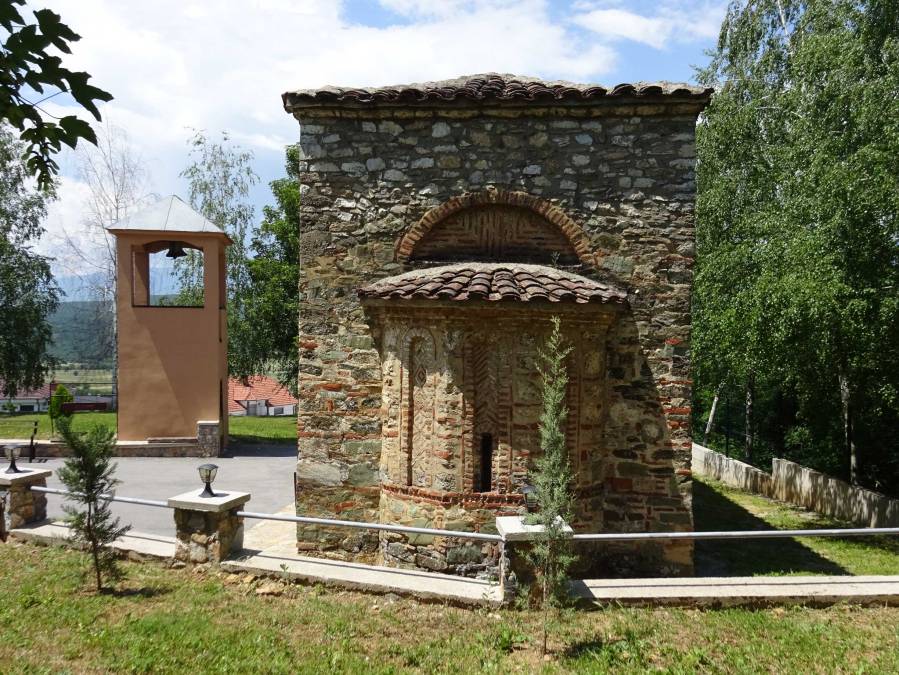
The church originally looked very different from what you see today. It was a single-nave church and its richly decorated brick-and-stone façades were typical of Byzantine architecture in medieval Macedonia.
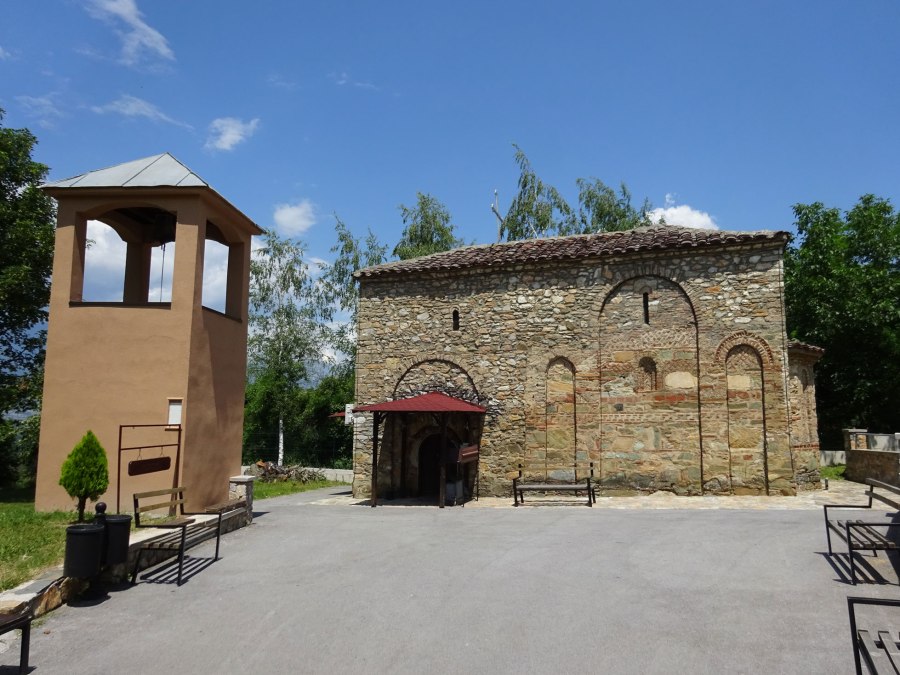
At some unknown point during the Ottoman period, the church lost its roof, dome and upper walls. The building stood abandoned for many years before being restored in the 19th century.
One of the most fascinating stories connected with the church is a local legend. According to tradition, the ruined church was rebuilt in the early 19th century by Alil-aga Cile, an influential local Muslim from Čelopek, supposedly at the urging of his Greek Orthodox wife, or, according to another version, in her memory.
There is no documentary evidence proving this story, although Alil-aga himself was a real historical figure.
If the legend is true, it would represent a remarkable example of cooperation across religious boundaries during the Ottoman period: a Muslim patron helping restore a Christian church. Although impossible to verify today, the story has survived in local oral tradition for generations.
This major restoration most likely took place around 1830. During this period the church received a new roof, a false dome was added, new wall paintings were created, a wooden gallery was built, and a new iconostasis was installed.
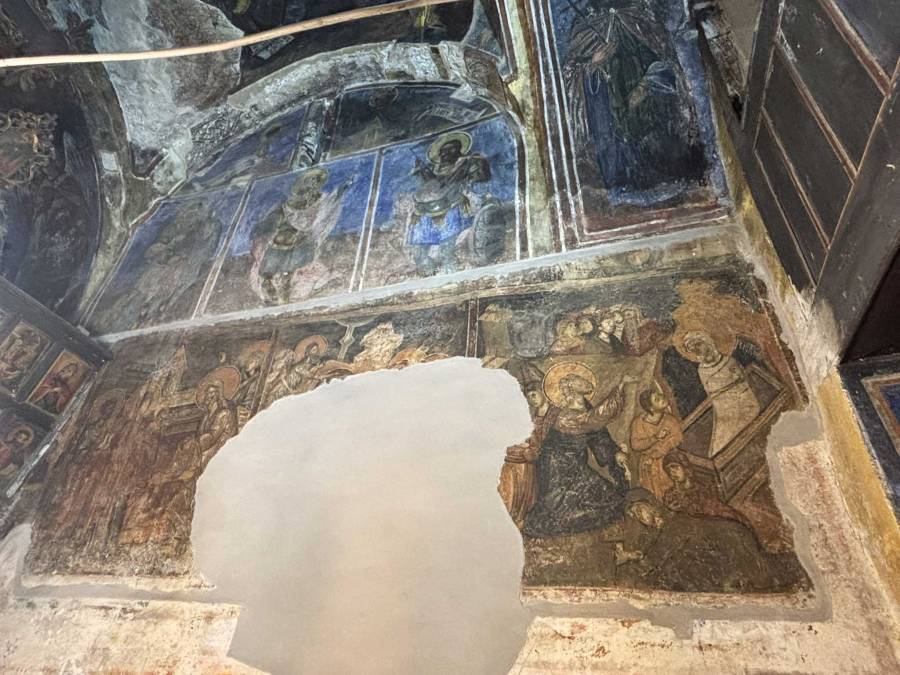
The church preserves fragments of beautiful 14th-century frescoes hidden beneath later paintings. Art historians consider the frescoes to be closely connected with important painting workshops that also worked in Lesnovo and Marko’s Monastery, placing them among the significant artistic monuments of medieval Macedonia.
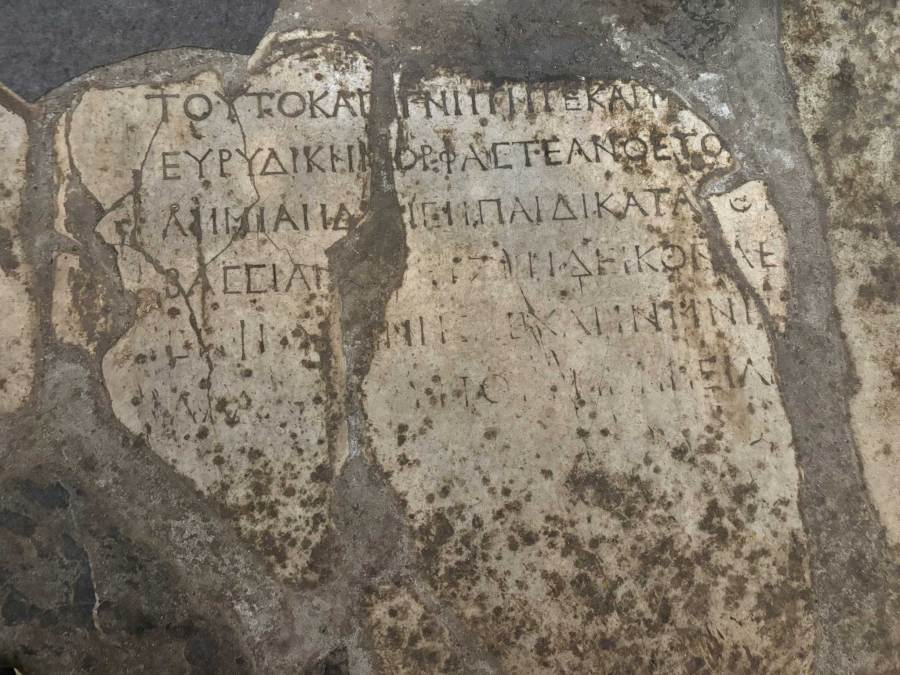
The church also preserves fragments of an ancient Roman funerary stone with a Greek inscription built into its floor. Nearby archaeological sites show that people lived in the area from Late Antiquity long before the medieval church was constructed.
Mysterious funerary symbols carved into the church wall
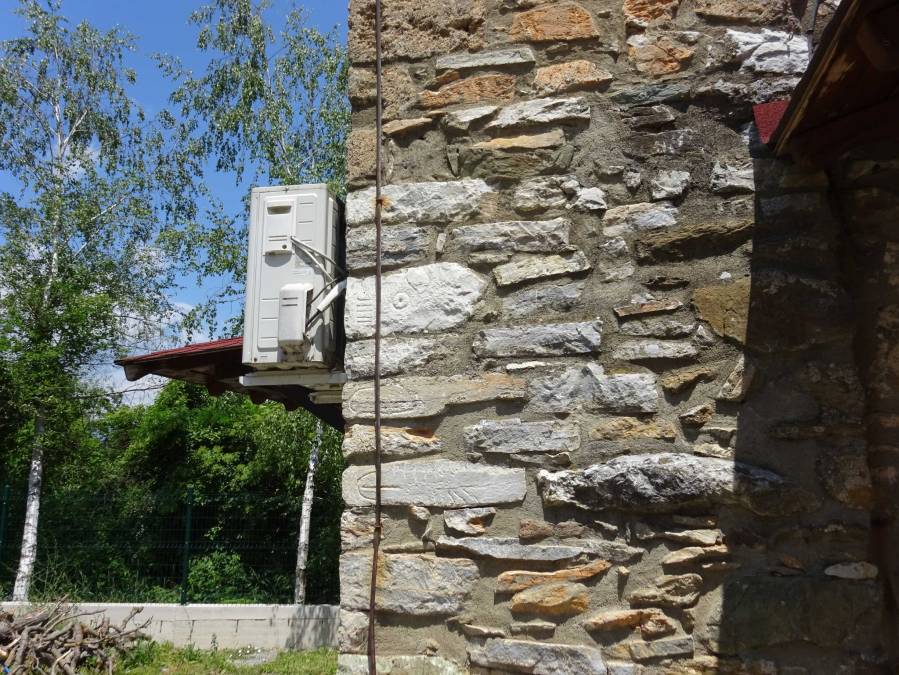
One of the church’s most unusual features is a group of three carved funerary symbols built into the outside corner of the south façade during the 19th-century restoration.
Unlike ordinary decoration, these simple carvings appear to be grave markers or memorial symbols.
Among them are:
- A cross inside a circle, a common medieval Christian symbol representing the deceased.
- A highly stylized human figure, reduced to little more than a cross and simple lines.
- Several mysterious abstract symbols, including a circular motif and another design that resembles either a ladder or a wooden fence. Their exact meaning remains unknown.
There is a very detailed paper in Serbian and English, from which the information on this page was taken: Smiljka Gabelić, Čelopek. Crkva Sv. Nikole (XIV i XIX vek) (Belgrade: Faculty of Philosophy, University of Belgrade, Institute of Art History, 2017).
The author suggests these stones were probably created during the 19th century, possibly after a devastating epidemic that struck the region. They may have served as temporary memorials for people, perhaps even children, who died during an outbreak of plague or another disease. A local priest also left an inscription dated 1882 mentioning what appears to have been a death of children, which may be connected to these carvings.
Rather than being placed in a cemetery, these symbols were carved between the two entrances of the church. According to the author’s interpretation, this location may have had a symbolic or even protective purpose.
She notes that in Balkan folk belief, church entrances were thought to provide protection against disease, and these simple memorial symbols may have reflected local beliefs about the soul’s journey after death. Similar funerary symbols are known from other medieval churches in Macedonia, showing that this was part of a longer tradition.
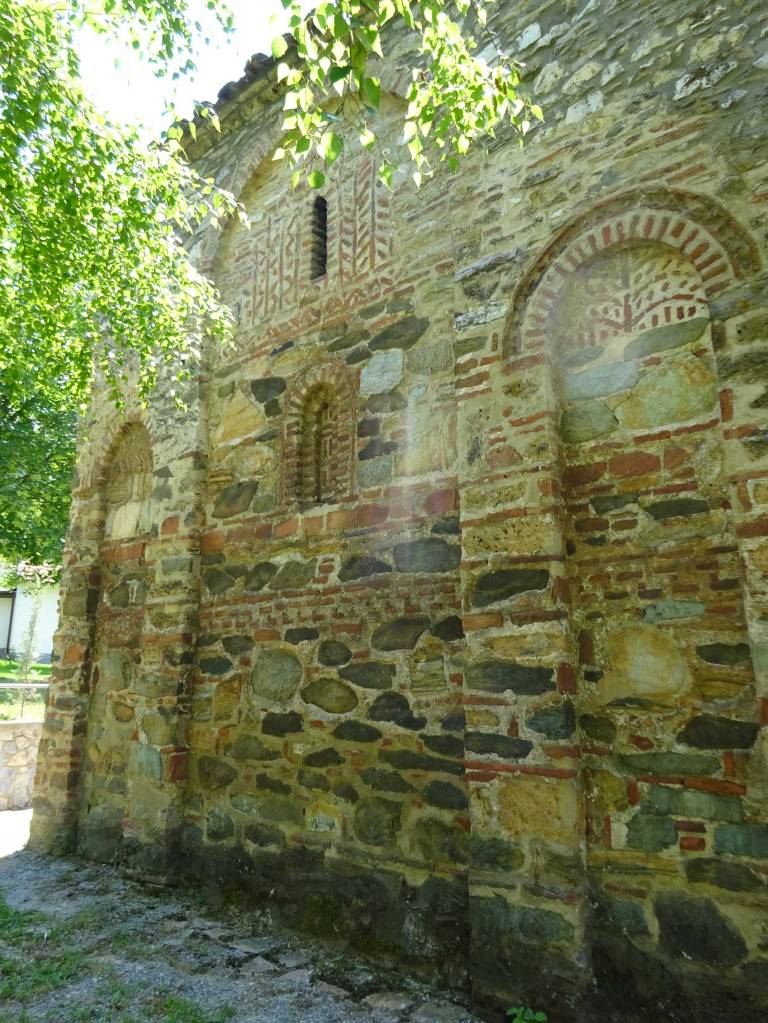
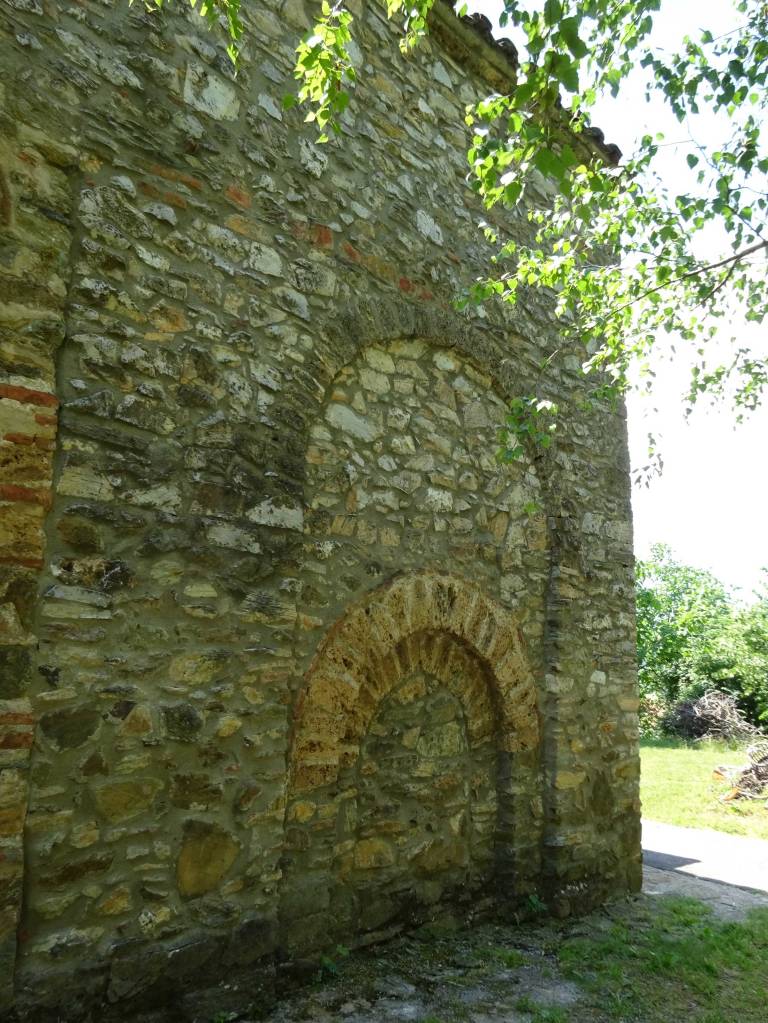
The church was closed when we arrived there, but the caretaker who lives very nearby saw us in front of the gate and opened the church for us.
He also told that according to local folklore the stones that were used to rebuilt the church were taken from a fortress on a hill above the church. There apparently is not much to see of the fortress anymore, but he offered to take us there on his tractor another day. Unfortunately we didn’t have time that week, but I’ll keep this location in mind to do some exploring during a next visit.
We visited this church as part of a daytrip from Tetovo. Other places that we visited during this daytrip were the ruins of St Mala Bogorodica and St Ilija in Stenche, the springs of the river Vardar and St Archangel Michael in Vrutok and St Marena in Zubovce.

